


News
Whispers from the Street… Nikolay Vassilev’s photographs inspire literary stories
The 9th competition for artistic analysis of photography “Photos Speak” honors the best authors
Sunday 22 June 2025 05:05
Sunday, 22 June 2025, 05:05
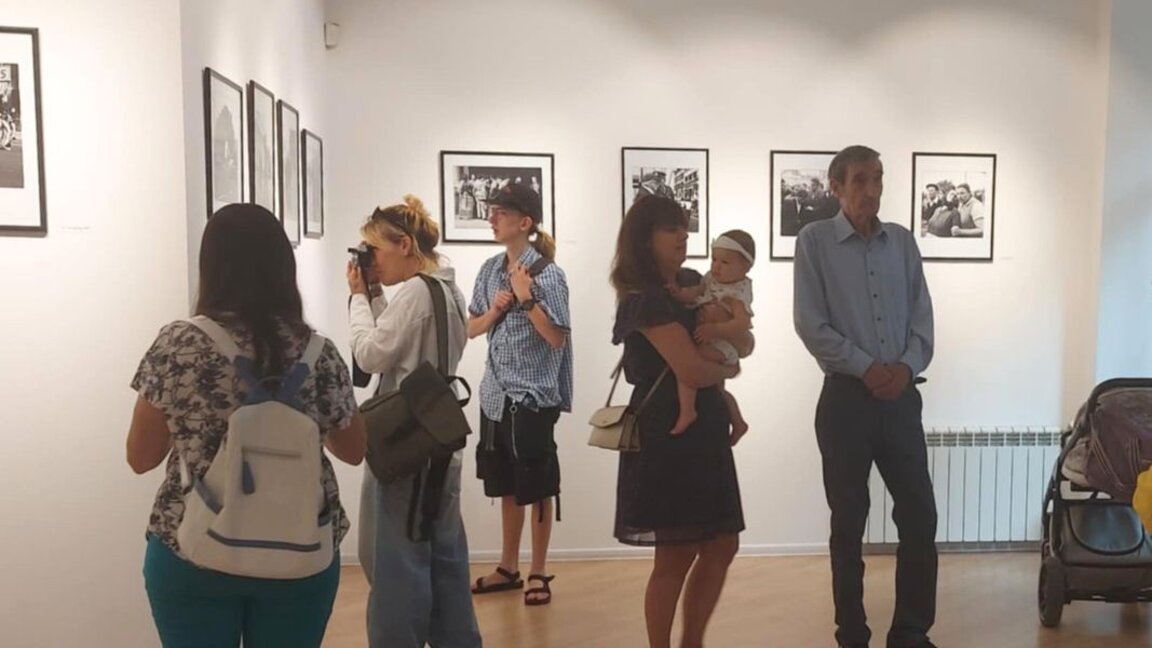
PHOTO Sofia Press Gallery
Font size
When different arts come into contact, unexpected things arise. And nothing is final – words embellish the image, and perceptions soar to new interpretations and worlds. A similar experience, returning us to a time that has recently flown by, is revealed by the exhibition “Noise and Whispers from the Street” on emblematic works from the archive of photographer and artist Nikolay Vassilev.
In the Sofia Press gallery-bookstore, surrounded by the exceptional photographs of Nikolay Vassilev, the Yanka Kyurkchieva Photography Academy honored the winners of the ninth edition of the "Photos Speak" 2025 photography artistic analysis competition. Participants were invited to create stories inspired by captured moments in cities from different parts of the world, of people and eras in the 1960s, 1970s and 1980s.
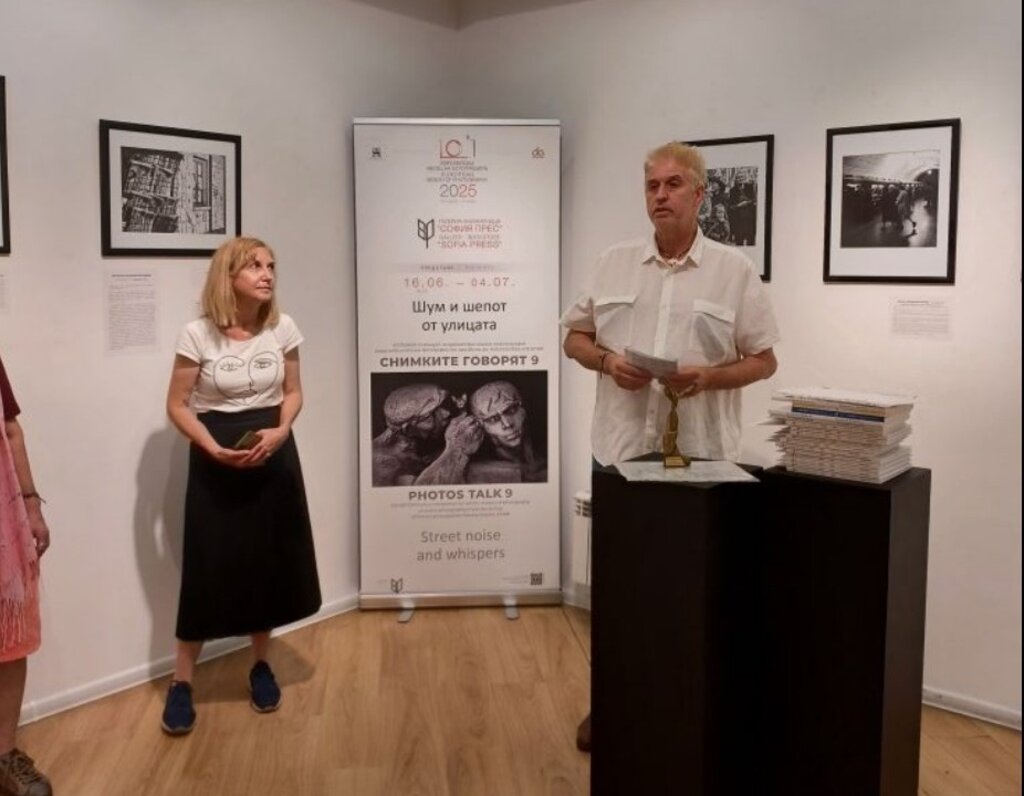
Олимпия Николова и Антон Савов
PHOTO Диана Цанкова
"It makes a very pleasant impression that the participants treat art in a thorough, analytical manner, with a special sense of concentration and desire to understand art," says Olympia Nikolova, an art critic and member of the competition jury. "There are many different interpretations - from poetic impressions to people who develop the story further or write a new one. Others analyze the plot, characters, situations with deep sensitivity and knowledge of the time and era."
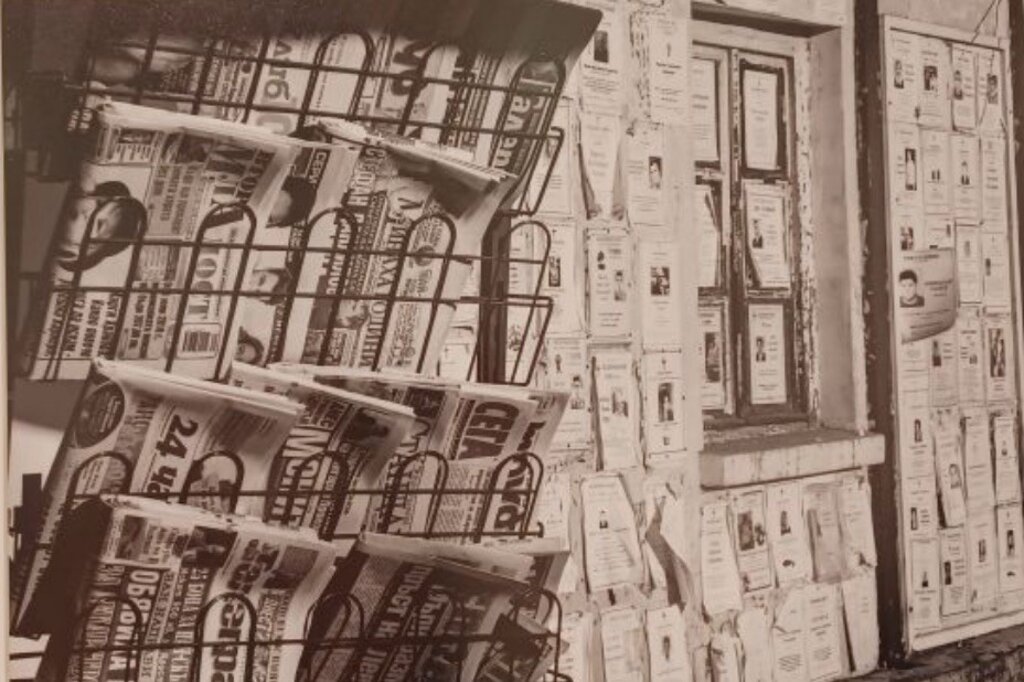
PHOTO Диана Цанкова
A house with a facade covered in obituaries, and a newspaper stand next to it.
This shot from Dragoman inspires the winner of the competition, arch. Katerina Mutafova to draw an analogy with the famous thought of Vasil Levski: "Time is in us and we are in time, it turns us around and we turn it around", but also to ask questions that mark our existence: "What use is there for the living and the dead from newspapers in which there is no truth?! What use is there for the same from obituaries for the deceased, who were not respected and honored during their lifetime?"
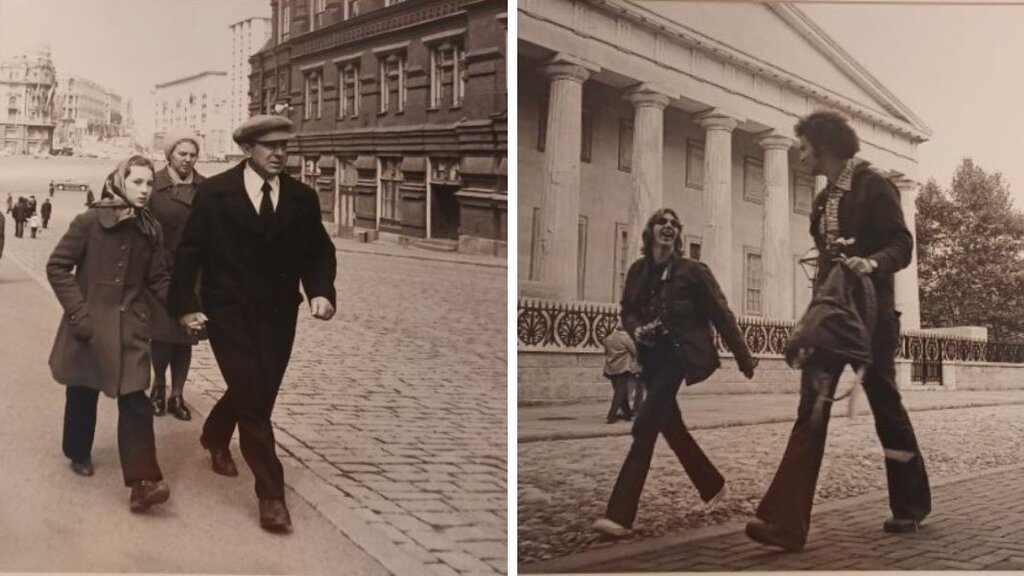
PHOTO Диана Цанкова
The Academy selected the photographs of the doyen of the guild Nikolay Vassilev for this year's competition not only out of respect for his nearly sixty-five years of creative experience. "We managed to provoke lovers of this different format to speak with words behind the image he captured," says its chairman Anton Savov and adds: "The shots that have reached the exhibition hall show both the work of Nikolay Vassilev and the truth, told as the viewers feel it when looking at the photographs."
Nostalgia for an unknown/unrecognizable world, carefully chosen words for people at the end of their days or already gone – sometimes the return to the past sounds in a minor key. If we stand next to a random photograph, however, it can take us in a variety of directions, stepping on the feelings and imagination of the lyricists.
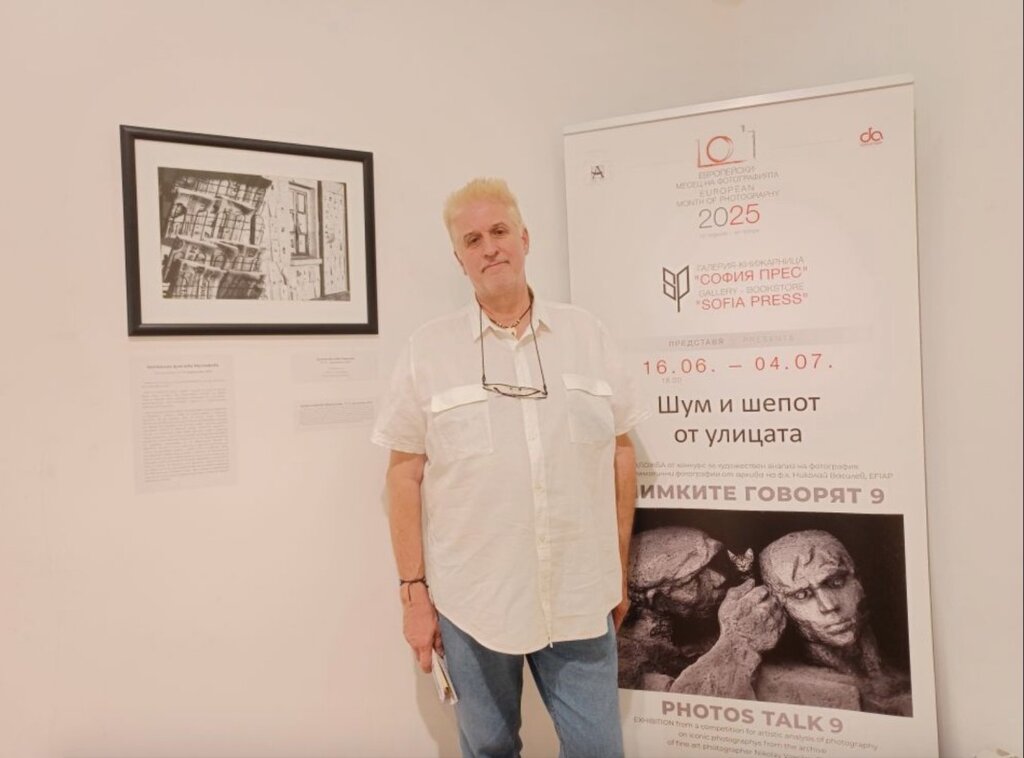
Антон Савов
PHOTO Диана Цанкова
"The captured spirit of different, let's call them, eras in the wide range of time in which the shots were taken, different places and cultures - this is the basis for the authors' interpretations", believes Anton Savov. "Nikolay Vassilev presents an authentic photo reportage from the places he has visited, because the profession of a photojournalist is exactly that. As for the "Photos Speak" format, it aims to make the connection between two arts that are absolutely different in approach, but also inextricably linked, because one gives rise to the other and vice versa. We know that photographers see images in their imaginations, and photographers capture images that tell a story, i.e. the competition is a kind of bridge between them."
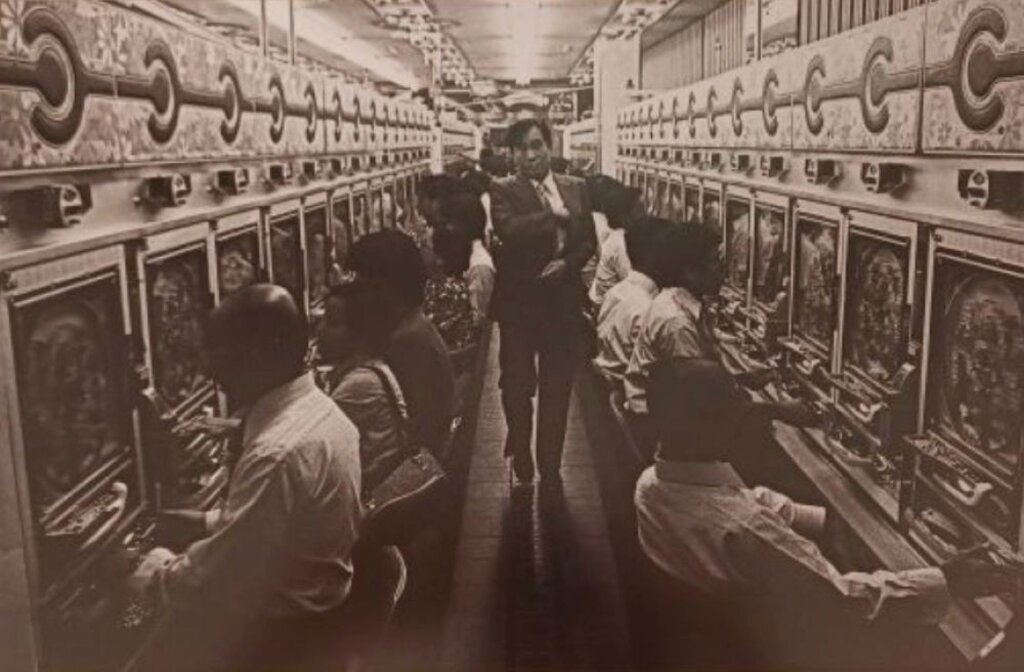
PHOTO Диана Цанкова
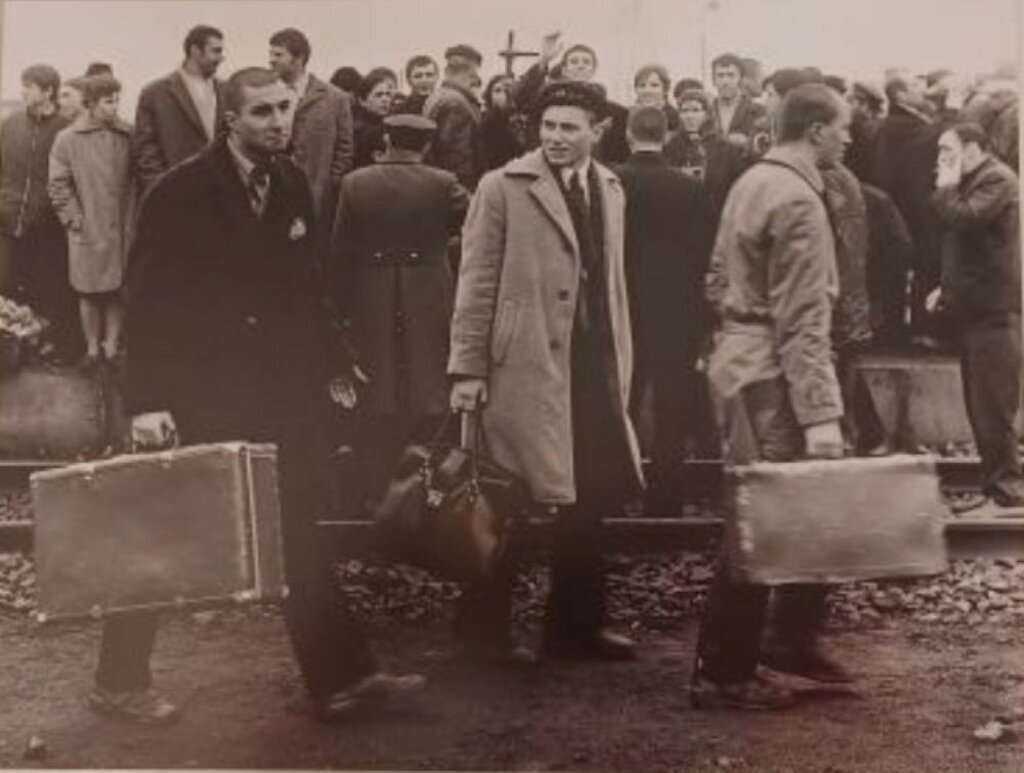
PHOTO Диана Цанкова
When selecting photographs for analysis, Nikolay Vassilev approaches them with the idea of something happening – for example, people indulging in their favorite pastime of pachinko in a gaming parlor in Kyoto or recruits at Sofia North Train Station leaving for their military service.
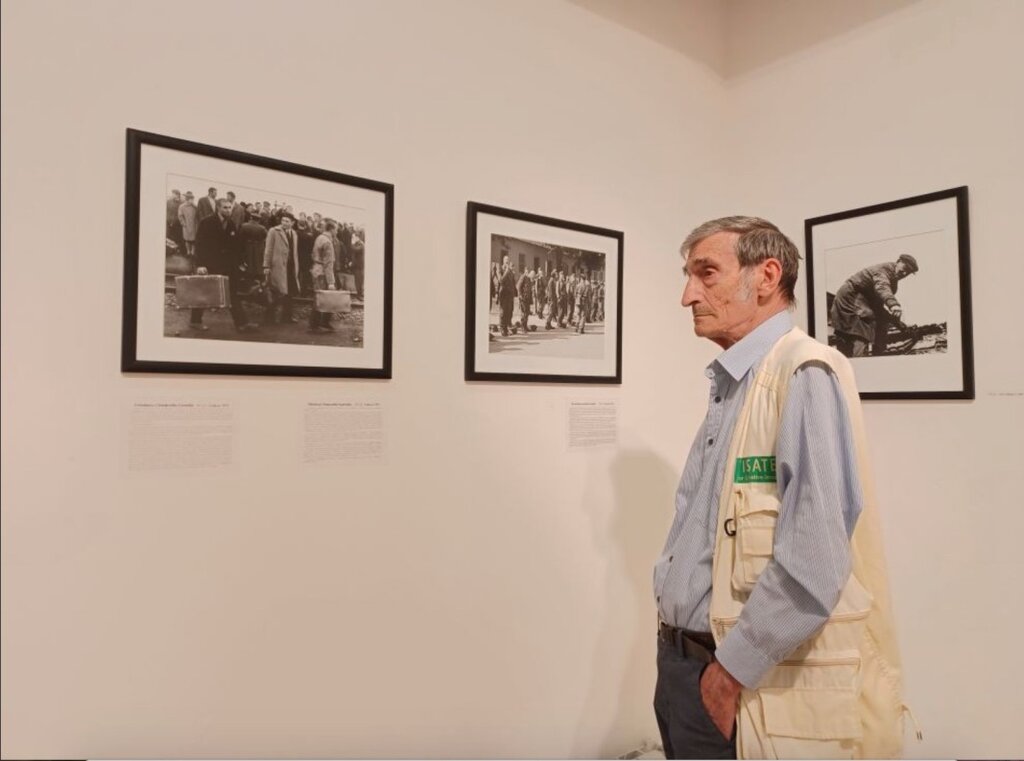
Николай Василев
PHOTO Диана Цанкова
"Here we see the inscription "Boring work kills!" on the tiles on the sidewalk", the author says, stopping in front of one of the photographs.
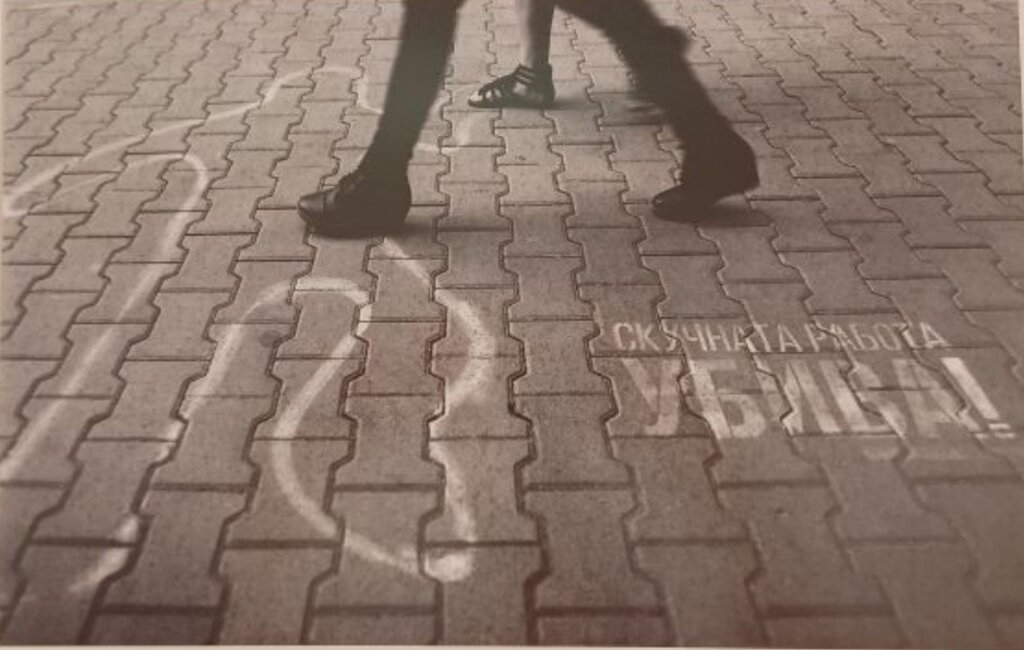
PHOTO Диана Цанкова
"This is the bus stop behind Sofia University. I was sitting on the bench and waiting for someone to pass, so that it would not be just a reproduction of the drawn human silhouette and the author of the text".
Nikolay Vassilev stops in front of more photographs - "The Change of the Military Guard", in his words, could hardly be understood by a person who did not serve in the army. Surprisingly, however, the scene in which the officer gives the command "Gas" due to an attack with chemical weapons was interpreted correctly by a woman. Another shot is worth a three-hour stay in the police station for the photographer.
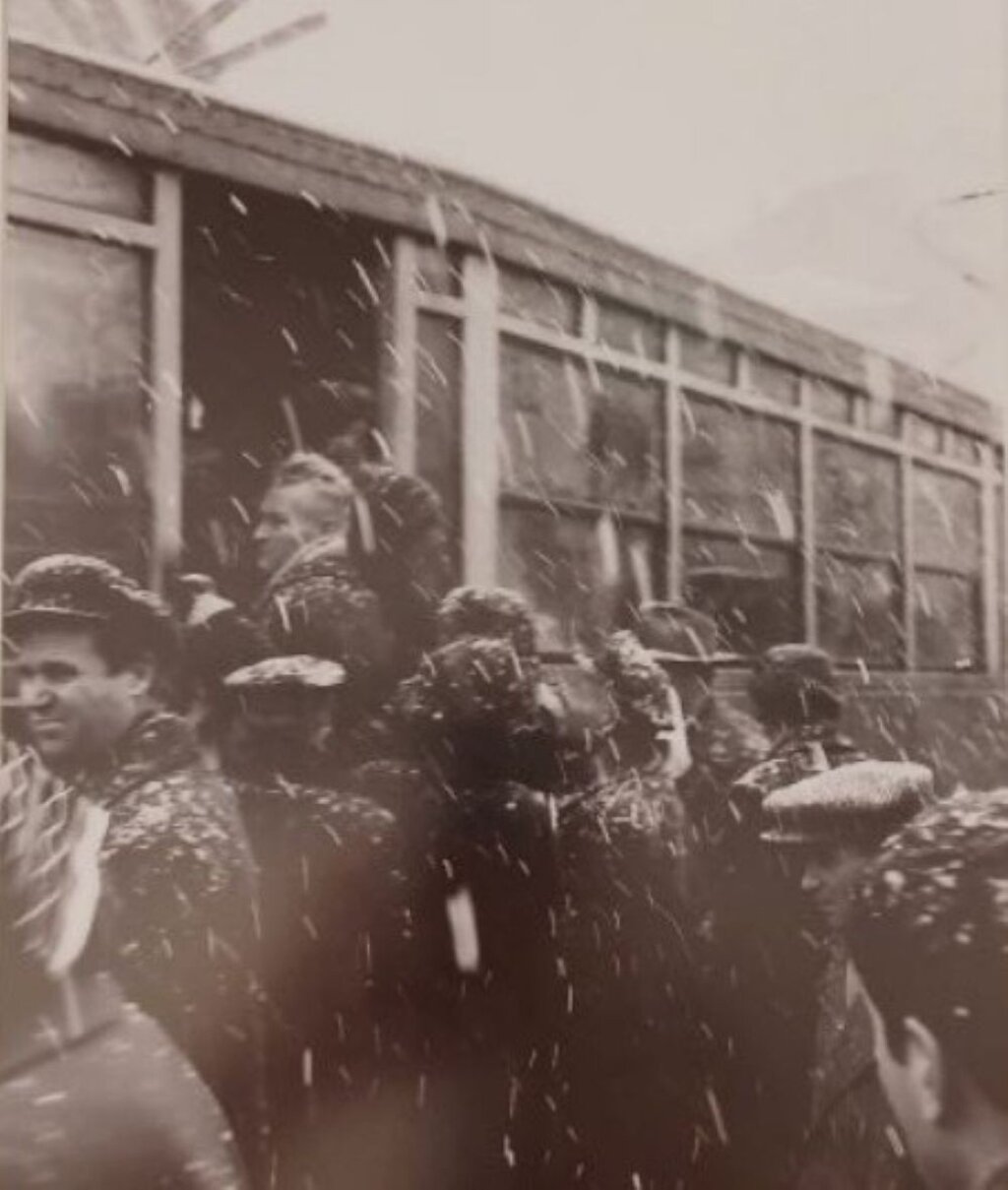
PHOTO Диана Цанкова
"It's November or December 1963 in Sofia," recalls Nikolay Vassilev. "It's sleet in the street and I go out to take pictures. I took a few shots of people jostling to get on the crowded tram, then I turned around and saw a lottery ticket seller wrapping herself in some torn scarves. While I was aiming the camera, two plainclothes policemen on either side of me took me to the capital's Ministry of Interior headquarters, where they asked me the same question for three hours: "Who pays you to take such pictures?" Thank God, they didn't take my film away, so we can see the picture now."
PHOTO Диана Цанкова
And are there any coincidences between his perception of what was captured on the film and those of the authors of the stories?
"Yes, they see what is there and interpret what they see in their own way," the photographer replies. "I will allow myself to quote Bernard Shaw, who at one time, when he published a work, expected critics to write something in order to understand what he wanted to say. Here I am more or less in a similar position. I am very interested, I will sit down calmly and carefully read all the comments - to understand what I wanted to say."
PHOTO Диана Цанкова
If we use the words of the famous American photographer Ansel Adams, in a photograph there are always at least two participants - the one who took it and the one who looks at it. Visitors to the exhibition can also add, albeit mentally, their own words to the images in the gallery.
Photos: Diana Tsankova, Sofia Press Gallery and Bookstore
English publication: R. Petkova
English publication: R. Petkova
This publication was created by: БНР екип