


Monday 10 November 2025 09:06
Monday, 10 November 2025, 09:06
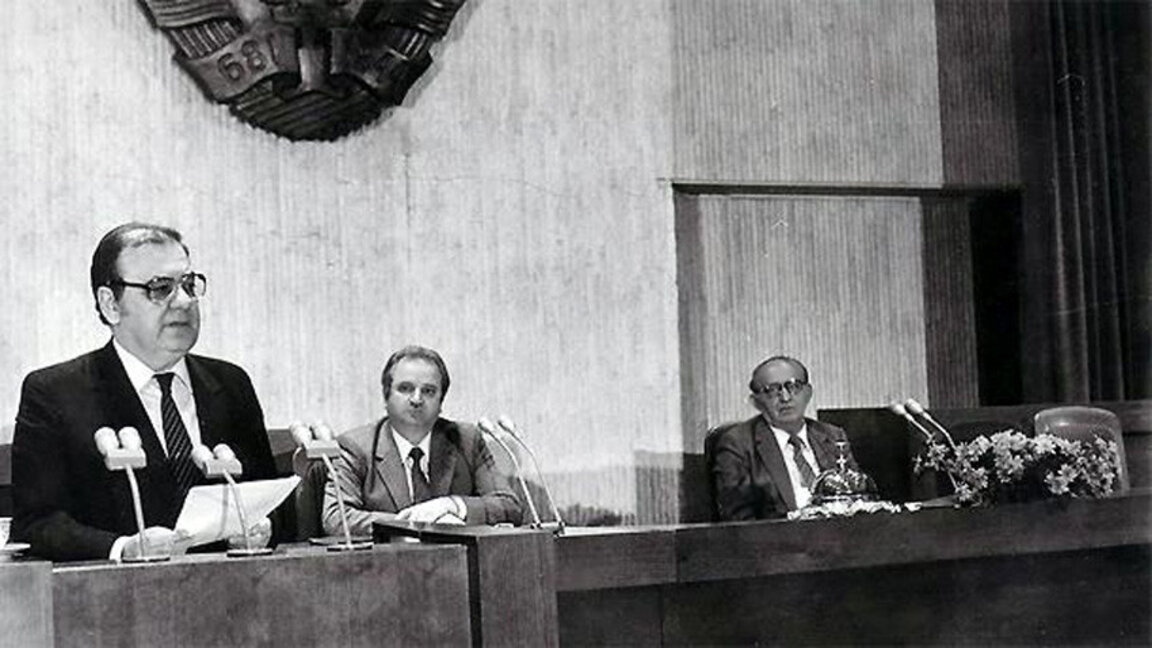
Plenum of the Central Committee of the Bulgarian Communist Party, November 10, 1989.
PHOTO BTA - archive
Font size
November 10 marks 36 years since the symbolic beginning of the transition from a one-party system to democracy in Bulgaria. The day after the fall of the Berlin Wall a plenum of the then ruling Bulgarian Communist Party ousted its long-time Secretary General and Head of State, Todor Zhivkov. In Moscow, Todor Zhivkov was considered an obstacle to the perestroika carried out at the time by Soviet leader Mikhail Gorbachev.
The leadership of country was taken by the then Foreign Minister Petar Mladenov and Andrey Lukanov. They subjected Zhivkov's rule to sharp criticism and admitted that the regime had led the country to economic crisis and bankruptcy.
Unlike the previous regime change after 1944, the changes to democracy and a market economy in the so-called transition were carried out slowly, gradually and peacefully.
Editor: Ivo Ivanov
Publication in English: Al. Markov
Photo: BTA - archive
This publication was created by: Росица Арабаджиева - Радио Шумен