


Friday 5 December 2025 13:17
Friday, 5 December 2025, 13:17
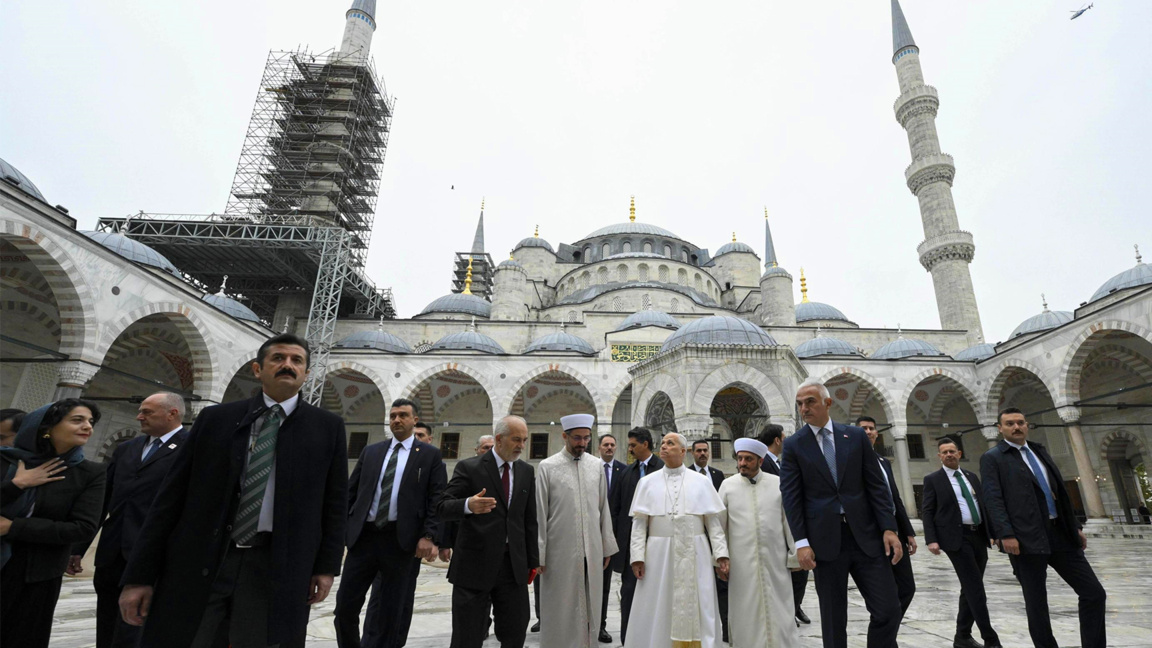
Pope Leo XIV is the fourth pontiff to have visited a mosque.
PHOTO EPA/BGNES
Font size
As part of his first Apostolic journey, Pope Leo XIV visited Turkey. In addition to meetings with Christian communities, his programme included a visit to the Sultan Ahmed Mosque, also known as the Blue Mosque — Istanbul's most prominent place of worship for Muslims, according to a report from the Vatican press office.
The Pope experienced the visit to the Mosque in silence, in a spirit of recollection and attentive listening, with deep respect for the place and for the faith of those who gather there in prayer, according to the Holy See Press Office.
Pope Leo XIV toured the richly decorated mosque and received a briefing on its history. At the entrance, he and members of his delegation removed their shoes.
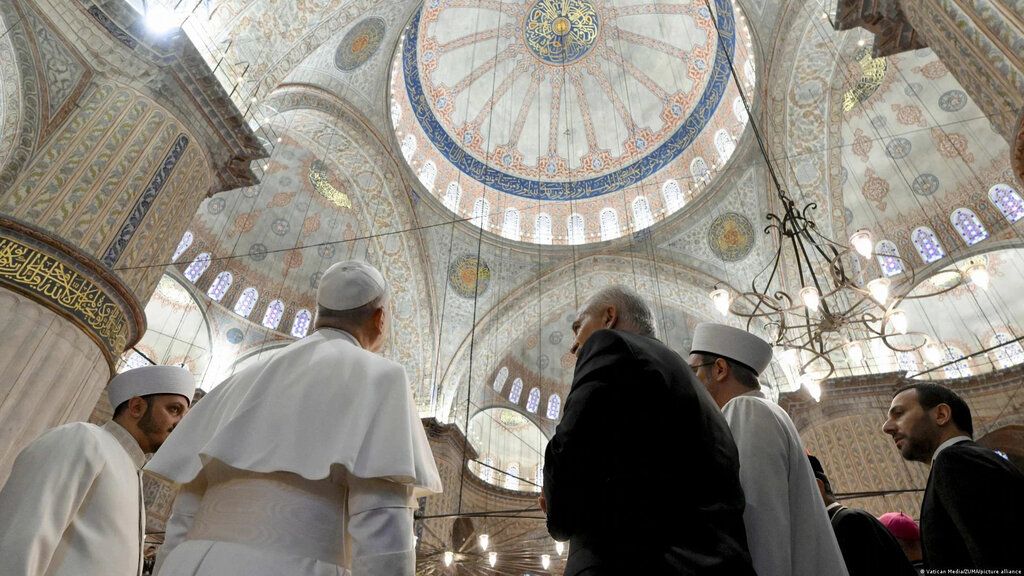
PHOTO Vatican Media/ZUMA/picture alliance
Built between 1609 and 1617 by Sultan Ahmed I on the site of the Great Palace of Constantinople, the Blue Mosque is one of Istanbul’s landmarks.
Pope Leo XIV’s visit is seen as a gesture of respect towards the host country, where 99% of the population is Muslim. His predecessors also visited the mosque: Pope Francis in 2014 and Pope Benedict XVI in 2006.
Benedict's visit marked only the second time in history that a pope had visited a mosque, following John Paul II's historic visit to the Umayyad Mosque in Damascus during his apostolic journey to Syria in 2001, as reported by Vatican News.
Greek farmers block highways over delayed subsidies
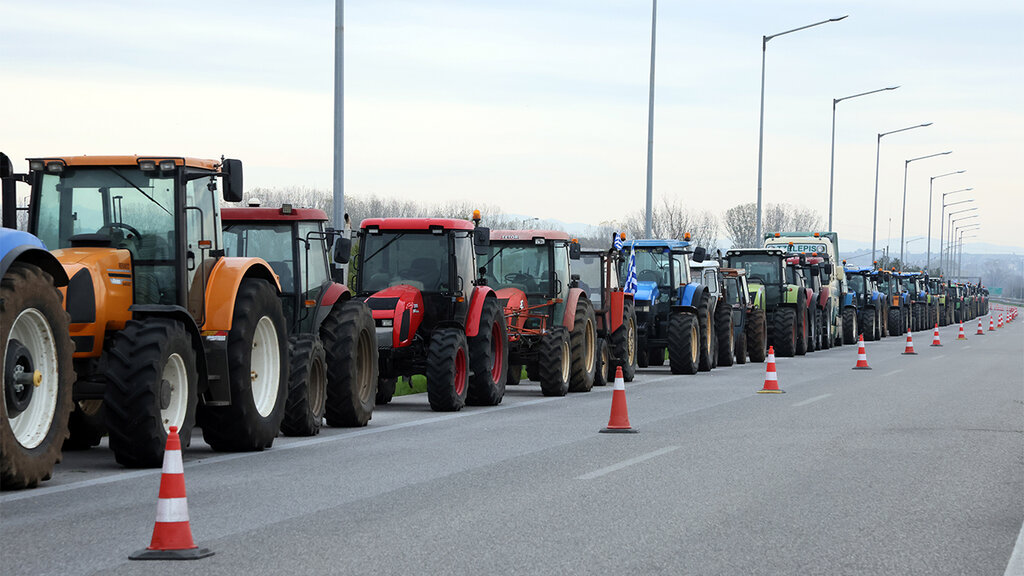
PHOTO kathimerini.gr
Greek farmers have stepped up protests by blocking highways in several regions, including Thessaly, Macedonia, Thrace, and Epirus, The Kathimerini Daily reports. Despite the blockades, farmers are allowing trucks carrying Greek products and ambulances to pass.
On the evening of 2 December, border crossings with Bulgaria and North Macedonia were also blocked. Protesters are seeking to draw attention to the challenges facing farmers and livestock breeders, including rising production costs and delays in agricultural subsidy payments.
The delays are linked to an investigation into false land and livestock declarations used to obtain EU subsidies illegally.
Former Croatian MP charged over fake COVID-19 tests

PHOTO regionalni.com
Prosecutors in the northern Croatian city of Varazdin have filed charges against former ruling-party MP Andjelko Mihalic and his son Filip for allegedly organising the production of more than 1.3 million counterfeit COVID-19 tests in Turkey, Croatia’s state broadcaster HRT reported, citing the prosecution. The authorities did not name the suspects in their official statement.
According to the indictment, the two arranged for the tests to be manufactured at a factory in Istanbul between August 2022 and May 2023. The products allegedly mimicked original branded tests and were imported into Croatia, where they were subsequently sold through their company to clients in Greece, Romania, Austria, Spain, and Germany.
Prosecutors estimate that the illegal operation generated profits of around €450,000.
Albania and France to expand bilingual schools to boost French language learning
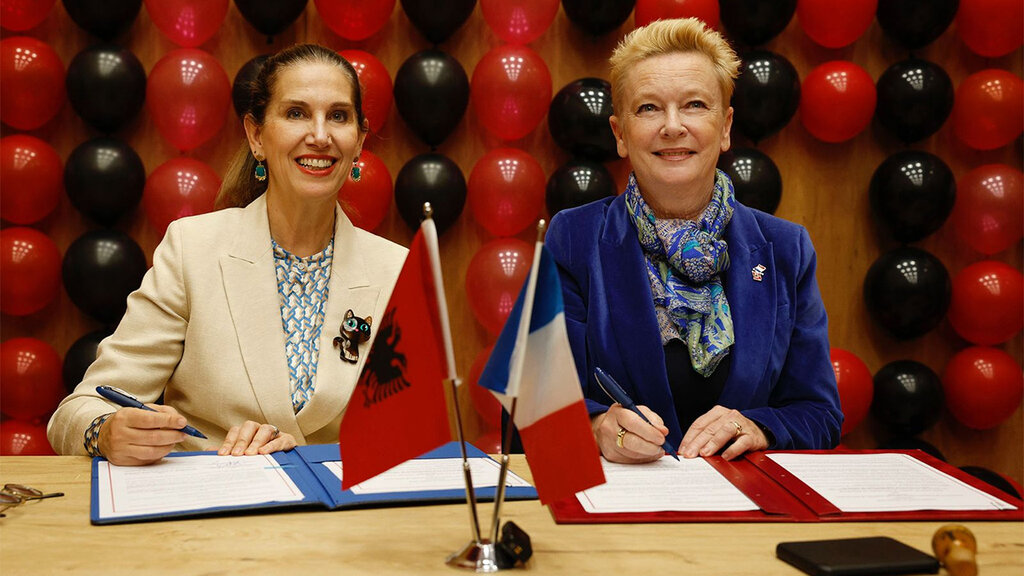
Education Minister Mirela Kumbaro and France’s ambassador to Albania, Catherine Suard.
PHOTO ata.gov.al
Albania’s Ministry of Education and the French government have signed a memorandum of understanding to establish Albanian-French bilingual schools, according to a report by Albania’s ATA news agency.
At a meeting with French-language teachers, Education Minister Mirela Kumbaro and France’s ambassador to Albania, Catherine Suard, highlighted the need to expand the network of bilingual schools in Korca, Durres, Shkodra, Elbasan, and Tirana.
Ms Kumbaro said that strengthening French-language education would help to prepare students for the science-focused French-Albanian lycée, which is set to open in September 2027. This public boarding school will feature modern classrooms, laboratories and a cafeteria. Some subjects will be taught in French by French teachers, while courses related to Albanian history and culture will be taught in Albanian.
Ambassador Suard expressed hope that the new lycée would attract young francophones who could act as a bridge between the two countries.
Tourism in Cyprus hits record levels
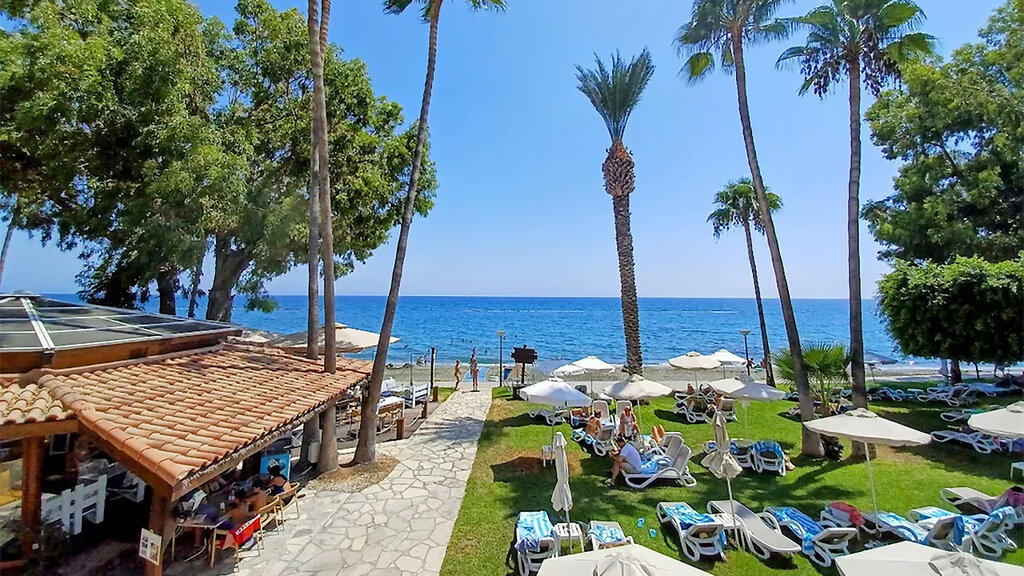
PHOTO cyprus-mail.com
Tourism revenues in Cyprus reached €3 billion between January and September, marking an increase of more than 15% compared to the same period in 2024, the island’s statistical service, CyStat, announced. The full-year figure for 2024 was €3.2 billion, and this is expected to be exceeded by the end of 2025, according to a report by BNR’s Cyprus correspondent Branislava Bobanac.
October 2025 was a historic month for Cyprus, as the island welcomed a record 537,744 tourists—the first time monthly arrivals surpassed half a million—according to the Ministry of Tourism.
Cyprus’s two international airports, in Larnaca and Paphos, also set new records, handling over 13 million arrivals and departures, up from 12.3 million during the same period last year.
In September, British tourists—the largest market, accounting for 31.4% of all visitors—spent an average of €115 per day. Israeli visitors, the second-largest group with a 14.0% market share, spent €158 per day on average, while Polish tourists, who made up 7.9% of visitors, spent €102 per day on average
Text by Miglena Ivanova
Editors: Elena Karkalanova, Ivo Ivanov
Posted in English by E. Radkova
This publication was created by: Elizabeth Radkova