


Author
Vesela Krasteva
Interview
Bulgarians in Albania: Bridging past and present
'We are the living link between Albania and Bulgaria,' says Yani Nikola from Mala Prespa
Monday 8 December 2025 13:50
Monday, 8 December 2025, 13:50
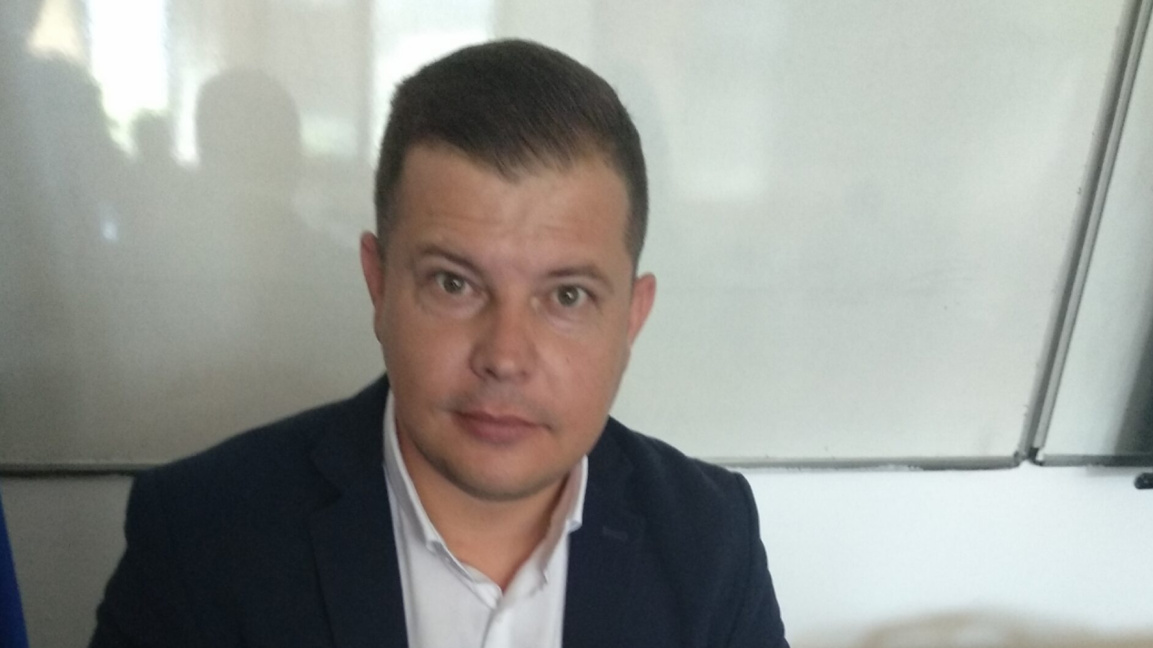
PHOTO bezgranitsi.bg
Font size
Hello! My name is Yani Nikola. I was born in Mala Prespa in Albania, where I completed my early schooling. I come from a Bulgarian family — of Bulgarian origins — who have lived for generations in this beautiful, if very small, corner of Albania: Mala Prespa.
And so today’s journey begins — through the past, the present and the future, following the lives of the people who connect them. Radio Bulgaria has often shared the stories of the Bulgarians in Albania, who have lived on these lands for centuries. A landmark year for them all was 2017, when the authorities in Tirana officially recognised our compatriots as a minority under Albanian law.
In 2023, Albania conducted its twelfth national census, clearly confirming the presence of a Bulgarian community: 7,057 people declared themselves Bulgarian. Our team visited members of this community, who welcomed us with warmth and hospitality. They told us their life stories, sharing both their pain and their hopes.
Today, at a time when the two Balkan countries are closer than ever on their shared European path, we would like to introduce you to one of the pillars of Bulgarian–Albanian friendship: Yani Nikola. He has served as Deputy Mayor of the Municipality of Pustec — the most densely populated Bulgarian area of Mala Prespa — for the past six years, as well as Secretary-General of the “Association for Bulgarian–Albanian Friendship” in the Albanian city of Korça. He is someone who understands better than most what it means to move forward with memory and love for a homeland that lies just an arm’s length away.
Nikola is one of the 3,691 men and 3,366 women who collectively made Bulgarians the fourth largest minority in the country, after Greeks, Roma and Balkan Egyptians, according to the Albanian Statistical Institute. However, two years on, the authorities in Tirana have still not released the detailed breakdown of the population by settlement — information of crucial importance for our compatriots living there.
Bulgarians in Albania mainly live in the regions of Mala Prespa, Golo Brdo, Debar and Gora. If a census in these areas shows that at least 20% of the population identifies as Bulgarian, the community will be able to request that secondary education be provided in the Bulgarian language. This is directly linked to preserving Bulgarian culture, history, traditions and spirit in these regions.
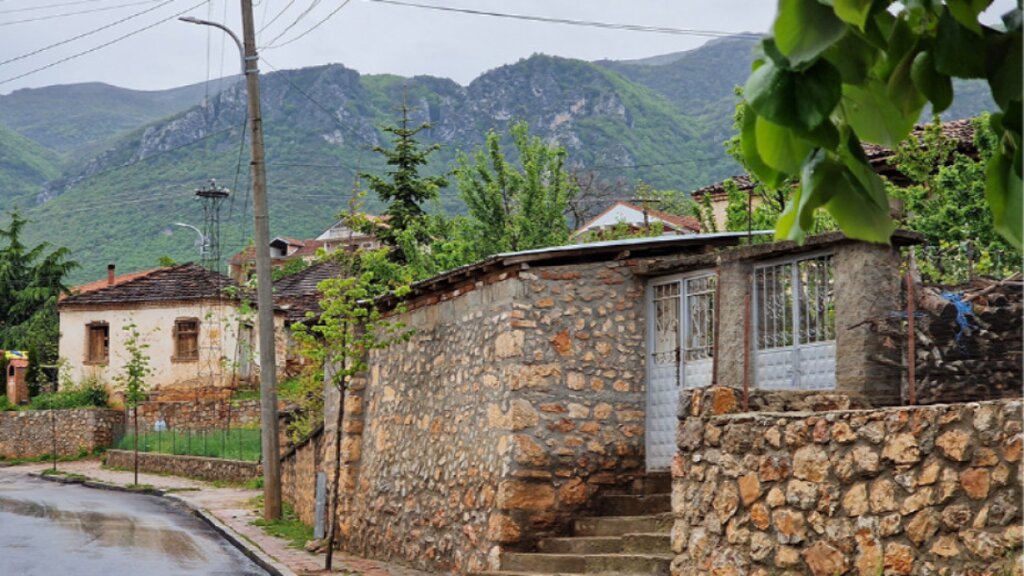
PHOTO BTA
"The results are still being delayed for political reasons," says Yani Nikola. Born in 1986, the question “What is your nationality?” has never been an issue for him.
"From a young age, I have always known who I am, and I am not afraid to say it, unlike many people in North Macedonia who are ashamed to admit they are Bulgarian. I am proud of who I am, and I am not ashamed to declare it publicly."
Yani is one of the children of Bulgaria born far from home, yet he received the most precious gift: a love for his homeland from his parents, and an education in Bulgaria. His greatest dream was to study medicine in Pleven and care for people. But fate had other plans: in 2004, he was admitted to study law at Ruse University “Angel Kanchev.” He graduated, and although he wanted to stay and work in Bulgaria, family circumstances brought him back to Albania — to nurture Bulgarian identity on foreign soil.
"After returning to Albania, I worked for several years in non-governmental organisations. In 2015, together with friends who had also studied in Bulgaria, as well as with Dimitar Pandovski, we founded the 'Association for Bulgarian–Albanian Friendship' in Korça. From the very beginning, we realised how important it was to be united — to give a voice to our community and to work for its benefit. We started by organising free Bulgarian-language courses, cultural and educational initiatives, and competitions for children and young people. With the support of the Bulgarian Memory Foundation, led by Dr Milen Vrabevski, we also participated in seminars organised in Bulgaria, bringing many children from our region with us.
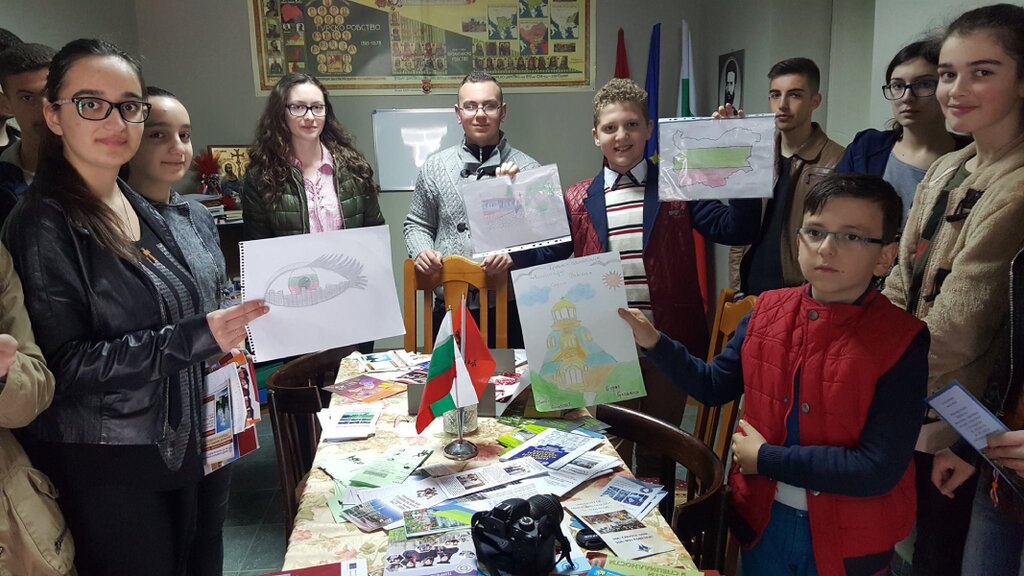
PHOTO Association for Bulgarian–Albanian Friendship
Today, our organisation runs two Bulgarian Sunday schools in Korça and Pogradec, educating around 45 children. Our main focus is on the younger generation: the Bulgarian youth. We are the living link between Bulgaria and Albania — a bridge of friendship, culture, and mutual understanding," he says.
And, to slightly misquote the great Bulgarian poet and revolutionary Hristo Botev from his poem “Haiduti”: Who does not know Yani Nikola? Who has not heard of him?
That is very much the reality in the Mala Prespa region — something our Radio Bulgaria team witnessed firsthand during our visit just a month ago. As someone deeply familiar with the Bulgarian community, Nikola does not shy away from acknowledging the challenges it faces today.
"The challenges are many," says Yani Nikola. "Bulgarians here live in very poor and neglected areas with little investment. The first and most urgent issue is healthcare. There are no specialists, and people are very poor and have no means to travel to specialised clinics in the capital or other larger cities in Albania. For this reason, and thanks to the Bulgarian Memory Foundation and Dr Milen Vrabevski, we organised free general medical check-ups in the Prespa region at the end of October for the fourth consecutive year. Over the past two years, more than 500 people have been examined, and those with serious conditions or diagnoses will receive full treatment in Bulgaria thanks to Dr Vrabevski. This is wonderful news for us and a great success for the initiative."
"Another major problem is the lack of job opportunities for young people. Many choose to emigrate abroad or move to larger cities, which is a serious issue for us because villages in the region are beginning to disappear from the demographic map," he warns, adding that there is a solution:
"We need investment and prospects for young people, not just for the 5,100 Bulgarians of Mala Prespa. Whether this will happen alongside Albania's accession to the EU — a process which the country officially began in 2024 and is expected to conclude around 2030 — remains to be seen."
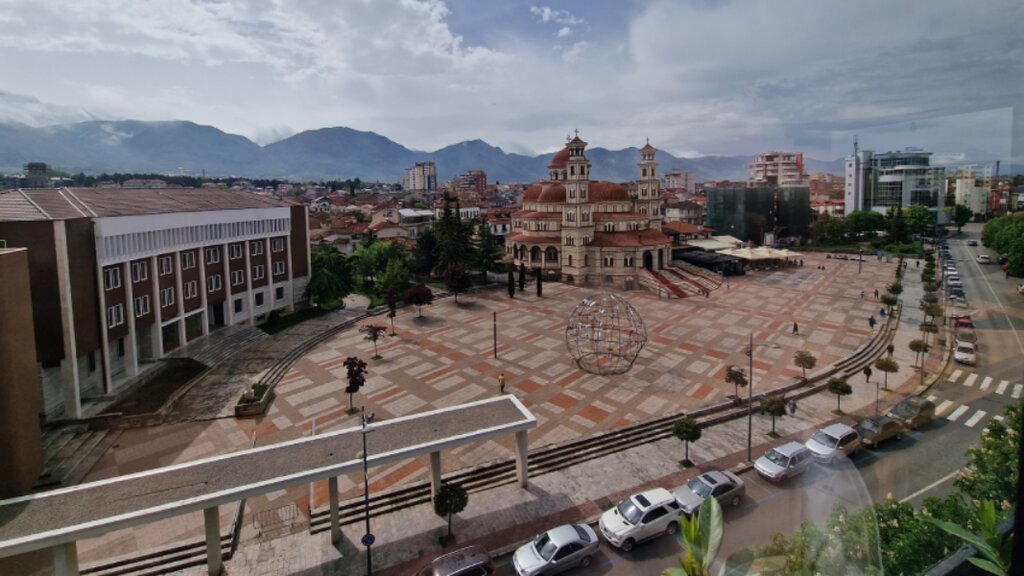
PHOTO Archive
"I don’t think change will come just because of the EU. But Albania's accession will bring us closer to Bulgaria. Borders will fall and we will become one," he says. "Our goal now is to maintain the Bulgarian spirit here in Albania, to continue preserving the language and culture, and, in the future, to have our representatives in the Albanian parliament so that our voice can be heard closer to those in power."
Nikola admits that the authorities in Albania are currently distant from the community, but not hostile. He believes that Bulgarian statesmen are working well and providing support, particularly through the Bulgarian embassy in Tirana and its head, Mr Ivaylo Kirov.
"Bulgaria is currently in a political crisis, but as a European state, it needs a strategy for Bulgarians living abroad. And that strategy, regardless of changes in government, must exist and be close to us — the Bulgarians beyond the border."
On the eve of the Christmas and New Year holidays, Yani Nikola wishes all Bulgarians:
"Be healthy and strong! To our compatriots in Bulgaria, I would like to remind you not to forget about the Bulgarians living abroad, especially in Albania in the regions of Vrbnik, Mala Prespa, Korça, Pogradec, Golo Brdo and Gora. To all Bulgarians worldwide, I would like to say that you should contribute to the well-being of your homeland because there is no better country than your own and no better place to live and work than in your own country. Seek opportunities to return and work in Bulgaria and help make it stronger.
Or simply build their small communities of friendship with Bulgaria and the places they have made their new home. Borders will fall, and one day we will truly be one — the dream of Yani Nikola, a Bulgarian born and raised in Albania."
Editor: Elena Karkalanova
Posted in English by E. Radkova
This publication was created by: Elizabeth Radkova