


Author
Tsvetana Toncheva
News
Highlights of Bulgarian musical culture
Angel Zaberski’s “Moonlight Sonata”
The unforgettable hit of Bulgaria’s legendary Lili Ivanova
Friday 12 December 2025 20:00
Friday, 12 December 2025, 20:00
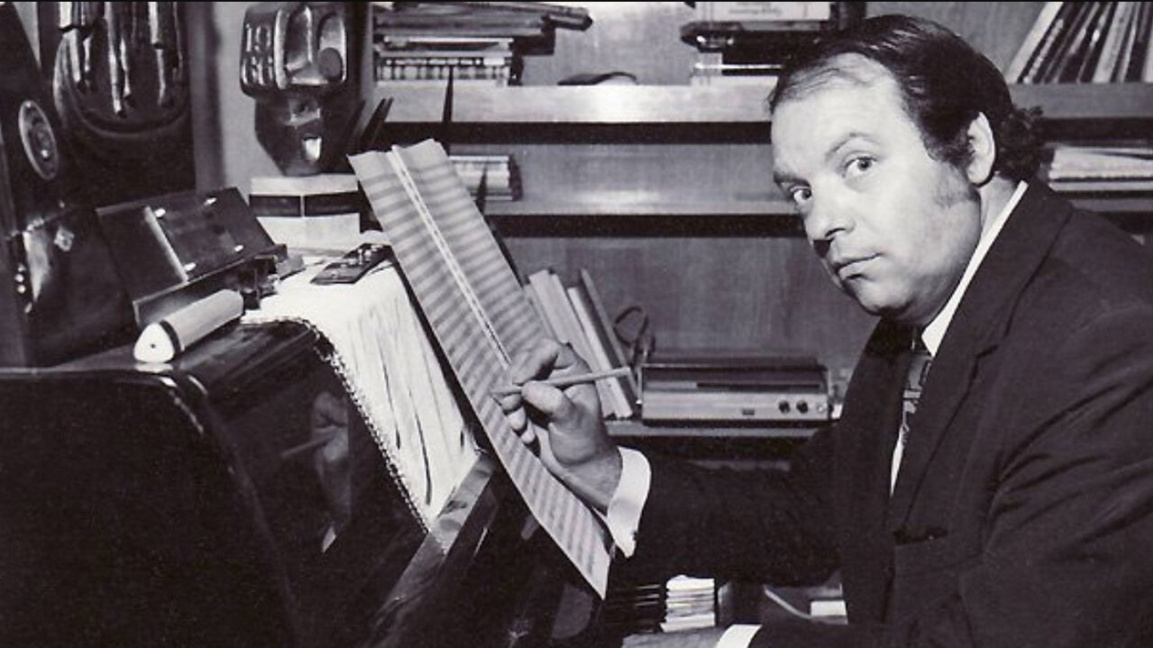
Angel Zaberski (1931 – 2011)
PHOTO Archive
Font size
Angel Zaberski (1931–2011), a master of the lyrical-dramatic pop song, was among the first Bulgarian composers to earn recognition for the country’s popular music on European stages. He began playing the violin as a child and later graduated from the Vocal Faculty of the Sofia Conservatory (today the National Music Academy), studying under the distinguished baritone and pedagogue Prof. Hristo Brambarov. Opera remained a lifelong passion: Zaberski studied the scores of Verdi and Puccini in depth, and followed the careers of international opera stars. Jazz also held a fascination for him, with Duke Ellington and Count Basie among his influences.
In 1955, Zaberski began working at Bulgarian National Radio as a musical producer for the foreign broadcasts (today Radio Bulgaria), and he also composed for radio theatre. In 1958, together with four friends, he founded the male vocal ensemble Friends of the Song. Within months, the quintet, alongside pop singer Rayna Deneva, had recorded Zaberski's debut song, Parva Sreshta (“The First Time We Met”).
Zaberski was the first composer to win a major award at the Golden Orpheus international vocal competition and song contest. In 1965, when the festival was still known as Songs for the Bulgarian Black Sea Coast, he presented two pieces, 'Kaliakra' and 'To Sunny Beach', which were performed by the talented Mimi Nikolova. 'Kaliakra' earned him his first major accolade.
The late 1960s marked a period of creative consolidation. Hits such as 'Adagio', 'The Birches and the Girl', 'When I Call You', 'Cranes', 'Should I Believe?' and 'The Birds Tell Stories' gained recognition in both Bulgarian and international competitions.
Zaberski began his teaching career at the newly founded Studio for Pop Performers at BNR, later continuing at the Estrada Department of the Bulgarian State Conservatory, which was established in 1968. He became one of the most prestigious vocal instructors, leading an independent vocal class with a distinctive methodology. Collaborations with stars including Margret Nikolova, Georgi Kordov, Boris Gudjunov, Borislav Grancharov, Konstantin Kazanski, Yordanka Hristova, Margarita Radinska, Kristina Dimitrova and Panayot Panayotov brought him further acclaim.

Young Lili Ivanova with poet Damyan Damyanov.
PHOTO Personal archive of poet Nadezhda Zaharieva, Damyanov's wife
Perhaps the most authentic interpreter of his work in the 1960s was the young Lili Ivanova. Refined vocal miniatures such as Adagio, The White Boat, Should I Believe?, and Moonlight Sonata sprang from the collaboration of these two exceptional artists, whose creative sensibilities were perfectly aligned. The Birches and the Girl had already been a festival hit with Georgi Kordov, but it was Ivanova’s interpretation that gave the song its distinctive character. Her rendition of Adagio earned Zaberski the prestigious Golden Key at the Intervision Festival in Bratislava in 1966, and two years later, Should I Believe? took first prize in Barcelona. These works remain canonical examples of Bulgarian popular music.

Lili Ivanova at a concert in 2024.
PHOTO facebook/Lili.Ivanova.Official
Zaberski’s hallmark — expansive melodies and rich emotional expression — helped yet another composition become a lasting favourite. Moonlight Sonata, with lyrics by Kolyo Sevov, won second prize at Golden Orpheus in 1968 and was released on a small-format record alongside three other festival entries. More than three decades later, in 2000, the ballad appeared on Lili Ivanova’s album Vetrove (“Winds”) and was subsequently included in her collections The Best 2 (2003) and Incredible (2015), cementing its status as an enduring classic.
Editor: Elena Karkalanova
Posted in English by E. Radkova
This publication was created by: Elizabeth Radkova