


Friday 12 December 2025 12:45
Friday, 12 December 2025, 12:45
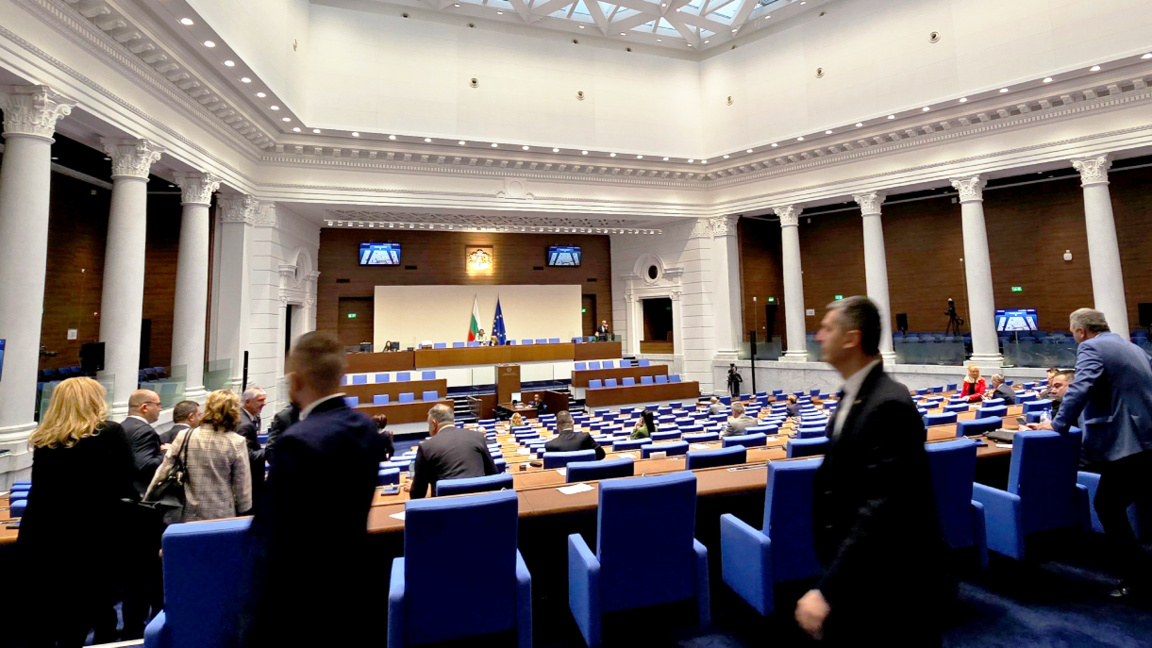
PHOTO BTA
Font size
Bulgaria is heading towards new early elections after the government of Prime Minister Rosen Zhelyazkov resigned on December 11, 2025. This happened immediately before the sixth vote of no confidence related to the budget and economic policy. "We hear the voice of the citizens who are protesting," Zhelyazkov said when submitting his resignation to parliament. The decision is the result of accumulated public dissatisfaction, expressed through mass protests in dozens of cities in the country and among Bulgarian communities abroad that questioned the way Bulgaria is governed and demanded greater accountability.
Government resigns without waiting for vote of no confidence
Bozhidar Bozhanov
PHOTO BGNES
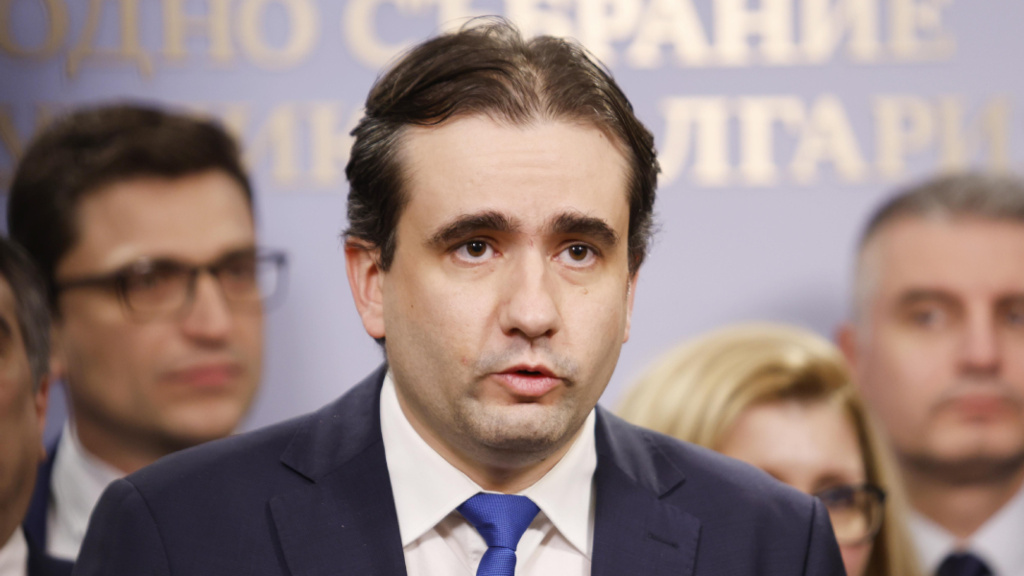
The government resigned in order to avoid even greater consolidation
of public energy but also to transfer the responsibility into the
hands of the opposition, analysts commented immediately after the
event. "The responsibility for the fact that Bulgaria is going
to early elections again lies with those who refused to isolate the
leader of DPS-New Beginning, Delyan Peevski, and refused to join the
cordon sanitaire around him and thus doomed this government to complete
delegitimisation in this short period of time in which this
happened," co-chairman of "Yes, Bulgaria" Bozhidar
Bozhanov said. His party is part of the coalition "We Continue
the Change - Democratic Bulgaria", which initiated the protests
that turned into the largest action of public discontent in the last
decade.
Mass anti-government protests across Bulgaria ahead of the no-confidence vote
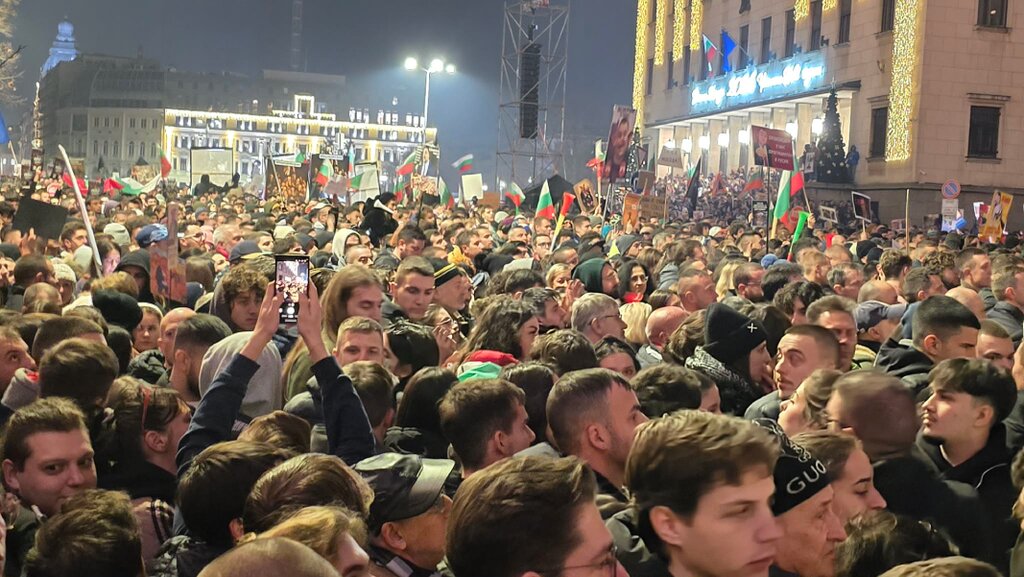
PHOTO Borislav Todorov
The civic society is calling for new faces in politics and fair elections. The question that currently has no answer is how this desire can be justified by the existing political entities and where the new “savior” will come from. In this sense, December is shaping up to be a very turbulent month for politicians in Bulgaria. The initial comments from both the largest parliamentary force GERB and the opposition “PP-DB” show that no options will be sought for reformatting the government in order to form a cabinet within the current composition of the National Assembly. However, technically such a possibility exists. Although the calculations show that a governing configuration can be found within the framework of the 51st National Assembly, it will be unacceptable in the eyes of society, due to the fact that the last elections in October 2024 were compromised due to violations and the composition of the parliament has an extremely low representativeness, as it was elected in conditions of low voter turnout – just 38% voted.
Therefore, the upcoming elections in the
spring are seen as a chance to "recharge the political system
with legitimacy" and increase trust in institutions.
Political chaos, anarchy before the introduction of the euro,
blocking the income policy in the draft budget for 2026 are just some
of the gloomy forecasts for the future, which seem to be a
counterpoint to the positive energy and the feeling that change is
possible among the young generation of protesters.

Petar Ganev
PHOTO BNR
According
to economist Petar Ganev from the Institute for Market Economics, the
situation will be complicated and in order for politicians to be
recognized by society as an alternative "it will no longer be
enough to simply be against Peevski and be polite."
"Opposing Delyan Peevski can be a common platform for
unification, but getting votes requires the parties to explain what
their vision is - will they raise taxes, will the state
administration be reformed, how will they attract investments, will
we return to the ‘eternal’ question about the Prosecutor General...
If there is no vision, it will not happen - we are already at the
stage where everyone should say how they see the future of this
country. This would provide some protection for citizens, because
after all, this protest energy started because of the increase in the
tax burden on workers. Currently this is planned in the medium-term
framework for 2027-2028. And I wish those who want to gain the trust
of the people would offer an alternative that also has integrity and
justice, but also a budget that does not raise taxes," Ganev
told BNT.
Bulgarians demonstrate intolerance toward the current model ofstate governance
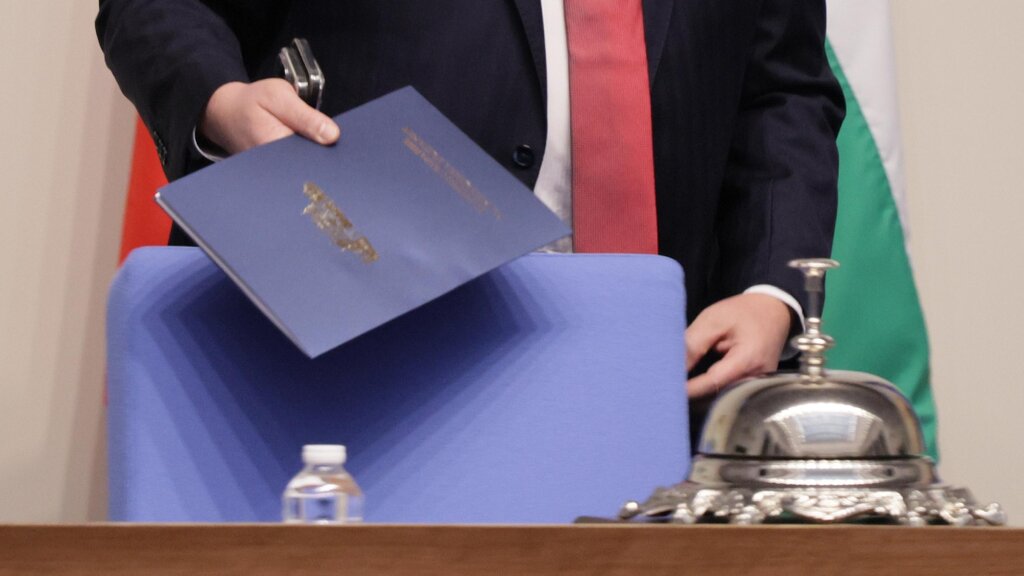
PHOTO BGNES
What
follows next?
The parliamentary roulette wheel is about to be turned as the
president must give a mandate for forming a new government. If the
current parliament fails to elect a council of ministers, a caretaker
prime minister and cabinet will be appointed with the main task of
organizing the early vote.
The situation in which the country finds itself with the
resignation of the government on the threshold of a historic
transformation related to the adoption of the common European
currency does not mean power vacuum. Until the citizens have
expressed their opinion during the early elections, power is
exercised by the government in resignation and then by a caretaker
cabinet.
"Elections are coming, as they will probably be in early
March," journalist Ivan Bakalov told the Bulgarian National
Radio. Many are wondering whether President Rumen Radev has the
opportunity to join them as leader of a new political project in
which some citizens would recognize the new "savior":
Bulgaria’s young generation shows it is ready to fight for itscivil rights
Compiled by: Elena Karkalanova
This publication was created by: Alexander Markov