


Author
Diana Tsankova
News
"Sacred Stories and Fantastic Landscapes" exhibition in BCI - Berlin
"Even after the darkest moment, we must preserve hope and make the next step," curator Olympia Nikolova says
Wednesday 17 December 2025 12:24
Wednesday, 17 December 2025, 12:24
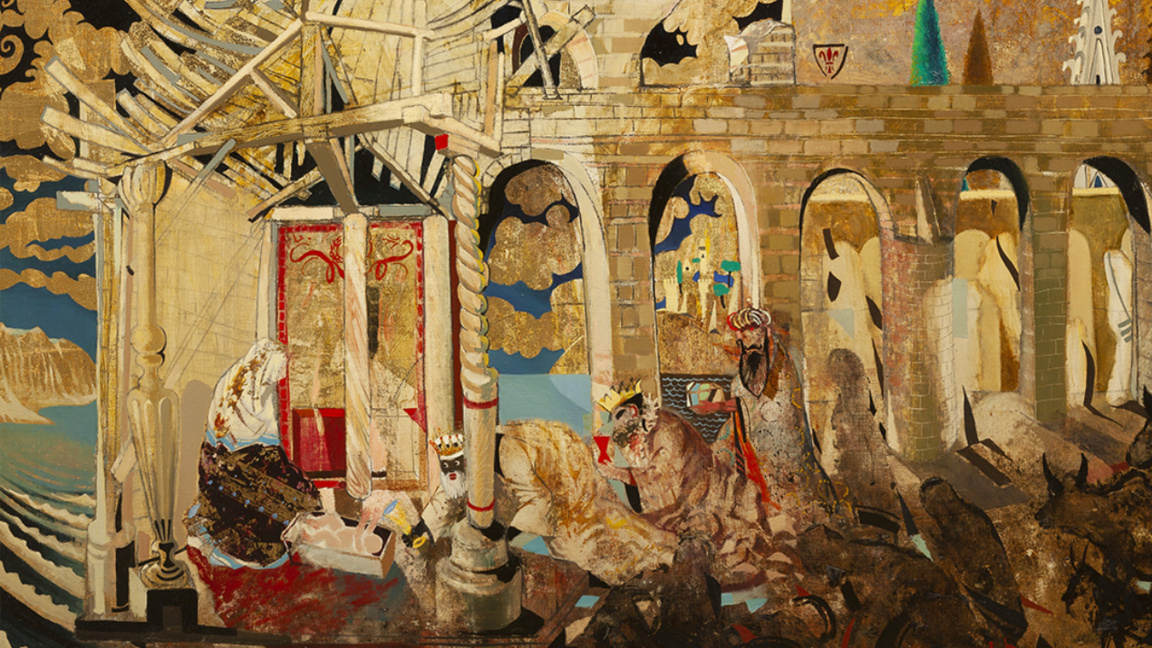
PHOTO Olympia Nikolova
Font size
Three artists with their own visual language enrich biblical
scenes in a single story about Christmas in the exhibition "Sacred
Stories and Fantastic Landscapes" in the Bulgarian
Cultural Institute (BCI) in Berlin. Relying on the
canon, with the help of imagination, they create the feeling of deep
authenticity of an event that takes us to the time when God was born.
The
works of Andrey Daniel, Atanas Atanasov and Stanimir Zhelev show us
that the miracle is encoded not only in the divine figure, but also
in the unlimited power of human imagination and talent, curator of
the exhibition, Olympia Nikolova, says.
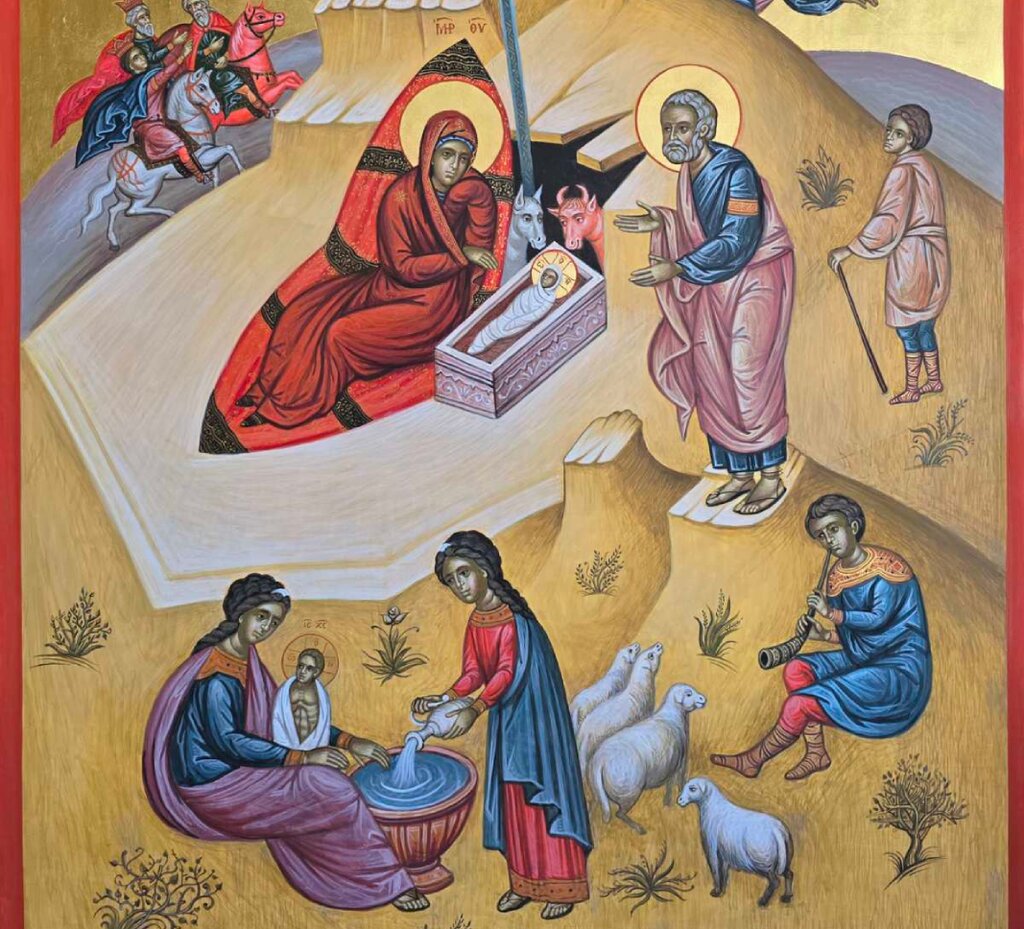
"Nativity of Christ" by Stanimir Zhelev
PHOTO Olympia Nikolova
"These are very serious and valuable authors who through their art do not try to convince the viewer of some theses, but rather provoke them to think about something that happened a long time ago and shaped our civilization,” she adds. “The idea of loving your neighbour, born 33 years after Nativity, has left a big mark on humanity - not only on Christianity, but also on the modern world. 2025 years later, we are still defining what it is to love your neighbour and what love is."
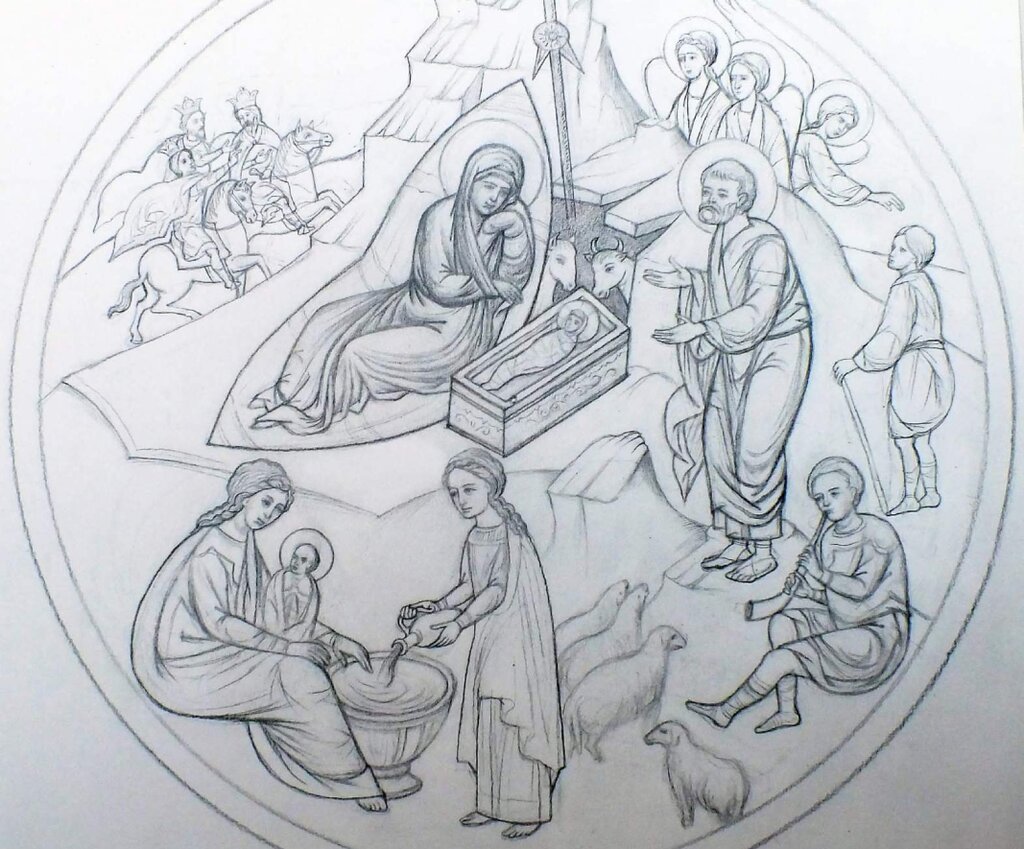
PHOTO Olympia Nikolova
In addition to several icons, Stanimir Zhelev also presents drawings of biblical scenes, which are characterised by finesse, sensitivity and capture every gesture. The painting "Between Two Epochs / Yet Another Nativity", created in 1995 by Andrey Daniel and characterised by the play of shadows and glows, a sense of festivity and grandeur, recreates the scene of the Nativity in a solemn, but also very human way. Atanas Atanasov, on the other hand, creates exquisite paintings on three-dimensional stone, as fantastic landscapes emphasize the connection between the divine and the earthly through Renaissance technique.
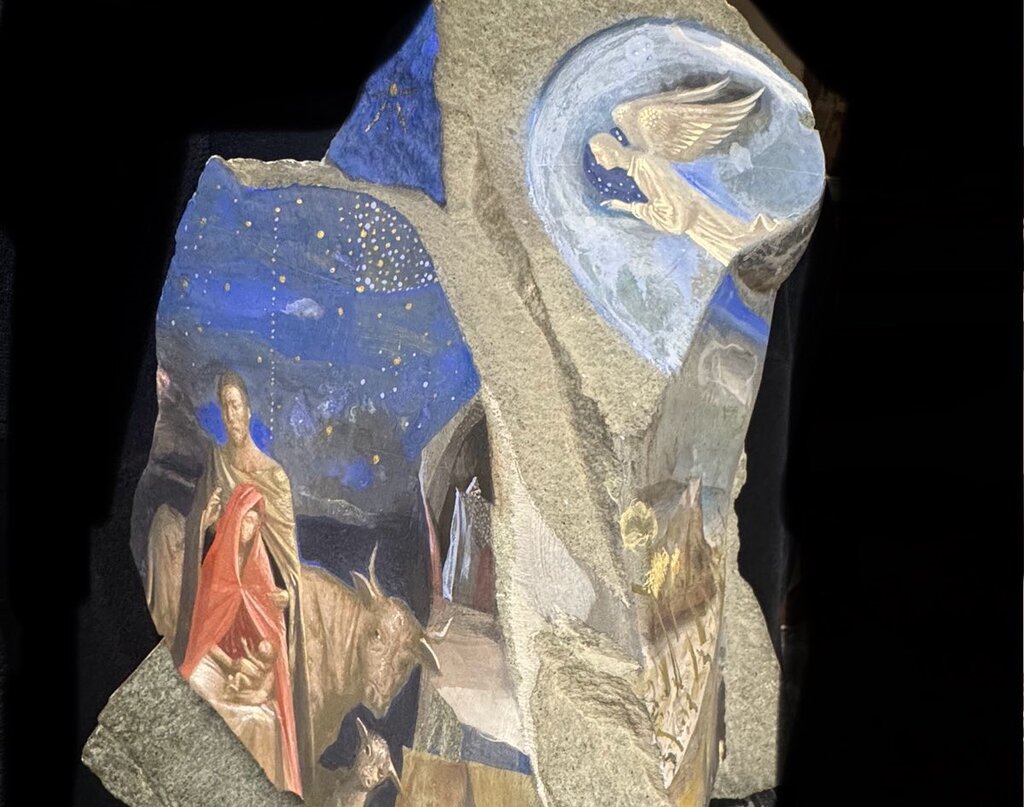
PHOTO Olympia Nikolova
The exhibition strives for a deep dialogue with the classical
heritage of the Old Continent. While the re-creation of the Holy Land
in the works of the former masters was often based on written
descriptions, rather than direct visual contact, the three artists
continue the tradition of imaginary geography, but with modern means.
"They
behave like jazz musicians who have
mastered
everything – both the classical and the improvisational way of
creating art,” the curator points
out. “In this way they establish a connection with both the canon
and contemporary interpretations. Relying on traditions, they
transpose these themes in a specific way. More observant viewers will
see links to the
icon art, to
Giotto's frescoes, and to Dutch artists.
This is a serious eclecticism that proves not only that they are able
artists, but also that they are
knowledgeable and enlightened."
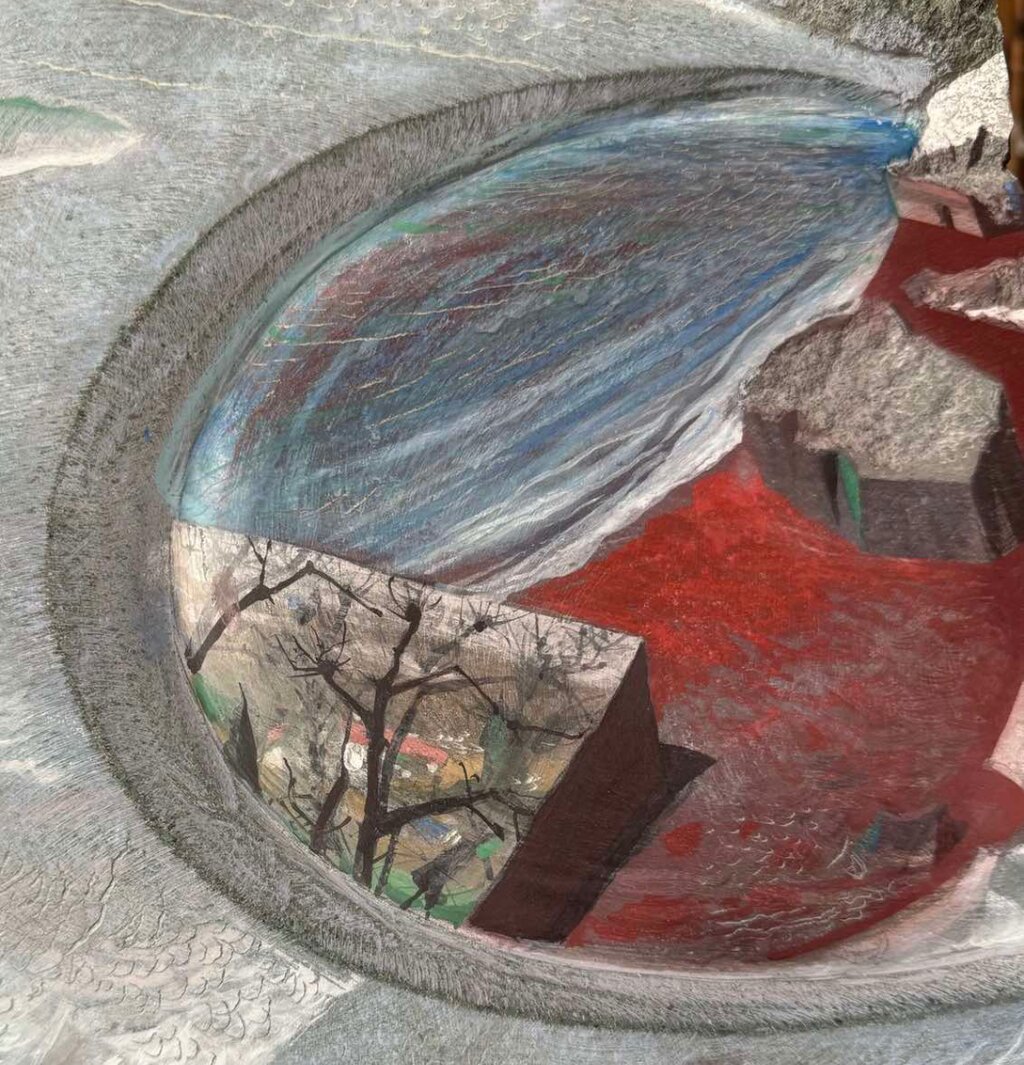
PHOTO Olympia Nikolova
In conclusion, Olympia Nikolova addresses the visitors of the
exhibition in Berlin, who will immerse themselves in the anticipation
of Christmas through the works of Bulgarian artists:
"I
hope everyone feels our desire to show other points of view. Perhaps,
one of the most valuable things in art is that it makes people think,
notice, doubt, challenge paradigms, and let their imagination run
wild. And although the artists tell an old story, in addition to its
seriousness, there is playing with art and the hope of Christmas is
also felt. In fact, what are we without hope? Every holiday
and especially the approaching one relies on the fact that even
after the darkest night and after the darkest event, we must preserve
hope and make the next step."
This publication was created by: Alexander Markov