


Author
Tsvetana Toncheva
News
Highlights of Bulgarian musical culture
Dobri Hristov: The patriarch of Bulgarian classical music
Friday 19 December 2025 20:00
Friday, 19 December 2025, 20:00
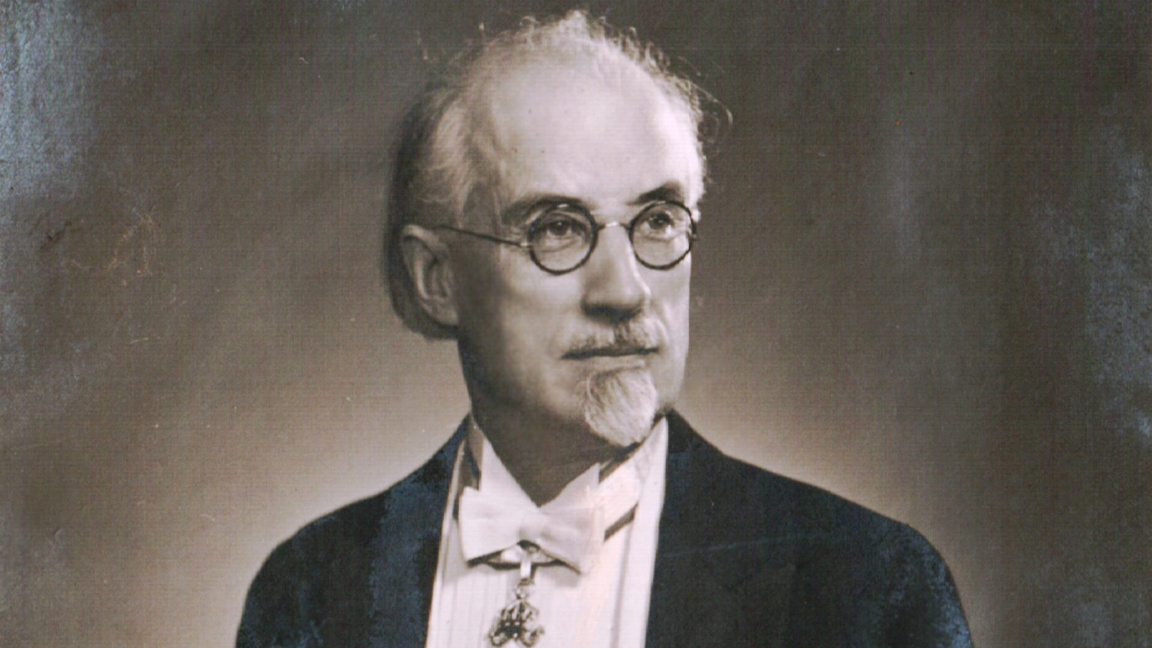
PHOTO archives.government.bg
Font size
Dubbed “patriarch of Bulgarian music” and “people’s composer”, Dobri Hristov (1875 – 1941), a pioneer in his field, is regarded as the most important figure in Bulgarian musical culture from the first decades of the 20th century. His work is built into the foundations of Bulgarian classical music; as a scholar he laid the foundations of our national music pedagogy and folklore studies.
His career followed the course typical of the entire generation of post-liberation musicians. His start in music, and as a scholar was from scratch. He did not have a family or a social milieu to foster any musical habits, nor did he have the suitable teachers, mentors or patrons. But ever since his childhood, Dobri Hristov felt he had a mission.
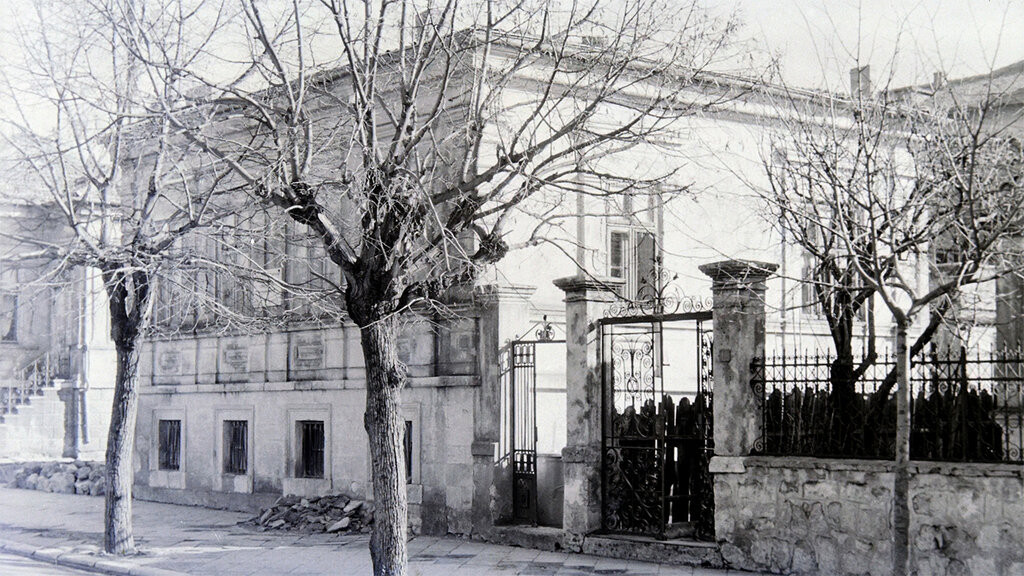
The house in which Dobri Hristov lived in Varna, demolished in 1959
PHOTO state archives-Varna
He called his father – poor furrier Hristo Ivanov – “a tough Bulgarian, as a child he ran away from his home town of Kazanlak”. Hristo was an ardent patriot, and his son remembers it was enough to issue the command: “one-two, and without waiting for “three” the children would start singing Shumi Maritsa, Ogun plamna v Balkana, Vyatur echi… and other patriotic songs of the times”. It was his mother that ushered Dobri Hristov into the mystical world of folklore. Decades later, the man who had been a student of Antonín Dvořák at the Paris Conservatoire was to write one of his most famous and most quoted articles – Folk music:
“No one can be prepared for universal love without first having mastered the love of their own nation… My constant advice to all young singers and musicians is to cherish the songs and the music of their ancestors and to endeavour, through artistic expression, to give them universal value. For it is said: “Music of artistic merit, deeply grounded in the people’s folk tradition, holds universal value; the more intensely national it is, the more international it will be”.
This aesthetic and artistic statement rang like an axiom for the emerging Bulgarian school of composers. For Dobri Hristov it was the creed he went by.
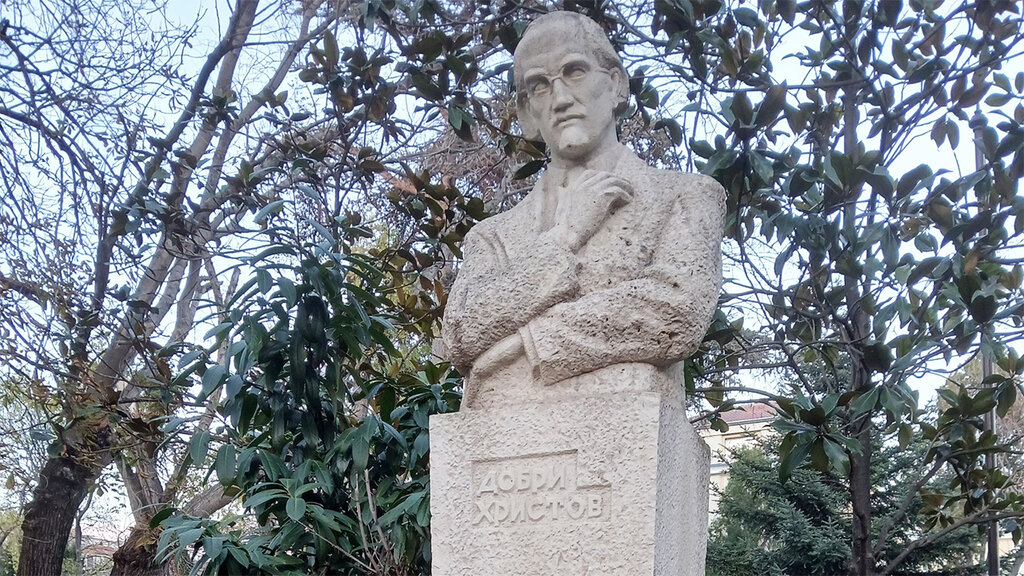
Monument to Dobri Hristov in Varna
PHOTO Facebook/dobrihristovfound
Teacher, conductor, scholar, head of some of the leading music establishments, Dobri Hristov was known for his love of vocal art and his enormous contribution to Bulgarian choral art. His first choral pieces include the popular Lilyana moma hubava and Pusti momi zheravnenki, created at the end of the 19th century. Upon his return from Prague in 1905, he began work on Bulgarian songs from Macedonia which he considered to be most appropriate for authorial arrangements using the techniques of classical harmony. Most of them, written for male choir, were published in 1923 in the music collection Macedonian songs; one of the best loved and most frequently performed songs is Dafino vino.
Dobri Hristov’s original works bear a close resemblance to folk arrangements. For the Bulgarian Orthodox Church, he created two liturgies that have become classics. Other popular works of his include his solo miniatures, written for famous Bulgarian tenor Konstantin Mihaylov-Stoyan. He wrote more than 600 children’s school songs.
Dobri Hristov’s songs – both secular and sacral – have, for over a century, occupied a central place in the repertoire of Bulgaria’s choirs. But there is one song that is emblematic. Often dubbed “ode to Bulgaria’s choirs”, Rodna pesen is a hymn to Bulgarian choral art. The lyrics are laconic and inspiring: “A song of our native land is forever binding”.
Here is this universally recognized Bulgarian masterpiece performed by the Children’s Radio Choir of the Bulgarian National Radio at the concert celebrating the choir’s 55th anniversary.
Translated by Milena Daynova
This publication was created by: Milena Daynova