


Author
Gergana Mancheva
Article
Christmas from the Aegean Sea to the Danube
Christmas from the Aegean to the Danube - Stoyan Varnaliev seeks 21 carols
“Our ancestors guarded Christmas carols like a precious dowry,” says the researcher of Bulgarian folklore
Friday 26 December 2025 10:15
Friday, 26 December 2025, 10:15
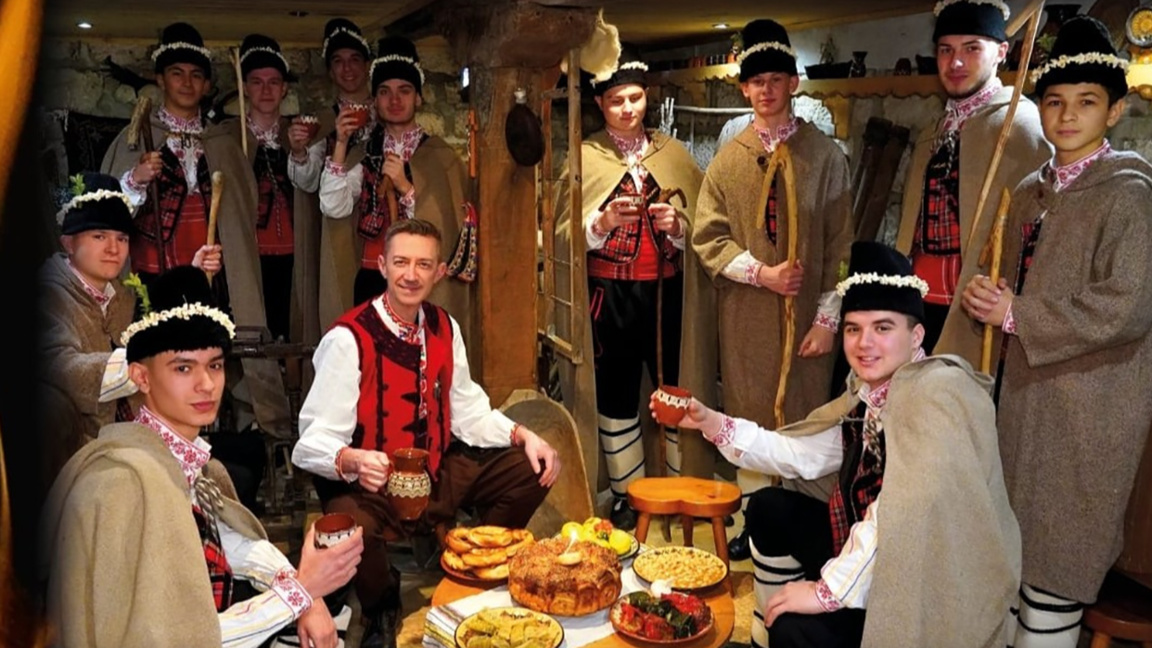
PHOTO Private archive
Font size
Christmas is one of the most eagerly awaited family holidays. According to old tradition, on the night before Christmas everyone should have returned home to their relatives - even if they have traveled a long way, for Christmas they must be at home. And the most anticipated custom in Bulgarian lands is welcoming the so-called “koledari” – the carol singers, who on the night before the great feast visit every home with their songs of blessing and spoken wishes for health, prosperity, and well-being.
The carolers carry the magic of the Bulgarian Christmas; they charge the holiday with expectations of good fortune that will unfold throughout the coming year. And if a house is not visited by carolers, then the year will not be fruitful for the people living there - so the old Bulgarians used to say. Unfortunately, today the tradition has largely turned into an attraction and is often staged on a platform, seemingly no longer fitting into urban notions of the holiday.
But what do we lose as we move away from the traditions of our ancestors? This is what the author of the collection “Christmas – from the Aegean Sea to the Danube” Stoyan Varnaliev, seeks to suggest. He himself is a talented musician and performer of authentic songs of the carol singers (koledarski songs), collecting and recording them as they were known to our forefathers. Even more interestingly, through his work Stoyan Varnaliev reveals the paths along which the songs migrated. As he explains, people carried the songs as a precious inheritance that had to be taken to their new homes. Thus, a song created in a Rhodope dialect would descend into the plains but continues to sound the way it had been sung by people from the mountains.
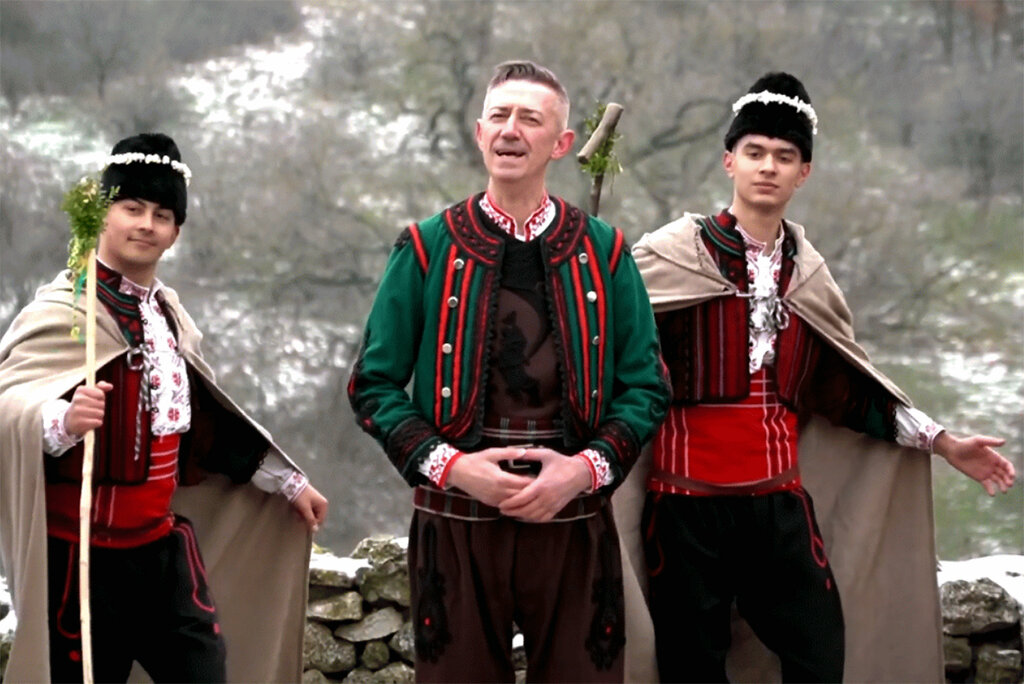
PHOTO Private archive
The topic of the migration of Bulgarians from Aegean Thrace to the Yambol region, and later through Dobrudzha all the way to the Danube is vast. The Christmas carols in Stoyan Varnaliev’s collection merely hint at the reflection of this historical moment in the lives and everyday culture of refugees and settlers.
The booklet “From the Aegean Sea to the Danube” contains 21 songs from Stoyan Varnaliev’s own repertoire. In addition to the folk lyrics, the songs are accompanied by musical notation and a CD, so that their authentic sound will not be forgotten.
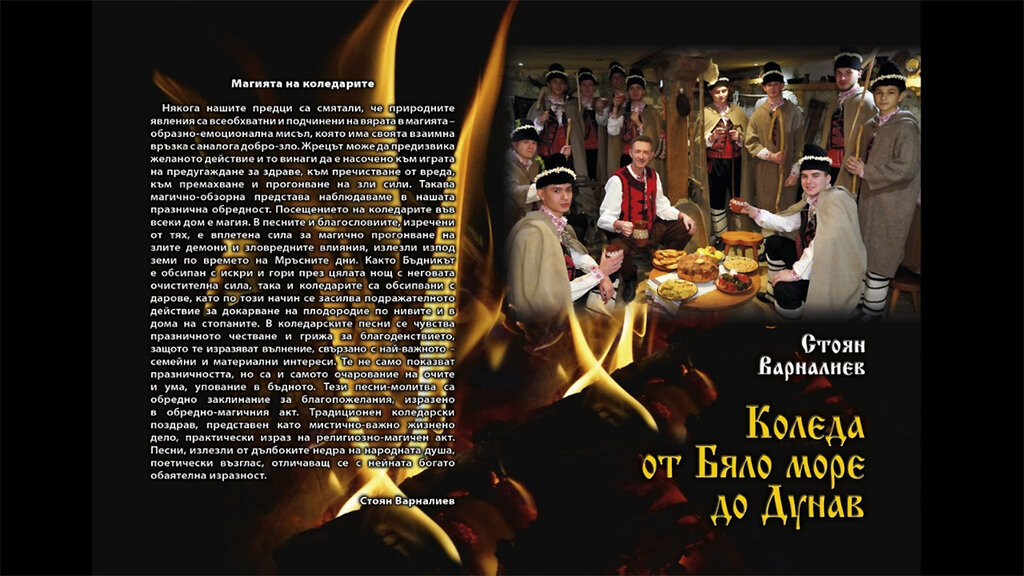
PHOTO Private archive
“With this project we show our listeners that there is one holiday - the warmest, the most beautiful, the most heartfelt one - the holiday that brings people together and gives us a reason to feel close to one another, to be empathetic and to give our loved ones the gift of our presence,” says Stoyan Varnaliev, the creator of the collection, whose voice brings us these old Bulgarian songs. He continues:
“The reason I began working with Christmas carols was my father. He told me that after I had recorded this “lazerski buenek” (a lively, fast maiden’s dance), I should also record Christmas carols. That’s when I started singing ‘Cherveni chizmi troptyaha’ (‘Red Boots Were Stamping’). This is a song from my native village - General Inzovo, in the Yambol region. That’s where everything began, with this carol that the group sings when it sets off through the village. I had known these Aegean-region Christmas carols since childhood; perhaps they had made an impression on me, but in any case they were sung only once a year. In my village there are refugees from Aegean Thrace, from various settlements there, so I had heard these songs and they entered my repertoire. The first song was ‘Cherveni chizmi troptyaha,’ then ‘Prochu se hubava Vivda,’ and then I began to look toward the Aegean songs as well. The first one I recorded was ‘Zaigra se drebno hortse.’”
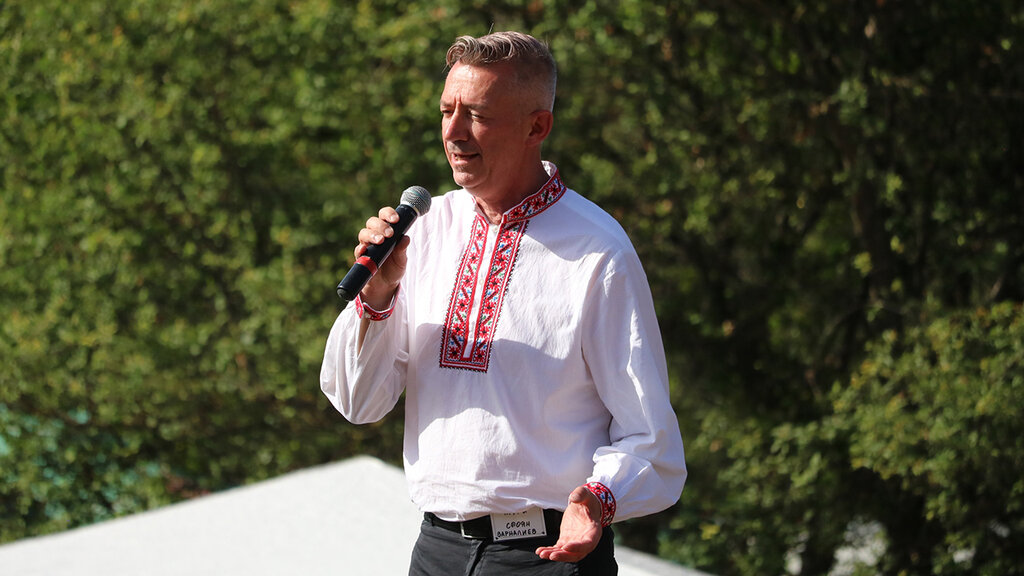
PHOTO BTA
When he went to Dobrudzha five years ago, Stoyan Varnaliev worked with Zhivko Zhelev, who created arrangements for the Christmas carols in the collection. Zhelev himself sees in Stoyan Varnaliev a continuer of the tradition passed down to him by the folk singer Valkana Stoyanova, who was also his mentor in folk music. He defines Varnaliev as a great guardian of Bulgarian Christmas carols and advises him to record more songs from his native region, but also to listen to those sung by other renowned folk singers - Kalinka Valcheva and Atanaska Staneva. In this way, Stoyan Varnaliev managed to rediscover them and find a common sound with the Thracian ones.
“That’s when Zhelev told me that these are songs of settlers from Thrace. Kalinka Valcheva’s family is from the village of Glavan, in the Stara Zagora region, and Atanaska Staneva is from the Yambol region. In this way I discovered that in Dobrudzha there are many Thracian songs,” shares the researcher during his guest appearance on the Christmas edition of the “Bulgaria Today” podcast on Radio Bulgaria.
“They settled there, but the most interesting thing is that they preserved the character of the place they came from. That impressed me greatly, and later I began to think that the Christmas carols themselves migrated into Eastern Bulgaria, just as the people did. They carried their songs like a dowry close to their hearts. In this way they preserved a heritage that we do not see, but which fills our hearts and warms our souls. And to this day it shows us that the Bulgarian root here is very, very deep. And whether it is in the south or in the north, it is one and the same.”
The songs are extremely rich, very poetic, with highly meaningful texts. Every word in them has its purpose. There is nothing superficial in Christmas carols - everything in them is precise, clear, and concrete. Each song is intended for a specific person - for the mistress of the house, for the young man, for the young woman. There are songs sung along the road, or when the group gathers and sets off.
“There is not a single song that is sung without a purpose,” insists Stoyan Varnaliev, and continues:
“The melody is beautiful, rich, and interesting, and that is why these are men’s songs - so that men can sing them. They are difficult insofar as the text is connected to the melodic line, which is very rich. And all of this has to be sung, because when the entire group of carolers sings, everyone awaits their songs as a gift. The voices themselves are like a magnet that awakens the earth. At that time it is still the period of the ‘unclean days,’ and the male voices have a cleansing power. The Christmas carol must be able to cleanse the negative energy that has accumulated or is about to come to the village. That is why these songs are so interesting, with such rich texts - there we also see a very detailed knowledge of the Bible and biblical narratives. We see that caroling is connected with paganism, but many of the carolers’ songs tell stories of saints - saints who help and watch over people - and the pagan elements are intertwined in such a way that one cannot exist without the other.”
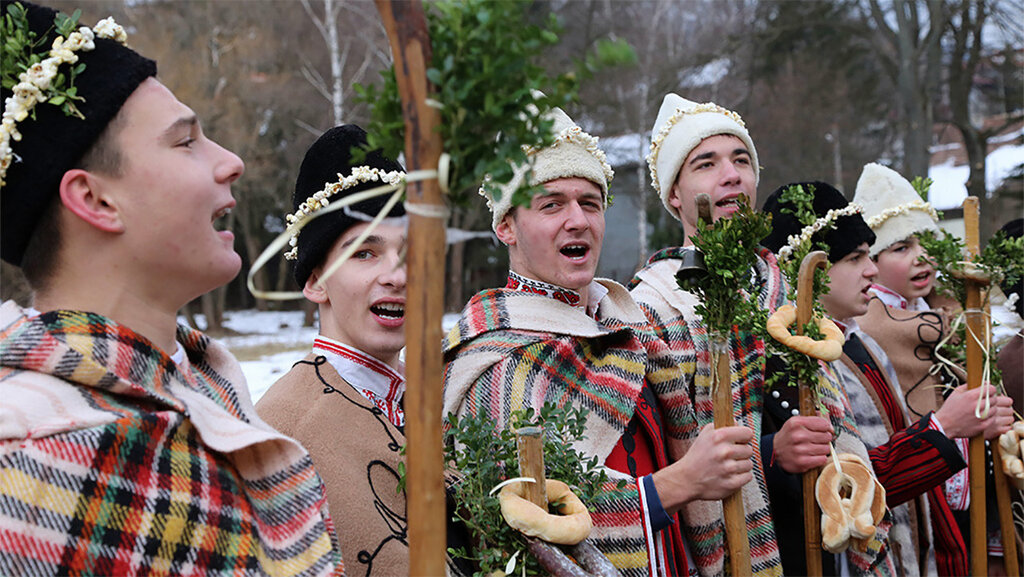
PHOTO BGNES
To become part of a caroling group, a young man goes through a period of training. He joins the group from mid-November, when the Christmas fasts begin - a period during which the carolers must mature, that is, learn the songs in the way they have been passed down from generation to generation, explains Stoyan Varnaliev:
“Here comes the magical word “continuity”. Continuity begins with the older person, who has already gone caroling and understands the meaning and significance of the ritual. This is a more knowledgeable, more experienced person who introduces the younger ones to the sacredness of the Christmas carol. The boys who go caroling thus show their community that they are already men and are moving into another social status. During the Christmas holidays, the boys visit the homes where their chosen ones live - the girls they would like to marry. And when they visit these homes, the young man shows readiness to take the path of a married man and that he wants the particular girl. This is a symbolism that we have unfortunately long since lost; we no longer have this sensitivity. Christmas carols are not directed at everyone - they are sung for a specific person. When the group comes and sings a song for you, you personally feel the energy of their blessing. That is precisely the magic carried by caroling and the spoken wishes,” says Stoyan Varnaliev.
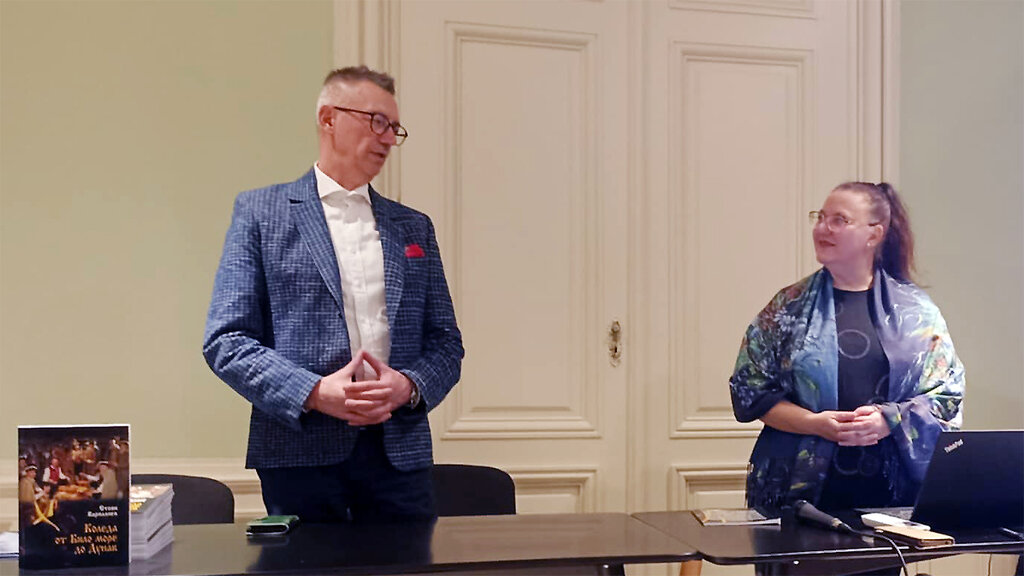
Stoyan Varnaliev and Chief Assistant Prof. Dr. Galina Lukanova at the presentation of the collection
PHOTO iefem.bas.bg
“Everything today is a stage, a performance; the caroling spirit is gone, but that does not prevent us from remembering and knowing the traditions. From knowing the sensitivity of those people and what the message of these songs is,” adds Chief Assistant Prof. Dr. Galina Lukanova from the Institute of Ethnology and Folklore Studies with the Ethnographic Museum at the Bulgarian Academy of Sciences. She is also involved with the Christmas carol and took part in compiling the collection by notating the selected songs:
“They carry a great deal of hope, light, and many wishes for prosperity, and they are an important part of our lives. The tradition of “koleduvane” (caroling) is a so-called initiation, when boys pass into the stage of becoming men, of beginning their own independent lives. It is their legitimate way to enter the house of the girl. So they carry great strength, great energy, and they are very welcome guests. If the carolers did not enter someone’s house, people would feel offended, because the coming of the carolers foretells the entire omen and the future prosperity throughout the year.”
English version: R. Petkova
This publication was created by: Rositsa Petkova