


Author
Albena Bezovska
News
Babino horo and other Midwives’ Day traditions
Exploring the Radio Bulgaria archives
Thursday 8 January 2026 07:35
Thursday, 8 January 2026, 07:35
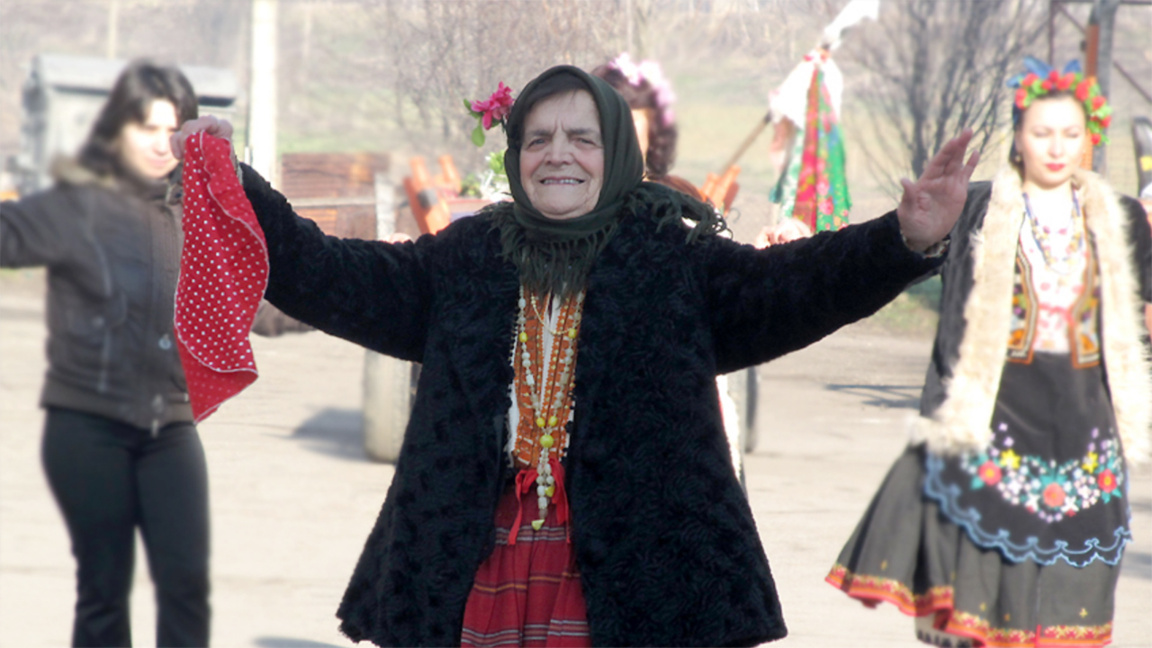
PHOTO BGNES
Font size
Midwives’ Day (Babinden) is one of Bulgaria’s most colorful folk customs. It is accompanied by a series of important rituals and much celebration. Today, the feast is observed on January 8 in honor of the babi—the women who practiced midwifery. Babinden is marked immediately after two other important feasts: Epiphany (Yordanovden) and the Day of St John the Baptist (Ivanovden). All three feasts are linked to ritual bathing.
According to the Gregorian calendar, Babinden is celebrated on January 21. Babinden is a female feast and in the past it was believed to be the only day when women were able to joke with men. Once, women could not say even a single word against the will of men. However, women usually joked with men at the end of the feast, when midwives completed all rituals for good health of the newly-born and the fertile women.
Celebrated Bulgarian ethnographer Dimitar Marinov has researched and written about the significance of Babinden and the way it was celebrated until the beginning of the 20th century. The purpose of the ritual is to ward off childhood illnesses, traditionally known as Babitsi or Sardeshnitsa. According to folk beliefs, Babitsi are evil spirits-several sisters who usually attack children and very rarely the adults. All rituals held on Babinden aim at protecting children from those evil spirits.
Three main rituals are performed on Babinden: bathing of the children by the midwife, the young mother's feast and the bathing of the midwife. On the day preceding Babinden the midwife prepares honey, butter, a bunch of wild geranium, millet and red or white wool. On Babinden she visits the houses early in the morning, bathes the babies, washes the faces of the elder children and sprinkles the lasses and the wives with water reciting incantations against bad luck. She then anoints the children with butter and honey, saying blessings for sound health and longevity. Women are also blessed with honey and butter. Later, women with children aged three or under go to the midwife's house. Each woman brings soap, towel, a bunch of flowers and money with herself. They help the midwife wash her hands under a fruit tree.
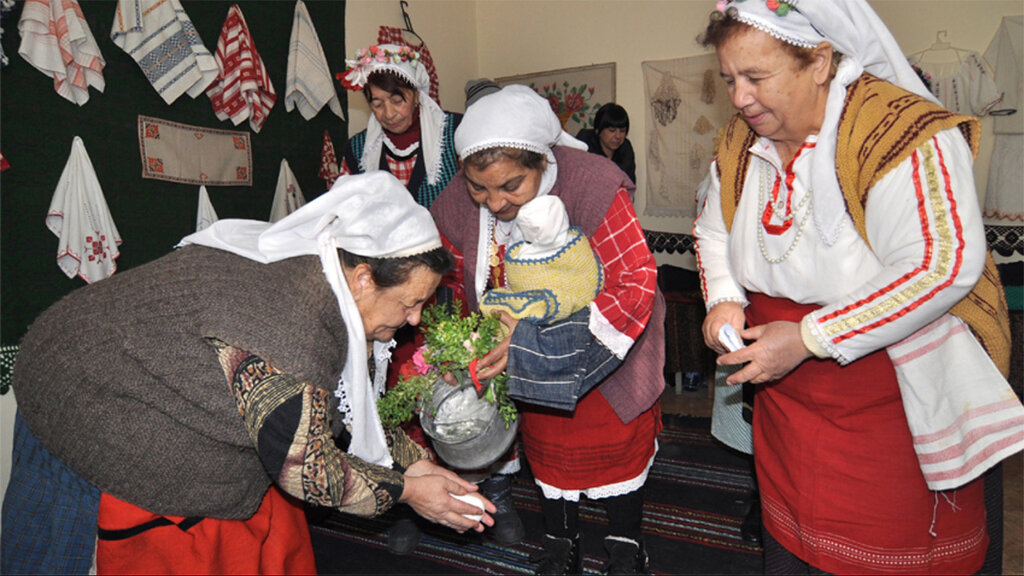
PHOTO BGNES
Later, women attend a ritual lunch at the midwives' houses. No men are allowed at the celebration, except for the gadulka players and bagpipers whose role is to entertain the women. During the feast, the women sing cheerful songs, often with bawdy or risqué lyrics.The midwife lights incense on a roof tile and wafts the smoke beneath the women’s skirts, a ritual believed to promote fertility and the birth of healthy children. She wears a string of red hot chillies around her neck, symbolising male fertility.
The mood turns even merrier as the men are allowed to join the party. The women begin teasing them, knocking off their felt hats, loosening their sashes, and pulling down their trousers. To escape the teasing, the men offer money to the elderly woman.
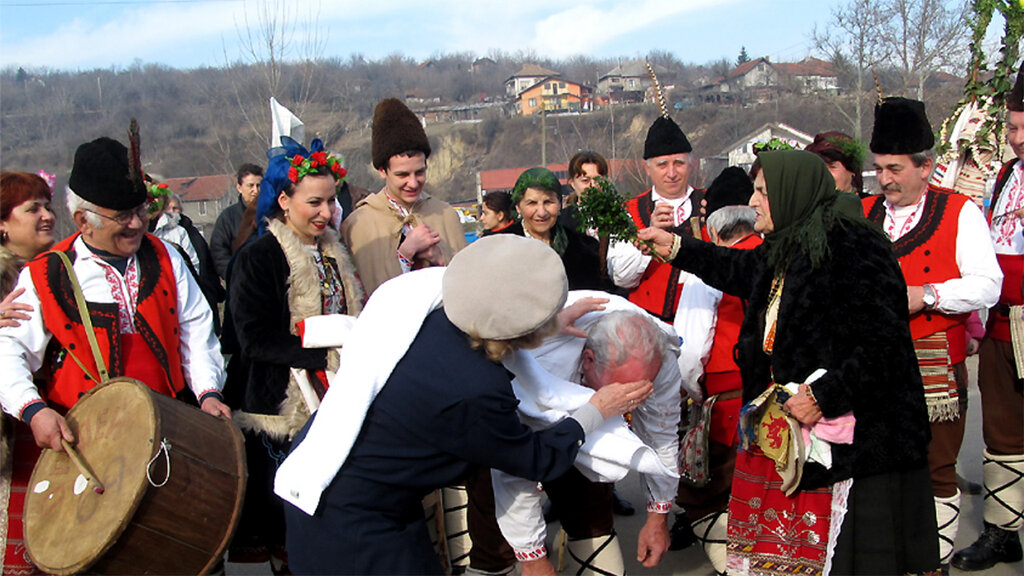
PHOTO BGNES
The celebration ends with the ritual bathing of the midwife. One of the men says, “She has bathed all our children – now it’s time for us to bathe her.” The others reply, “It must be done.” This time, it is the women who attempt to ransom the Baba from the men.
By now, the festivities have moved into the courtyard. Music fills the air and horo dances are performed. The elderly woman adorns her head with floral wreaths and steps outside. As soon as she appears, a rachenitsa is struck up; two men and two women begin to dance, while the others lift the elderly woman onto their shoulders and carry her to a cart covered with colorful woven rugs.
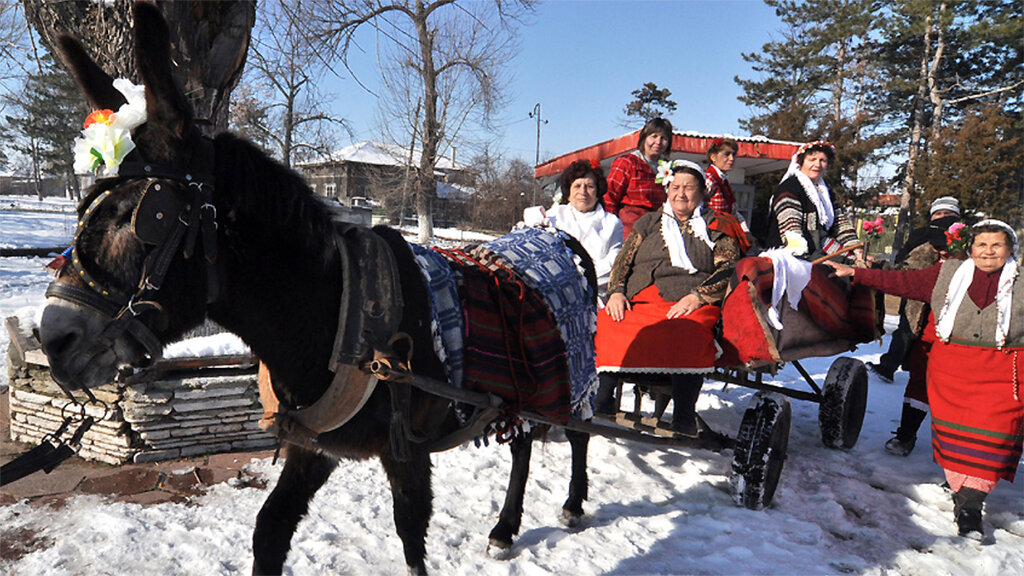
PHOTO BGNES
The whole village accompanies her to a nearby river or fountain for her bath. Sometimes, however, she is taken out into the fields and doused with water. She is then escorted back to her home and carried indoors. Throughout, the musicians play while men and women dance and celebrate together. Once the ritual is complete, the procession ends, marking the close of Babinden.
Editor: Elena Karkalanova
English version: Kostadin Atanasov
Photos: archive and BGNES
This publication was created by: Elizabeth Radkova