


Author
Tsvetana Toncheva
Monday 12 January 2026 11:25
Monday, 12 January 2026, 11:25
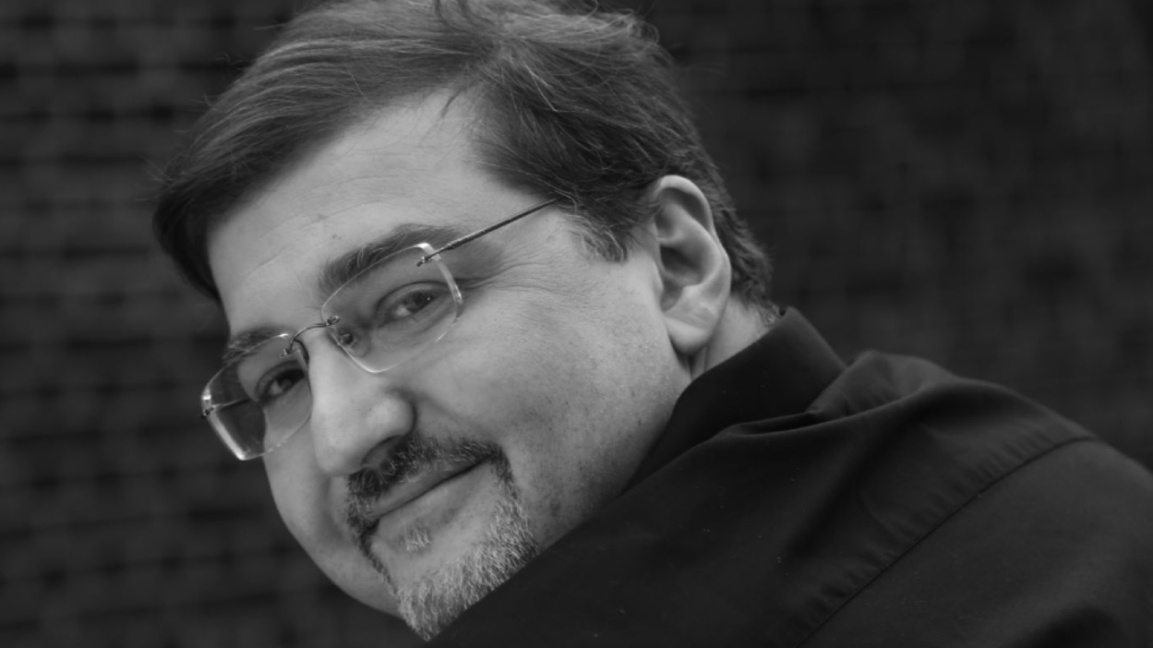
PHOTO musicaperpetua.com
Font size
Bulgarian musician Ivo Varbanov has been living in London for decades. Born in Bulgaria’s town of Pleven in 1972, shortly before his ninth birthday, he left for Italy with his mother. In the late 1980s and early 1990s, he worked in Milan with the renowned Hungarian pianist and pedagogue Ilonka Deckers. He later continued his studies at the Royal Academy of Music in the United Kingdom. He has given recitals and performed with orchestras across Great Britain, France, Spain, Ireland, Germany, the Netherlands, Slovakia, Poland, Russia, Turkey, and the United States.

PHOTO Facebook/ Ivo Varbanov
After a forced break from concert activity between 2009 and 2012 due to a serious illness, Ivo Vаrbanov returned to the London stage with remarkable performances, including appearances with the Royal Philharmonic Orchestra. The pianist is a recipient of the Ivan Vazov Award for promoting Bulgarian culture abroad. In 2011, he also received the Silver Lion award from Bulgaria’s Ministry of Foreign Affairs.
He has made recordings for Hyperion Records, Lorelt Records, Gega New, Bulgarian National Radio (BNR), Orchid Classics, and ICSM Records (an independent record label founded by him and his wife, Italian pianist Fiammetta Tarli).

PHOTO Tanya Dimkova
Vаrbanov’s most recent performance in Sofia took place at the National Arts Gallery. The recital featured a particularly intriguing program - the final piano cycles of Pancho Vladigerov - and served as an excellent occasion for a conversation in which, speaking especially for Radio Bulgaria, Ivo Varbanov first shares how he feels about his identity: Bulgarian, Italian, or English?
“I don’t really like to identify myself with a specific nationality, because that leads to self-limitation and to mistakes in life. Naturally, I was born here… my connection with Bulgaria has not been severed. I couldn’t say that I feel more Italian than Bulgarian. I have lived in England for many years, so perhaps the most accurate way to put it is that I was born in Bulgaria, I love certain things about Bulgaria, just as I love certain things about England and certain things about Italy - but I can’t accept everything these three countries offer me, because every country has good things, but also not-so-good ones.”
His repertoire is quite impressive: Haydn, Beethoven, Brahms, and many composers of the 20th century. His CD featuring the Piano Concerto and Ballade No. 2 by Dimitar Nenov, recorded with the Royal Scottish National Orchestra and conductor Emil Tabakov and released by Hyperion Records in 2017, received international attention and very high praise from European critics.
“In fact, I’ve played quite a lot of Bulgarian music,” Varbanov shares. “Perhaps not enough, considering the volume of piano works by Bulgarian composers. But Dimitar Nenov’s Concerto was the reason I began to acquaint myself in depth with this composer’s music. I also performed it with the Sofia Philharmonic and Grigor Palikarov two years ago. During the pandemic I was supposed to record Vladigerov’s First and Third Concertos with the BBC Scottish orchestra. Unfortunately, the recording fell through. Since then, many things have changed in the structure of the BBC… Accounting began to outweigh the artistic direction of the orchestras. They started recording too much commercial music - things that may lack artistic value and historical significance, but in fact have commercial price and value. This project may not be realized with that orchestra… I don’t have clarity about what exactly will happen. The world of music is quite complicated at the moment, and I don’t know whether solutions can be found to many of the problems.”
This leads directly to the next question - about his recital featuring Vladigerov’s late piano cycles. Monstrously difficult works - technically and interpretatively, but also difficult for audiences to absorb. Today, under conditions of destructive consumerism, when all the arts are commodities that must be attractively packaged and content itself seems to matter little - is there any point in performing such repertoire?
"Yes, the presentation and the marketing aspect of music have become very strong. I wouldn’t say they are dominant, but the public’s lack of knowledge, combined with this marketing approach, in my view leads to a lowering of standards. Many people go to a concert because want to hear something different, something pleasant to the ear, without having any real education in this field. And they are strongly influenced by things that are not directly related to the musical content. It is a fact that a large proportion of musicians are becoming increasingly illiterate from the point of view of musical language. Some time ago I spoke with Boyan Vodenicharov, who is on the jury of the ‘Queen Elisabeth’ Competition in almost every edition. There is something he calls ‘industrial pianism’ - everything in the performance looks impeccable, but it is a pale copy of many elements assembled together… This trend does not lead to anything good, because concert halls are gradually emptying everywhere, and the reason for this is, first, the lack of thoughtful programming on the part of season organizers, and the lack of courage to include more interesting works as well.”

PHOTO Facebook/ Zdravko Petrov
We don’t need to listen to Tchaikovsky’s, Brahms’s, or Sibelius’s Violin Concerto every single season… Perhaps, in order to get to know music better, two elements are extremely important.
One is education - to bring more music back into the education of young people in general, and to do so in greater depth, not in an elementary or infantilized way, because children are not that stupid. We very often underestimate them.
The other element is for the people responsible for programming to have a bit more courage to make programs more interesting, to find ways to attract audiences. The approach to classical music - that it must necessarily generate revenue and make a profit - is a major absurdity. For the simple reason that the value of a composition is not based on how many tickets were sold, but on other things that, over time, prove its intrinsic worth. Very often, the people who make these decisions - that is, political figures, all over the world, this is not a problem only in Bulgaria - are, to put it mildly, illiterate in this field. And accordingly, the decisions they make are wrong - quite simply put."
Why has he decided to perform Vladigerov’s late cycles?
“Because for me it was important, since unlike Nenov, Vladigerov is quite a controversial figure. There are people in Bulgaria who adore him and others who reject him… Some treat him dismissively… The truth is that there is a period in his art that relies more on clichés and on conveyor-belt composition. Some of the works are replicas of earlier ones… This is a problem, but it is connected with the fact that Vladigerov returned to Bulgaria because of what was happening in Germany. We are talking about the 1930s - as a Jewish persson, he had very little chance of surviving in Germany. He returned to Bulgaria, then communism arrived, and he had to adapt in some way. It is well known that he used to say (jokingly, of course) to Vassil Kazandjiev, for example, to stop composing overly experimental things, otherwise they would both end up in the Belene camp. These are things he said in the 1950s and 1960s to people involved in the avant-garde. The truth is that these late opuses by Vladigerov are quite different from the earlier ones. For me, the strongest phase of Vladigerov is his first 30 years and then the final period of his life. These works are different; there is an experimental element, and of course his personal compositional voice. But my view of these compositions - which is not yet finished and still has to mature - is connected with avoiding clichés in the performance of his works. My idea is to look at them in a different way.”

PHOTO ivovarbanov.com
In 2003, Varbanov launched a wine-producing project in Bulgaria. His vineyard, planted in 2006, is located in the Southern Sakar Mountain. The first wine reached the market in 2011. A few years later, the pianist became the only Bulgarian representative in the International Wine Academy in Geneva, and among his well-known clients are musicians from Depeche Mode and Simply Red, actor Michael Gambon, and the company Berry Bros. His wines are not mass-produced - rare, expensive, and highly rated. It seems that in this field as well, Ivo Varbanov strives to be the best. Does he seek perfection there too, as in music?
“I don’t know if ‘perfectionism’ is the right word. Perhaps it’s the search for what I like - that is, something I would be satisfied with and could sleep peacefully knowing I’ve done my job well. Maybe the standard I have for wine is indeed high. My path in wine began as a consumer - not as someone with inherited land who decided to do something with it, but as an enthusiast who values the cultural aspect of wine, I would say, more than the hedonistic element.”

PHOTO Facebook/ Ivo Varbanov
Among his closest friends in his home country, Varbanov mentions Hristo Yotsov, who recently wrote a concerto for two pianos, which Ivo and his wife Fiametta will perform in February in Pleven and in Sofia. And would he return to Bulgaria, given that he also has a business here?
“That’s an interesting question - what exactly does it mean to return? I am actually in Bulgaria very often. The fact is that we practically live in three places: Bulgaria, Italy, and England. At this stage, this is perhaps the right thing for us. I wouldn’t live permanently in London, in Italy, or in Sofia, because that would be limiting. I’m organized in such a way as to travel in the lightest possible way.”
He associates Bulgaria above all “with nature, with an interesting history, artifacts from the distant past, going back to the time of the Thracians… and of course with friends here.” Since he prefers the Romantic repertoire, perhaps he is a romantic? “Maybe yes, but maybe not. I don’t know, I can’t honestly define myself.” And a dreamer? “Yes, that - definitely!” What does he dream for his son?
“The only thing I dream for him is that he does what he wants to do in his life.”

Duo Fiammetta Tarli and Ivo Varbanov
PHOTO Apollonia 2021
Read also:
Pianist Rossitza Banova: I believe in the wonderful future of Bulgaria
Liya Petrova: It's always a special moment to play on the Bulgarian stage
Edited by Elena Karkalanova
English version: R. Petkova
This publication was created by: Rositsa Petkova