


Author
Lyubomir Kolarov
News
Between two worlds: how Denitsa Ürge builds a home and identity in Hungary
Monday 12 January 2026 12:29
Monday, 12 January 2026, 12:29
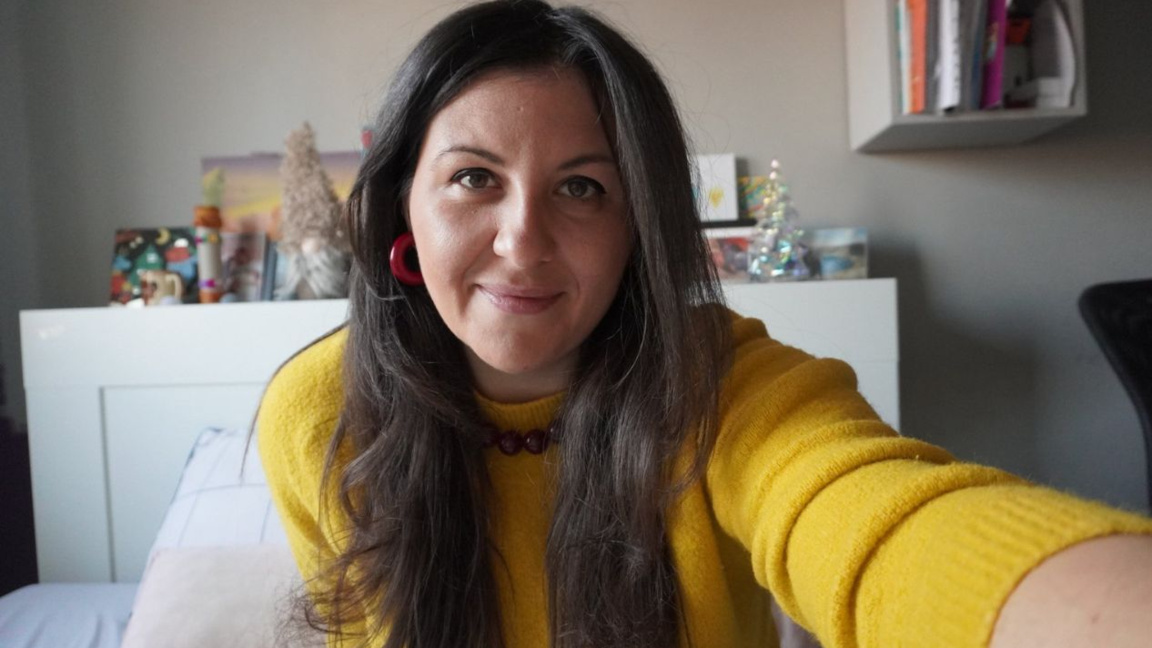
PHOTO Facebook/Денка в Унгария
Font size
Denitsa Ürge’s path to Hungary began not with a long-term plan or a carefully mapped-out strategy, but with love and a spontaneous decision. The Bulgarian woman, who today lives with her family in Hungary, met her future husband - a Hungarian - while working at a call center in Sofia. “He lived in Bulgaria for a total of four years. We met in a call center in Sofia, and that’s where our story began,” Denitsa recalls.
Their first child was born in Sofia, but when her husband received a job offer in Budapest, the young family made a decision that changed their lives.

The imposing building of the Hungarian Parliament in Budapest
PHOTO Facebook /Денка В Унгария
“I didn’t think about it too long. I just said: we’re going. We were extremely young, very much in love. Our child was one year old, and we didn’t analyze the risks - we simply packed our bags and left,” she remembers. Leaving the country, however, was not a rejection: “In no way do I see this as running away from Bulgaria. For me, it was a natural continuation of our story.”
The first months in Hungary turned out to be a trial. Although she was prepared for the “big differences,” everyday life confronted Denitsa with unexpected absences.

Kominche (small chimney) – a hollow sweet bread, baked over charcoal and wrapped around a wooden cylinder
PHOTO Facebook /Денка В Унгария
“It was very hard for me to get used to the lack of cheese in the shops or to the taste of the local yogurt. Suddenly, these familiar things disappeared,” she says. Added to this were the language barrier, loneliness, and caring for a small child. “I often asked myself whether I had made the right decision,” the Bulgarian woman admits.

PHOTO Facebook /Денка В Унгария
A particularly important topic in the conversation is children and their integration into Hungarian reality. Although today they feel confident in a multilingual environment, the beginning was not easy.
“When they started kindergarten, they needed about a year to adapt. They refused to speak Hungarian and didn’t want to eat there,” Denitsa recounts. Gradually, however, the children adjusted, and today they naturally switch between two languages and two cultures - something their mother sees as a big asset.
Bulgarian identity occupies a central place in the family’s life.
“To this day, I don’t speak Hungarian with my children - only Bulgarian,” Denitsa emphasizes. Bulgarian dishes are cooked at home, martenitsi are made, and kukeri masks are crafted. “It’s important to me that they know where they come from,” she adds.

Egg soup prepared according to a Hungarian recipe
PHOTO Facebook /Денка В Унгария
Through social media - YouTube and Facebook - Denitsa shares recipes, personal stories, and impressions of life in Hungary. “I wanted to show that being happy outside Bulgaria does not mean losing your identity,” she says.

PHOTO Facebook /Денка В Унгария
In addition, according to her, Hungary is a country about which little is known in Bulgaria.
In this context, Denitsa speaks with particular pride about the Bulgarian gardeners who left a deep mark on Hungarian history.
A cultural route will tell the story of Bulgarian gardeners abroad
Bulgarians in Hungary with double celebration – Day of Bulgarian-Hungarian Friendship and UNESCO recognition for gardening

Bulgarian News newspaper: Members of the Association of Bulgarians in Hungary (on the right)
PHOTO Facebook /Денка В Унгария
“This is a topic that fills me with immense pride. People who came in the 17th, 18th and 19th centuries taught Hungarians agriculture. They built a Bulgarian school and church. Whenever someone mentions the Bulgarian gardeners, it always makes me very happy,” she shares. Today, Bulgarian gardening is part of Hungary’s intangible cultural heritage - a recognition that strengthens the sense of belonging.
Denitsa finds her community both among Bulgarians in Hungary and online. Her children attend a Bulgarian school and dance Bulgarian folk dances.
“What you are doing is a treasure trove,” she says about Radio Bulgaria’s segment ‘Bulgarians Around the World’. “Behind every number in the statistics stands a person with their own dreams, fears, and hopes.”

Honorary plaque at the Sts. Cyril and Methodius Church in Budapest
PHOTO Facebook /Денка В Унгария
And her advice to those considering leaving? “Be brave. Take your language, traditions, and memories in your suitcase - and your sense of humor.”
Denitsa Ürge’s story shows that life abroad is not a rejection of Bulgaria, but an opportunity to carry it with you, to share it, and to keep it alive - even when you are far from its borders.
Read also:
Gabriela Hadzikostova: Bulgarians in Hungary enjoy great respect
Fourth generation of Bulgarian children in Hungary fill the classrooms of the Sunday school
The legacy of the Bulgarian emigrants in Hungary celebrated in Budapest
Edited by Elena Karkalanova
English version: R. Petkova
This publication was created by: Rositsa Petkova