


Author
Diana Tsankova
News
Trilingual album traces the spiritual ties between Bulgaria and Georgia
The album “Development of Georgian–Bulgarian Bilateral Relations” was presented last year at Sokhumi State University in Tbilisi
Sunday 18 January 2026 11:05
Sunday, 18 January 2026, 11:05
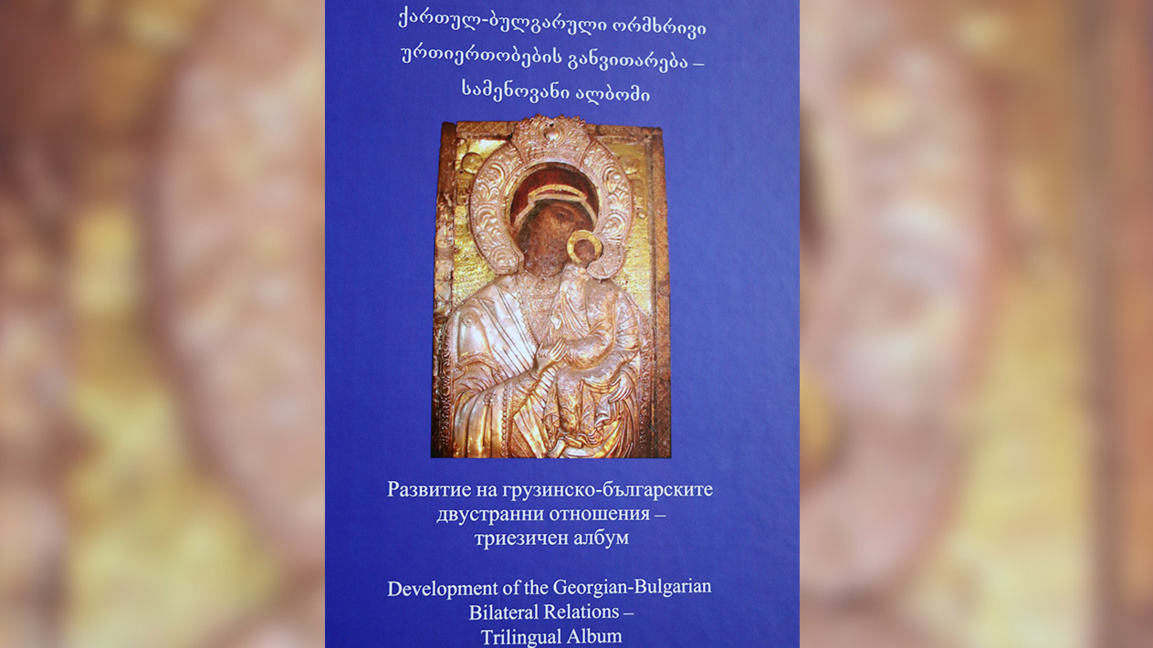
PHOTO Facebook/SokhumiStateUniversity
Font size
The trilingual album “Development of Georgian-Bulgarian Bilateral Relations”, presented last year at Sokhumi State University in Tbilisi, takes the reader on a fascinating journey in which the history, culture, and spiritual connections between the two ancient peoples come vividly to life. According to Prof. Indira Dzagania, Head of the Department of International Relations and Intercultural Ties at the university and leader of the creative team, every page of the volume is a new encounter with the understanding and mutual respect that form the foundation of interaction between the two nations.
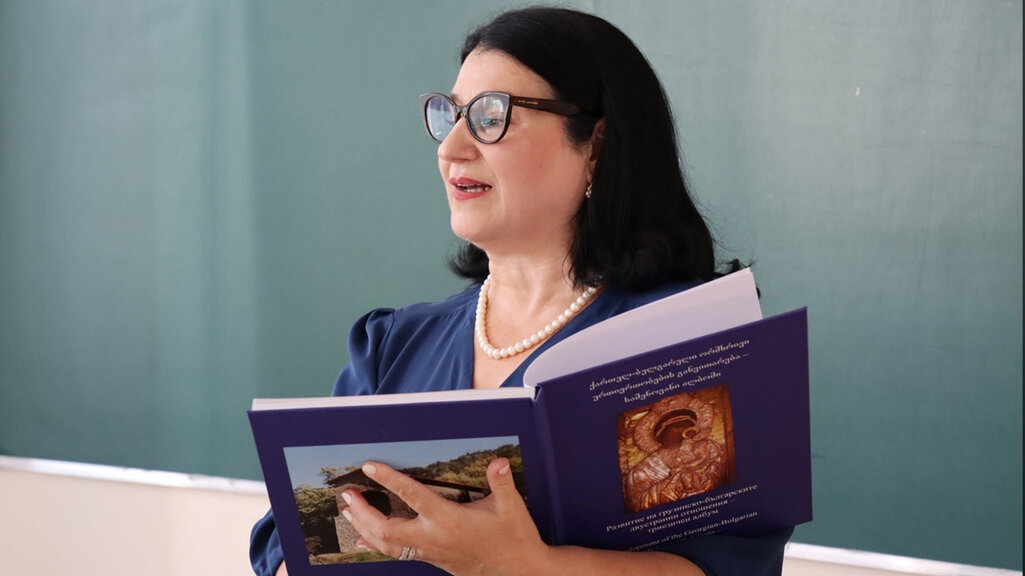
Prof. Indira Dzagania
PHOTO Facebook/SokhumiStateUniversity
The richly illustrated album - created by lecturers from the department and by the head of the Bulgarian language studies at Sokhumi State University, Chief Assistant Professor Ivana Petkova - is published in Bulgarian, Georgian, and English. Tracing the centuries-long development of Bulgaria and Georgia, it reveals their civilizational unity, reaffirmed today in their shared choice of a European path.
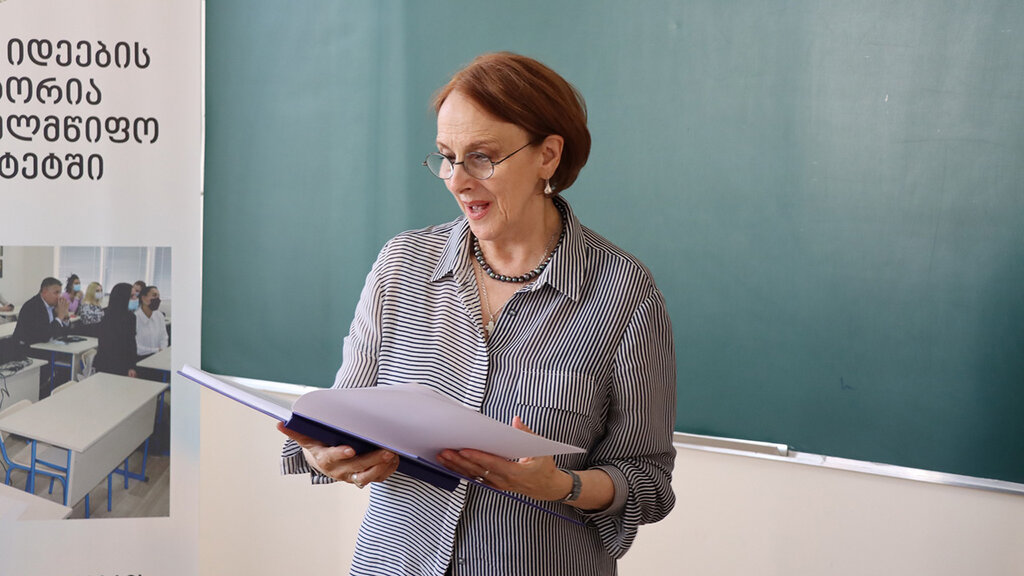
Chief Assistant Ivana Petkova
PHOTO Facebook/EmbassyBulgariaTbilisi
“There is historical evidence of Proto-Bulgarian settlement in the South Caucasus as early as the 1st-3rd centuries AD - long before the creation of the Bulgarian state,” Ivana Petkova explains.
“Systematic Bulgarian–Georgian relations, however, begin in the 10th century after the Christianization of Bulgaria. Scholarly literature notes that Bulgarians were aware of the Iverians (also Iberians) (ethnic Georgians), and Georgians knew of the land of the Bulgarians. The inhabitants of the Iverian (Iberian) Kingdom, which was located on the territory of ancient Colchis, are mentioned for the first time in The Life of Constantine–Cyril the Philosopher, in the famous disputе at the Council of Venice and the refutation of the trilingual dogma. The creator of the Slavic alphabet offers the following argument: ‘We know many peoples who have books and glorify God, each in their own language. It is known that among them are (…) the Iverians (…) and many others.’”
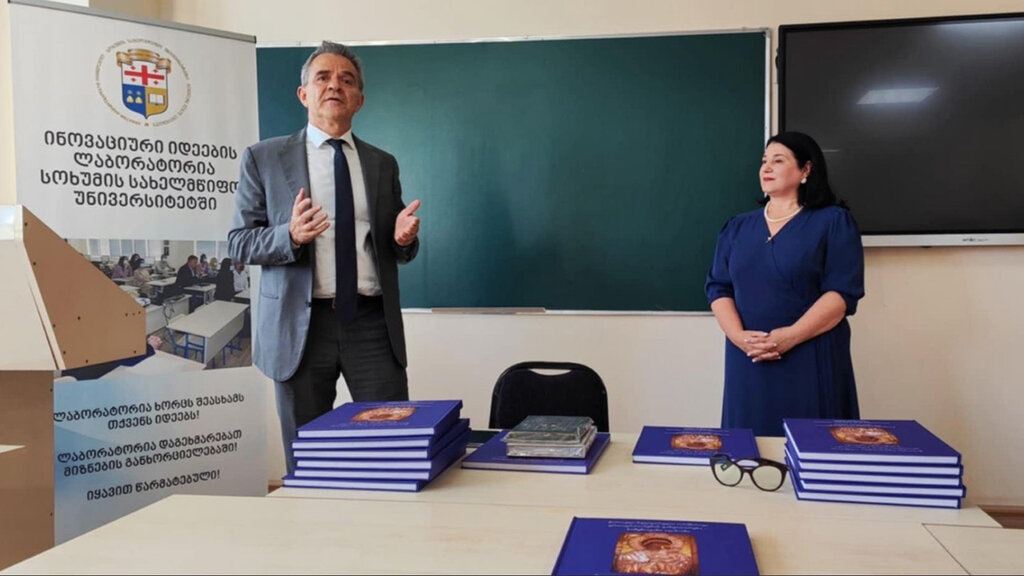
The Ambassador of the Republic of Bulgaria to Georgia, Veselin Valkanov, and Prof. Indira Dzagania at the presentation of the album
PHOTO Facebook/EmbassyBulgariaTbilisi
Unfortunately, the knowledge most contemporary Georgians have about Bulgaria often extends only to its seaside resorts and to a misconception deliberately cultivated in the Soviet and post-Soviet space - that Bulgarians write using Russian letters.
“In this regard, I point out that in the lands of today’s Bulgaria, and more precisely in the Preslav Literary School, the disciples of Cyril and Methodius developed a new graphic variant of the Glagolitic script, called Cyrillic,” Ivana Petkova emphasizes. “Today it is used by three quarters of the Slavic world, as well as in the writing systems of languages in Eastern Europe and Central Asia. I also stress that the first literary language of the Slavic world is Old Bulgarian by its ethno-linguistic characteristics, and that it is the fourth cultural language in Europe, recognized as sacred as early as the 10th century.”
The Golden Age of the Bulgarian state, the National Revival, and the national liberation struggles also find a place in the publication. The monastery known to Georgians as “Petritsoni” continues to this day to remind us of the rapprochement between the two peoples, rooted in their shared belonging to the Orthodox world under Byzantine influence.
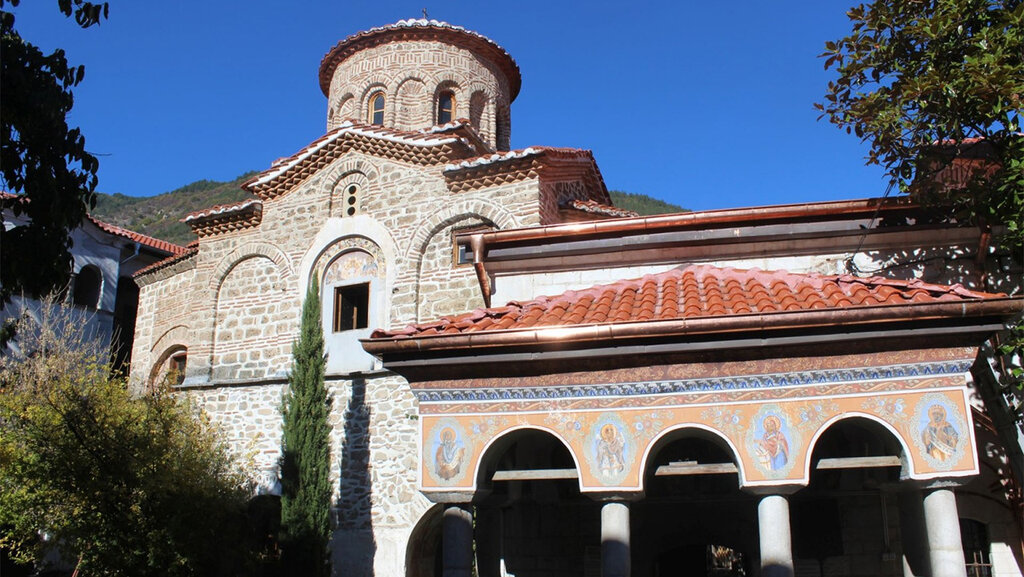
Bachkovo monastery "The Dormition of the Theotokos"
PHOTO asenovgrad.bg
“Georgians can learn many things from the album not only about Bulgaria, but also about themselves,” Ivana Petkova adds. “A symbol of the Georgian-Bulgarian spiritual ties is the Bachkovo Monastery (Petritsoni), built in 1083 by the Georgian Gregory Pakourianos, a Byzantine military commander and statesman. They can learn about the connections between the Georgian Monastery of Iviron on Mount Athos, whose main relic is the miraculous icon of the Virgin Mary, and the Bulgarian monasteries of St. George Zograf and Hilendar. They can learn about the epigraphic monuments of Provadia and the unique Georgian rock inscription with drawings from the 14th century. They can learn that in 1901 the novel Under the Yoke by Ivan Vazov was translated by the Georgian intellectual and writer Tedo Sakhokia, and that in Paris the translator presented the author with the Georgian translation of the first Bulgarian novel. They can also learn that in the same year Ivan Vazov published his essay A Glimpse into the Historical Life of the Georgian People in the authoritative journal Balgarska sbirka.”
Another important fact highlighted is the participation of many Georgians - ordinary soldiers, officers, and hereditary nobles - in the Russo-Turkish War of Liberation. Among them was the Georgian Prince Alexey Tsereteli, who played a significant role in the battles at Shipka Pass. His contribution is commemorated to this day by streets bearing his name in Sofia and Plovdiv.
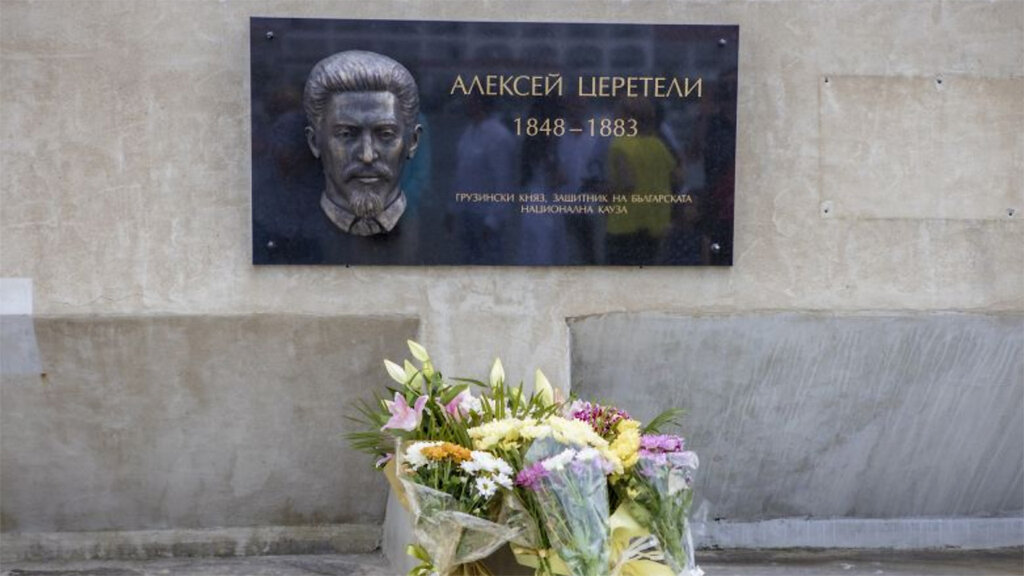
Bas-relief of Prince Alexey Tsereteli in Bulgaria's Sveti Vlas
PHOTO epicenter.bg
One of the album’s goals is to promote educational and cultural ties between the two countries. “The Bulgarian studies course intensifies these connections in a special chapter titled ‘Bulgaria and the Sokhumi State University,’” Ivana Petkova adds.
“I have an idea to create an academic platform,” she continues. “It could be called a ‘Bulgarian-Georgian Center for Language and Cultural Studies’ or a ‘Bulgarian-Georgian Center for Tradition, Language, and Culture.’ This structure would encompass a broader range of activities, providing access to Bulgarian language teaching for more people of different ages and with diverse interests in the field of Bulgarian-Georgian relations. In this way, we will open a wider audience to the study of our language, and the university itself will strengthen its profile as a regional academic center for Bulgarian studies in the South Caucasus.”
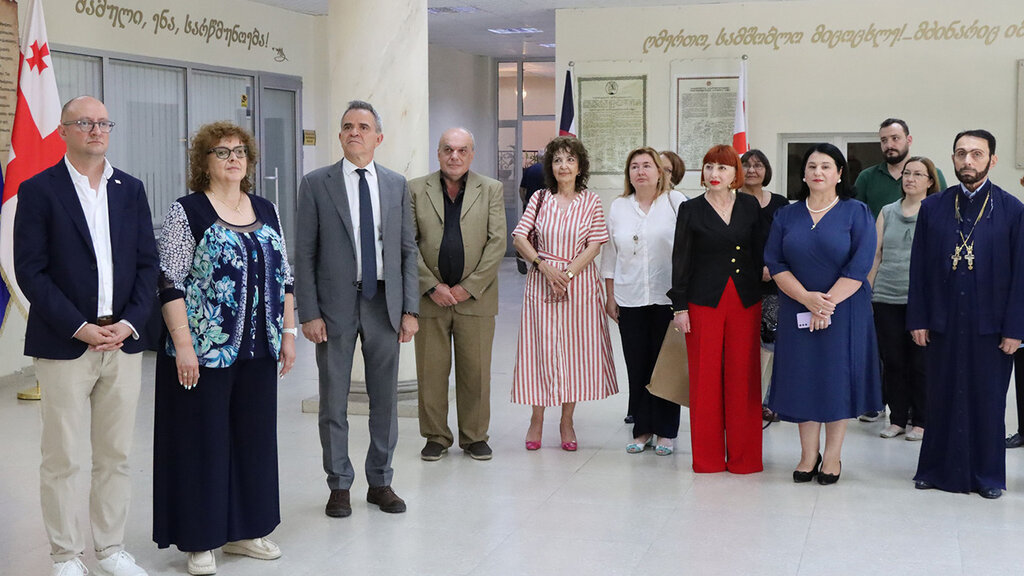
PHOTO Facebook/EmbassyBulgariaTbilisi
Ancient origins, a crossroads location between Europe and Asia, centuries of invasions by foreign conquerors, and hard-fought struggles against them - all of this brings the two peoples closer together. And despite their difficult historical fate, they have managed to preserve their language and national identity.
English version: R. Petkova
This publication was created by: Rositsa Petkova
- #bachkovo monastery
- #Glagolitic script
- #Tbilisi
- #Ivana Petkova
- #Bulgaria Georgia
- #Bulgarian-Georgian bilateral ties
- #Bulgarians in Georgia
- #Prof. Indira Dzagania
- #Sokhumi State University
- #Georgian history
- #South Caucasus
- #Iverians
- #Iverian (Iberian) Kingdom
- #Petritsoni monastery
- #Georgian intellectual and writer Tedo Sakhokia