Author
Alexandra Karamihaleva
Bridge of Faith
Asen and Rivka - an Orthodox family in the Netherlands
Friday 30 January 2026 13:20
Friday, 30 January 2026, 13:20
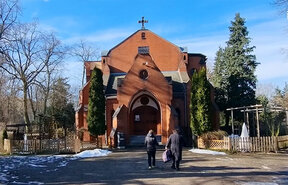
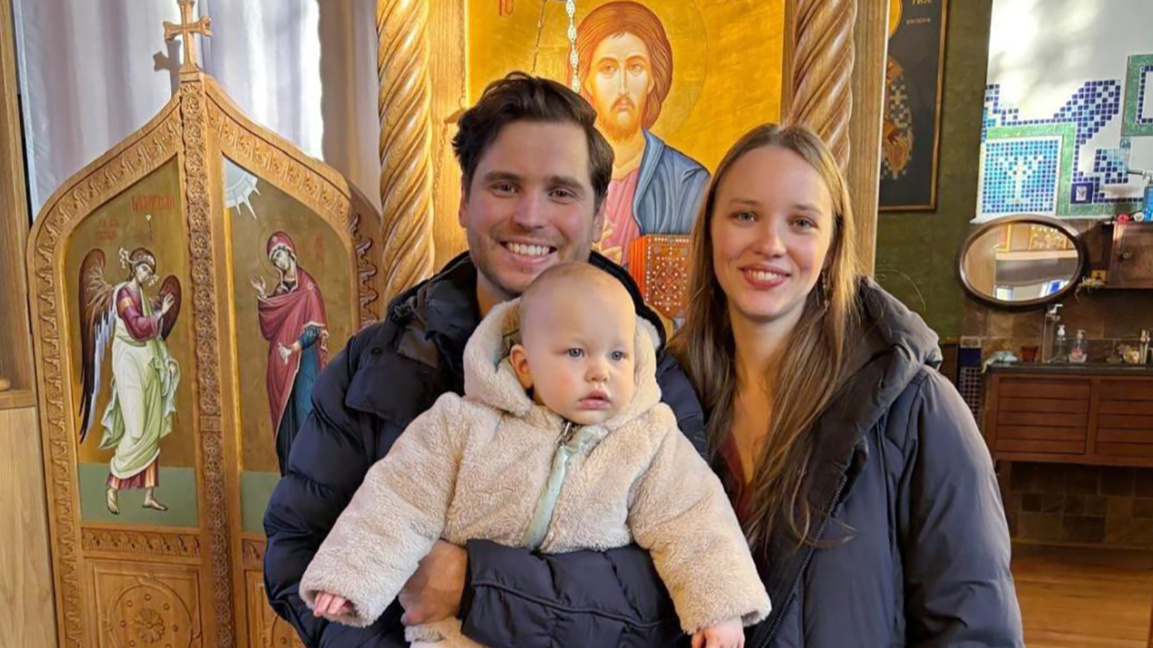
PHOTO Private archive
Font size
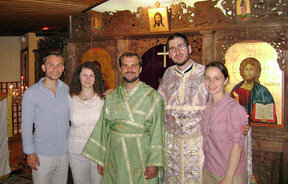
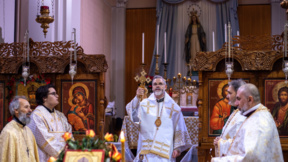
Bulgarians from different parts of the Netherlands gather at the Orthodox church “St. Archangels Michael and Gabriel” in The Hague. “To hear the Bulgarian language is a luxury, and there is nothing better than sharing prayer in your native tongue. Here the church is always full,” Asen Andonov tells Radio Bulgaria. He is among the young people of the Bulgarian Orthodox Church Community “St. Paisius of Hilendar” in the Netherlands. He comes to the Bulgarian church in The Hague with his wife Rivka-Elisaveta and their little daughter Magdalena.
Like many young Bulgarians, Asen left for the Netherlands to study - he has completed a master’s degree in Modern Greek Philology, English language didactics, and analysis of foreign-language textbooks at the universities of Tilburg and Plovdiv. He holds a bachelor’s degree as a primary school teacher and currently works at a Dutch school. He speaks five languages and studies operatic singing under the guidance of Petar Danailov.
For Radio Bulgaria’s podcast “Bridge of Faith”, Asen Andonov shares that when he arrived in the Netherlands ten years ago - in Tilbug, he initially attended a church under the Ecumenical Patriarchate. After moving to The Hague, however, he began looking for a more convenient option and discovered that there was a Bulgarian church in the city.
“I remember that when I arrived there were some renovation works going on. That same year they also bought the church; many things were happening,” Asen recalls, noting that Bulgarians - not only in the Netherlands but also elsewhere abroad - are interested in where there is a Bulgarian-speaking community and are willing to travel long distances to reach a Bulgarian church. “This is actually one of the challenges abroad - that we don’t have a church on every corner, and sometimes we have to drive for an hour from one end of the Netherlands to the other, park the car - and finding parking is very difficult. But yes, people come here from all over Holland,” he says.
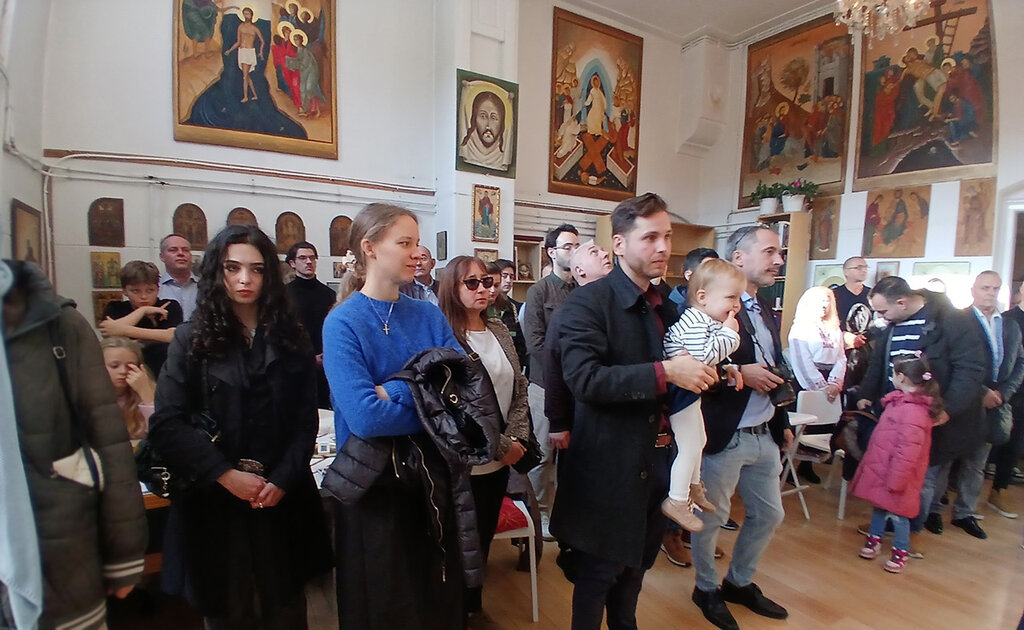
PHOTO Aleksandra Karamihaleva
Attending services definitely requires effort from our compatriots - to set aside a special day and travel a considerable distance - but this seems to make Orthodox Christians abroad more conscious and more devoted to the faith.
“Yes, definitely!” Asen is positive, comparing churches during services in Bulgaria and abroad: “When I return to Bulgaria, I expect to see churches full of believers. Here the churches are always full, especially with young people, young families, with children. Everywhere it is normal to see a huge line of small children waiting for Communion, whereas when I go to Bulgaria it’s not the same.”
Reflecting on what the Bulgarian Orthodox Church Community in The Hague gives him, Asen says: “When you enter a church, regardless of which Orthodox church it is, but especially the Bulgarian one, a person immediately feels at home, as if in their homeland. One feels a sense of warmth.”
For a man whose wife is Dutch and who lives in a foreign-language environment, Asen Andonov deeply values the opportunity, in the Bulgarian church, not only to hear and communicate in the Bulgarian language, but also - during confession - to share his most intimate thoughts, inner struggles, and personal experiences.
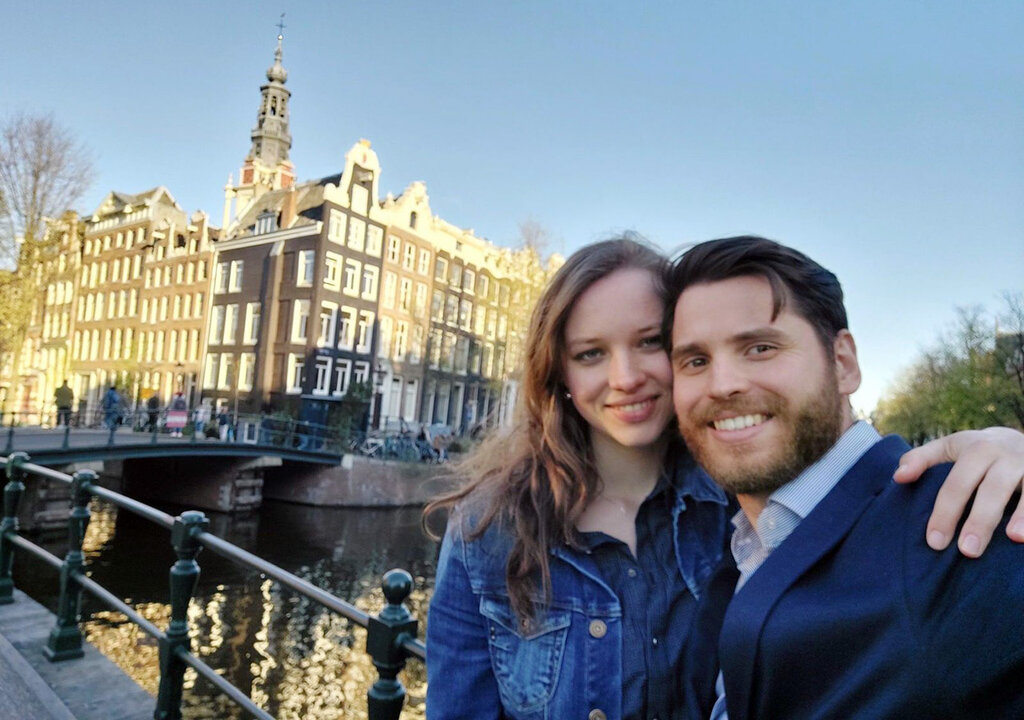
PHOTO Private archive
His wife Rivka-Elisaveta comes from a very devout Dutch family in the city of Almere, but with God’s help, after meeting Asen and deciding to start a family, she accepted Orthodox Chistianity. They were married in Bulgaria and baptized their daughter in an Orthodox church. The young woman says that at first she knew absolutely nothing about the Orthodox Church, but later learned from her husband that this Church is very ancient and that Christ Himself founded it. She chose the Orthodox Church for precisely this reason - because she realized that Protestantism is a much newer movement.
“As soon as I entered the Orthodox Church, I felt something different - there you feel the presence of God. Whereas when a person enters a Protestant church, it is empty inside; there is only a cross,” she tells us.
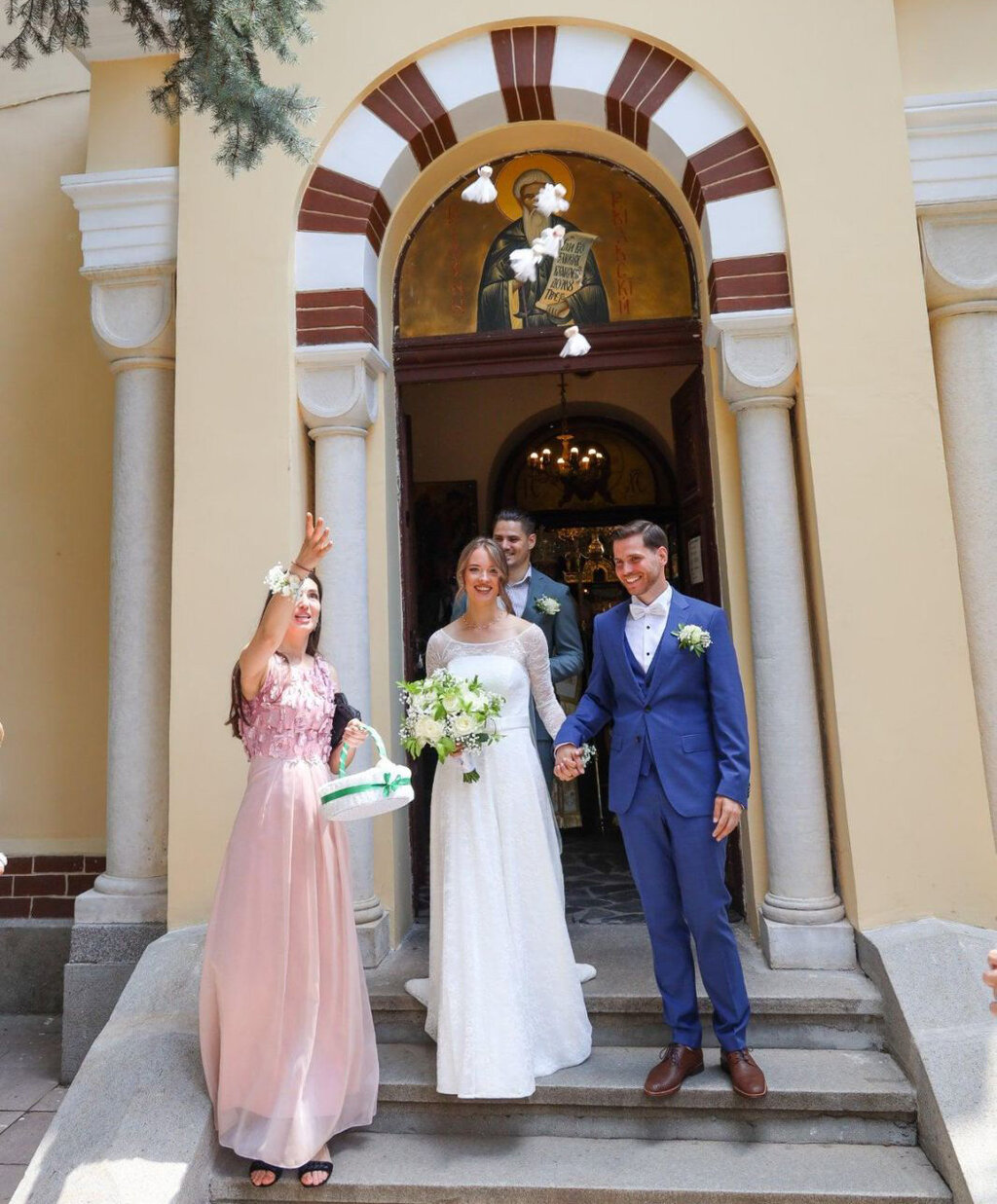
PHOTO Private archive
Rivka, who at her baptism took the name “Elisaveta” in honour of the Holy Venerable Martyr Grand Duchess Elisaveta Fyodorovna, says she will never forget how, when she entered the church and heard people singing, she was pierced by a sense of God’s presence: “When I used to enter my Protestant church, there was a band playing with drums and a saxophone… and people were dancing. Whereas in the Orthodox Church there is a sense of sacredness, of reverence, of humility, which was absent in the Protestant church.”
For Rivka Andonova, at first everything in the Orthodox Church was new, incomprehensible, mysterious - the doctrine, the rituals, the Sacraments. When she learned from her husband about the Sacrament of the Eucharist, it was difficult for her to accept and understand the Orthodox teaching that during the Divine Liturgy the bread and wine are transformed into the true Body and Blood of Christ, and that by partaking of them, Christians become one with Christ Himself. “In the Protestant church we accept many things directly and literally, whereas here faith flows from the heart. By receiving the Body and Blood of Christ, you receive Christ within yourself and become one with Him,” she says.
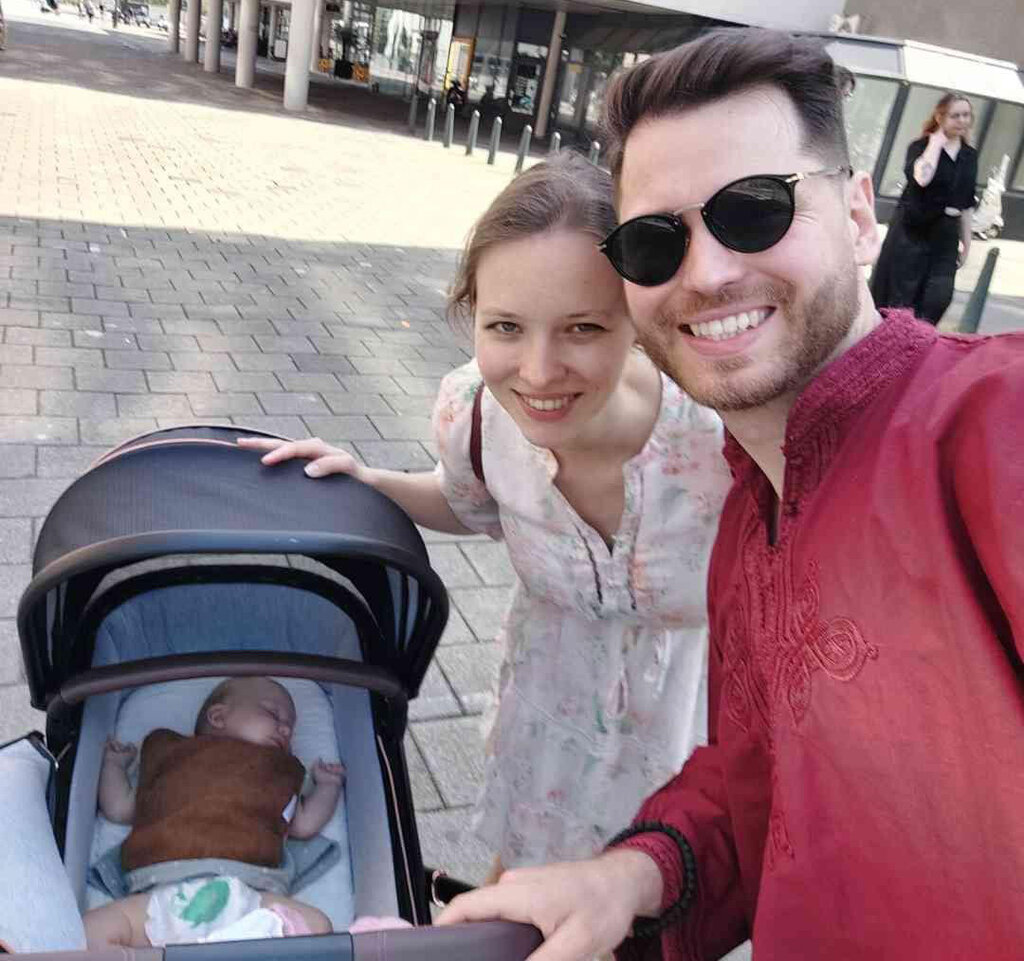
PHOTO Private archive
We ask her whether she feels calmer about her daughter knowing that she is growing up in the Orthodox Church. Does she feel faith as a kind of vaccine that protects both them and their child from the corruption of this secular world?
“Yes, definitely!” Rivka says emphatically. “For me it is a great comfort that my daughter Magdalena is growing up in this Church. What I notice is that children who attend the Orthodox church radiate a great calmness. Yes, of course, they remain children, they play, but compared to children outside the Church, one senses a huge difference in the inner peace they possess.”
Rivka-Elisaveta notes that their little daughter Magdalena has a special connection with Christ and, thanks to the icons in the church, she recognizes Him. When she sees an image of the Lord, she says, “Oh, Jesus, Jesus!”, makes the sign of the cross, wants to kiss the cross, kiss the icons, and approaches everything in the church with great love.
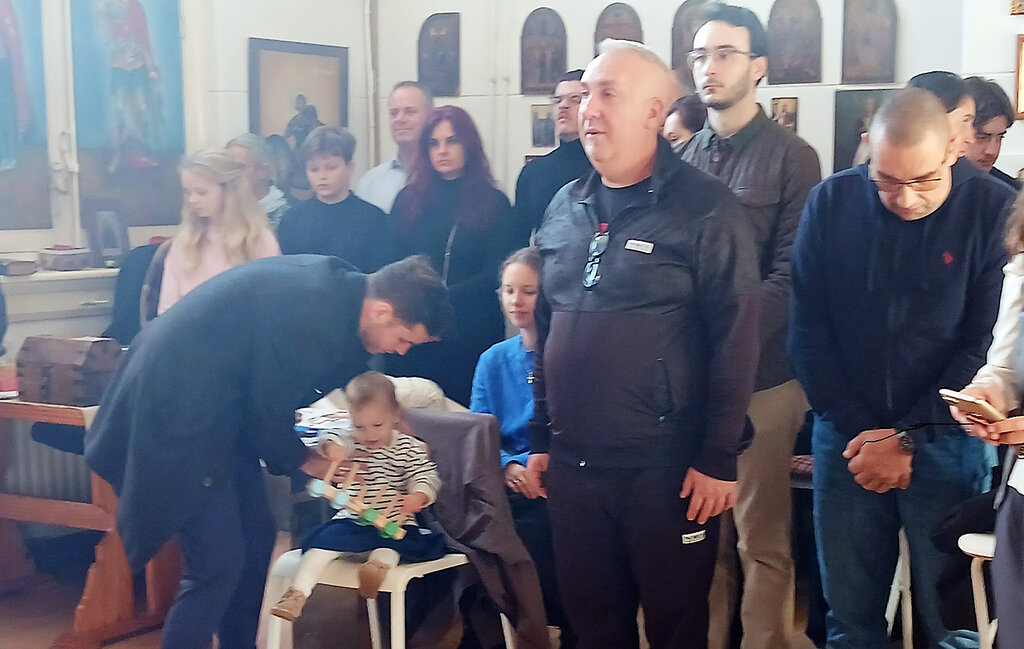
PHOTO Aleksandra Karamihaleva
The first two editions for 2026 of Radio Bulgaria's podcast "Bridge of Faith" are dedicated to the Bulgarian Orthodox Church Community “St. Paisius of Hilendar” in The Hague - they will be available on the Radio Bulgaria website on January 30 and February 27, 2026.
Read also:
A Piece of Bulgaria in The Hague: St Michael and Gabriel Church
Bulgarian Orthodox community in Milan to celebrate on 7 December
Ventseslav Sabev from Geneva: When we believe in God, we carry a message of peace
English version: R. Petkova
This publication was created by: Rositsa Petkova