


Saturday 7 February 2026 15:10
Saturday, 7 February 2026, 15:10
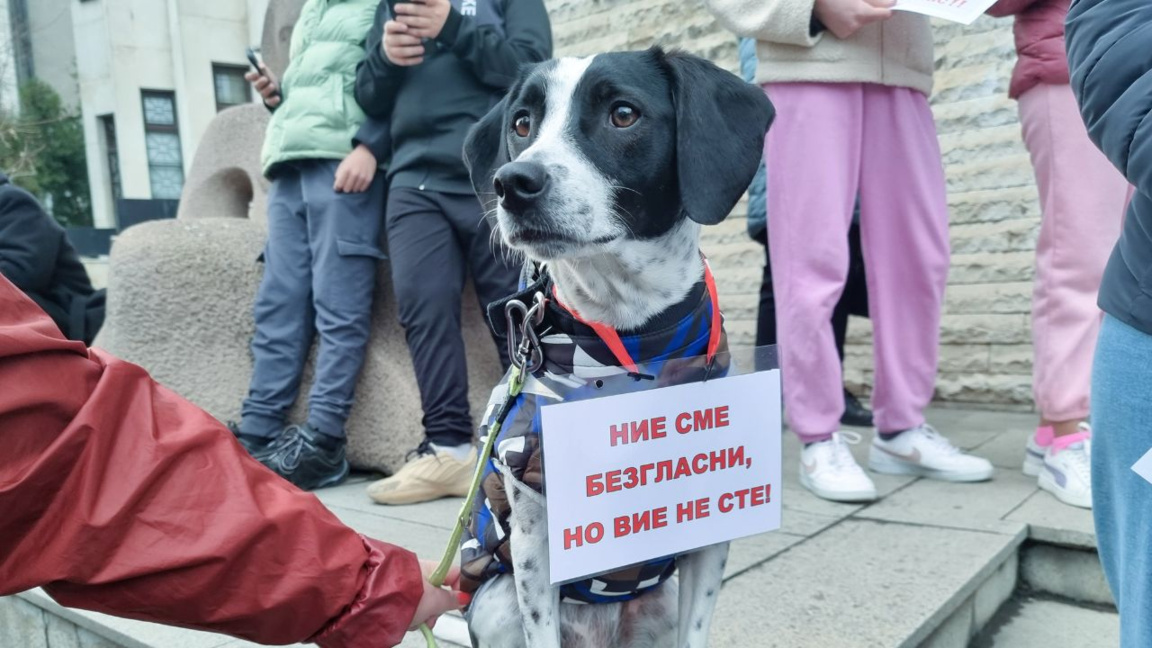
PHOTO BTA
Font size
A case of brutal animal abuse, reportedly orchestrated, filmed and sold online in the village of Tsarevets near Svishtov, has once again drawn public attention to the problem of animal cruelty. In this context, the idea of creating a National Animal Protection Agency under the Council of Ministers is gaining wider public support.
The proposed agency would coordinate the work of the police, prosecutors, courts, local authorities and civil society organisations. Promoted by Stefan Dimitrov, deputy chair of the Public Council to Bulgaria’s 51st National Assembly, the plan also envisages preventive measures, including educational and awareness campaigns, collaboration with schools and social services, and training for police officers and prosecutors based on international best practice. The agency would oversee law enforcement and impose administrative sanctions where necessary. An online petition supporting the proposal has already gathered more than 4,000 signatures.
- Another case of animal cruelty mobilizes civic energy
- Civil society calls for effective policing and an end to animal cruelty
- Animal cruelty to be punished more severely in Bulgaria
According to Dimitrov, Bulgaria currently lacks coordination among the institutions responsible for investigating and punishing cases of animal cruelty. Training and prevention efforts are minimal, while formal oversight is carried out by the Bulgarian Food Safety Agency (BFSA), which lacks the resources and expertise to enforce the law effectively, as its mandate focuses on food safety and animal disease control. Dimitrov also criticises the so-called “zoo police,” saying it does not operate as a specialised unit. Cases involving animals are an additional burden for officers, often resulting in these crimes being neglected.
He adds that easy and untraceable access to animals also contributes to abuse, which is why he calls for breeding and sales to be conducted only by registered breeders under strict supervision.
Text: Yoan Kolev
Editor: Elena Karkalanova
Posted in English by E. Radkova
This publication was created by: Elizabeth Radkova