


Author
Diana Tsankova
News
Online footage of violence – the psychology of impunity and lack of empathy
People perceive reporting signals not as a civic duty, but as a personal risk, because there is fear of retaliation
Monday 9 February 2026 15:20
Monday, 9 February 2026, 15:20

PHOTO freepik.com
Font size
We have been witnessing recent revelations in Bulgaria that lead to the gratification of base instincts which, it turns out, leave traces over time. Filming the abuse of animals, installing cameras in beauty salons and gynecological offices, and sharing the footage on adult websites may have simple explanations - that you have protection, that most likely no one will ever trace it back to you, that you are a carrier of human stupidity. According to psychological science, however, behind this phenomenon lies a complex combination of personality deficits and a social environment that not only allows such behavior to manifest itself, but also to become normalized.
Social psychologist Assoc. Prof. Nikolay Dimitrov uses the term dehumanization of the victim to explain why recording and distributing footage of violence or of what is seen in intimate spaces turns into entertainment for the perpetrator. There is also the phenomenon of moral distancing, in which the creator does not see the consequences of their actions, while the environment provides anonymity and a sense of impunity.
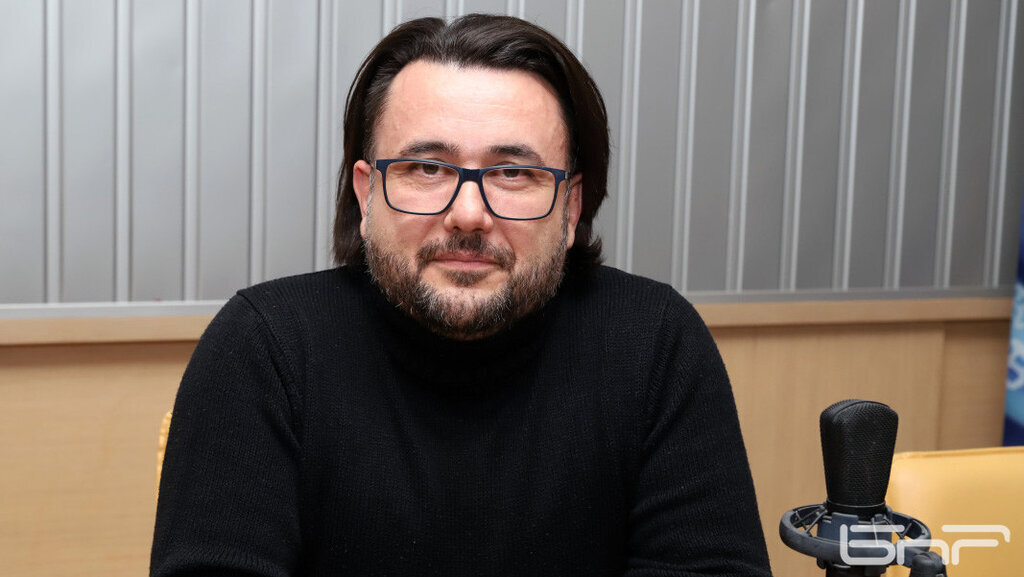
Social psychologist Assoc. Prof. Nikolay Dimitrov
PHOTO Ani Petrova
“At the core of such violations of norms lies the search for power and control over a living being, whether animal or human - over the body, over personal space, over the suffering of the other afterward,” says Nikolay Dimitrov. “This is a way to compensate for inner emptiness and a lack of empathy or a lack of a sense of one’s own significance. And when such actions remain without a moral and institutional response, they begin to reproduce themselves.”
In resorting to such excesses, money proves to be a secondary motive. Such actions usually satisfy deeper psychological and social drives, such as the need for power, for control, for domination, for recognition. And the fact that what is published online receives views in the form of likes, shares, and comments becomes a source of prestige. Against this background, people who suspect that something is wrong often choose to stay on the sidelines.
“Most often this is the so-called bystander effect,” the psychologist explains. “The more people know or suspect that something is happening, the less likely it is that anyone will react. Thus responsibility becomes diffused and everyone expects someone else to take the initiative. There is also fear of retaliation - when in the public consciousness there exists a belief that a given person is untouchable, people perceive reporting signals not as a civic duty, but as a personal risk. A culture of cautious silence is created; fear becomes dominant, and passivity understandable, although socially harmful.”
Caution, distance, turning a blind eye - even while realizing that silence also carries guilt - cannot serve as a diagnosis of our entire society.

PHOTO freepik.com
“What we need to validate are the social conditions that sometimes make such excesses invisible,” Nikolay Dimitrov believes. “Extreme behavior stands out where norms are unclear, sanctions inconsistent, and the public response delayed or hesitant. Rather, we should be concerned about how we cultivate sensitivity to violence, how we protect victims, how clearly we show that certain boundaries are not negotiable. Because a society that allows the redefinition of individual boundaries later suffers from it. The most dangerous thing is not the excess itself, but the silence around it, because that is what makes it possible.”
But where should education in empathy, sensitivity, and responsibility toward the suffering of the victim come from, regardless of whether we are talking about a human or an animal being?
“From all agents of socialization, family comes first,” the psychologist is categorical. “When parents are busy and do not pay attention to their children, there is nowhere for them to learn valuable social skills. And when they enter a formal school environment, they are not worked with actively enough there either. Not least, there is one powerful factor over the years and even centuries in shaping the individual – religion - but we see the kind of institutional and moral crisis of withdrawal from public functions that the Bulgarian Orthodox Church is in. Let us not forget the media as well, which are a powerful agent of socialization, and when media violence, especially visual violence, is part of programming, it becomes normalized and begins to be perceived as an element of life.”
PHOTO BTA
One of the questions our society is asking is whether law enforcement authorities will follow through to the end in investigating the scandals and whether fair sentences will be handed down - and if not, can we expect a civic reaction, as happened at the end of 2025?
“It is good for society to react,” says social psychologist Assoc. Prof. Nikolay Dimitrov. “Without setting motives against one another, sometimes such spontaneous and mass reactions are seen against violence toward animals, while reactions against violence toward children are lacking, and I would like to see greater activity in those cases as well. As for whether the judicial authorities will do their job, I hope they will, because one of the mechanisms of social control is precisely the reaction of institutions. And the more timely and adequate it is, the clearer the signal it sends about what is acceptable and what is unacceptable - that is, it shows people who might do such a thing that it will not go unpunished and that it is better not to do it.”
English: R. Petkova
This publication was created by: Rositsa Petkova