


Author
Yoan Kolev
News
Japan is discovering Bulgaria – and loving it
Thinking outside the box is key in Bulgaria, says Tsvetan Dimov, a man shaped by two cultures.
Tuesday 10 February 2026 18:08
Tuesday, 10 February 2026, 18:08

PHOTO Facebook / Tsvetan Dimov
Font size
Stay positive no matter what – this is the life philosophy and the core of Tsvetan Dimov’s optimism. A Bulgarian whose life story is so rich and eventful that it could easily become the plot of a novel or a feature film.
He was born and lived in Sofia until the age of 12, when his parents – both medical doctors – moved to Japan. Apart from the initial cultural shock, Tsvetan had to learn many things, one of which was his own name. In Japan, he was called Tsubetan, because the sound “V” does not exist in the Japanese language.
“It took me three or four months to learn the two alphabets – katakana and hiragana – that they use. My mistake was that I first learned the katakana characters, but this alphabet is used only for words of foreign origin and foreign names,” Tsvetan recollects. “Then, at one point, I realised that I couldn’t read a thing apart from my own name and the name Bulgaria – ‘Burugaria’ – which is printed on yoghurt pots in the stores.
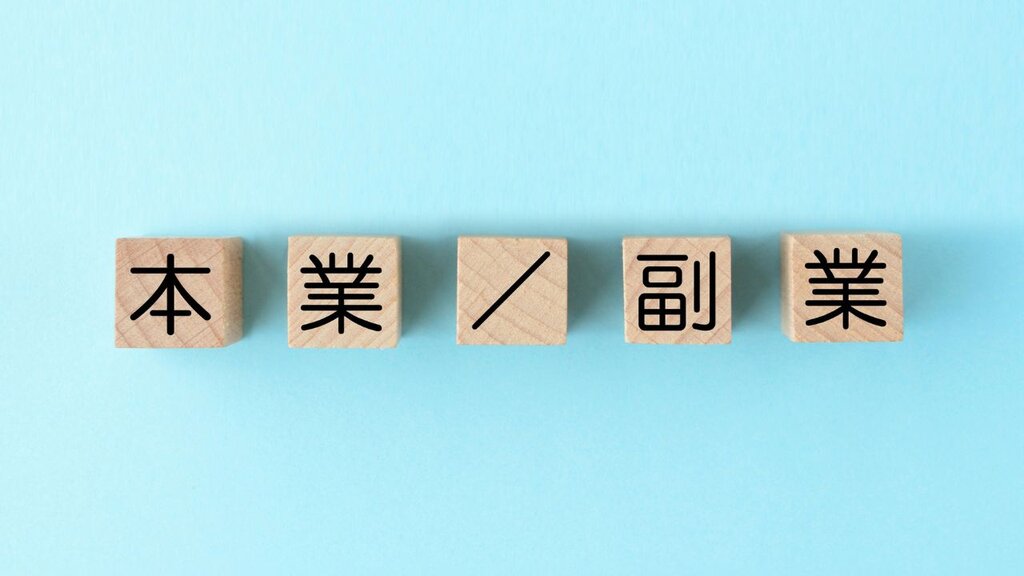
PHOTO Pixabay
When people asked where I came from, I’d say ‘Burugaria’, and they’d laugh, because the first thing that came to their mind was the yoghurt pots, and the idea that I came from yoghurt seemed funny.”
To learn Japanese, one must understand Japanese culture and way of thinking. One of the first things that strikes a newcomer is the concept of having two faces: one for society, tate mae, and one for when you are alone, hon ne. Tate mae means you must behave in a way that does not offend people, while hon ne is your true opinion, which you keep to yourself.
Tsvetan Dimov notes that interest in Bulgarian language and culture is rising in Tokyo, a megapolis with a population of several million. More and more Japanese people are learning Bulgarian, which is certainly not among the easiest languages. There are even public speaking contests in Bulgarian, which is quite unique.
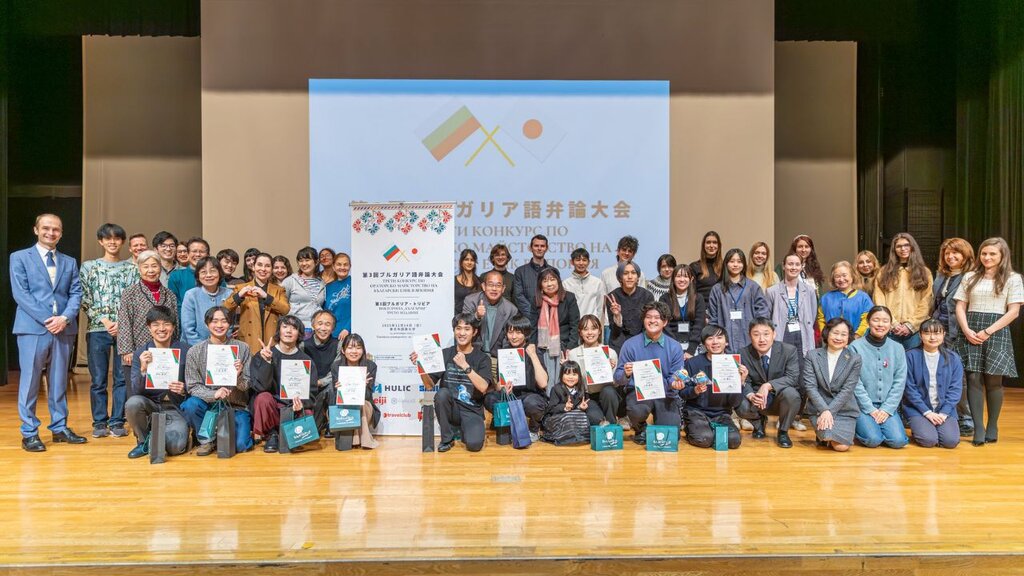
PHOTO Bulgarian Embassy in Japan
“Last year, the Bulgarian embassy in Tokyo began organising public speaking contests for Japanese learners. Bulgarian is taught at two universities – one on the northern island of Hokkaido and another in Tokyo. Japanese people now know much more about our culture, language, and way of thinking. They love to visit Bulgaria, and some have even settled here. Among their favourite places are the Belogradchik Rocks, the Rila Monastery, the Boyana Church, Varna, Burgas, Smolyan, and the Rhodopes.”
Bulgaria is on roughly the same latitude as Hokkaido, so Japanese tourists know they can come here for skiing. Moreover, there are already many Bulgarian ski instructors working in Japan.
For some time in Tokyo, Tsvetan worked as a shop assistant selling Bulgarian products such as rose oil, rose water, rakia, and Bulgarian wine. He says people there are quite impressed by the quality of these natural products, adding that nowadays their knowledge of Bulgaria goes beyond yoghurt, wine, and the legendary sumo wrestler Kaloyan Mahlyanov – Kotooshu.
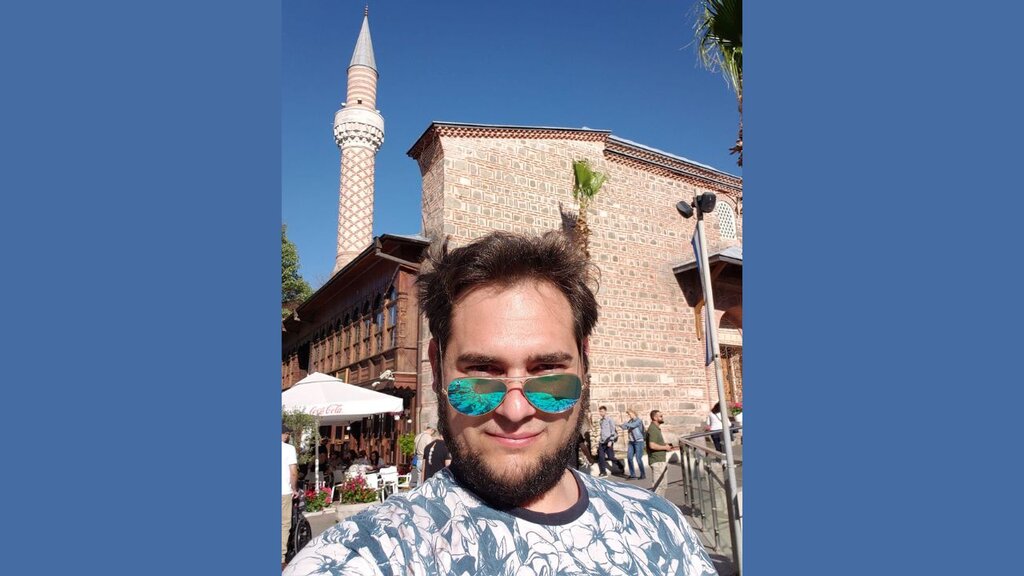
PHOTO Facebook / Tsvetan Dimov
In Japan, Tsvetan mastered the art of Japanese calligraphy and holds a certificate to teach it. “Being a teacher is a vocation,” he says.
“The first time I tried calligraphy was at school. The teacher told me to hold the rice paper at a 90-degree angle and not to worry about making mistakes. ‘Concentrate,’ they said. ‘You don’t hold the brush like a pen; you write with sweeping strokes. You should write on the smooth side, because the ink would smear on the other, grainy side. The first thing you do before writing is touch the paper and feel which side is which.’ The important thing when writing the kanji and kana, I was told, is to put your heart into each stroke.”
He always had a talent for it and was good at art classes in Bulgaria. Writing in Japanese is more of an art, especially with all the kanji – the Chinese characters used in Japanese writing.
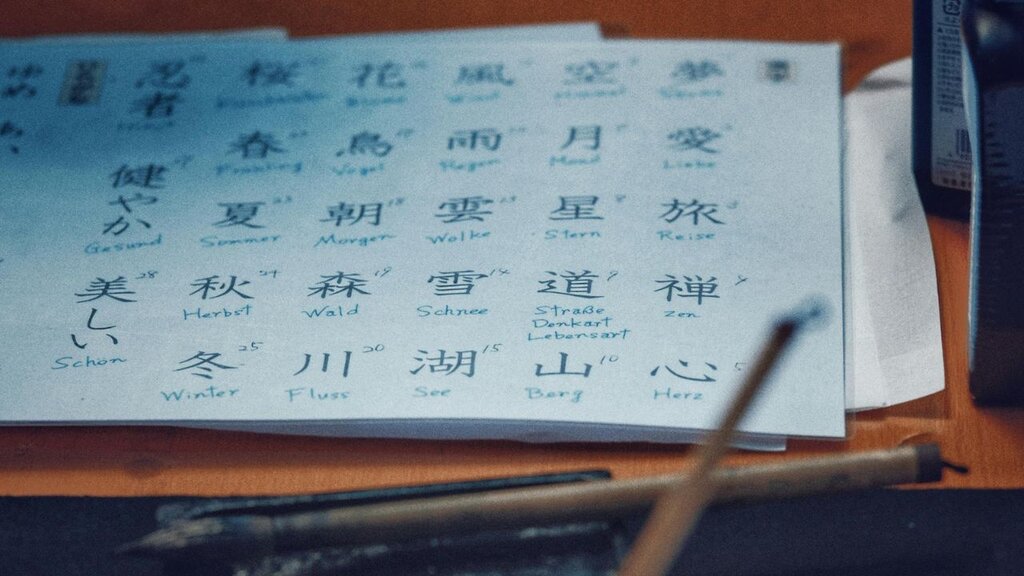
PHOTO Pexels
In 2020, Tsvetan returned to Bulgaria – the world was under lockdown. As all Bulgarian Sunday schools in Japan were closed, he wanted to help Bulgarian children living in Japan stay connected to their language and culture. He contacted Darin Madzharov, founder of the Ucha Se (I Learn) online platform, and asked him to provide access for the Bulgarian students in Japan. Madjarov agreed, and this marked the beginning of a new online school named “Sladkopoyna Chuchuliga”, which operated until the embassy in Tokyo opened the Vassil Levski Sunday School.
Tsvetan now lives in Sofia. He works with both the Bulgarian and Japanese languages and admits that, with the help of the “Bulgaria Wants You” initiative – which connects employers with young Bulgarians living abroad – it was relatively easy to find a good job.
However, six years ago, when he returned from Japan, he experienced culture shock. Among the things that surprised him were:
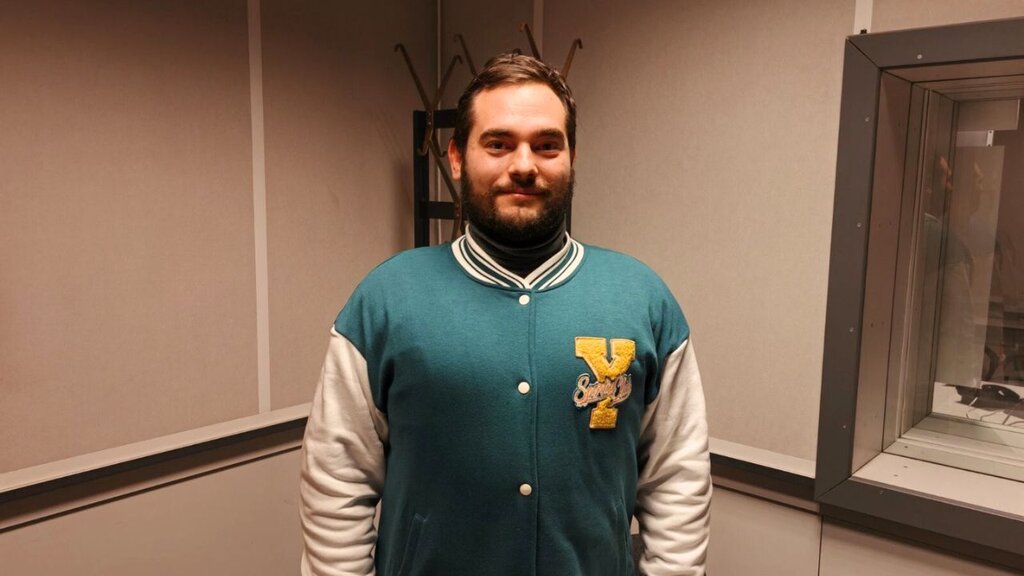
PHOTO Yoan Kolev
“I may look more radiant and all-smiley than other Bulgarians, and some people must think I’m odd. Also, there are no stray dogs or cats in Japan – the municipalities take care of them. I needed some time to get used to the traffic, because there the cars have right-hand drive and drive on the left, whereas here we have left-hand drive and drive on the right. The most important thing I realised was that in Bulgaria you need three qualities: out-of-the-box thinking, loads of imagination, and the ability not to worry too much. But still, I think that driving in Sofia is more challenging than in Tokyo.”
Editor: Elena Karkalanova
English translation: Elizabeth Radkova
This publication was created by: Elizabeth Radkova