


Author
Diana Tsankova
News
Bulgarian students win award in international Space Colony Design competition
Humanity is far from achieving possible life in space, but it’s good to dream, says Elitsa Pavlova
Wednesday 11 February 2026 15:19
Wednesday, 11 February 2026, 15:19
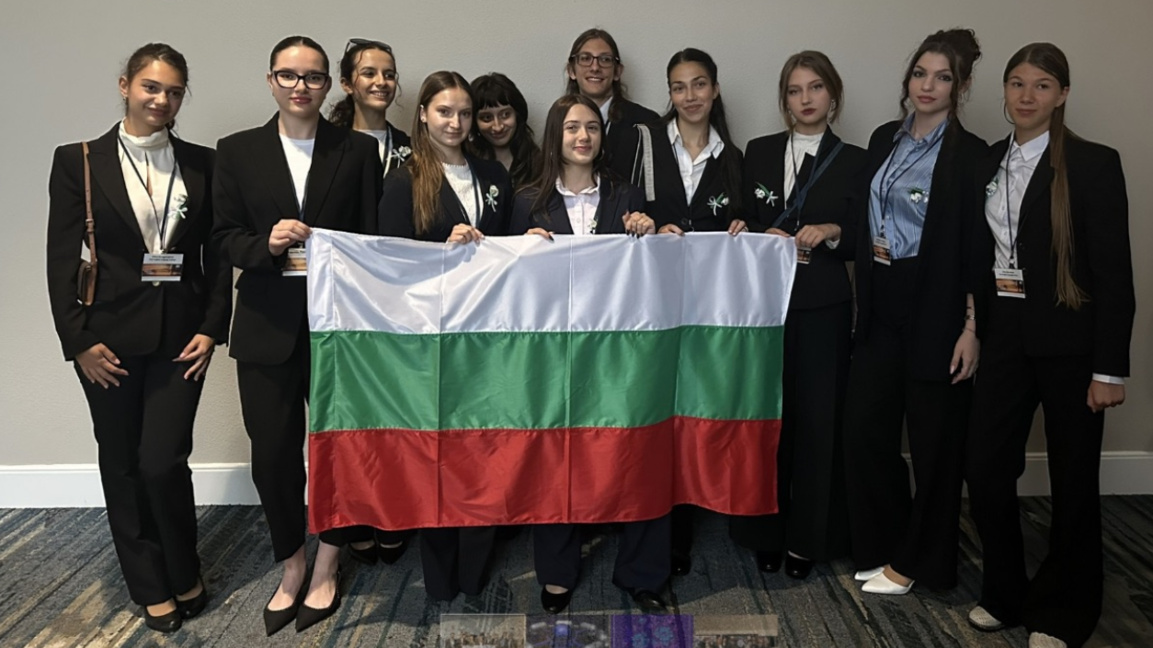
PHOTO Stanislava Pavlova
Font size
Twelve Bulgarian high school students are taking a glimpse of the future by creating not just a place for survival in outer space, but a true paradise among the stars where people can live fulfilling lives. With their project FlorAstra (“Flowers of the Stars,” translated from Latin), they won an award for the second consecutive year in the international Live in a Healthy Space Design Competition 2025, organized by the National Space Society in the United States, with more than 2,500 projects and over 14,500 students from twelve countries participating.
A few days ago, Elitsa Pavlova, Bilyana Manasieva, Jasmin Tsvetkova, Georgi Bishkov, Ema Nestorova, Nadezhda Dragneva, Irena Shevkenova, Siyana Krasteva, Martin Lambov, Daniel Georgiev, Lora Georgieva, and Ira Karina Dimova received the most eagerly awaited news - that they had been awarded second prize in the competition, which they won last year. They were required to present a concept for an agricultural structure for growing plants in space conditions.
“I think our victory is partly due to the fact that each time we include something typically Bulgarian,” says Elitsa Pavlova from the First English Language High School in Sofia. “Last year, we presented a method for producing yogurt on the International Space Station since it has many health benefits and we believed it would be useful even in space. This year, we decided to include another Bulgarian element - the oil-bearing rose, with its benefits not only in essential oils, ointments, or jams, but also as decoration, for mood, and to bring something from Earth to the station.”
The twelfth graders present their vision of a colony orbiting Ceres - a dwarf planet in our Solar System. They find symbolism in its name, as it carries the message “Let us move forward, let us continue the human race”. Ceres is also the ancient Roman goddess of fertility and motherhood.
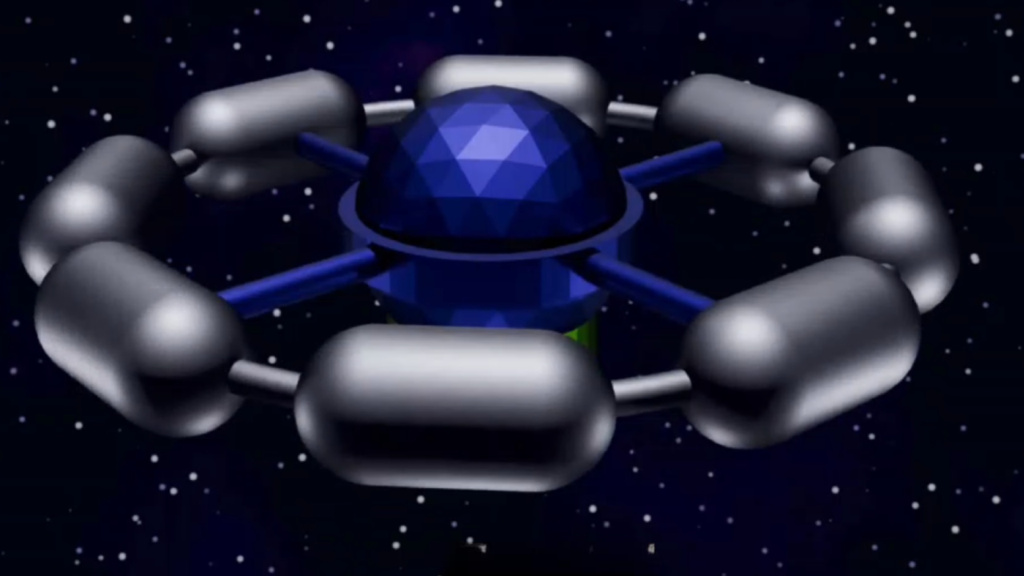
PHOTO Stanislava Pavlova
Our plan for the future is still very bold,” Elitsa Pavlova continues. “Humanity is quite far from achieving life in space, but it’s good to dream. We developed absolutely every aspect of life for the future space resident. We examined how oxygen and energy would be produced, how every resource would be purified and recycled. We also created a diet for the people on our station and came up with various activities, tasks, and goals for them to pursue there.”
The space colony around Ceres would provide life for 4,000 people through a fully closed ecosystem. With the help of an innovative combination of technologies, more than 40 types of plants would be grown there. The recycling system would convert urine into drinking water and fertilizers, while crickets and black soldier fly larvae would consume organic waste, turning into a protein-rich food source. Genetically modified crops with increased levels of vitamins A and C, 3D-printed meat made from plant proteins, and robotic harvesting would create an autonomous food system in which every resource is used repeatedly in an endless cycle of renewal - according to the project of the young Bulgarian inventors.
FlorAstra also focuses on psychological well-being through the cultivation of flowers. Thus, the rose species Rosa damascena and Rosa rugosa would not only decorate the space but also offer medicinal properties against pain, stress, and inflammation, and their essential oils would be used to produce medicines and cosmetics aboard the space station.
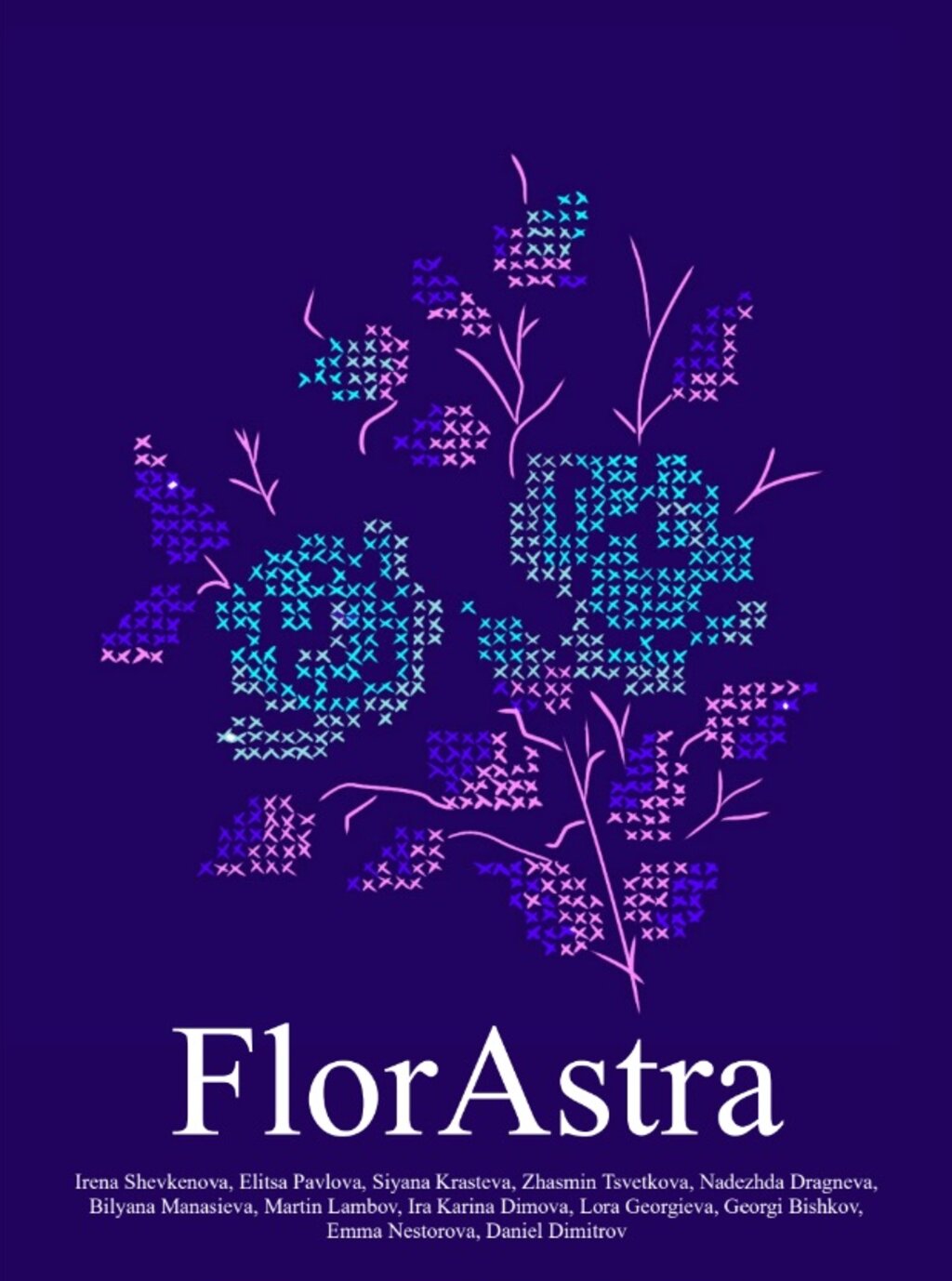
PHOTO Stanislava Pavlova
“As we know, humans have so far only reached the Moon; missions to Mars are planned, but still far in the future. We expect to follow the upcoming Moon mission that will take place in the coming months. Ceres is even farther than both the Moon and Mars, but we hope that at least within our lifetime we will see people reaching such distant points,” says Elitsa Pavlova.
To build their vision of the future, the young Bulgarian students rely entirely on their own efforts.
“It all started when I found the competition online,” Elitsa Pavlova recalls. “We did not work with a teacher’s help either this year or last year - we organized ourselves. We are twelve students from two Sofia schools - the First English Language High School and 133rd Secondary School “Alexander S. Pushkin”. We researched all the requirements, completed the work accordingly, and submitted it online. We relied on knowledge acquired at school. We did not use artificial intelligence. We conducted our own research and mainly read scientific studies.”
The nine girls and three boys envision different futures for themselves:
“Each member of our team has different interests, and that’s exactly what helped our success,” says Elitsa Pavlova. “Some are interested in biology and want to work with genetic modification, another member wants to become a pilot for example. Personally, I would like to pursue space architecture - designing structures that will help people develop more quickly in space exploration.”
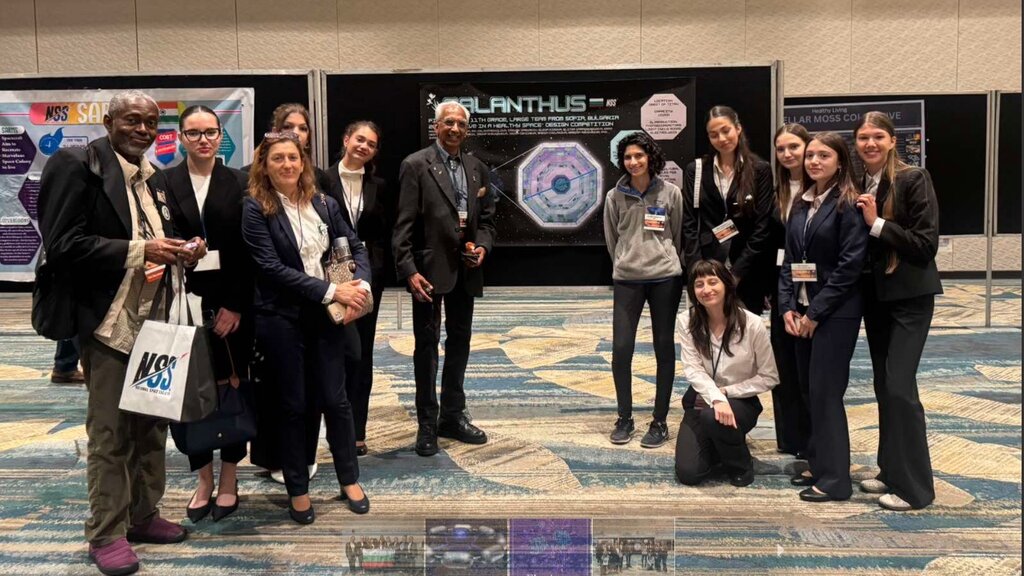
PHOTO Stanislava Pavlova
In 2025, the competition winners were invited to present their project Galanthus at the annual National Space Society conference in Florida. They did not believe they would be able to travel because of the high costs, but the Sofia Municipality extended a helping hand. Across the ocean, a world they had only dreamed of opened before their eyes - they met astronauts, world-class scientists, and NASA’s current administrator Jared Isaacman, visited the Kennedy Space Centre and NASA’s Cape Canaveral, and witnessed the launch of two rockets.
“Even the few minutes we had to speak with Susan Kilrain and Robert Gibson - astronauts who flew in many key missions - were truly inspiring. We realized that sitting in front of us were people who had walked this path, and that we could be like them,” says Elitsa Pavlova. According to her, Susan Kilrain’s life experience is proof that in physics and astrophysics - fields dominated by men - women also have a chance.
The young visionaries hope to fulfil their next dream - to present their work and establish valuable contacts in the United States, as they did last year.
“We met not only scientists but also students from other countries,” Elitsa Pavlova adds. “We formed friendships with Canadians and Romanians; there were teams from Kazakhstan, India, and distant parts of the world. In the future, we will continue to seek more practical projects - not purely theoretical like ours - and we will work together with like-minded people from around the globe. I hope so!”
Edited by Elena Karkalanova
English: Rositsa Petkova
This publication was created by: Rositsa Petkova