


Author
Tsvetana Toncheva
News
Asen Ovcharov: The man who laid the foundations of Bulgarian jazz
February 13 marks 120 years since the birth of the brilliant pianist, conductor, and composer whose life hit some brutal wrong notes
Friday 13 February 2026 12:23
Friday, 13 February 2026, 12:23
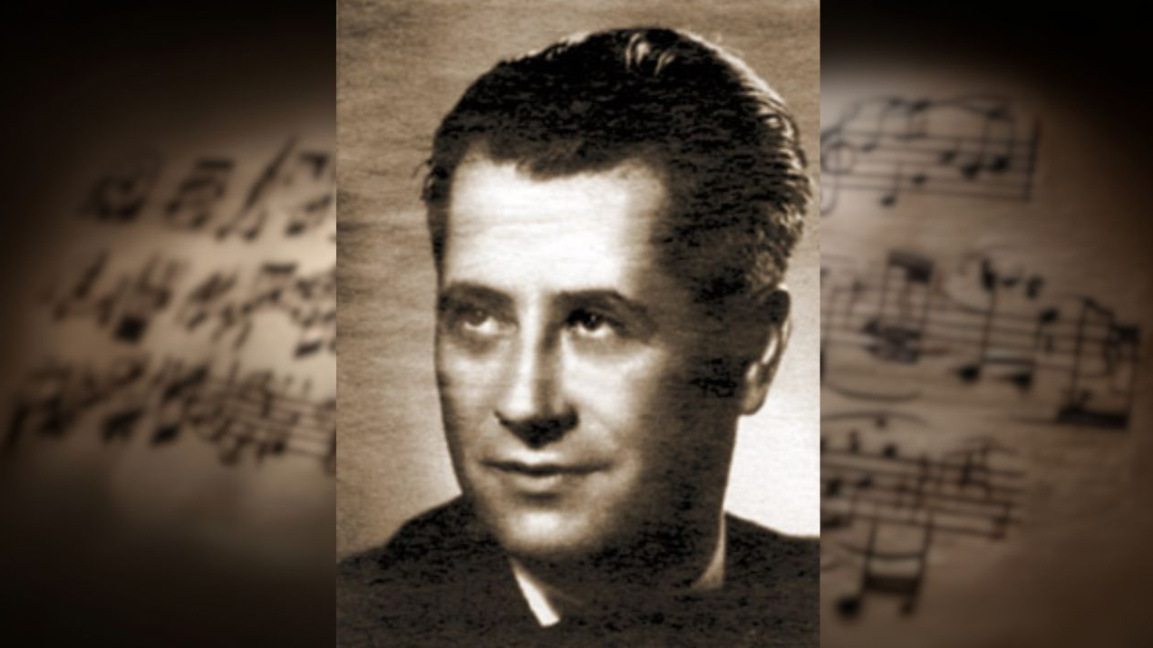
PHOTO archive
Font size
When discussing the origins of Bulgarian jazz, one name surfaces more than any other: Asen Ovcharov.
Often described as the “father” and “founder” of Bulgarian jazz, he occupies a central place in the story of the country’s modern culture — as a bandleader, arranger and teacher.
His impressive career began in the 1930s, when he founded some of the first Bulgarian jazz orchestras. From his pioneering work as an organiser and conductor to his later dedication as a teacher at the Music School in Plovdiv, Ovcharov played a decisive role in shaping musical tastes and introducing Bulgarian audiences to jazz.
In the last two decades of his life, however, he became a victim of harsh political repression. After Bulgaria aligned itself with the Communist bloc in 1944, jazz fell outside the officially accepted musical currents in the country. Despite persecution and imprisonment, Ovcharov remained loyal to what he regarded as a mysterious, elegant and irresistible genre.
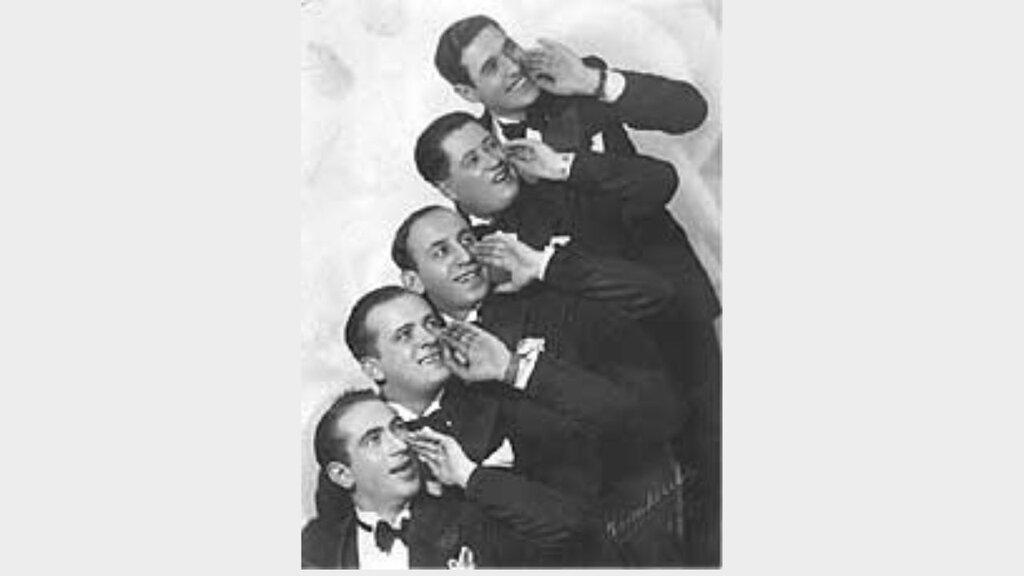
PHOTO Archive
Born in Harmanli in 1906, Ovcharov initially studied chemistry at Sofia University. Yet laboratory work could not compete with rhythm and harmony. He left his studies and chose music — a decision that would alter the course of Bulgarian popular music.
He studied piano with the esteemed Professor Andrey Stoyanov and began his career performing with the orchestras of conductor Boris Leviev. By 1932, Ovcharov had become the first jazz musician to perform live on national radio — at a time when broadcasting was the principal platform for music.
A year later, he helped to establish the country’s first professional organisation for jazz ensembles: the Jazz Orchestral Club. His most significant step, however, was to elevate jazz from cabaret entertainment to a recognised concert art form.
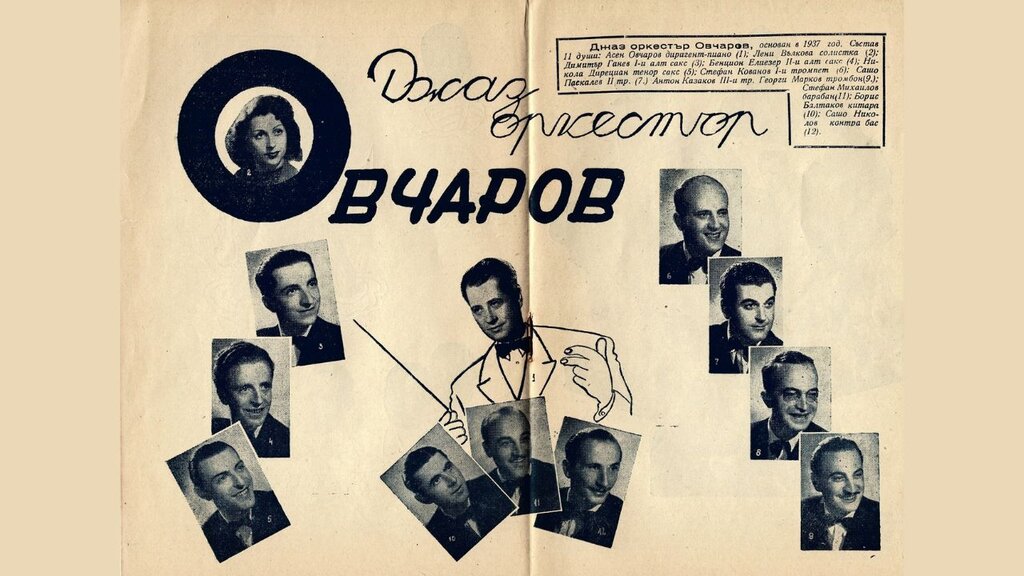
PHOTO jazzfm.bg
Although it is often said that the first Bulgarian jazz orchestra was the well-known “Jazz Ovcharov”, founded in 1937, music critic Vladimir Gadzhev later pointed out that a Jazz Radio Orchestra, which also functioned as a dance orchestra, had already been formed in 1936 on the initiative of composer Dimitar Nenov. Nevertheless, Gadzhev emphasised that Ovcharov was the first true leader-musician to play an active role in developing Bulgarian jazz as a genre.
Between 1936 and 1937, Ovcharov created a large number of arrangements for a band that he had assembled himself. This group included some of the era's leading instrumentalists, such as the saxophonists Bozhidar Sakelarev, Niko Nisimov, and Leon Alfasa; the trumpeter Stefan Kovanov; the drummer David Ashkenazi; and Alexander Nikolov, also known as Sasho Sladura ("Sladura" meaning "sweetheart"), who played the violin and double bass.
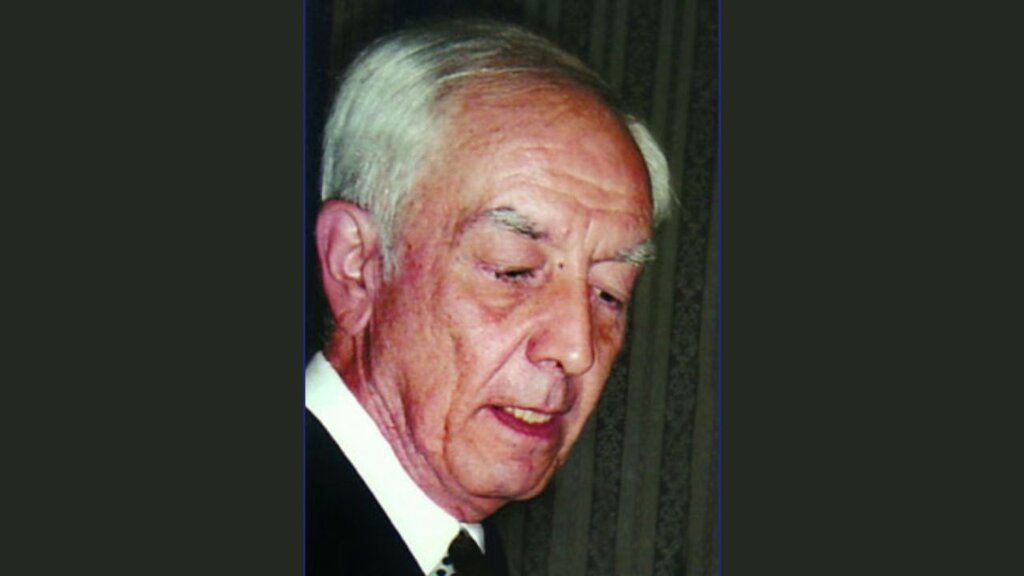
Vladimir Gadzhev
PHOTO iztok-zapad.eu
The big band “Jazz Ovcharov” held its first official concert in 1938. It was a major success. Foreign impresarios attended and even offered the orchestra a contract for a large tour of South America.
During World War II, jazz grew increasingly popular in Bulgaria. In 1941, a variety theatre opened in the City Casino building in Sofia (now the Sofia City Art Gallery), and 'Jazz Ovcharov' became its resident orchestra under the direction of operetta artist Angel Sladkarov.
However, in 1944, a conflict led Bozhidar Sakelarev to leave the group and form a new ensemble called 'The Jazz of the Optimists', which toured the country. After the war, musical life in the capital resumed and the two leading ensembles, 'Jazz Ovcharov' and 'The Jazz of the Optimists', alternated concert programmes in a building on Tsar Osvoboditel Boulevard.
In a 2002 interview with Bulgarian National Radio, the distinguished saxophonist, clarinettist and conductor Dimitar Ganev — one of the founders of the BNR Big Band and the Balkanton Orchestra — described Ovcharov as a highly colourful and hard-working individual.
Ganev recalled one of Ovcharov’s remarkable abilities: transcribing entire scores from memory.
“At that time, an American film was being shown in Sofia – Sun Valley Serenade. After work, which meant at 4 a.m., Asen Ovcharov would go to the cinema, where they would screen the film for him so that he could write down the full score of all the melodies and songs performed by the Glenn Miller Orchestra. The next day, rehearsals would begin, and it was such a pleasure for us to play those pieces performed by the Glenn Miller Orchestra!”
The now largely forgotten practice of transcribing music by ear and writing out individual parts for each instrument, together with Ovcharov’s high artistic standards, earned him the nickname “The Hound” — a reference to the long rehearsals he insisted upon until a piece sounded exactly as the leader wanted it.
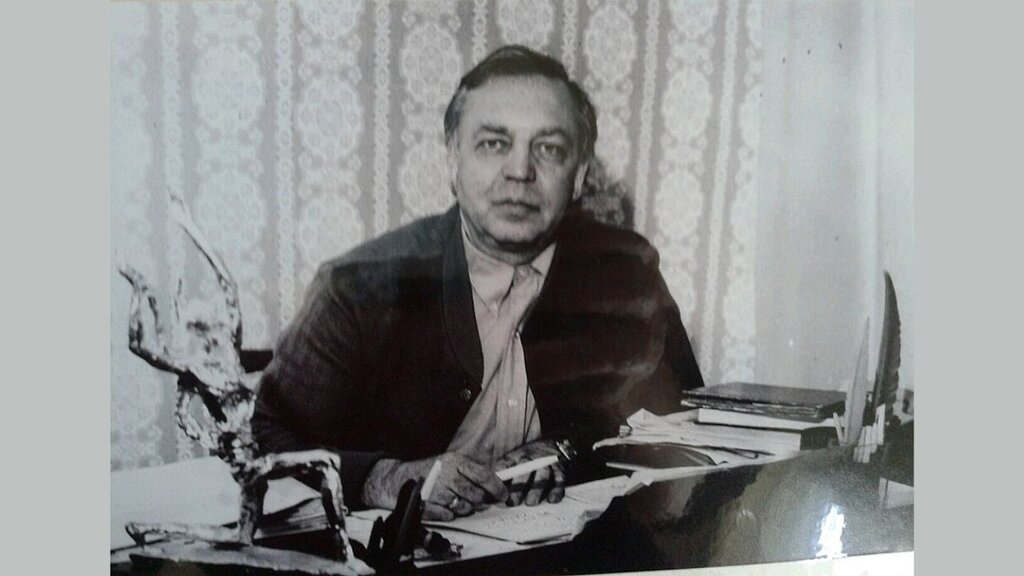
Dimitar Ganev
PHOTO Family archive of Maria Ganeva
In 1948, the first big band of its kind in Bulgaria was formed, with full instrumental sections. The band's debut concert took place at the Soviet Officers' House.
Soon after, repression followed. In 1949, Ovcharov was arrested and accused of spying for the United States and Great Britain. Although he had indeed visited their diplomatic missions, his only intention had been to obtain original sheet music. Among the absurd accusations was the claim that he had attempted to “jazz” and “caricature” the melody of “The Internationale,” then associated with the Soviet Union.
“Jazz Ovcharov” was dissolved. Ovcharov spent years in prison and in the Belene labour camp before being exiled to Plovdiv. There, he taught the accordion at the music school and later conducted the Song and Dance Ensemble of Radio Plovdiv. Eventually, he assembled another big band, this time largely composed of young musicians.
Asen Ovcharov died in Plovdiv in 1972. On 24 May 2001, he was posthumously awarded an honorary prize by the Ministry of Culture of the Republic of Bulgaria.
Despite political persecution and personal hardship, Ovcharov remained devoted to jazz throughout his life, succeeding in firmly embedding the genre in Bulgaria’s cultural landscape.
Editor: Elena Karkalanova
English: E. Radkova
This publication was created by: Elizabeth Radkova