


February 14 - Day of Bulgarian Archaeology
Over 300 archaeological finds from the 2025 season are on display in Sofia
Saturday 14 February 2026 06:25
Saturday, 14 February 2026, 06:25
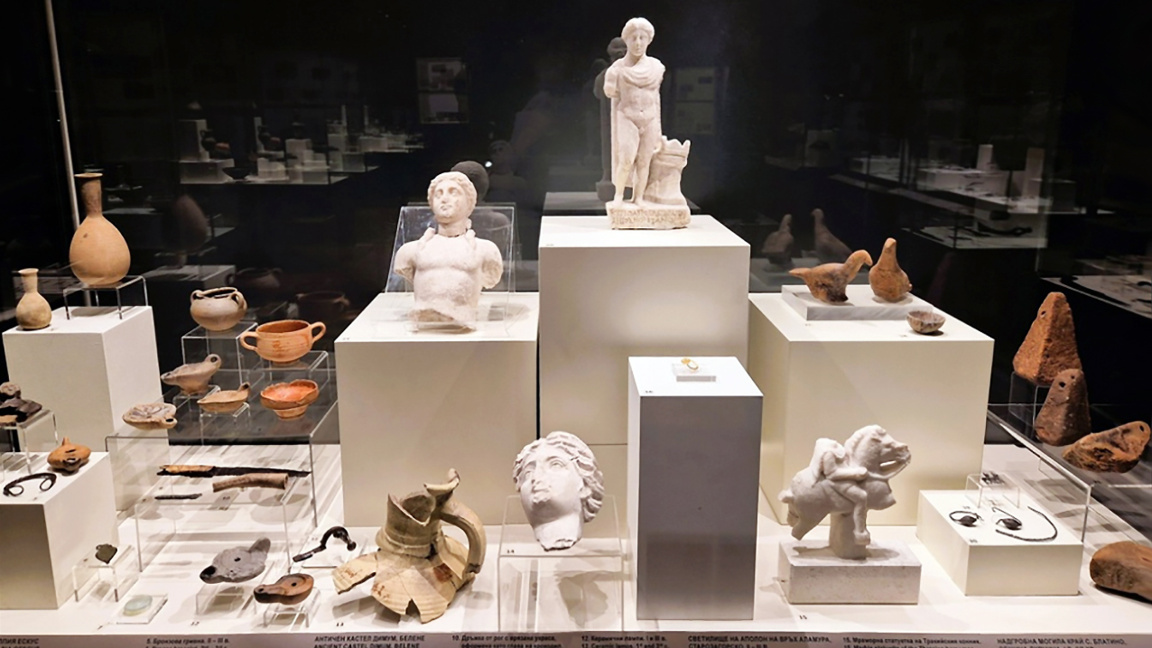
PHOTO National Archeological Institute with Museum, BAS
Font size
For the 19th consecutive year on the occasion of February 14 - the Day of Bulgarian Archaeology, the National Archaeological Institute with Museum at the Bulgarian Academy of Sciences (BAS), together with 19 other museums across the country, is presenting the traditional exhibition “Bulgarian Archaeology.” It showcases the most significant results of the 2025 archaeological research season.
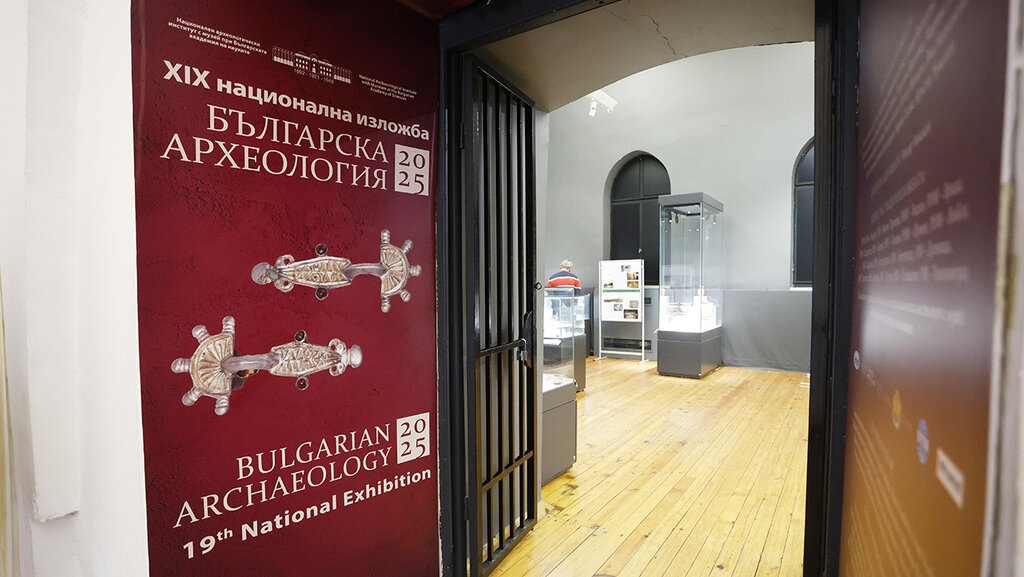
PHOTO BGNES
Chronologically, the exhibits range from prehistory to the late Middle Ages. The finds come from landmark prehistoric settlement mounds such as Provadia and Yunatsite; from the ancient cities of Ratiaria, Oescus, Dimum, and Heraclea Sintica; from the medieval capitals Pliska, Tarnovo, and Kaliakra; as well as from lesser-known sites connected to various rescue excavations.
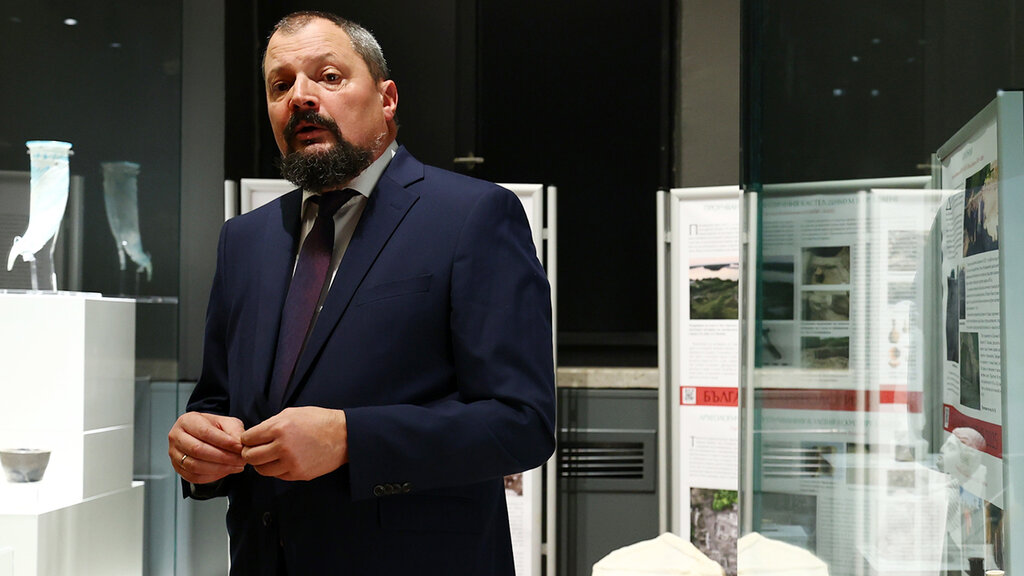
Assoc. Prof. Hristo Popov, PhD
PHOTO BTA
“The space is, to some extent, limited and cannot present everything,” explains Assoc. Prof. Dr. Hristo Popov, Director of the National Archaeological Institute with Museum at BAS, at the exhibition’s presentation.
More than 300 artifacts from 31 sites across the country can be viewed at the National Archaeological Museum in Sofia until June 7.
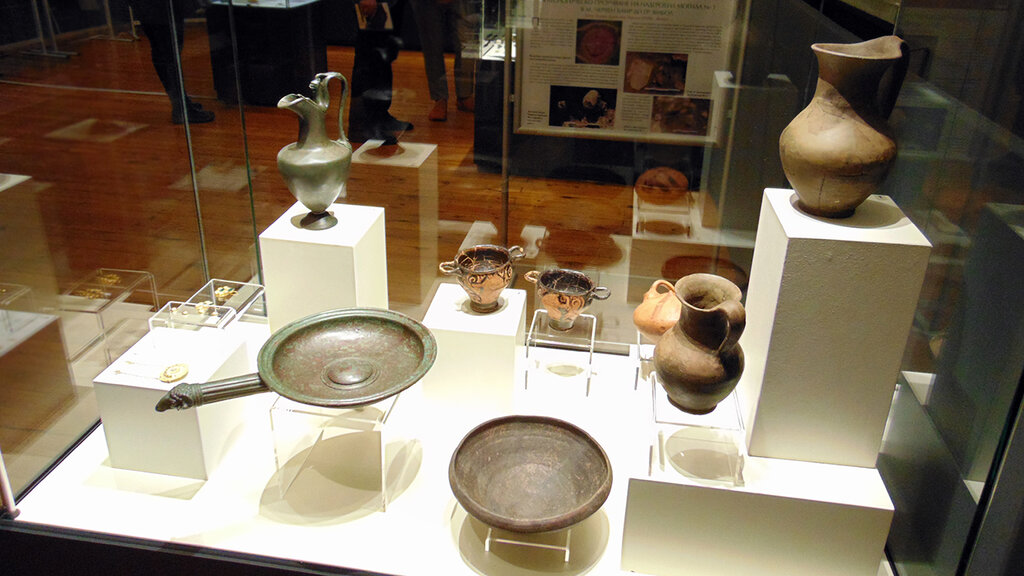
PHOTO Ivo Ivanov
“One of the highlights of the exhibition is a glass rhyton in the shape of a cornucopia - an exceptionally rare find, with well-preserved remains and very carefully restored, since it was not found intact,” explains Assoc. Prof. Dr. Kamen Boyadzhiev. “I would say it was quite a serious challenge from a restoration point of view. But despite the short time frame, you can see it today fully restored and displayed in the exhibition,” he adds.
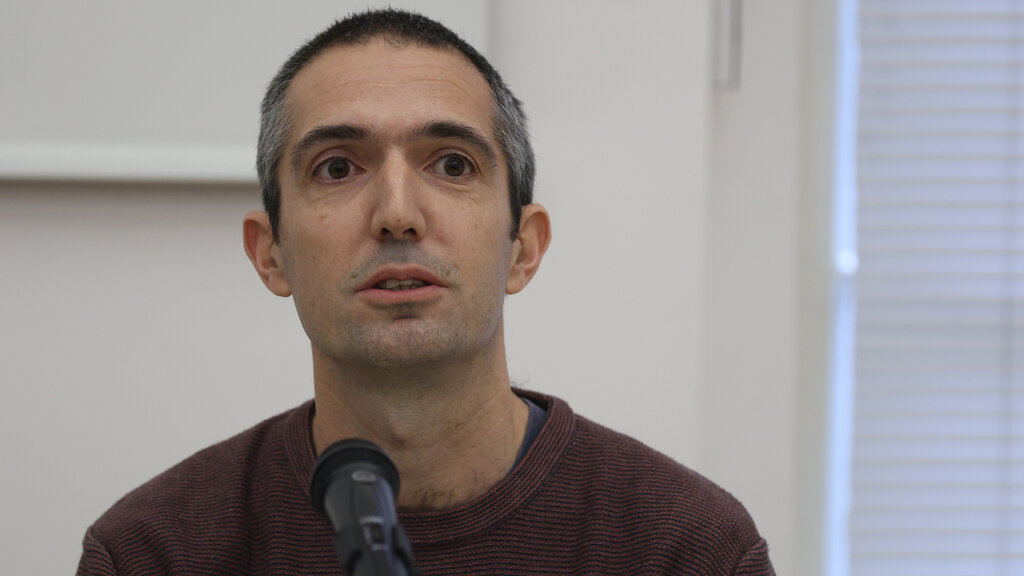
Assoc. Prof. Dr. Kamen Boyadzhiev
PHOTO BTA
Although discovered in an unremarkable context, near iron-smelting furnaces and close to Roman sacrificial pits, the glass horn from the area of the village of Blaskovo near Varna is rare even for the Roman world in Europe.
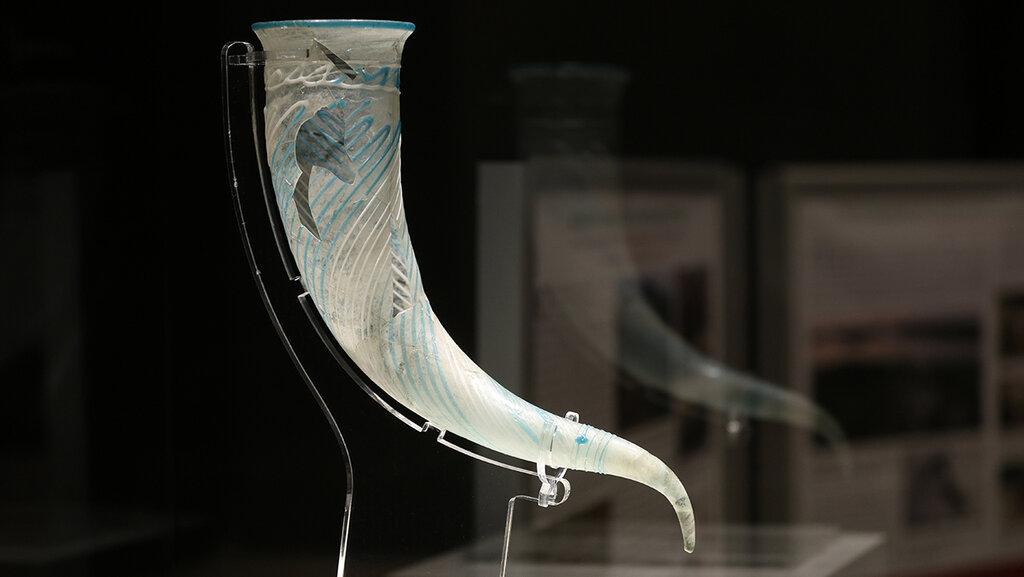
PHOTO BTA
“It most likely dates from the Late Roman period, when the Great Migration began and the Gothic invasions took place. In any case, this object was imported into Thrace,” Assoc. Prof. Dr. Gergana Kabakchieva tell Radio Bulgaria. “We have never had a glass rhyton here before, not even a fragment. This leads me to believe that the rhyton most probably originated from the workshops of Cologne, which until the end of the 4th century and later remained one of the largest and longest-lasting centers of glass production in Western Europe.”
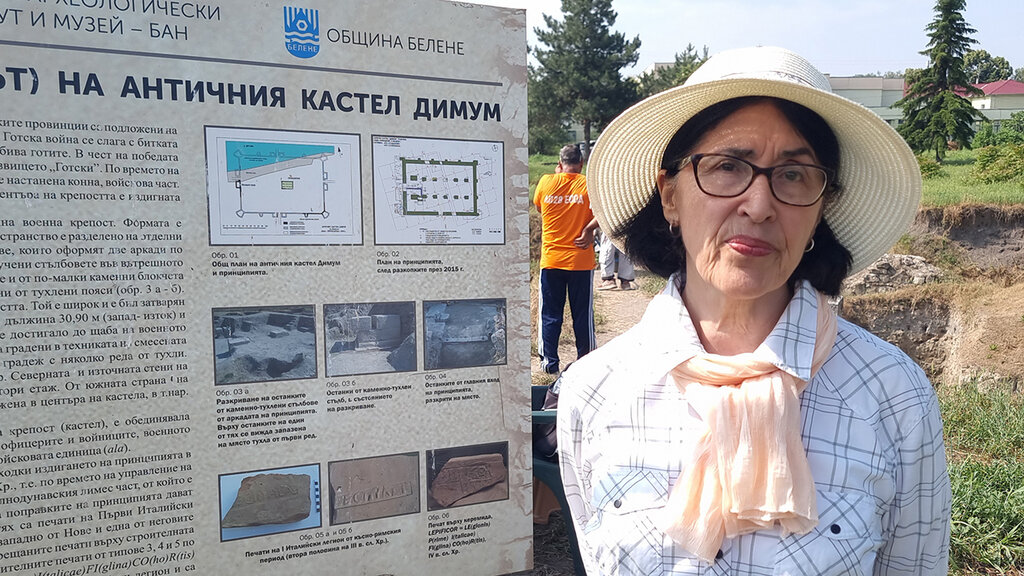
Prof. Dr. Gergana Kabakchieva
PHOTO BTA
As an archaeologist at the National Archaeological Institute, Assoc. Prof. Gergana Kabakchieva systematically studies the Roman limes along the Bulgarian stretch of the Danube. During the 2025 archaeological season, she and her team continued their research of the imperial palace at Ulpia Oescus, where in the summer of 328 Emperor Constantine the Great stayed in the capital of Lower Dacia to inaugurate a new bridge over the Danube River. While studying the fortress of Dimum near Belene, archaeologists discovered a strange object that they initially thought was a horn whistle.
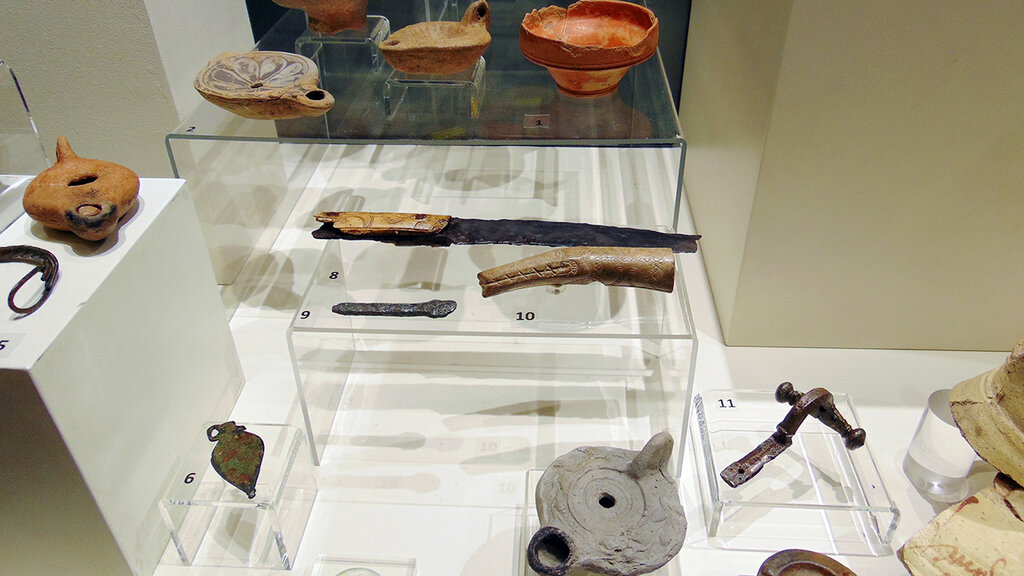
Artefacts from Dimum near Belene, in the middle - the goat horn in the shape of a crocodile's mouth
PHOTO Ivo Ivanov
“The front part of this horn is shaped like a crocodile’s head. For years we have been searching for the name of the military unit that was stationed at Dimum - this ancient castellum on the Lower Danube. Clues so far have come from part of a seal bearing three preserved letters. Only ‘sol’ can be read, which epigraphists interpret as ‘solensium,’ meaning ‘the solar’. Apparently, some military unit came from warmer lands, and the find we discovered in 2025 can, in my opinion, indeed be linked to this information,” said Assoc. Prof. Kabakchieva.
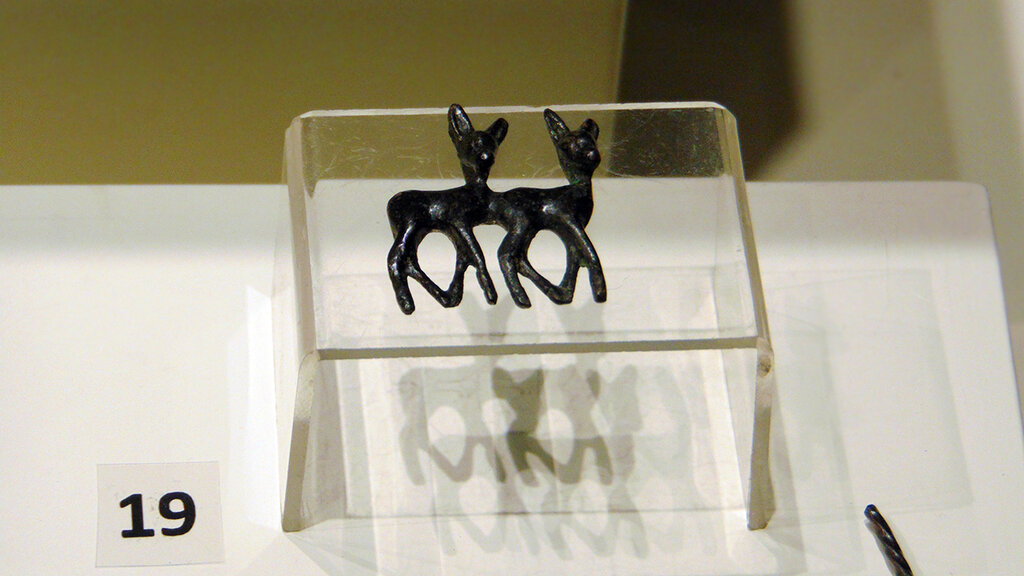
An exquisite garment fibula from the sanctuary of Apollo on Alamura Peak in the Stara Zagora region
PHOTO Ivo Ivanov
In 2025, excavations continued for two months at the Kaliakra National Archaeological and Nature Reserve. At the rocky Black Sea cape, definitive evidence has now been found of a permanent settlement dating back to the First Bulgarian Empire, Dr. Filip Petrunov explains.
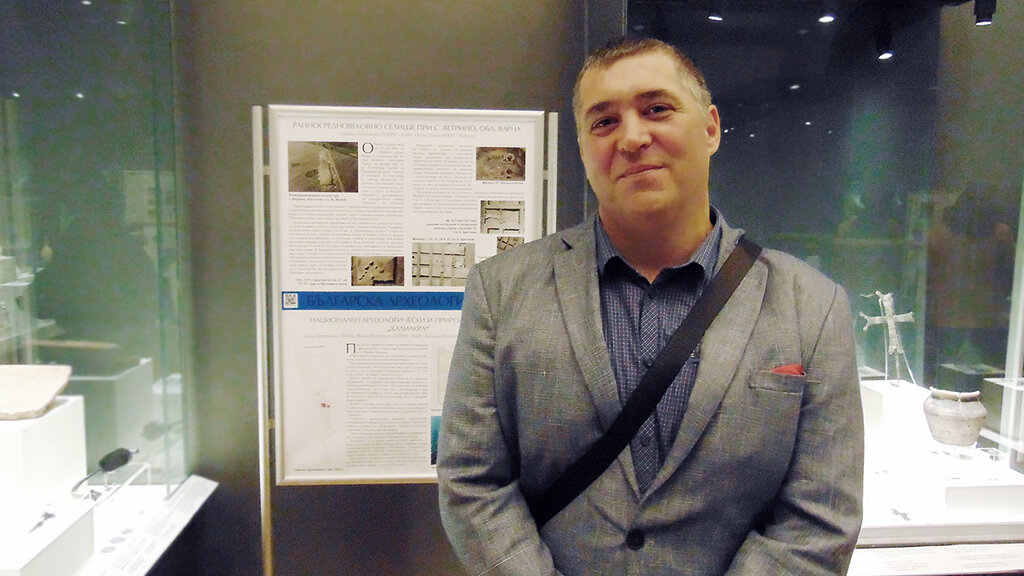
D-r Filip Petrunov
PHOTO Ivo Ivanov
“During these two months we collected more than 400 items made of gold, silver, bronze, and lead. Some of the most representative pieces are currently part of the 19th ‘Bulgarian Archaeology’ exhibition at the National Archaeological Institute.
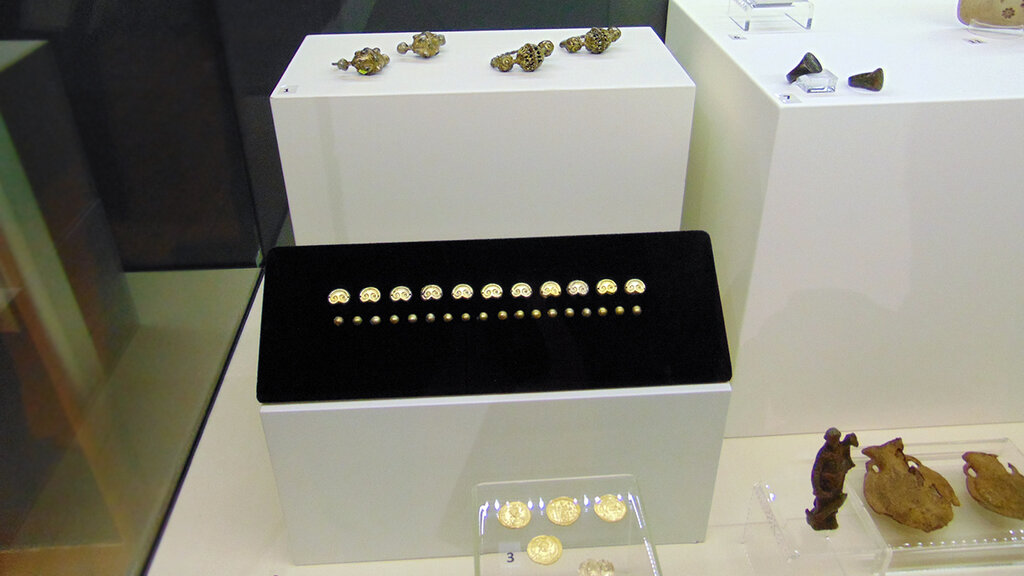
Artefacts from Kaliakra discovered in the 2025 season
PHOTO Ivo Ivanov
Among them we should highlight a Roman statuette of Fortuna with a cornucopia; materials from the First Bulgarian Empire; rings with a pentagram and an eagle; and two lead ampullae - small flasks used to store holy myrrh brought by pilgrims from the Holy Land - as well as 14th-century materials.
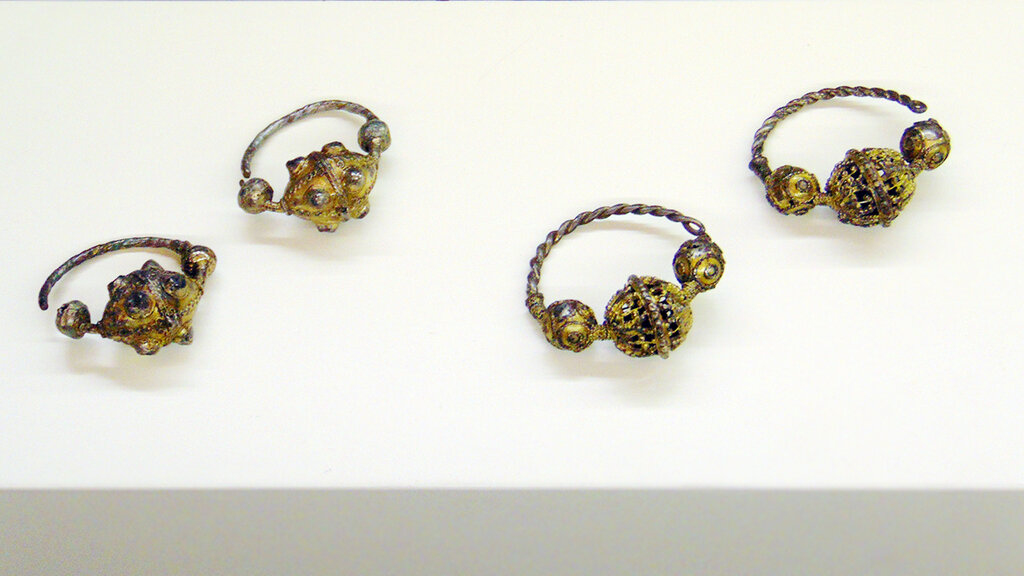
Gold female earrings from Kaliakra
PHOTO Ivo Ivanov
From that period we have a beautiful inscribed medallion, two sets of gold earrings, and a rather luxurious diadem made of gilded copper plates,” the archaeologist tells Radio Bulgaria.
Photos: Ivo Ivanov, BTA, BGNES, National Archeological Institute with Museum, BAS
English version: R. Petkova
This publication was created by: Rositsa Petkova
- #Kaliakra
- #National Archaeological Institute with Museum
- #Ratiaria
- #Bulgarian archeology
- #archeology Bulgaria
- #archeological excavations Bulgaria
- #archeological discoveries Bulgaria
- #National Archaeological Institute with Museum at the Bulgarian Academy of Sciences
- #Day of Bulgarian Archeology
- #Assoc. Prof. Dr. Hristo Popov
- #glass rhyton
- #Roman Empire Bulgaria
- #Roman limes
- #Bulgarian archeologists