


Author
Lyubomir Kolarov
Antoaneta Radoslavova: The Radio remembers its people and voices
Monday 16 February 2026 04:05
Monday, 16 February 2026, 04:05
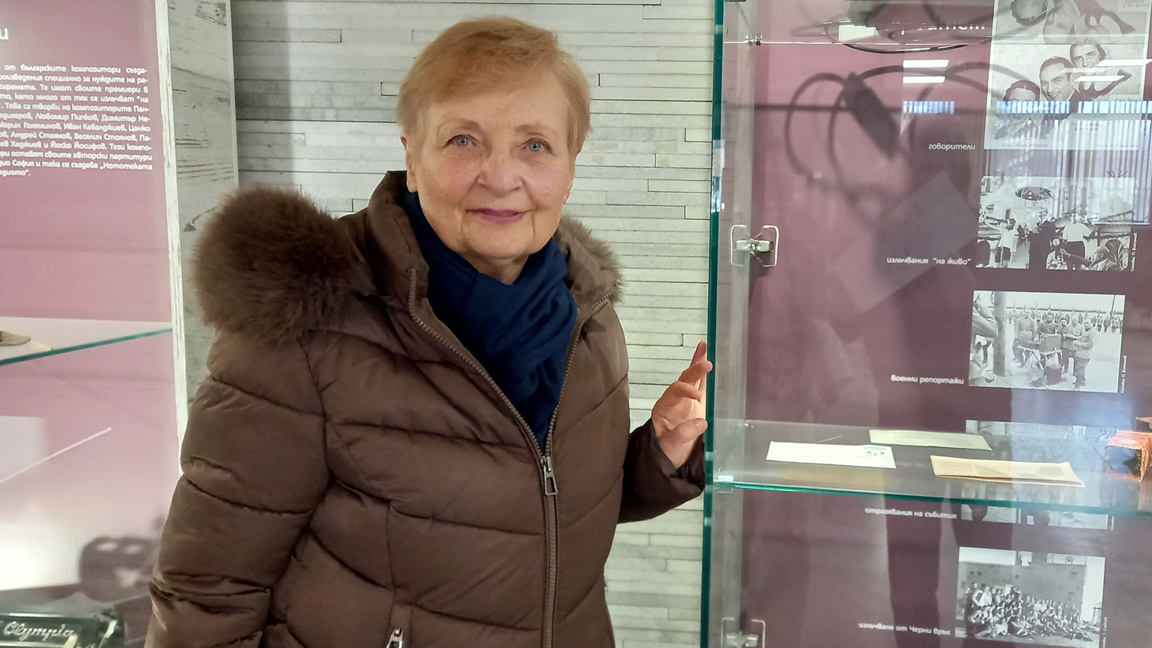
Antoaneta Radoslavova
PHOTO Lyubomir Kolarov
Font size
The voice on the radio was a window to the world - especially in the years when access to information was limited and radio waves connected continents. We speak about the history, memory, and future of the foreign-language service of the Bulgarian National Radio, known today as Radio Bulgaria, with Antoaneta Radoslavova – curator of the only Museum of Radio History in Bulgaria, long-time music editor at the Bulgarian National Radio, and part of the Radio Bulgaria team.
At the very beginning of our meeting, she emphasizes her personal connection to the media:
"I am happy to be in the studio of Radio Bulgaria – a media outlet that I love and have, in a sense, researched in one of my books, which is dedicated to music on Bulgarian radio in the period from 1930 to 1944."
After her retirement, Antoaneta Radoslavova continued her academic work. In 2012, she received an invitation from Zahari Milenkov - founder and first curator of the Radio Museum. At first, she declined because she was working on her book about the history of Radio Sofia. Two years later, she accepted. "I couldn’t refuse him," she admits, and for twelve years now she has been part of the museum’s team.
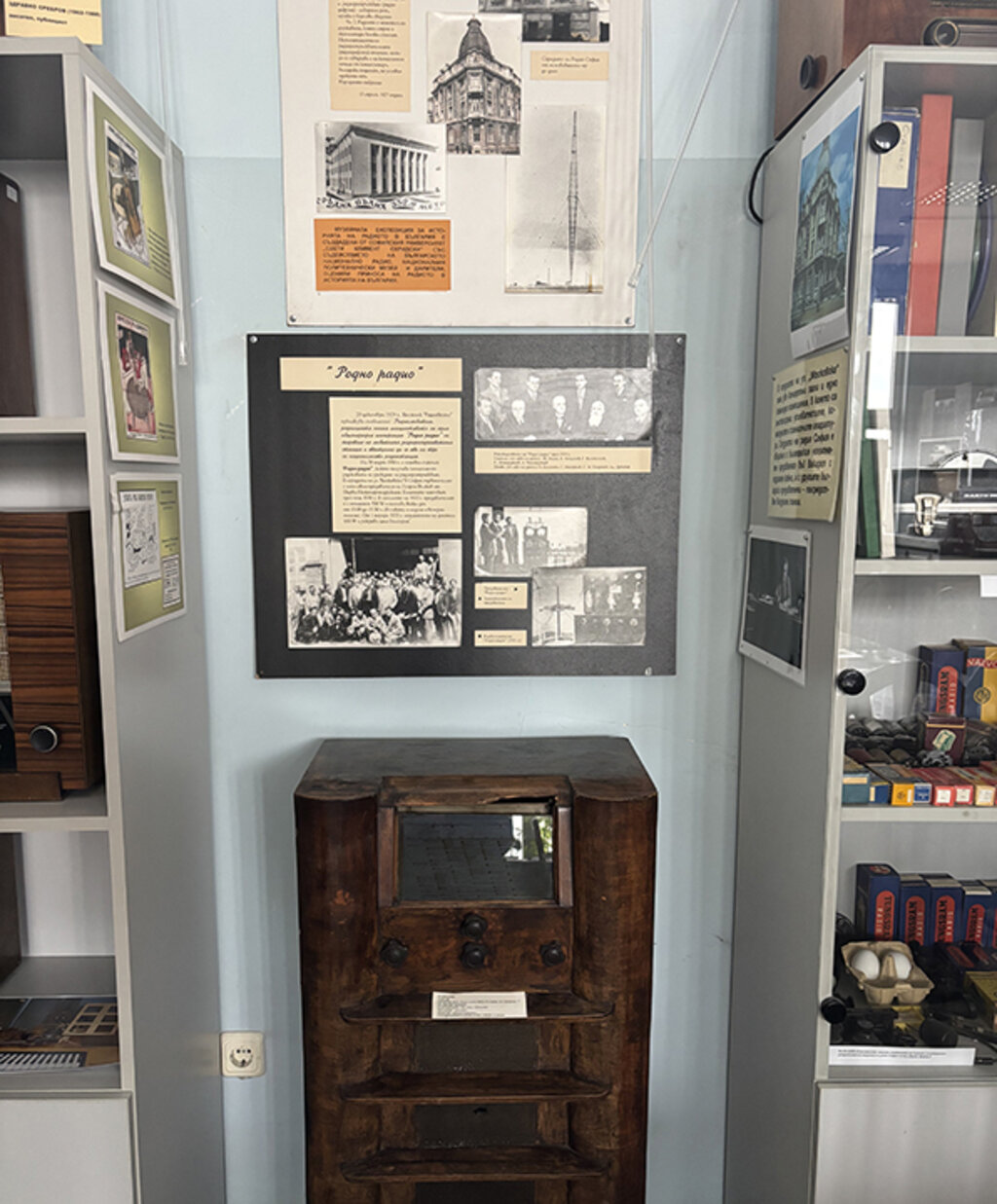
PHOTO Lyubomir Kolarov
Among the most valuable archival testimonies, she points to recordings of opera prima Ghena Dimitrova and interviews with the intellectual Petar Uvaliev. She is especially moved by his words, spoken in a conversation with Galya Siriyska from the editorial office for Bulgarians abroad, in which he talks about radio’s ability to transcend divisions and overcome hatred.
“Radio waves leapt over the trenches of hatred. Radio taught us not to hate,” said Petar Uvaliev.
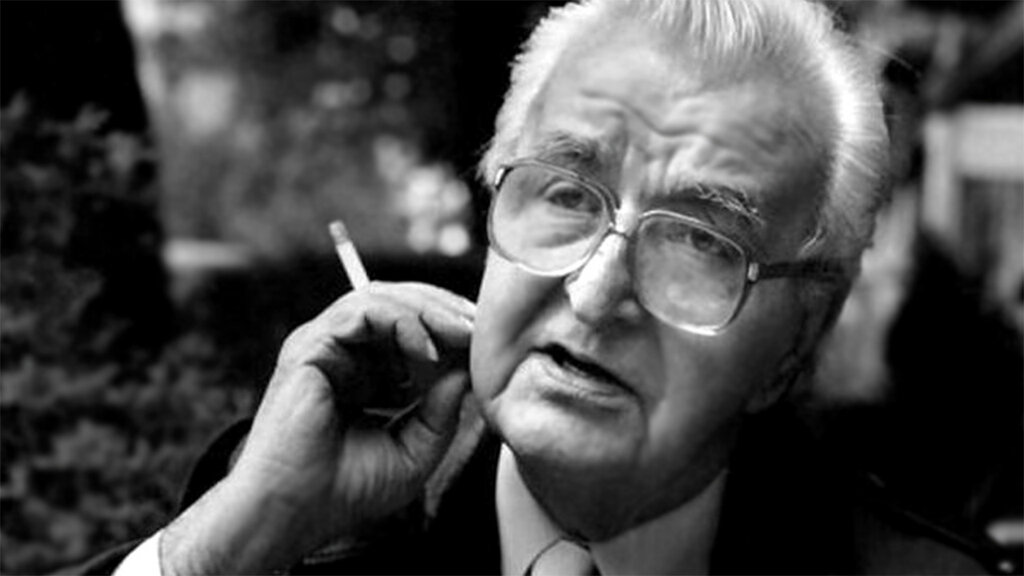
PHOTO BNR Archive
Over the years, Radio Bulgaria has had a clear mission - “to show what an interesting country Bulgaria is, to reveal its culture and its music.” As early as 1936, special 30-minute music programs were broadcast for Bulgarians abroad, through which both Bulgarians and foreigners became acquainted with Bulgaria’s unique musical folklore. Later, broadcasts were developed in German, Italian, Polish, Czech, Serbo-Croatian, Romanian, Greek, and Turkish, and in different periods - also in Arabic; there was even an African editorial department.
In the early 1990s, the foreign-language programs began broadcasting under the name Radio Bulgaria. In 2012, however, the shortwave and medium-wave transmitters were shut down, and the media outlet moved entirely into the online space - a change that marked a new stage in its development.
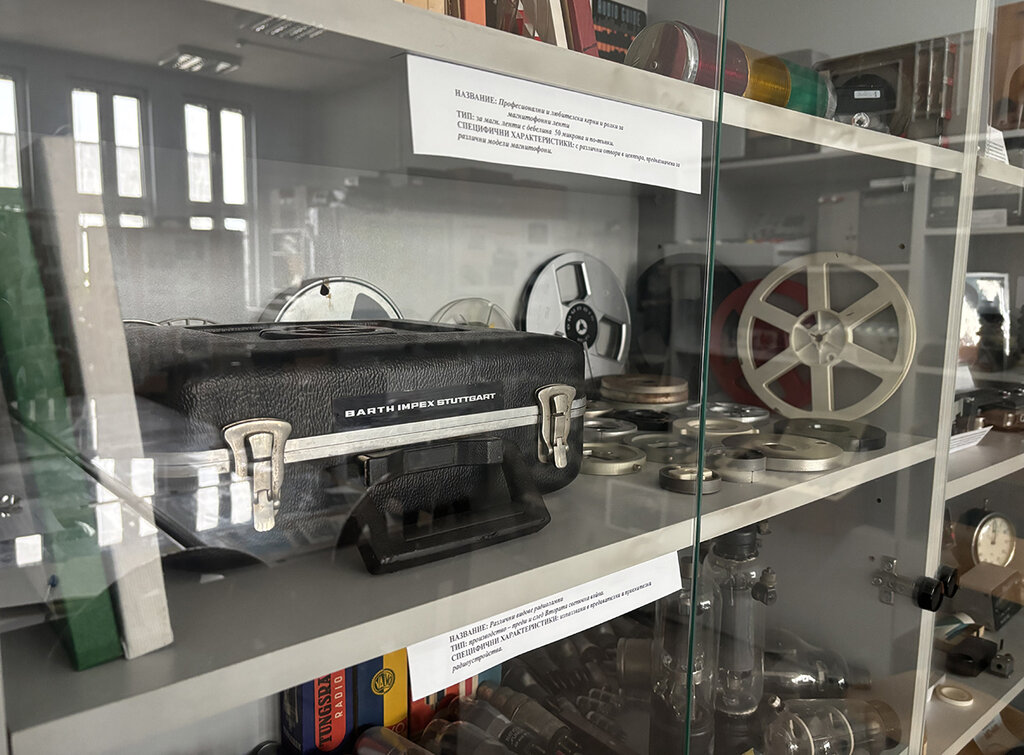
PHOTO Lyubomir Kolarov
Today, the museum preserves not only documents and recordings, but also unique technical equipment. Among the exhibits is a multi-path mercury rectifier tube, donated by the regional radio station in Stara Zagora, which operated for more than 60 years without interruption. Visitors are also impressed by the old microphones preserved thanks to engineer Asen Marinov, including a four-sided carbon model and a marble model from the 1930s.
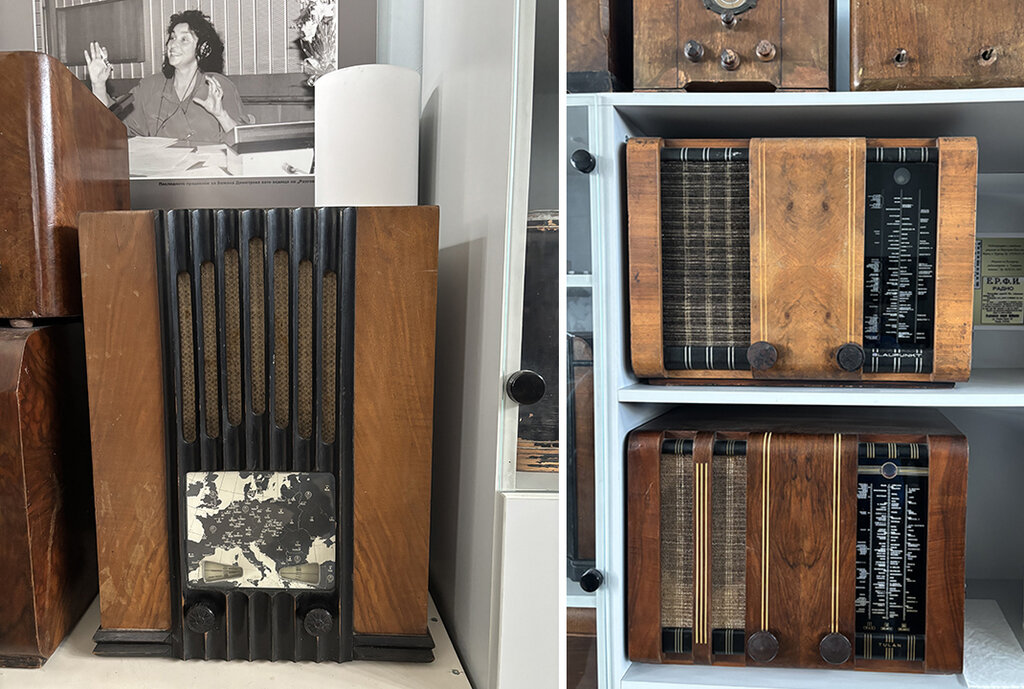
PHOTO Lyubomir Kolarov
According to Antoaneta Radoslavova, though, what matters most is the memory of the people:
“We strive to preserve not only objects - consoles, tape recorders, old radio receivers - but also the memory of the people who worked in radio, because radio must remember its journalists, musicians, sound engineers, technicians, engineers, translators, announcers, and others who devoted several decades of their lives here at the radio.”
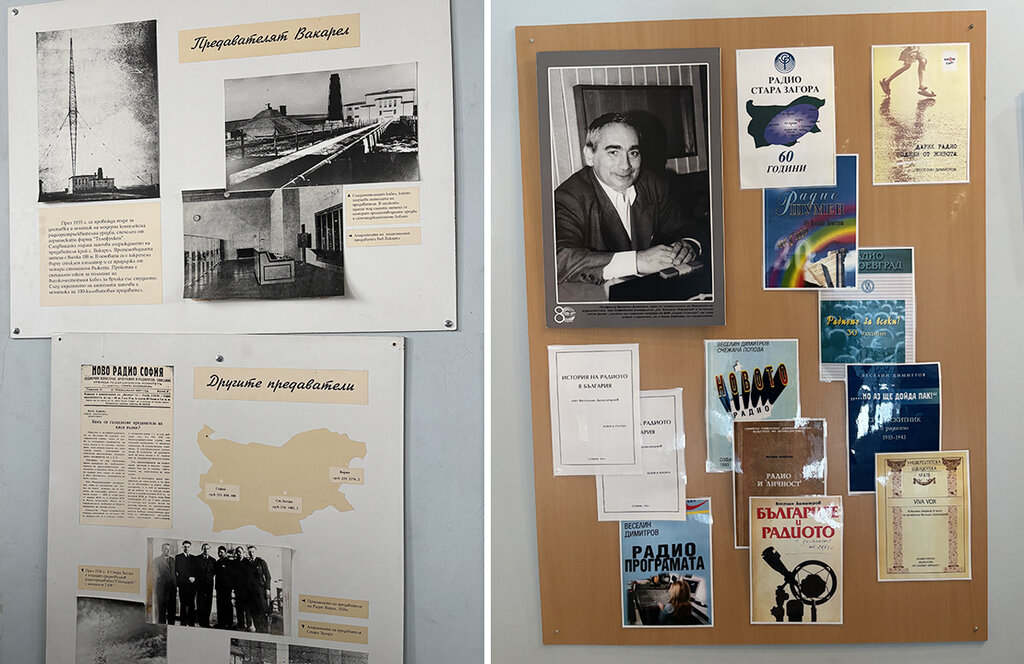
PHOTO Lyubomir Kolarov
Among the “treasures” of Radio Bulgaria, she highlights the series “Folk Studio” by Rumyanya Panayotova. The museum preserves a huge folder containing her programs dedicated to Bulgarian songs, dances, and traditions. An interesting memory from the early 1990s is a letter from Japan, in which a listener expressed surprise at the modern Bulgarian music broadcast on air.
If she could relive one moment from the past, Radoslavova says she would return to the beginning of the shortwave broadcasts. The archives preserve hundreds of letters from Europe, North Africa, Syria, Morocco, and the United States - testimony to the strength of the signal and the connection with listeners.
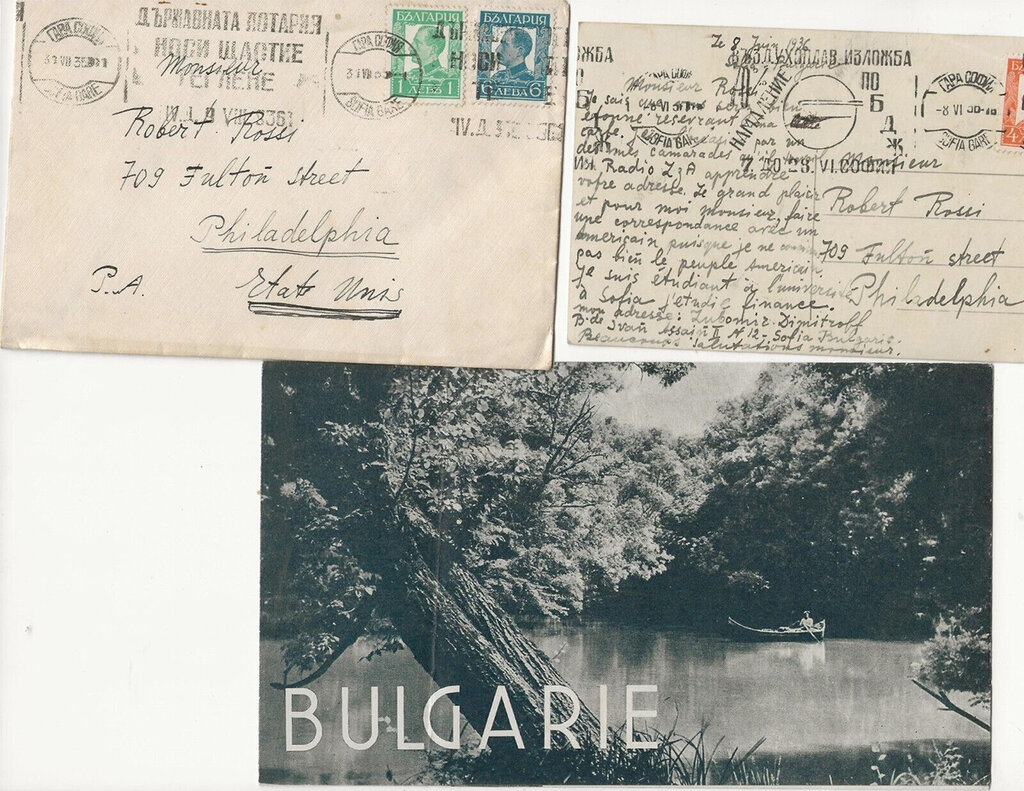
PHOTO Museum of the History of Radio in Bulgaria "Prof. Dr. Veselin Dimitrov"
“For example, I would go back again to the past, to the time when, unsure of their technical level, Bulgarians nevertheless made efforts to have shortwave broadcasts, and their work was rewarded by the hundreds of letters that arrived… Usually, they contained precise information about how the signal was heard - crystal clear sound, better than some local radio stations.”
Today, the technologies are different, but the mission remains. Radio Bulgaria continues to tell the story of this country to the world, while the Museum of Radio History preserves not just equipment, but the living memory of generations of professionals - from engineer Minko Topalov and Kosta Adamov to dozens of editors, translators, and announcers who left their voices on the air.
Because, as is clear from the words of Antoaneta Radoslavova, sound does not disappear. It remains - as cultural memory and as a community created across distances.
English version: R. Petkova