


Author
Vladimir Mitev
News
Alexandru Drăghici builds a musical bridge between Bulgarians and Romanians
Tuesday 17 February 2026 11:45
Tuesday, 17 February 2026, 11:45
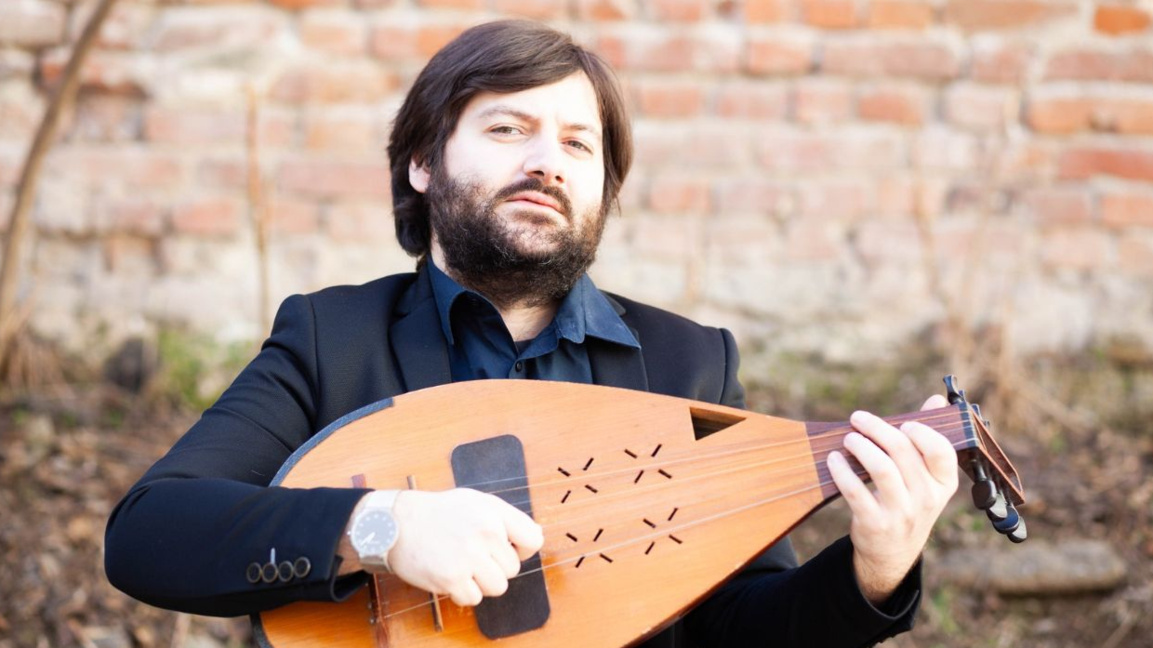
PHOTO Facebook /Alexandru Drăghici
Font size
Alexandru Drăghici is a specialist in Romanian philology and musician who dedicates much of his creative energy to building a personal cultural bridge to Bulgaria and the Balkans. His journey began at a music school in his hometown of Pitești, located in the heart of the Romanian region of Wallachia, where he initially focused on his native folk music. Despite his musical education, he later graduated in Greek and Romanian Philology in Bucharest, which helped him discover the many points of connection among the cultures of Southeastern Europe.
As a child, Alexandru spent time in the villages south of Pitești, and later, when he encountered Bulgarian customs and linguistic forms, he was surprised to discover the deep ties between the rural traditions of the two countries. This allowed him to understand Balkan culture in its entirety, rather than within the narrow framework of the Romanian perspective alone.
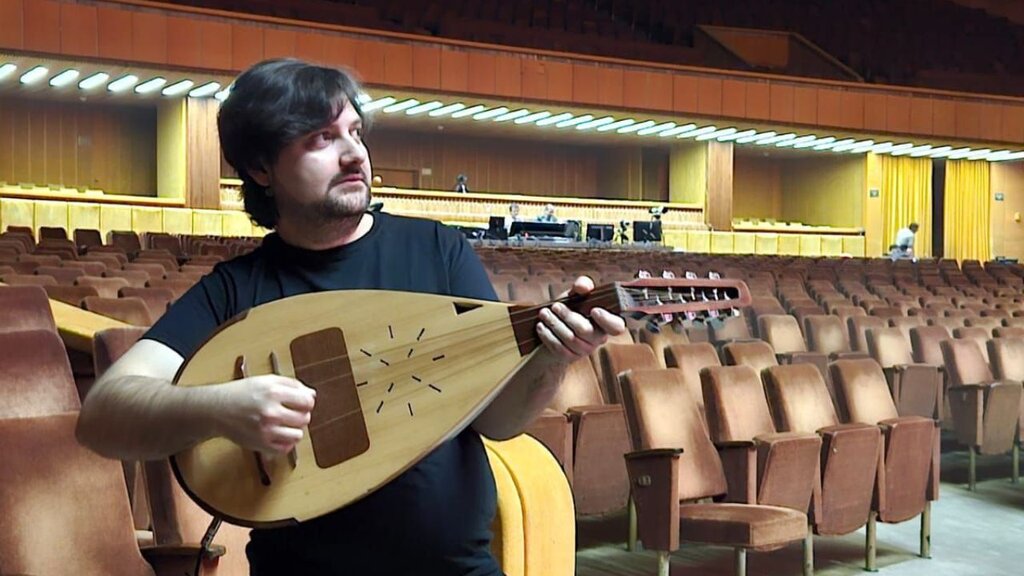
PHOTO Facebook /Alexandru Drăghici
An interesting episode in his professional life is his collaboration with the cult Romanian comedy troupe Divertis, whose equivalent in Bulgaria is Klub NLO (an acting and musical formation from the television comedy show of the same name broadcast on the Bulgarian National Television between 1996 and 2004). Alexandru bears a visual resemblance to the late actor Ioan Gyuri Pascu - the most popular member of Divertis - and was invited to take part in their projects. However, Alex himself makes an important clarification: he is not an actor, but solely a musician. His role in the troupe is connected to performing songs and parodies on stage or on television, thereby supporting the group after the loss of their legendary figure.
His interest in Bulgarian folklore develops on several levels, one of the strongest connections he identifies being the accordion technique and its ornamentation, likely borrowed from the bagpipe tradition. Drăghici notes that many Romanian accordionists sincerely admire the Bulgarian school, an admiration that dates back to the years of socialism.
“I know many accordionists from Romania who admire Bulgarian music and accordion technique. I don’t know how they learned about it - perhaps from radio stations that reached Bucharest. As for me, I constantly listen to live news from Bulgaria in my car. But it’s probably not just that. I don’t know whether the Bulgarian public knows that during socialism in Romania, under Ceaușescu, there were only two hours of television per day, and people with old antennas would catch Bulgarian television. There were films and music, and since then this great admiration has existed, because accordion techniques in Romania and Bulgaria are somewhat similar,” Alexandru Drăghici explains.
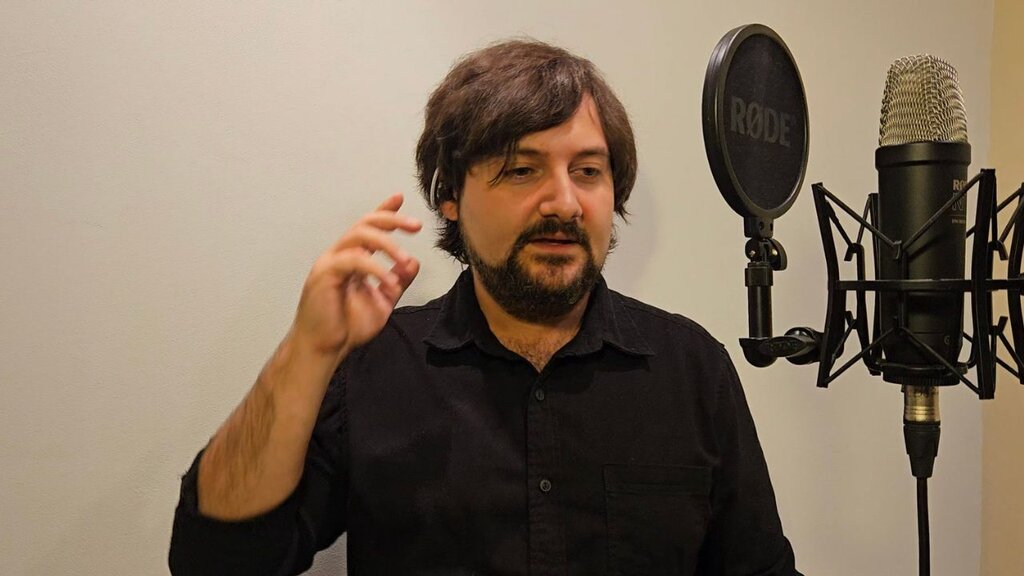
PHOTO Facebook /Alexandru Drăghici
For him, the serious process of learning the Bulgarian language began about two years ago through self-study with books, grammar materials, and films. Thanks to his philological background, he does not find the grammar difficult and has reached a level that allows him not only to converse, but also to sing in Bulgarian. Alexandru already has recordings of Bulgarian folk songs and shares that he is especially fond of Rhodope folklore, as the distinctive sound of that region suits his voice particularly well
Despite the obvious similarities between the two peoples, Alexandru Drăghici acknowledges that there is still considerable distance and insufficient mutual interest between our cultures. According to him, the main obstacle is the language barrier and the fact that learning a neighboring language requires great patience, despite the many shared words. He also notes the influence of historical layers from the time of wars and socialism, yet he is convinced that the centuries-old bridges between Bulgarians and Romanians are still alive.
PHOTO Facebook /Alexandru Drăghici
Looking to the future, Alexandru dreams of a large-scale musical project that would unite Romanian and Bulgarian motifs:
“For now, I can only dream. It was supposed to be a secret, but since you’re asking… I dream of a musical project in which both Romanian and Bulgarian music are performed with many instruments. Something big, something huge - like the projects of Goran Bregović, for example. But it would include Bulgarian and Romanian music - Romanian music from Wallachia and from Moldova. That way I could show and prove that they are very similar and that these connections are really strong.”
And here is another song from the Bulgarian folklore repertoire that Alexandru Drăghici performs in Bulgarian:
English version: R. Petkova
This publication was created by: Rositsa Petkova