


News
BNR journalist Assia Chaneva receives recogntion from the United Nations
The UN Food and Agriculture Organization has published insights on the role of science in the media shared by five women, among whom is the journalist from BNR's Hristo Botev channel
Tuesday 17 February 2026 11:48
Tuesday, 17 February 2026, 11:48
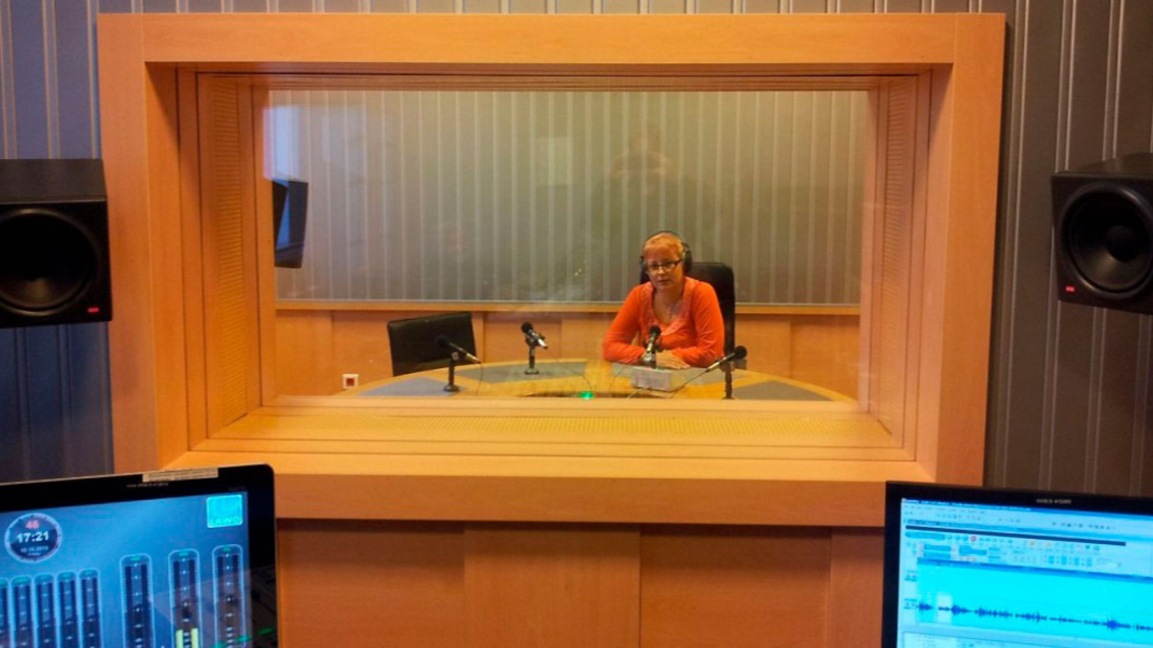
Assia Chaneva
PHOTO BNR
Font size
On the occasion of the International Day of Women and Girls in Science marked on February 11, the General Fisheries Commission for the Mediterranean of the Food and Agriculture Organization of the United Nations (FAO) highlighted the key role of women in science communication for the Mediterranean and the Black Sea.
Addressing the pressures on the seas requires not only a solid scientific foundation, but also cooperation across sectors, borders, and communities. The media play an essential role in this process by transforming scientific data into accessible stories that raise awareness and inspire collective action.
On its official website, the Food and Agriculture Organization of the United Nations has published the views of five women journalists from the Mediterranean and Black Sea region on the importance of science communication.
Assia Chaneva, longtime journalist from the Bulgarian National Radio, is among the five women selected by FAO to share their journey in journalism and their approaches to communicating science effectively.
The other journalists featured in the publication are from Tunisia, Turkey, Italy, and Croatia.
Assia Chaneva points to the factors influencing life in marine regions - from fisheries and tourism to natural disasters, climate change, and the loss of biodiversity:
“Behind every dataset and calculation, there are people, nature, choices, and consequences,” she says.
By turning complex scientific research and achievements into human-centered stories, Asya Chaneva connects scientific knowledge with everyday experience, approaching her journalistic work with dedication and responsibility.
“Clear communication helps build trust between the media and their audiences, as well as between scientists and the public, ensuring that science is not something distant or abstract, but connected to lived experience and shared responsibility,” Asya Chaneva adds.
In August 2022, the journalistic investigation by Assia Chaneva, “Restoring Coastal Ecosystems - Mission Possible,” won the journalism competition of the Bulgarian Biodiversity Foundation under the Climate Game On project of the European Commission’s DEAR programme.
Restoring coastal ecosystems - Mission possible: Part 1
Restoring coastal ecosystems - Mission possible: Part 2
Sources:
FAO – The Food and Agriculture Organization is a specialized agency of the United Nations that leads international efforts to defeat hunger. It has 194 members – 193 countries and the European Union – and operates in over 130 countries worldwide. The organization’s goal is food security for all and to ensure that people have regular access to sufficient high-quality food to lead active and healthy lives.
The General Fisheries Commission for the Mediterranean is a regional fisheries management organization composed of 24 contracting parties (19 Mediterranean countries, 4 Black Sea countries, plus the EU). Its main objective is to ensure the conservation and sustainable use of living marine resources, as well as the sustainable development of aquaculture in the Mediterranean and the Black Sea.
Edited by R. Mihova
English: R. Petkova
This publication was created by: Rositsa Petkova