


Author
Yoan Kolev
News
Journalist Ralf Petrov: German editorial office of Radio Bulgaria is in my heart
The media must overcome the period of financial difficulties to be a more attractive place for work for young people
Sunday 22 February 2026 08:15
Sunday, 22 February 2026, 08:15
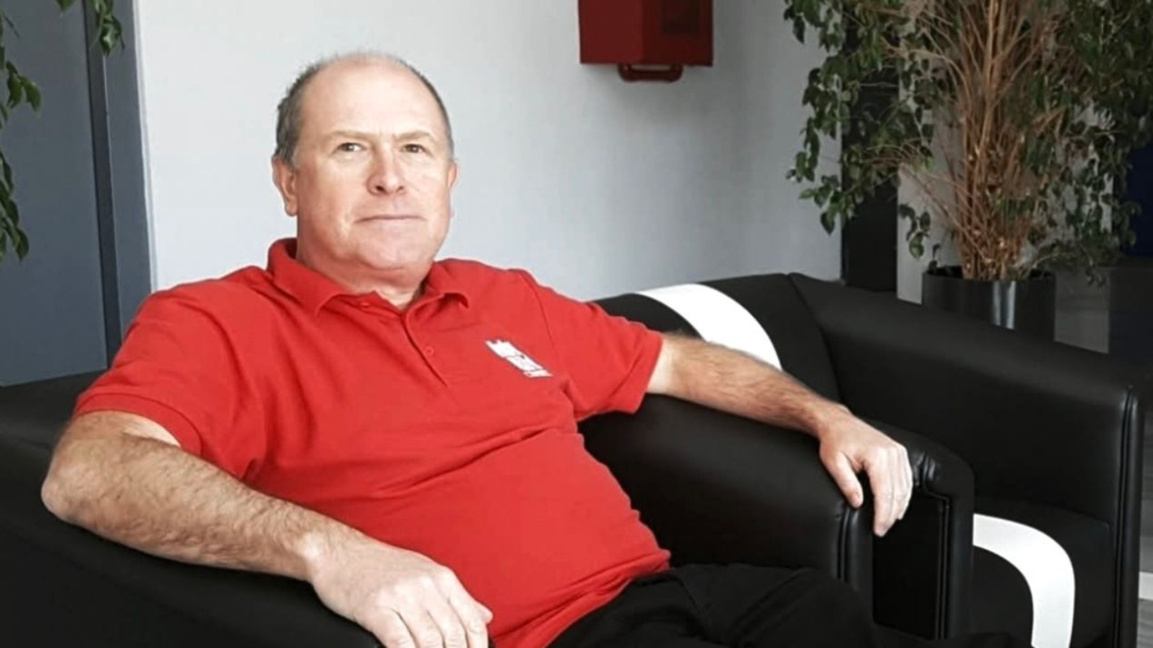
PHOTO Personal archive
Font size
The German-language programs of the foreign language section of the public radio, whose successor today is Radio Bulgaria, have a long history. They began to be broadcast on short waves on Radio Sofia as early as 1937. Until 1941, the German-language broadcasts did not differ in duration from the others in French, Italian, English and Esperanto, but by the middle of the year they began to dominate in duration. After the end of World War II, the German language was not among the broadcasts for abroad, but not for long. Over the years, the number of translators-speakers in the team changed, reaching 10-12 people in the heyday of the editorial office. One of them is journalist Ralf Petrov, who started work in the editorial office in 1987:
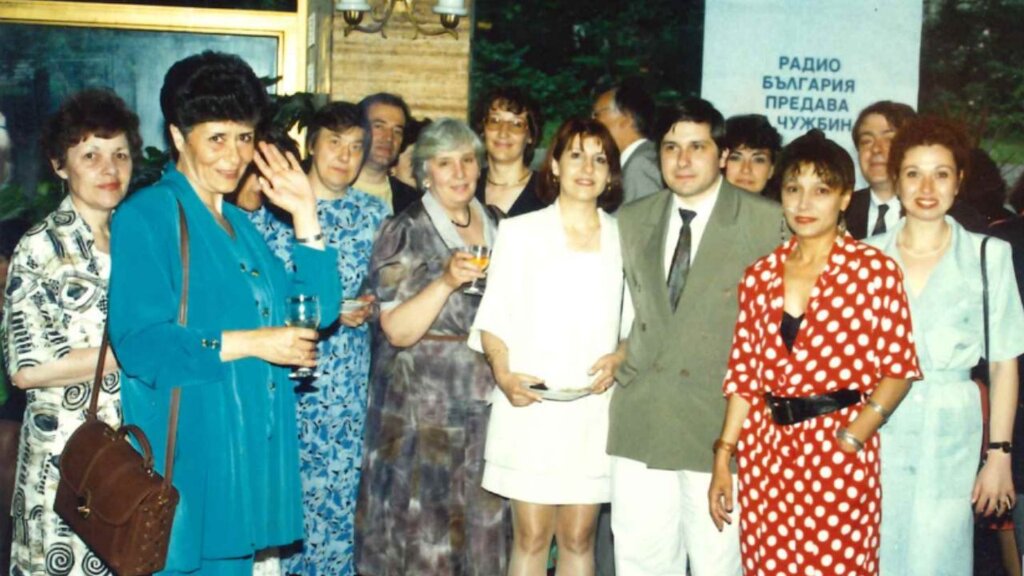
PHOTO Museum of the History of Radio in Bulgaria
"A year before that, I was at the Humboldt University of Berlin
on an exchange program with Sofia University, where I studied German
philology. There were other Bulgarians there, including a lady who
was already collaborating with the German editorial office. She
recommended that I should call the radio station, which had a youth club,”
Petrov recalls. “When I returned home, I contacted the editorial
office and once a month I went to this club, where we discussed
various youth topics in German. A year later, one of the editors in
the German editorial office went to her wedding in Plovdiv, invited
all the colleagues and it turned out that on the day of the wedding,
there was no one to lead the evening news. Then they put their trust
in me and this was my first real participation in the work of the
editorial office."
Shortly
after, Ralf officially became part of the team and thus the
alternative of being sent somewhere in the country as a German
language teacher did not happen. His professional path was forever
linked to media although he has not been part of the German editorial
team of Radio Bulgaria for decades.
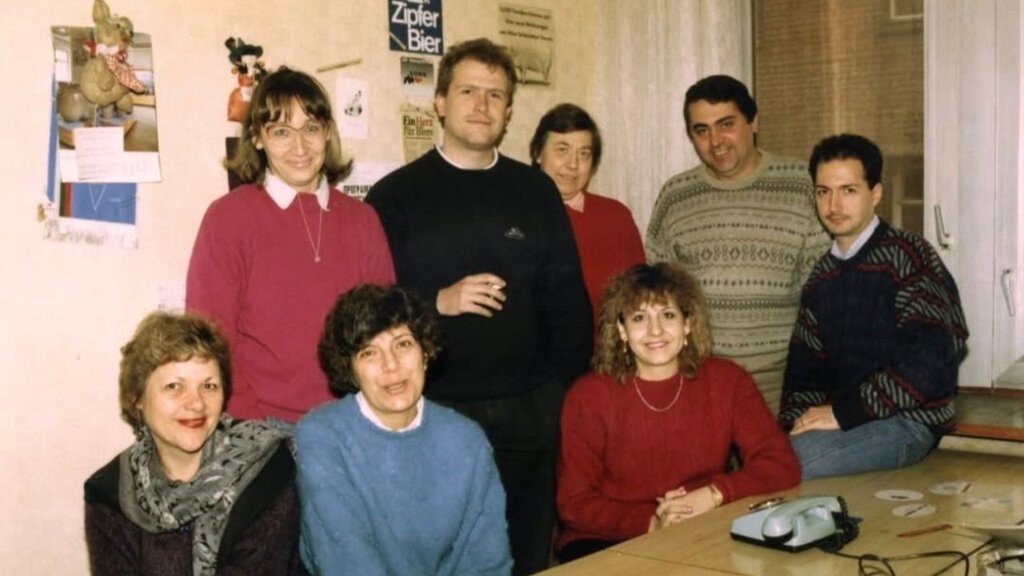
PHOTO Museum of the History of Radio in Bulgaria
These
days, the German editorial team prepares a weekday online program
"Bulgaria Today", in which the focus is on life in the
country and presents various tourist destinations, as well as good Bulgarian
music. Until 2012, however, the connection with the audience was
mainly through shortwave radio and our interlocutor still remembers
the program schedule according to which the editorial team worked:
"Back
then there were two program blocks, one of which was evening and
included news, political commentary, culture, tourism and folk music.
Although we are talking about years before the democratic changes
(i.e. before 1989), the team tried not to use excessive propaganda.
It was even written on our door that these were shows for West
Germany and Austria. Our focus was on Western Europe, as the idea was
to show how well we live in the East. I dare say that what we
broadcast was really interesting, with a focus on the history,
culture, music of Bulgaria – things that interest people more than
dry politics. Our goal was to present a Bulgaria that is interesting,
despite the division of Europe."
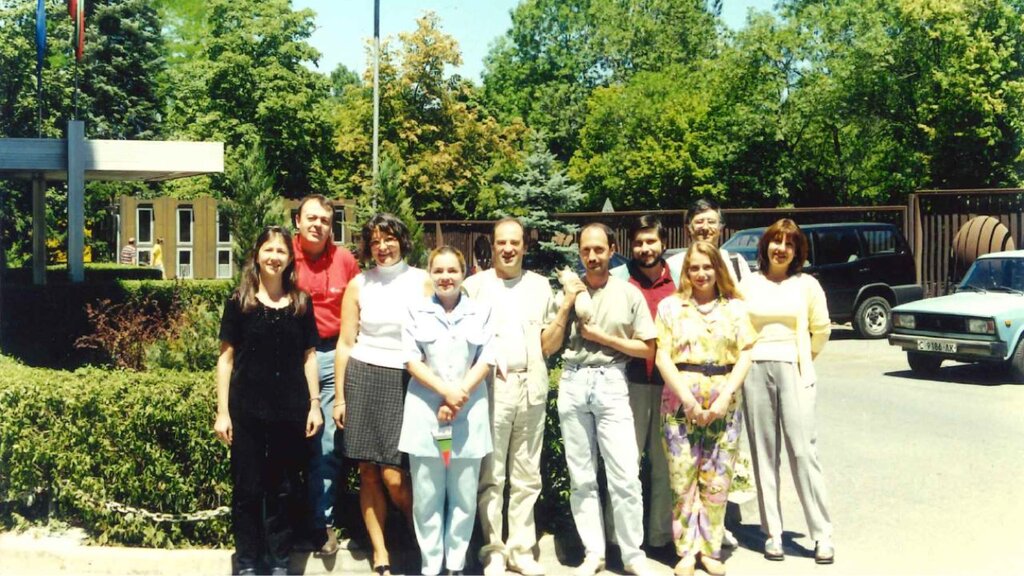
PHOTO Museum of the History of Radio in Bulgaria
The
journalist says that he was impressed by the letters that the
editorial office received and through them he learned that in the
late 1980s there were still Germans who remained in the country after
World War II, as well as people who liked the country, coming on
vacation, and also loved Bulgarian folk music.
His
obsession with staying informed about the latest trends
in music turned
Ralf into a fan of the iconic radio voices – music journalists Toma
Sprostranov and Yordan Georgiev:
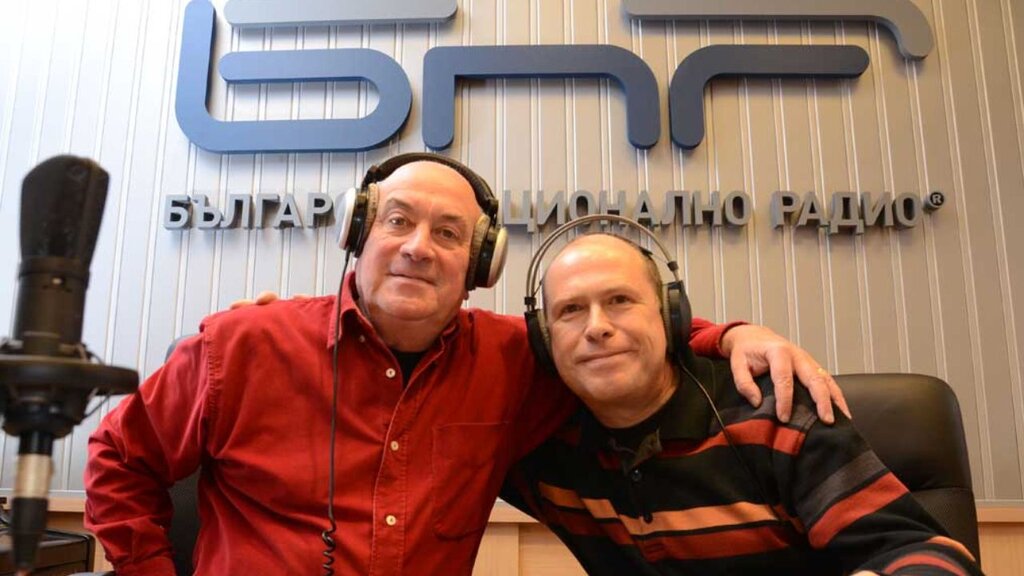
PHOTO viabulgaria.com
"From
the first day in the radio, I was trembling in anticipation when I
would be able to meet these people, because for me they were absolute
idols. I was lucky that next to the studio where we recorded the
German broadcast, there was a booth where the gramophone records were
transferred to tapes."
One
day, Toma Sprostranov asked him to hear if the lyrics of a song were
suitable for broadcast and when he realized that Ralf was keenly
interested in music, he started giving him records so that he could
re-record them. Several times, he even replaced Sprostranov as the
host of "Pulsirashti noti". After some time, he also met
Yordan Georgiev, whom he also sometimes replaced on his music show.
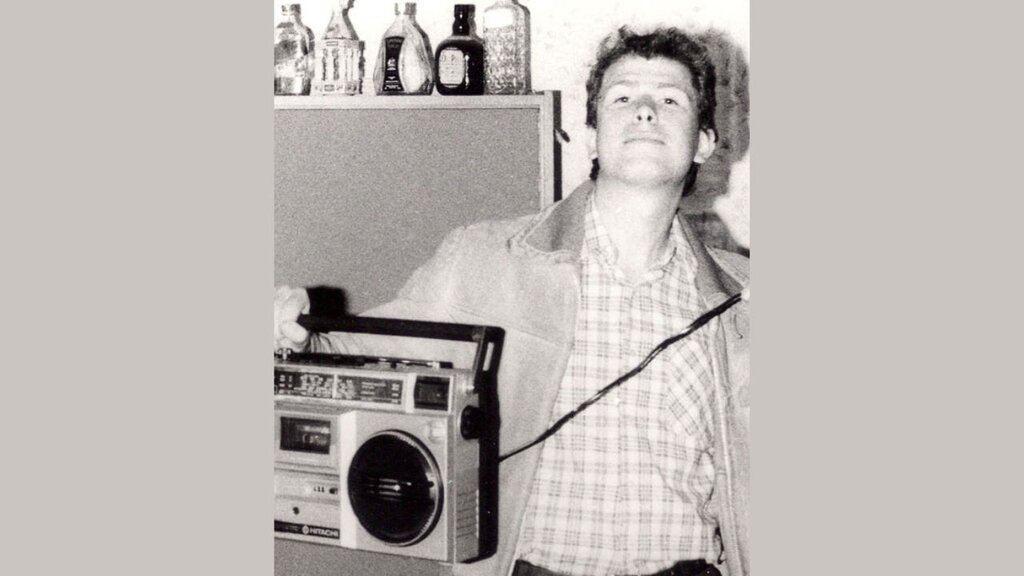
PHOTO viabulgaria.com
Indirectly,
thanks to them and a music magazine, Ralf also learned about a music
forum being held in East Berlin in 1989, attended by major record
labels and production companies. He managed to be among the
journalists sent there by Bulgaria and this opened up an unexpected
opportunity for him. The following year, he was invited to another
similar fair in Cologne, where he was to speak about copyright in
Eastern Europe. There, he came to the stand of the publishing house
of famous music magazine PopCorn:
"I
introduced myself to them at the stand, left a business card and
after a few months they called me and said they were interested in
starting a collaboration. This happened back in 1992, when I decided
to leave the radio and get into private business. Together with my
colleague Radoslav Dikov and friends from our youth, we created this
magazine in Bulgaria, which gave us the opportunity to continue our contacts with
the radio, as we wrote mainly about music and often appeared on
music shows, providing a subscription as a prize in them."
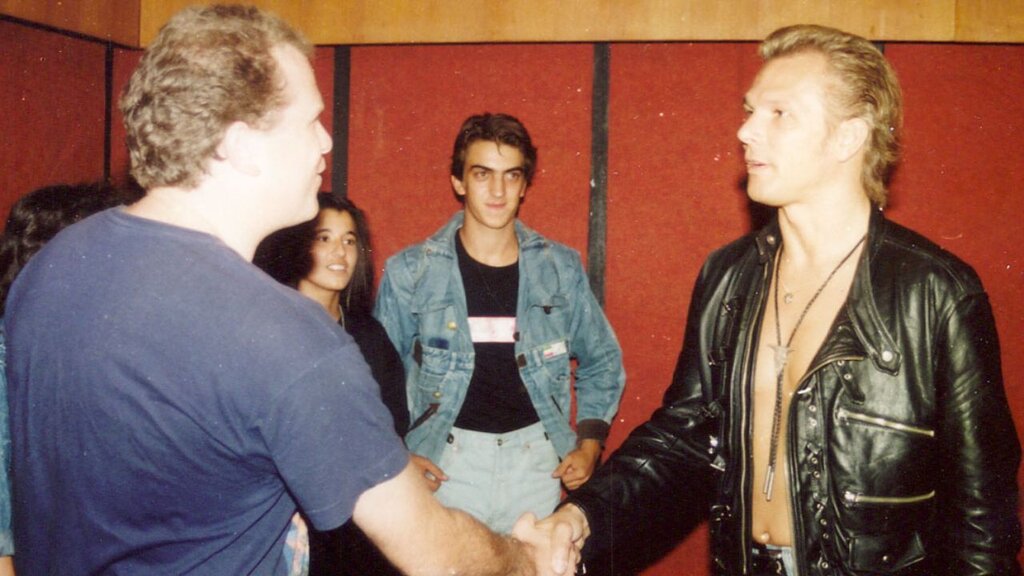
1993 - Meeting Scorpions before their concert at V. Levski Stadium
PHOTO viabulgaria.com
The magazine existed until 1997, when after a short stay at the Bulgarian National Television, Ralf became part of the team of one of the most popular automotive magazines in the world, also published in Bulgarian. The media industry remains his destiny and he continues to position Bulgaria in the hearts of the European audience. And from the position of experience, his advice to the young is:
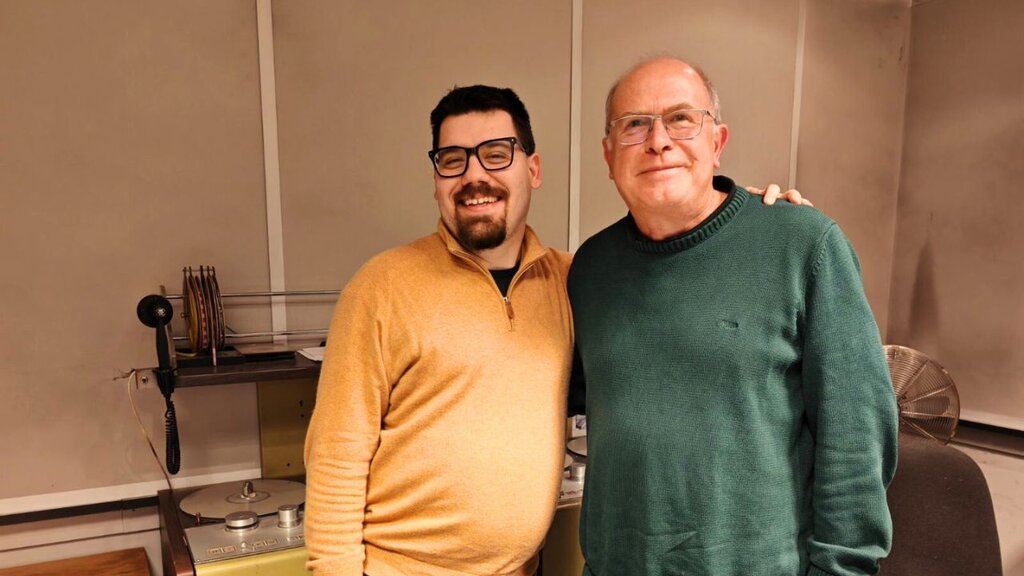
With Yoan Kolev from Radio Bulgaria
PHOTO Yoan Kolev
"The media teach us discipline, curiosity and interest in the world around us. It is indeed difficult for young people at the moment, but if one manages to discover the positive aspects of being together with like-minded people and colleagues with whom to have good time at work, I think the media are a very pleasant place. I wish success to the radio and the team, which will always remain in my heart, because I started from here."
This publication was created by: Alexander Markov