


Author
Rositsa Petkova
News
The greatest problem in Bulgaria is seeking medical help too late
Gergana Hrischeva and the BNR podcast with a mission for healthier Bulgarians
Over 200 episodes with hundreds of patient stories and expert opinions teach Bulgarians how to care better for their health
Wednesday 25 February 2026 11:55
Wednesday, 25 February 2026, 11:55
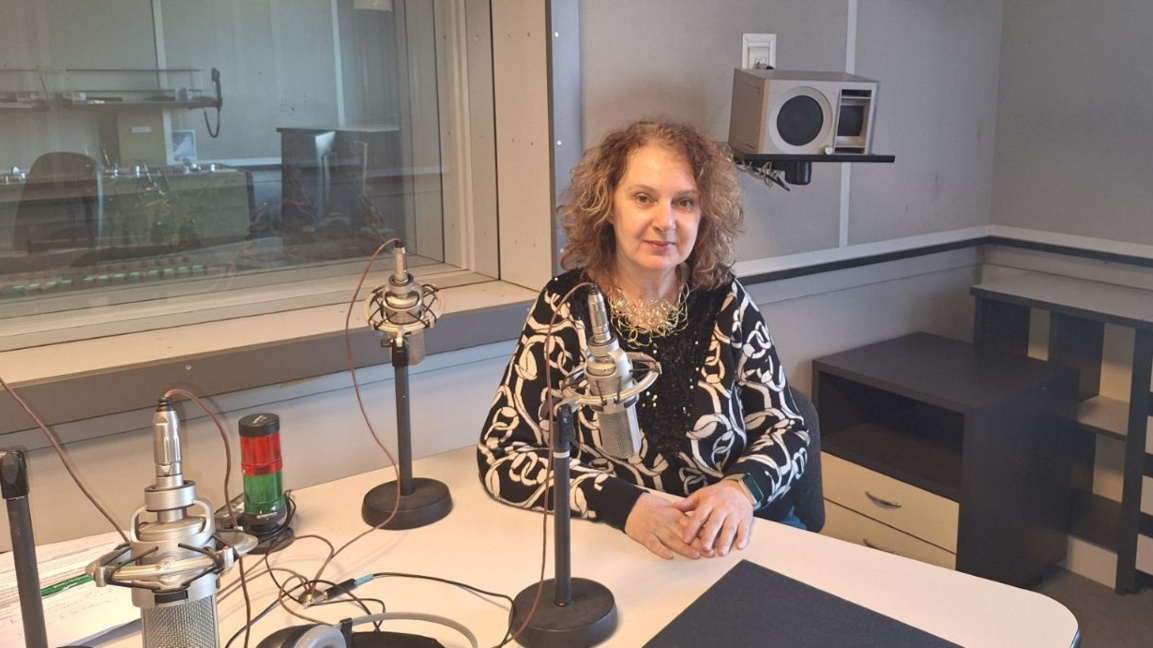
Gergana Hrischeva
PHOTO Rositsa Petkova
Font size
Healthcare concerns every one of us - from patients to physicians, from parents to active citizens striving to live healthier lives. In Bulgaria, where preventable mortality and the shortage of medical professionals remain at alarming levels, the conversation about health and prevention is not merely necessary - it is urgent.
With more than 200 episodes and nearly 500 guests to date – doctors, scientists, experts, patients, and representatives of patient organizations - the specialized health podcast “At the Center of the System” of the Bulgarian National Radio has established itself as a sought-after platform for health journalism in Bulgaria. Its creator and host, Gergana Hrischeva, is a health reporter with over 22 years of experience at BNR’s national Horizon program, now a member of the Digital Programme department of the BNR, and the author of several more specialized health and medicine podcasts (including Covid Vaccines, Skin and Health, Skin and Sun).
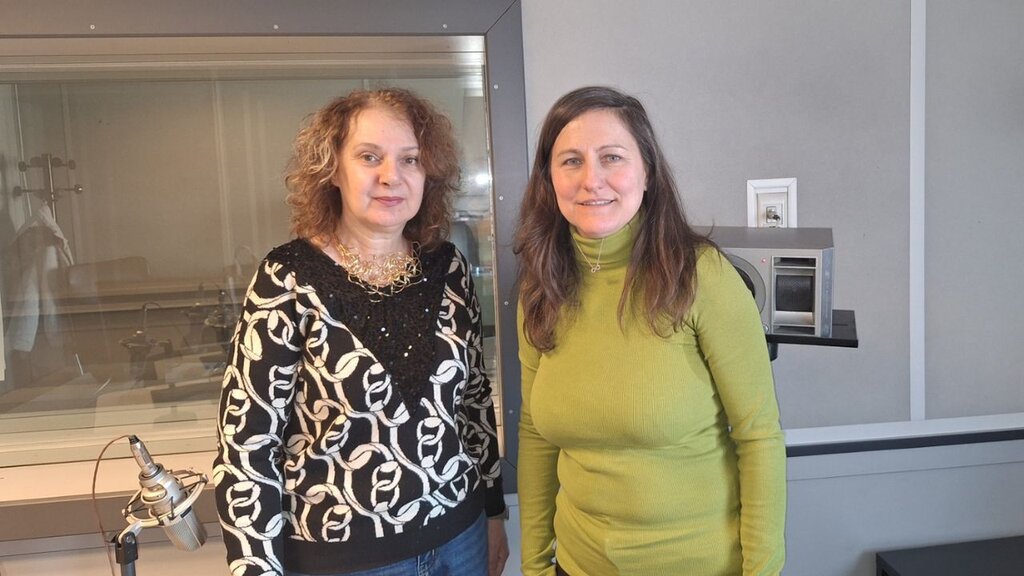
Gergana Hrischeva and Rositsa Petkova from Radio Bulgaria
PHOTO Rositsa Petkova
“The idea behind the podcast is to offer focused health discussions with reliable information from established medical professionals, in service to society. Perhaps no other field is so saturated with myths, legends, speculation, and fake news as healthcare. Our aim is to provide an alternative - to give Bulgarian society accurate, verified information from all perspectives. When an episode is devoted to a specific disease and does not include a patient case, I strive to invite the most respected experts and ensure they are trusted by patients as well. Sometimes you have many possibilities, but you must judge whether the topic will be meaningful for a large audience. Of course, we have also covered rare diseases - because those patients need a voice as well.”
The podcast has received several prestigious distinctions, including the Bulgarian Patient Forum’s award for online media “Daniela Seizova - In the Name of Life,” recognition from the Global Libraries - Bulgaria Foundation, and at the end of January this year Gergana Hrischeva was honored with BNR’s annual radio journalism award “Sirak Skitnik” for her work on her podcast "At the Center of the System".
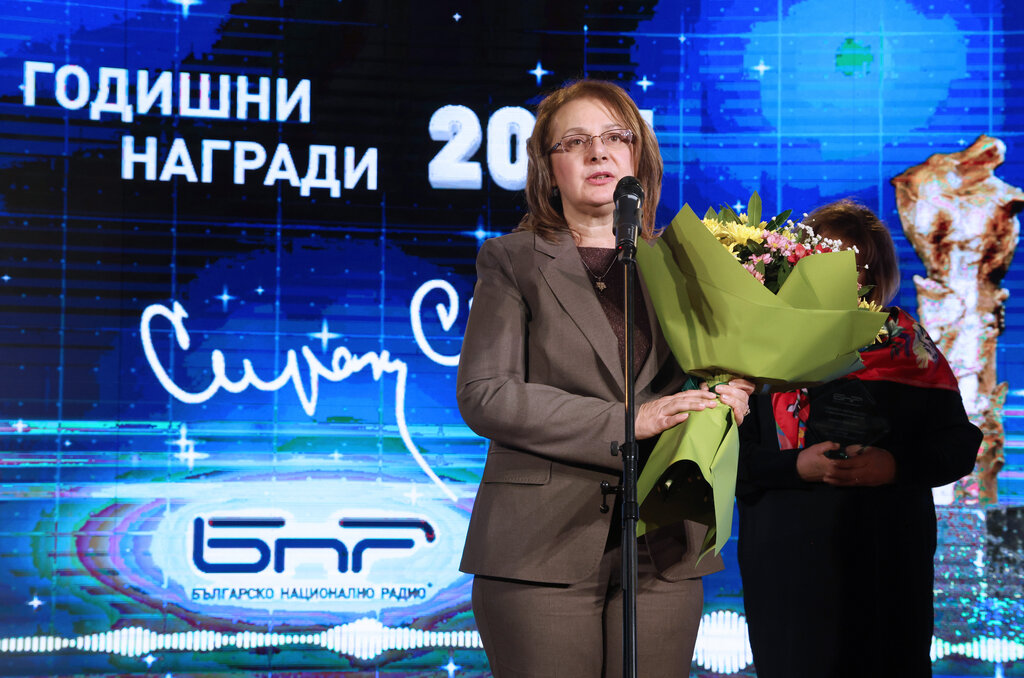
Gergana Hrischeva received the Individual Award for Radio Journalism of the BNR for her distinguished presence behind the microphone
PHOTO Ani Petrova
For years, Hrischeva kept heating the cliché repeated at forums and press conferences that “the patient is at the center of the system”. She chose to take that phrase literally - placing the individual truly at the center of the entire healthcare and medical system through personal stories and topics touching daily life. “The podcast has grown far beyond its original idea and now spans dozens of medical fields,” she says.
Why does Bulgaria remain among the EU Leaders in preventable mortality?
“Statistics show that Bulgaria ranks at the top in mortality and morbidity from cardiovascular diseases, followed by oncological illnesses. There are over 500,000 patients with diabetes in this country, and diabetes can lead to numerous complications, especially when untreated or poorly controlled. Bulgarians are very diligent in defending their rights - they often seek second and third opinions - but they go to medical institutions far too late. And that is precisely where the high mortality stems from: delayed visits to the doctor. It reflects our mentality of not placing our health first. Bulgarians do not eat as healthily as others, they believe all kinds of online speculation about nutrition, and they engage in very little physical activity. The lack of mass sport, obesity, stress, depression - all of this is interconnected.”
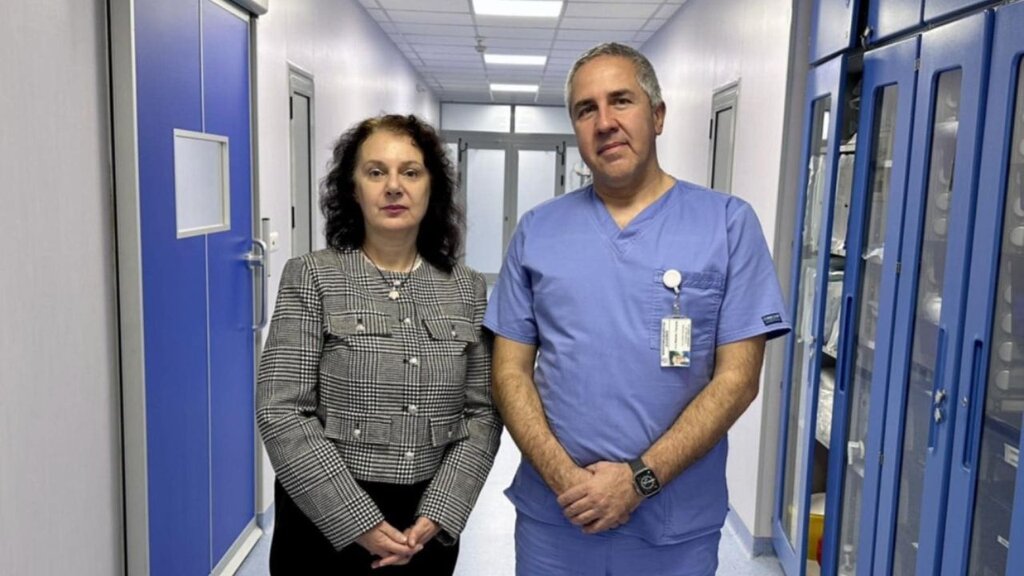
Gergana Hrischeva and Prof. Ivelin Takorov
PHOTO Military Medical Academy
Why do Bulgarians seek medical help so late? “Preventive care exists in Bulgaria, but we do not use it,” Hrischeva says with palpable regret:
“I dare say that we have access to all types of preventive examinations covered by the National Health Insurance Fund - free of charge - which could keep us healthy if we attended them at the prescribed intervals. In recent years, excellent screening programs have been introduced for prostate cancer in men and mammography in women. What we lack, compared to countries such as Belgium for example, is a systematic reminder - there, citizens receive letters notifying them of upcoming screenings by mail. In Bulgaria, though, we introduced ‘E-Health,’ a digital patient record that can be installed on a mobile phone and constantly signal what examinations are due and what has already been completed.”
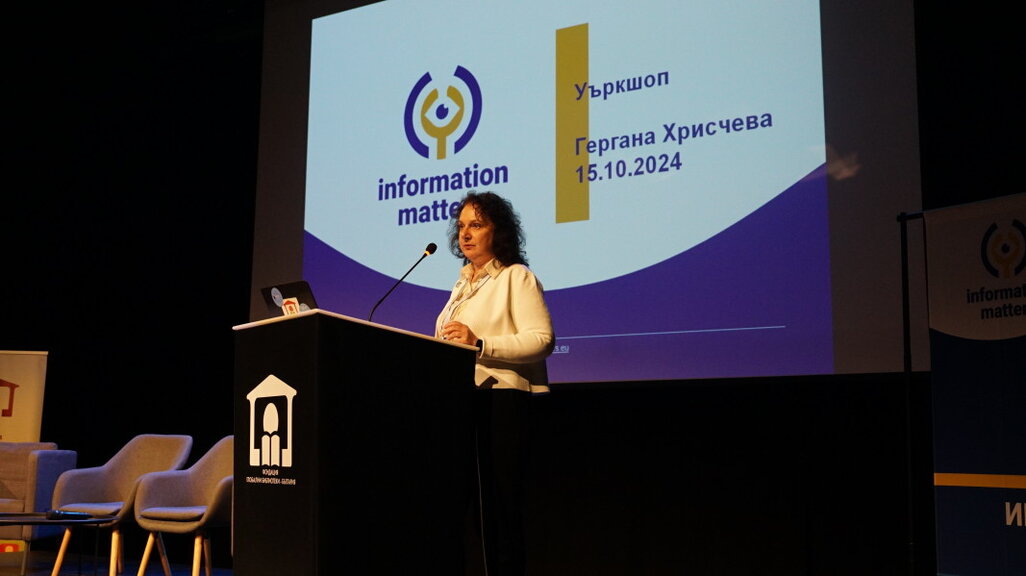
PHOTO PR Care
Another pressing issue in the Bulgarian healthcare system is the deepening shortage of medical specialists:
“In terms of doctors per capita, we have sufficient numbers. The problem lies with nurses - their numbers have been declining for years. I believe there are currently about 22,000. We need two or three times more so that a nurse would care for no more than five patients. More often, one nurse is responsible for 15 to 20 patients. We also lack clinical laboratory technicians, specialists at the National Radiology Center, and medical physicists. As medical equipment becomes increasingly sophisticated and artificial intelligence enters healthcare we will need highly trained professionals bridging computer science and medicine.”
Hrischeva offers a concrete example: in Sofia’s hematology hospital, there is a shortage of clinical laboratory staff - the specialists who process biopsy samples and play a crucial role in tumor diagnosis and monitoring. “One technician handles an enormous number of samples. With exhaustion, the risk of serious error increases. We also lack orderlies and support staff. All of this stems from inadequate pay and the demanding, often thankless nature of the work.”
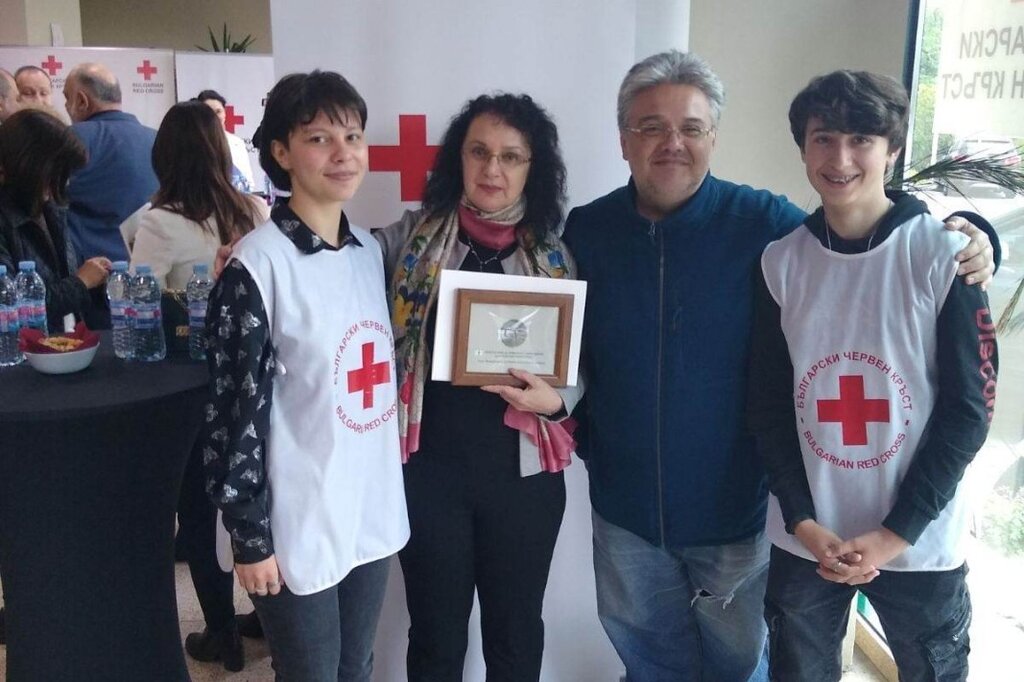
Gergana Hrischeva, Petar Tsintsarski, young people from the Bulgarian Youth Red Cross
PHOTO Private archive
“Bulgarian doctors who spent the last 10-15 years working abroad are beginning to return - excellent gastroenterologists, urologists, vascular surgeons. Bulgaria now offers world-class medical equipment, increasingly modern hospitals, and adequate remuneration relative to workload. I have spoken to physicians currently practicing in the United States and across Europe. There, patient loads are far heavier, and oversight of medical errors is extremely strict. Doctors work under immense pressure while in Bulgaria the situation is more balanced.”
Among the most listened-to episodes of “At the Center of the System” are those dedicated to dementia, metabolic syndrome and obesity, herniated discs, collective labor agreements in healthcare, older adults on TikTok, reproductive health, and many others. Interest is particularly strong in mental health and children's health issues.
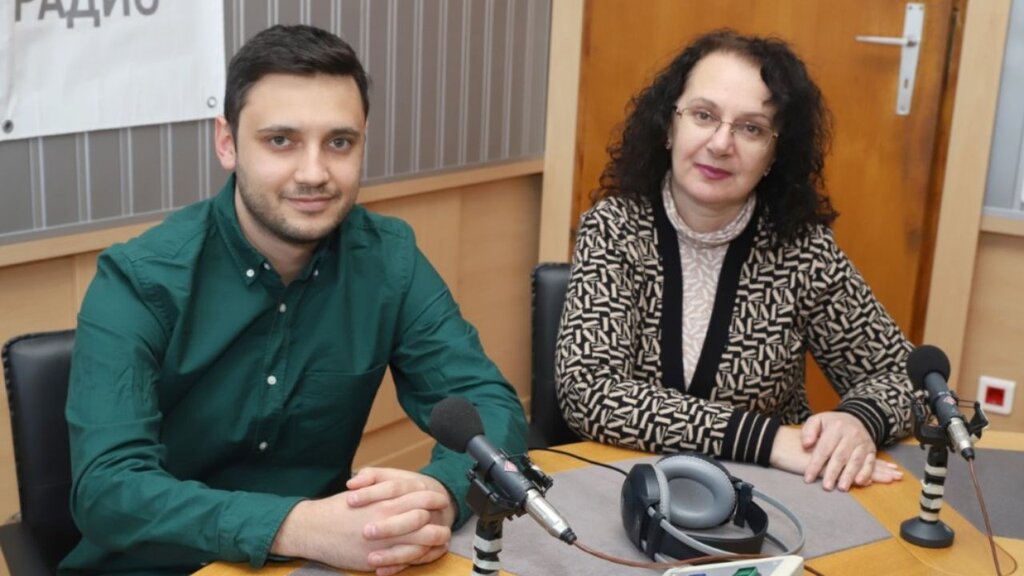
Dr. Petar Iliev and Gergana Hrischeva
PHOTO BNR
“More and more Bulgarians - and Bulgarian parents - are seeking psychological and psychiatric help. Leading specialists increasingly provide detailed information about children on the autism spectrum and about mental illness in general. This will be a defining issue of the future, as global data indicate a rise in mental health disorders. Bulgarians are gradually shedding the shame and fear associated with seeking psychiatric care. However, a serious problem remains: much of this care lies outside the Health Insurance Fund’s coverage. There is still no comprehensive regulation governing mental health services, so patients must pay out of their pocket. Fortunately, we do have excellent psychologists.”
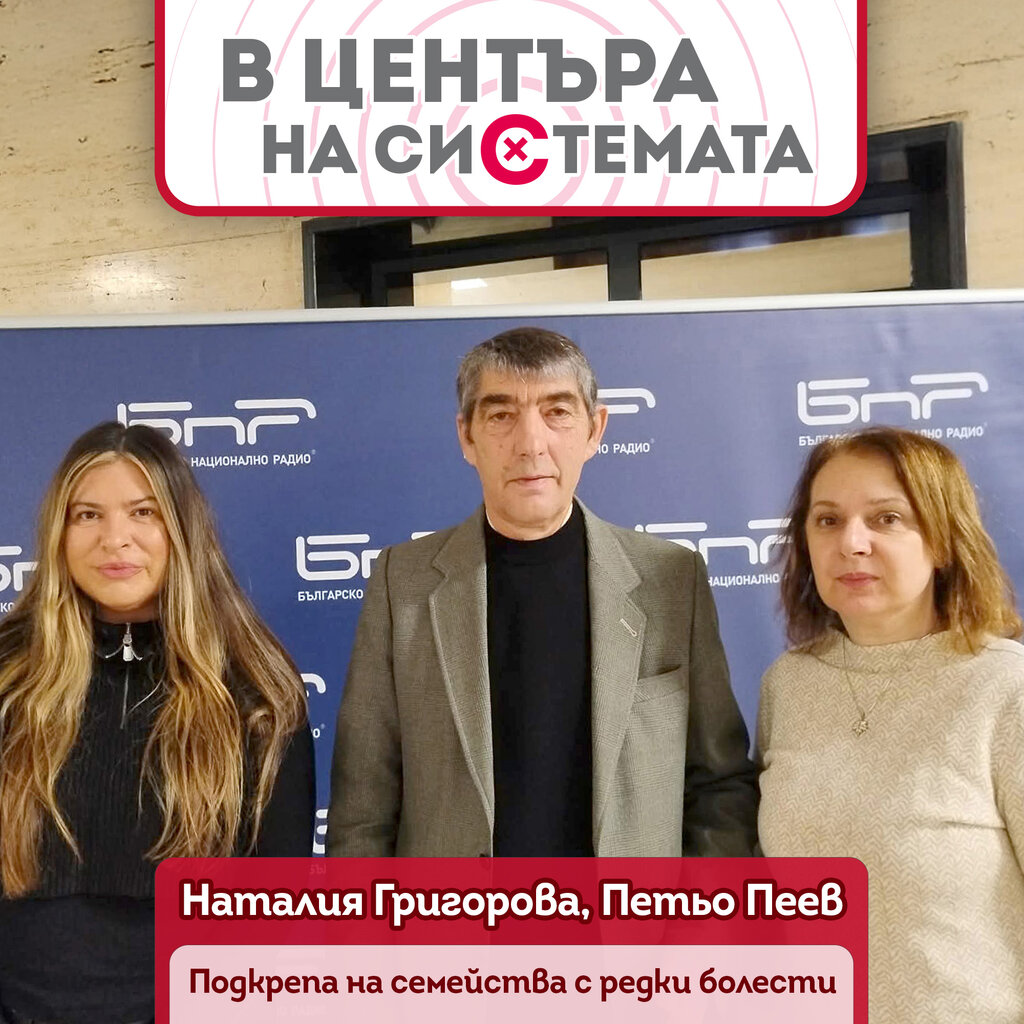
Natalia Grigorova, Petyo Peev, Gergana Hrischeva
PHOTO Georgi Tsvetkov
In today’s world of informational noise, the BNR podcast “At the Center of the System” proves that health journalism can be a public mission. In a country ranking very high in preventable mortality within the EU - where preventive care exists yet is neglected, and where the national children’s hospital remains only a project - such platforms cultivate health literacy.
BNR journalist Gergana Hrischeva does more than ask questions in her podcast. She creates a space where medical experts can speak in depth, and where society receives the tools to make informed choices. And sometimes, an informed decision is precisely what can save a life.
English: R. Petkova
This publication was created by: Rositsa Petkova