


Author
Desislava Semkovska
News
DX Legend Ivo Ivanov: Even if only online, keep telling the world about Bulgaria
As the voice of Bulgaria marks 90 years of international broadcasting, veteran broadcaster and former frequency manager Ivo Ivanov reflects on the transition from shortwave airwaves to the digital era
Sunday 1 March 2026 08:45
Sunday, 1 March 2026, 08:45
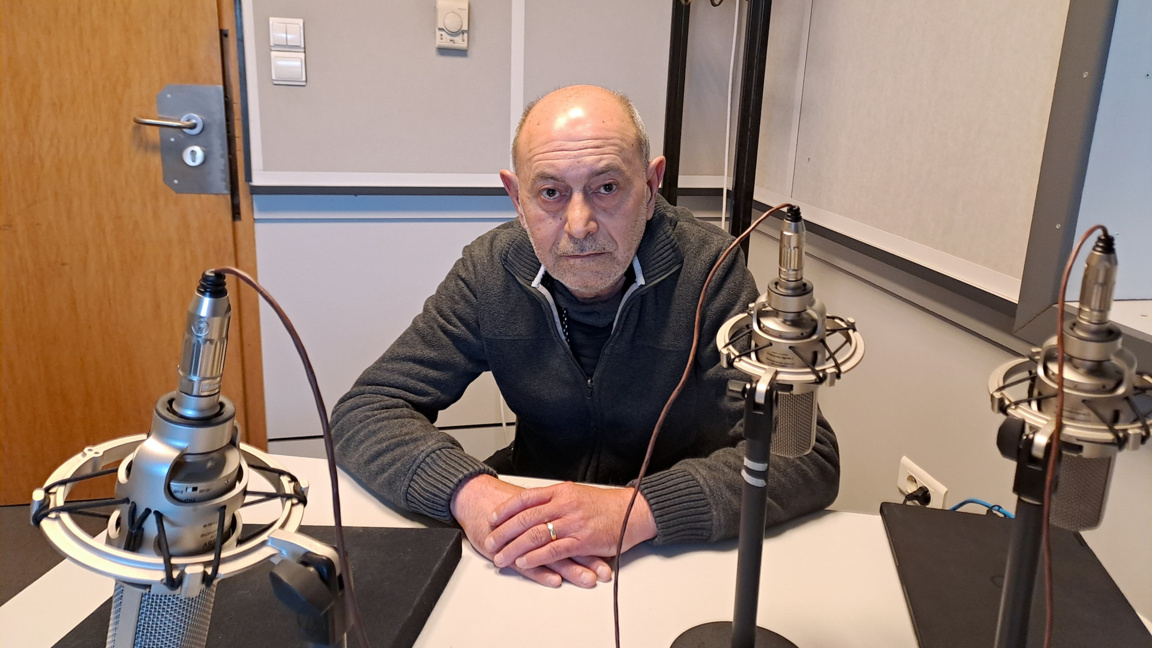
PHOTO Desislava Semkovska
Font size
Regular shortwave broadcasts of Radio Sofia’s foreign-language service, today known as Radio Bulgaria, date back to April 1936. Over the decades, languages changed, frequencies shifted, and programme exchanges were launched and discontinued. International transmissions were interrupted and later resumed, yet the voices of the station’s finest translators and announcers continued to travel across the airwaves to the most distant corners of the globe, providing news and insights into Bulgaria — a nation small in size, but rich in culture and complexity.
From 1974, these broadcasts reached global audiences through the Padarsko transmission centre near Plovdiv. By 1992, the Bulgarian National Radio’s external service began broadcasting under the name Radio Bulgaria, transmitting worldwide on shortwave via the Kostinbrod and Padarsko sites, as well as on medium wave across the Balkans.
In 1994, Ivo Ivanov joined Radio Bulgaria’s Bulgarian Service. Initially working as a freelance contributor, he began recording a specialised programme for radio amateurs in Bulgarian and quickly became a legendary figure on the shortwave bands.

The radio transmission station in Padarsko.
PHOTO predavatel.com
“I officially joined the radio in 1995 — on 1 April, April Fools’ Day,” he recalls. “With the backing of Radio Bulgaria’s then director, Angel Nedyalkov, I pushed for the newly established Russian Service to include a programme for radio amateurs, because every self-respecting shortwave broadcaster had such a programme.”
The programme DX MIX — named after the radio abbreviation DX, meaning long-distance communication — became a vital part of the station’s history. In his capacity as Frequency Manager, Ivanov presented the programme in Russian and Bulgarian, providing critical updates on frequency changes, newly launched stations, and seasonal transmission schedules of international broadcasters. An English-language version also existed, though not voiced by Ivanov himself.
For years, the station’s well-known interval signal captured the attention of thousands of radio enthusiasts, gathering them around their receivers.
What memories does that signal evoke for Ivo Ivanov today?
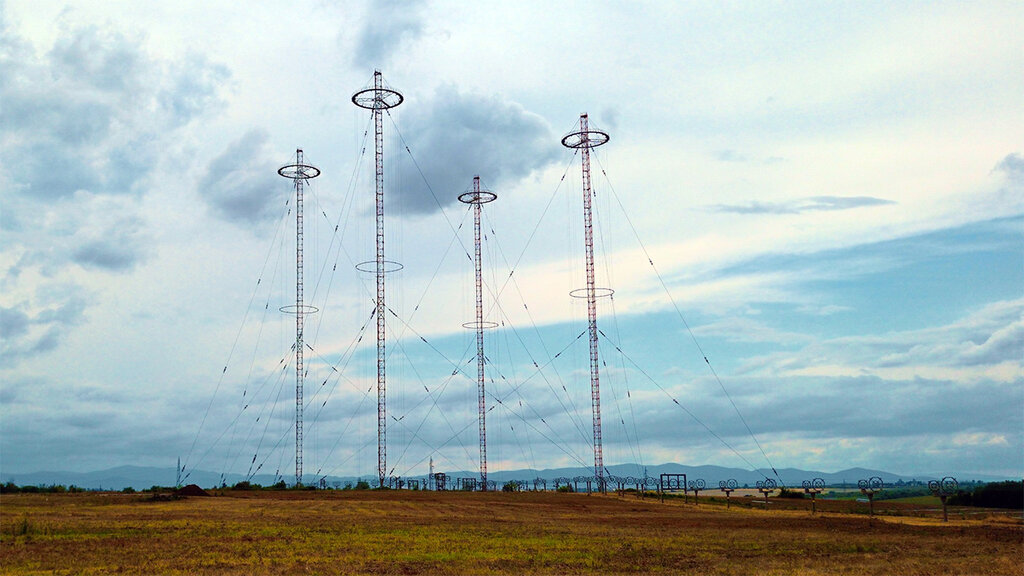
The Vidin transmission station
PHOTO Bojidar Tsvetanov
“Great nostalgia,” admits the long-time presenter, adding with bitterness:
“In recent years, so many radio stations have ceased to exist… Nothing remains. The airwaves are empty. If you look at Europe, only broadcasters in Turkey, Romania, Spain, France and the BBC World Service are still there — that’s all. All the others gradually stopped transmitting.”
Radio Bulgaria’s voice, too, eventually faded from the shortwave bands. On 1 February 2012, its foreign-language broadcasts were aired on shortwave for the final time. Later that year, the antenna systems at the Padarsko transmission centre were dismantled.
“During the very last minutes of Radio Bulgaria’s broadcasts, I was at the Padarsko transmitter site, thanking my colleagues there. People were devastated. A few years later, the centre was completely demolished. In its final years, Radio Bulgaria continued broadcasting only because a decision was taken to shut down all medium-wave transmitters in Bulgaria in order to fund shortwave transmissions. I had calculated we might last five years — in fact, we managed seven, which is no small achievement,” Ivanov says.
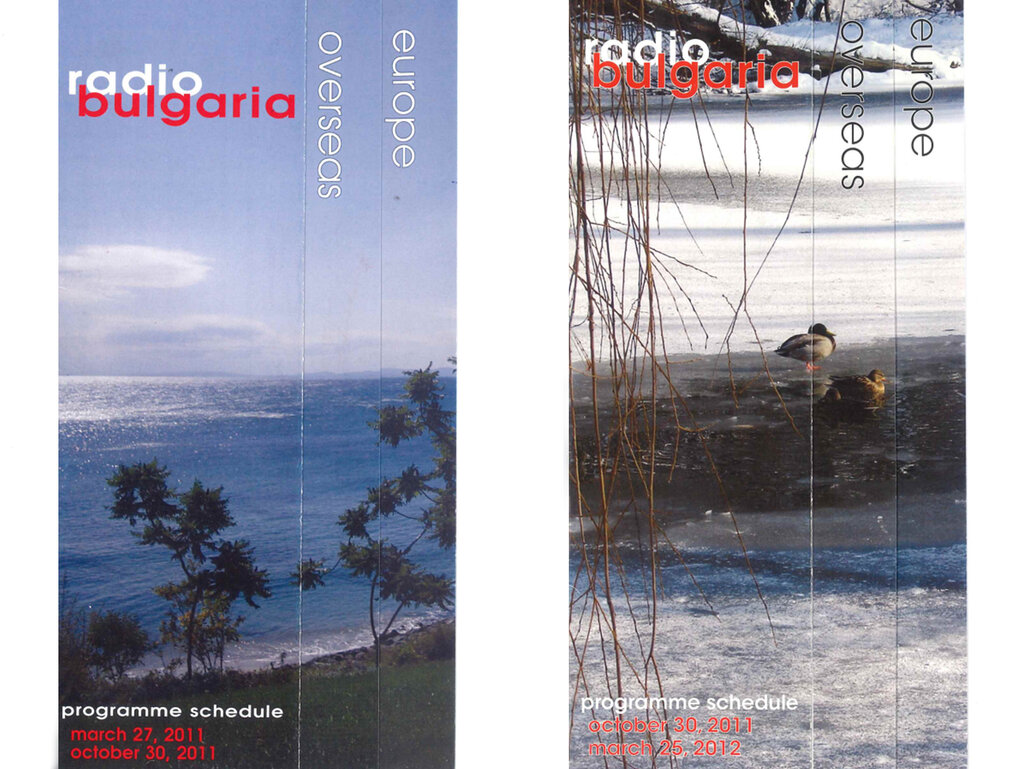
Radio Bulgaria’s final two frequency schedules.
PHOTO Radio Bulgaria
In the final edition of DX MIX — No. 863 — Ivanov bid farewell to his listeners:
“With today’s final edition, DX MIX comes to an end. For the past seventeen and a half years, I have been with you every week — the loyal listeners of Radio Bulgaria. You already know that from 1 February Radio Bulgaria is ending its shortwave broadcasts. The DX programme is also coming to an end. My deepest respect to all of you who supported us through the years. I wish you health, happiness — and 73*!”
This year, Radio Bulgaria marks its 90th anniversary. Although its voices no longer travel through the ether, they continue to thrive online as a multi-language news portal.
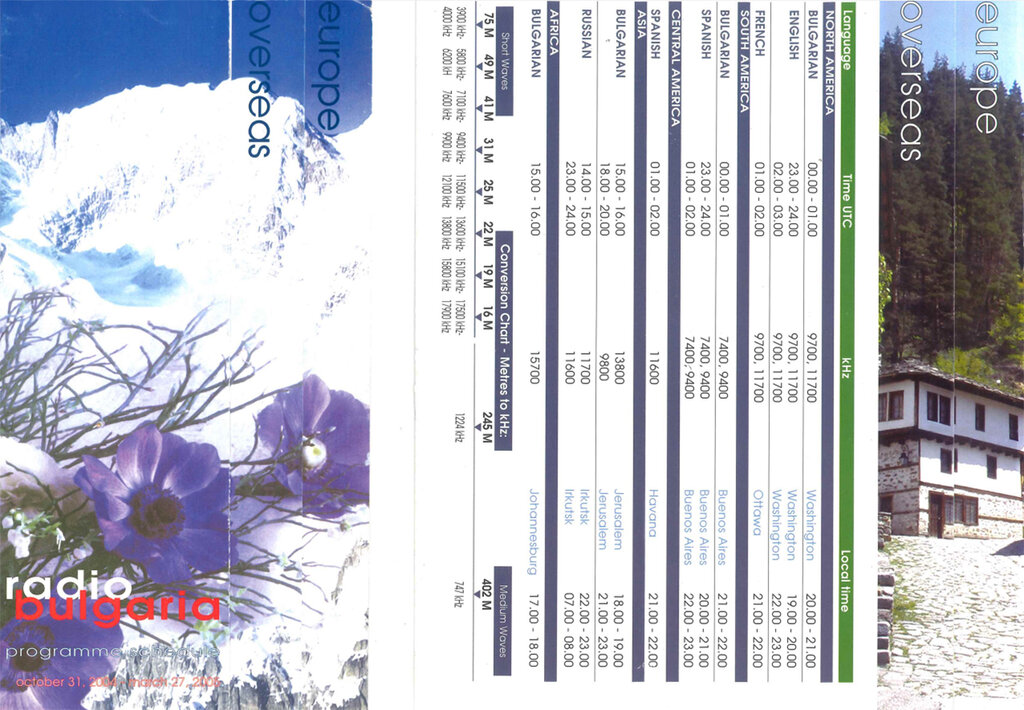
Frequency Schedule of Radio Bulgaria.
PHOTO Radio Bulgaria
What does Ivo Ivanov wish for the teams who continue to produce content in eleven languages despite the challenges?
“I wish you good health. Keep fighting as best you can. Even if we are now only online, keep telling the world about Bulgaria! There is so much for our listeners to learn. Do what you can — keep going!”
And shall we conclude with those most eagerly awaited words on the shortwave bands—a wish for clear reception and good fortune: "Much DX, or 73?"
“And 73!” Ivo Ivanov emphasises, before adding: “And 88 — love and kisses to you all!”
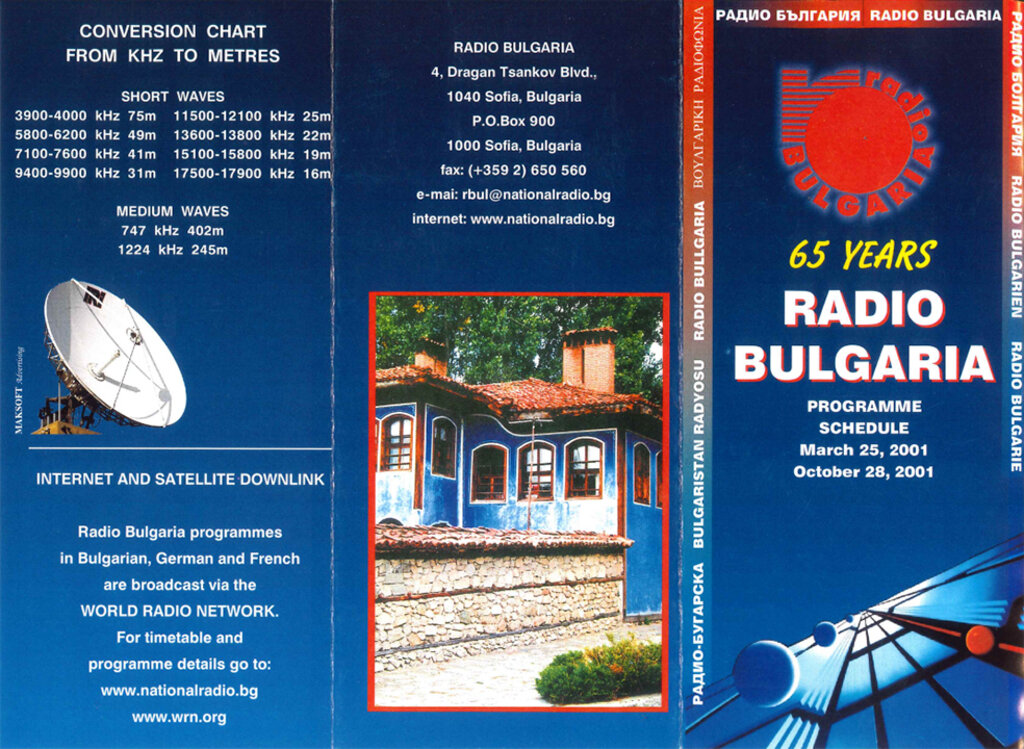
PHOTO Radio Bulgaria
*The Secret Language of Shortwave
For decades, radio enthusiasts (known as DXers) used a specialized shorthand to communicate across crackling international frequencies.
- DX: A telegraphic code for "distance." A DXer is someone who specializes in listening to distant or rare foreign radio stations.
- 73: The universal amateur radio code for "Best Regards." It is used by operators regardless of their native language.
- 88: A more affectionate sign-off meaning "Love and Kisses." In the male-dominated world of early radio, it was a warm way to greet family or close colleagues.
- Interval Signal: A short, repeating musical phrase (unique to each station) played before a broadcast starts. It helps listeners find and identify the station while tuning their dials.
Edited and posted in English by E. Radkova
This publication was created by: Elizabeth Radkova