


Author
Diana Tsankova
News
Science, education, and business join forces at a national festival in Sofia
School curriculum needs to be updated in a way that adequately reflects the realities of our living environment, says Georgi Ivanov of “Educational Factory”
Tuesday 24 March 2026 10:37
Tuesday, 24 March 2026, 10:37
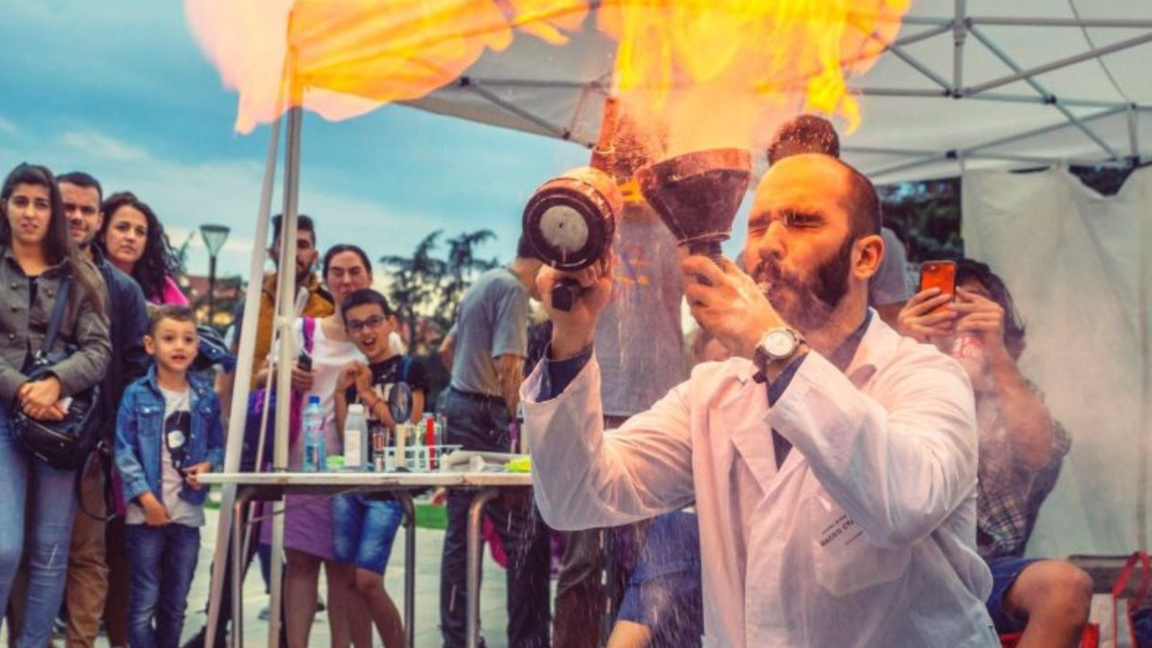
PHOTO Educational Factory
Font size
The national science and education festival “The Found Generation” returns after several years’ hiatus to create a space where established professionals pass on their experience and young talents bring fresh perspectives. Over the course of two days, curiosity will be transformed into an experience, and science into art, promise the organizers.
On April 18 and 19, at the National Palace of Culture in Sofia, the education, science, and business sectors will join hands in the name of a future driven by knowledge, technology, and the human spirit. This comprehensive exchange will bring together pupils and parents, teachers and students, researchers and entrepreneurs - all belonging, according to the organization “Educational Factory”, to what they call the “found generation”.
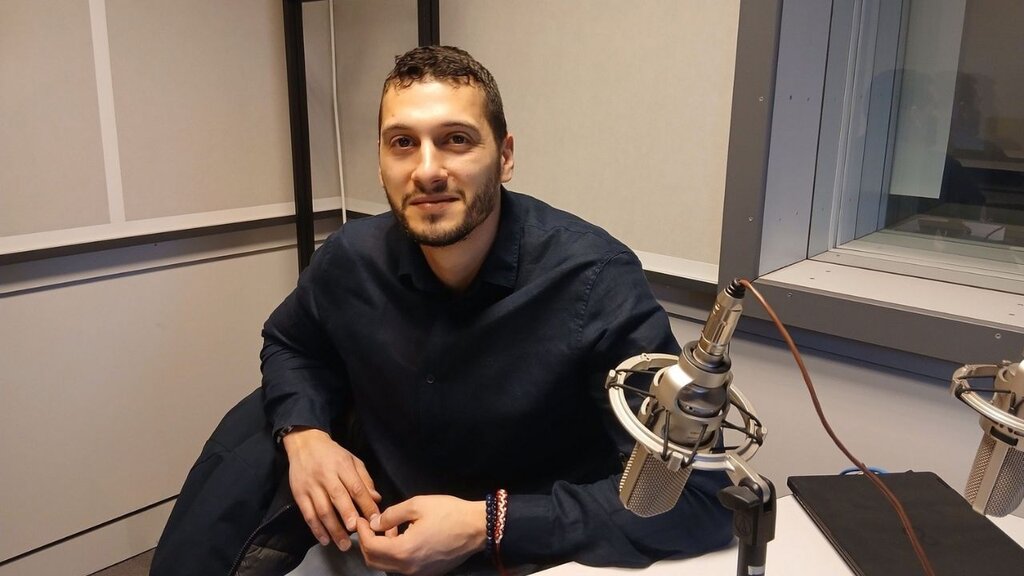
Georgi Ivanov
PHOTO Educational Factory
“The ‘found generation’ comprises very diverse people and age groups,” explains Georgi Ivanov, co-founder of the organization and festival organizer, who has international experience working with established universities and developing educational initiatives and partnerships.
“So far, more than 65 school groups from 43 cities have registered to participate in the forum. This means that these educators are dedicating time and effort to bring so many children from their hometowns. For us, this is the ‘found generation,’ because they give more than what is required of them - and they do so in the best possible way. The ‘found generation’ also includes scientists and organizations working daily to improve the environment and education in Bulgaria. It includes the more than 100 volunteers who have a vision for development and are willing to devote their time to something meaningful and valuable. From all these people - young and old alike - we have much to learn.”
Within the framework of the festival, well-known brands and companies will present technological solutions, while representatives of scientific institutes and universities will highlight the advantages of more practice-oriented education, such as STEM centers, and showcase achievements in robotics. Interactive zones, lectures and discussion panels, live demonstrations, as well as VR and AR experiences, will further engage visitors.
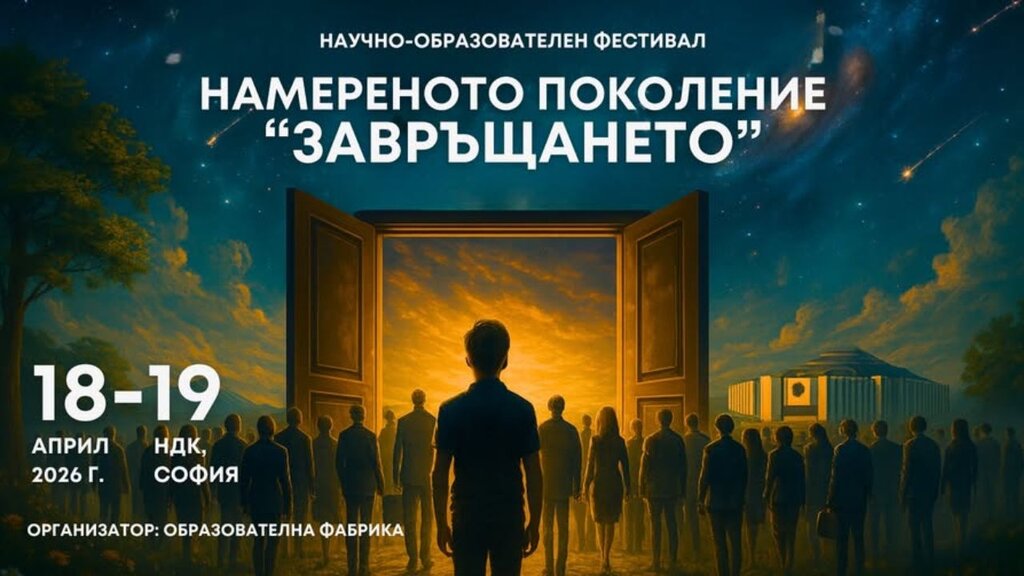
PHOTO Educational Factory
Topics such as space, cybersecurity, and artificial intelligence will be explored with the active participation of young people, who will come into contact with a reality that is becoming an integral part of their lives.
“As for the professions of the future, we truly live in a dynamic world,” Ivanov emphasizes. “Artificial intelligence and technology in general are developing rapidly, and many jobs will be eliminated as they can easily be automated. At the same time, new opportunities are opening up - ones that are far more valuable and offer long-term development. We want to discuss all of this with young people, so they can become familiar with these trends and approach their career and personal development more consciously.”

PHOTO Educational Factory
Digital literacy will also be in focus, including a demonstration of deepfake technology - showing how a person can be manipulated through a short video to say or do things that are entirely fabricated. Another important topic will be healthy living as a prerequisite for professional development. Through so-called situational theatre - where the audience also becomes an active participant - the issue of aggression in schools will be addressed.
But are Bulgarian schools and universities truly up to the task? Can they partner effectively with science and business organizations in preparing young people for a world in which they themselves will play leading roles?

PHOTO Educational Factory
“The problem is very deep,” Georgi Ivanov responds. “There are institutions striving to do this, but through my work with many universities abroad, I see that this is an extremely intensive period. Every curriculum needs to change, and its content must be updated in a way that adequately reflects the realities of our living environment. However, I am not certain to what extent Bulgarian universities are succeeding in this. Of course, some of them participate in international exchange programs and have potential. It is therefore important that good practices are shared so that education as a whole can improve.
As for schools, there is still much work to be done. At the same time, they are home to people from the ‘found generation’ - those who want to develop and apply new methods closer to children, because we are dealing with a generation that requires a different approach. In Bulgaria, we observe a paradox: on the one hand, we produce some of the brightest minds in the world, as seen in our Olympic teams in the natural sciences, artificial intelligence, and information technology; on the other hand, functional illiteracy remains at a high level.”
Georgi Ivanov refrains from making predictions about the future facing the younger generation, but expresses the hope that, to the extent possible, we will prepare ourselves and, through adaptability, find our place within it.
Photos: Educational Factory
English version: R. Petkova
This publication was created by: Rositsa Petkova