


News
From the market to the fridge - consumers and traders under price pressure
Friday 3 April 2026 14:25
Friday, 3 April 2026, 14:25
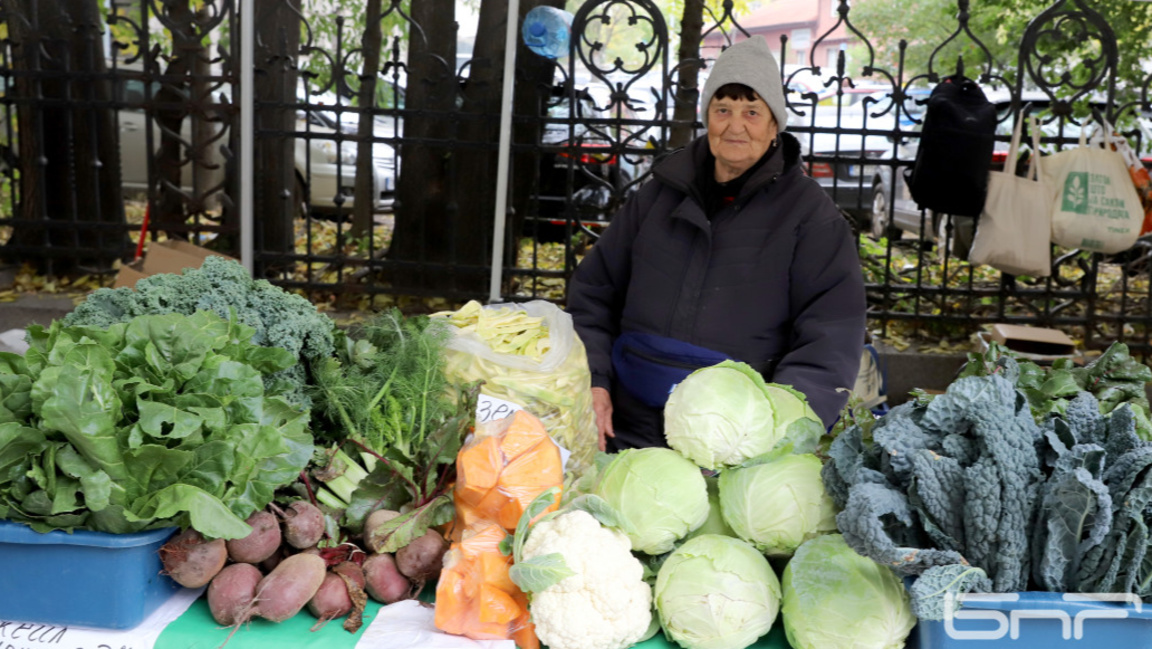
PHOTO Ani Petrova
Font size
The war in the Middle East, rising fuel prices, and inflation are increasingly being felt in the daily lives of people in Bulgaria. This is most visible at municipal markets - the places where small producers and traders meet consumers directly, and where every price change is reflected in conversations, people’s mood, and their willingness to buy.
“In small municipalities, people know well when market day is and follow the tradition of comparing prices in large retail chains with those at open-air markets, where they can buy everything from fresh eggs and laying hens to Turkish curtains and Chinese slippers,” says BNR correspondent Keti Trencheva from southwestern Bulgaria.
“In Razlog, market day is every Monday, and traders, producers, and consumers know each other like neighbors. Over the past month, however, the market space has visibly shrunk, the assortment has decreased, and prices have risen - even within a single day. Those for whom the math doesn’t work will give up, but for now no one dares to cross the limit of tolerance. More and more people are looking for seedlings to grow their own vegetables and thus insure themselves against alarming forecasts.”
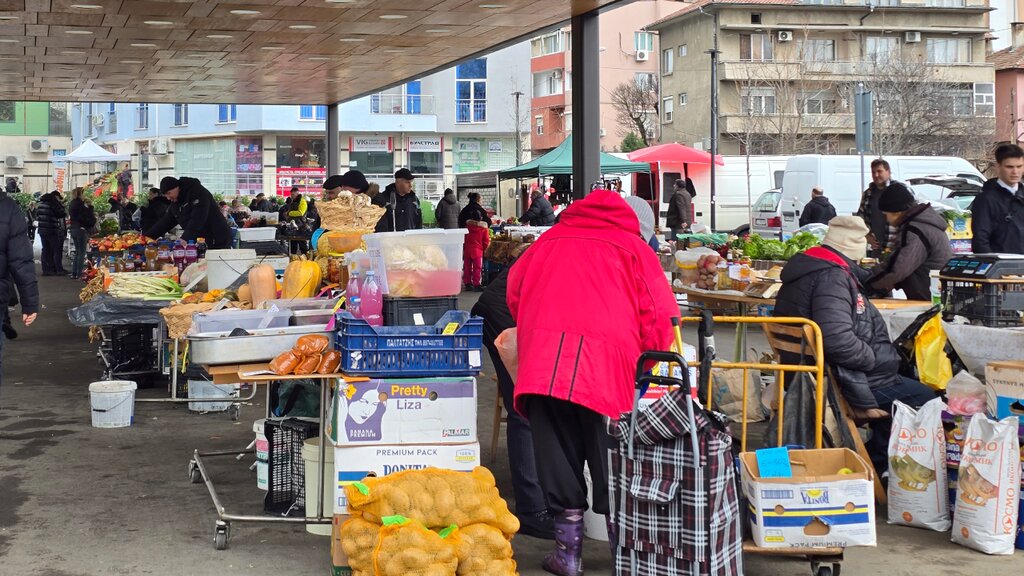
PHOTO BTA
“Everything is expensive… we are pensioners,” shares a woman at the market in the southwestern Bulgarian town. People feel uncertain and are increasingly making compromises - shopping around more, comparing prices, and buying less:
“We do both - we look for cheaper options and buy less often… we give up some things.”
Traders are also under pressure. Many travel from town to town and are finding it increasingly difficult to cover their costs. Some are already questioning whether to continue their business, as “the numbers don’t add up,” while others fluctuate between despair and hope.
“We bring our goods from far away - we go to Petrich, which is more than 100 km away,” explains one vegetable vendor at the market in the town of Razlog. She admits that her only way to respond to rising fuel prices is to continue increasing prices: “We will raise them too, in small steps - there’s no other way. People need to eat, and so do we.”
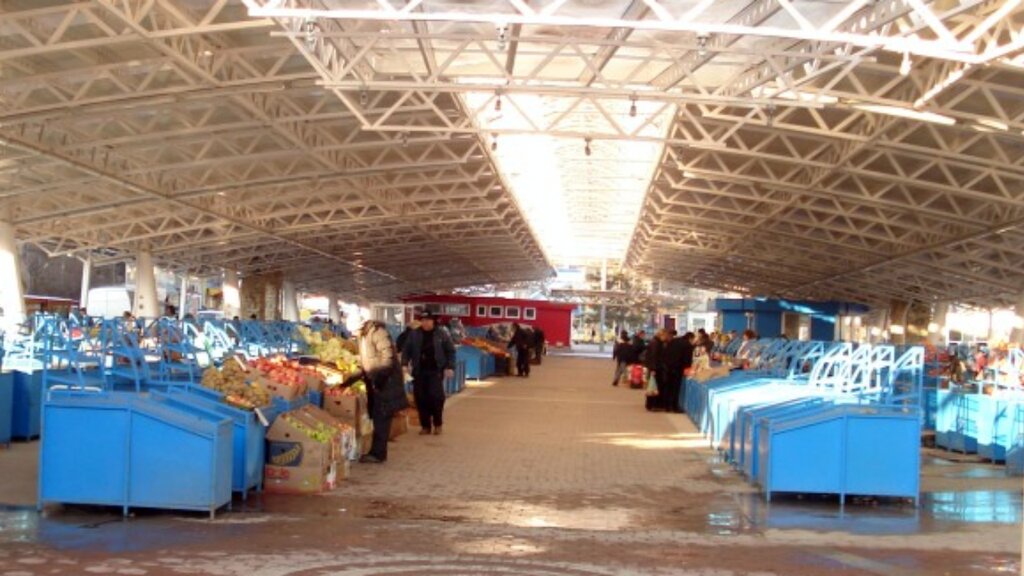
PHOTO pazarkj.com
A similar situation can be seen in Kardzhali, where there are already empty stalls at the producers’ market. For some, the reason is high rents; for others, it is the high price of produce, which becomes unsellable. The rise in prices is the result of accumulated factors - from energy costs and more expensive fertilizers to global developments in food markets, says vegetable producer Anton Ruschukliev. In an interview with BNR Kardzhali, the agronomist notes that Bulgarian markets currently offer mainly imported fruits and vegetables, adding:
“Worldwide, food prices are rising. But this year we also face a more serious issue related to the introduction of the euro. We were told there would be no price increases, yet in many places prices remained nominally the same but in euros - without conversion (1.95583 leva per euro). In reality, prices increased due to the euro transition. Meanwhile, wages did not change, which reduced people’s purchasing power. People started tightening their budgets and buying less. At 4 euros, eggplant becomes a luxury food… And without turnover, the trader renting a market stall is forced to give it up.”
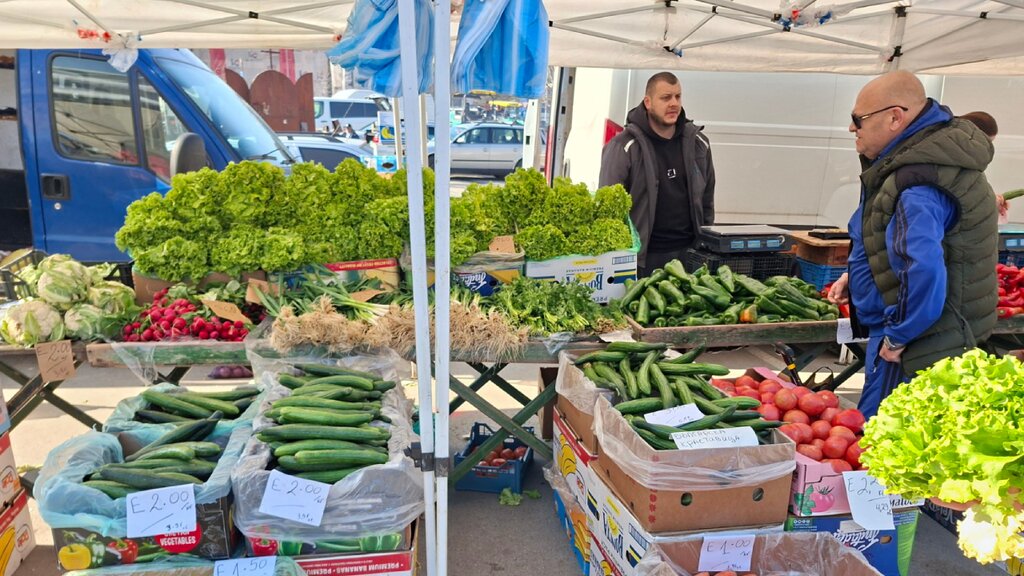
PHOTO Facebook/ marketplace Blagoevgrad
Additional pressure comes from labour costs and workforce shortages. “Labour costs have also increased… many people have gone abroad,” Ruschukliev adds.
Thus, small producers find themselves squeezed between rising costs and the limited means of their customers, while competition with large retail chains remains a serious challenge. These economic processes also have a broader context, making forecasts difficult, as energy prices remain highly dependent on geopolitical instability, including conflicts in the Middle East.
All of this is clearly visible at Bulgaria’s municipal markets, which increasingly reflect economic tension - with more cautious buyers and ever more struggling traders. They remain a place for fresh produce and human connection, but also a mirror of crises, where personal budgets meet global uncertainty.
Based on interviews by Radka Petkova from BNR's regional radio station in Kardzhali and Keti Trencheva, BNR correspondent in Blagoevgrad
Text: Elena Karkalanova
English: R. Petkova
This publication was created by: Rositsa Petkova