


Author
Darina Grigorova
Good Friday hymns inspire faith in the Resurrection
Friday 10 April 2026 10:35
Friday, 10 April 2026, 10:35
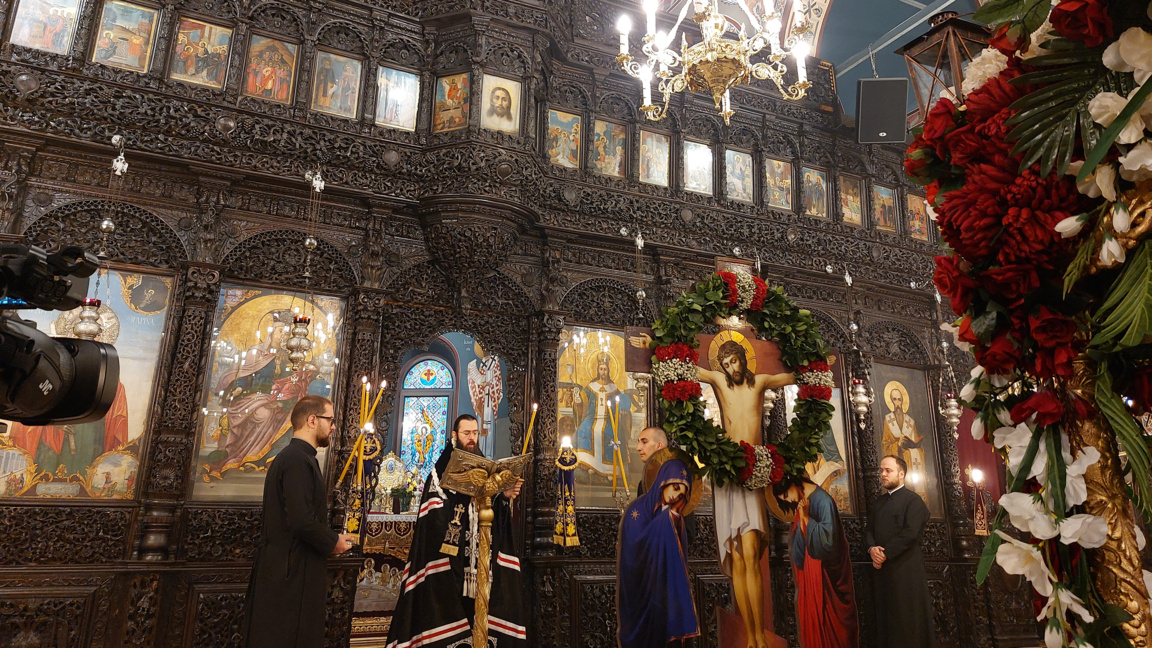
PHOTO Yanitsa Marova, Radio Plovdiv
Font size
The hymns of Good Friday are among the most beautiful and moving in the Orthodox liturgical tradition. They are not simply music, but a kind of musical lament that seems to lead us through the events of Golgotha, culminating in the trembling expectation of the Saviour’s Resurrection.
Though they speak of sorrow, they are shot through with hope — the hope that death has been overcome by death. Jesus Christ, the source of life, is laid in the tomb; yet precisely by entering into death, He destroys it from within. This gives the faithful a deep assurance that death and the grave are not the end, but a gateway to salvation.
“The Church gives us no time at all to grieve in a merely human way,” theologian and church music lecturer Nikola Antonov tells Radio Bulgaria, adding:
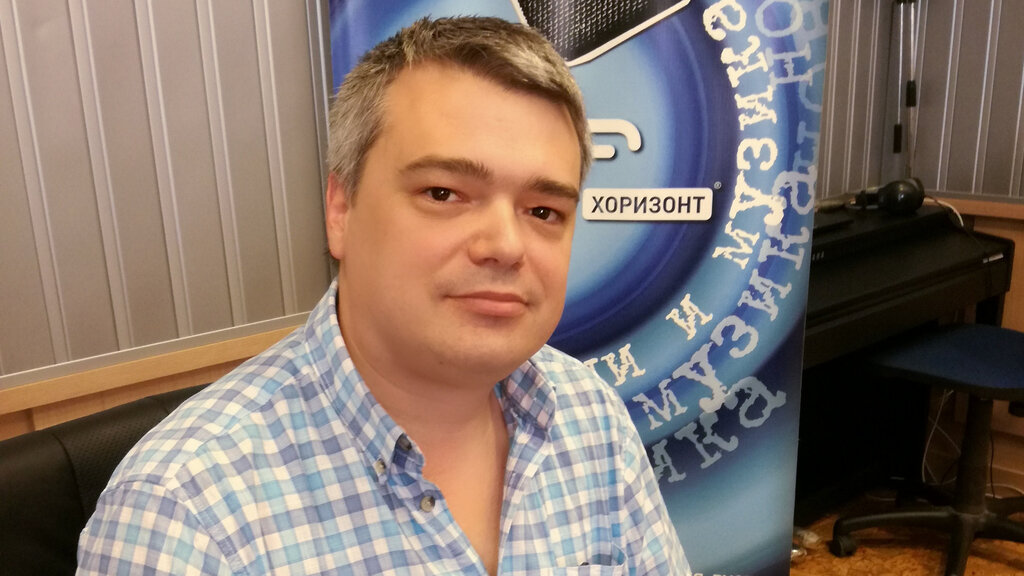
Nikola Antonov
PHOTO Tanya Velichkova, BNR
“In this way, the Church teaches us to experience sorrow, to feel sorrow, but not to surrender to it. This is also a form of education for our lives today. What is the scourge of our age? Depression, despondency — this is sorrow for the modern person. You don’t necessarily have to lose a loved one to fall into such a state; it affects most people when they encounter difficulties. And in this sense, by following this liturgical cycle, often without even realising it, we are actually being taught how not to sink into sorrow.”
The transition from grief to light is especially vivid in the three stases of the Funeral Service of Christ, also known as the Lamentations at the Tomb. In the first and second, the sorrow of the Mother of God predominates as she mourns her Son: “O Life, how canst Thou die? O Christ, how dost Thou dwell in a tomb…” But in the third, the light of joy begins to emerge: “The myrrh-bearing women, having come to Thy tomb…”
In Bulgarian Orthodox churches, two principal styles of the Lamentations are performed. One is the Byzantine, Eastern chant — more inward, contemplative and mystical. The other is choral, polyphonic singing, where the melody is more immediately recognisable and draws in all those present in the church:
“The polyphonic version — whether in three or four voices — exists in different arrangements depending on the type of church choir it is written for. It is also based on the Byzantine model, but harmonised, so that at its core the Byzantine pattern is still heard. Both versions are beautiful and rich, but it is very important to know how to perform these melodies, because sometimes there is an excess either of the minor or the major element. This is already a matter of formation — of church aesthetics, of the performers, the choirs, the conductors. It is an important issue, connected with how we interpret church melodies, whether we are speaking of polyphonic church music or the monodic tradition.”
Some of the most exquisite harmonisations of church hymns were composed by the great Bulgarian composer Dobri Hristov, and are sung in nearly every major church across the country. Among the finest examples of choral Funeral Service of Christ can be heard at the Patriarchal Cathedral “St Alexander Nevsky” in Sofia.
The male choir “St Yoan Koukouzel”, though often performing in a monodic style, also has polyphonic renditions of parts of the service that are internationally recognised for their exceptional balance and depth.
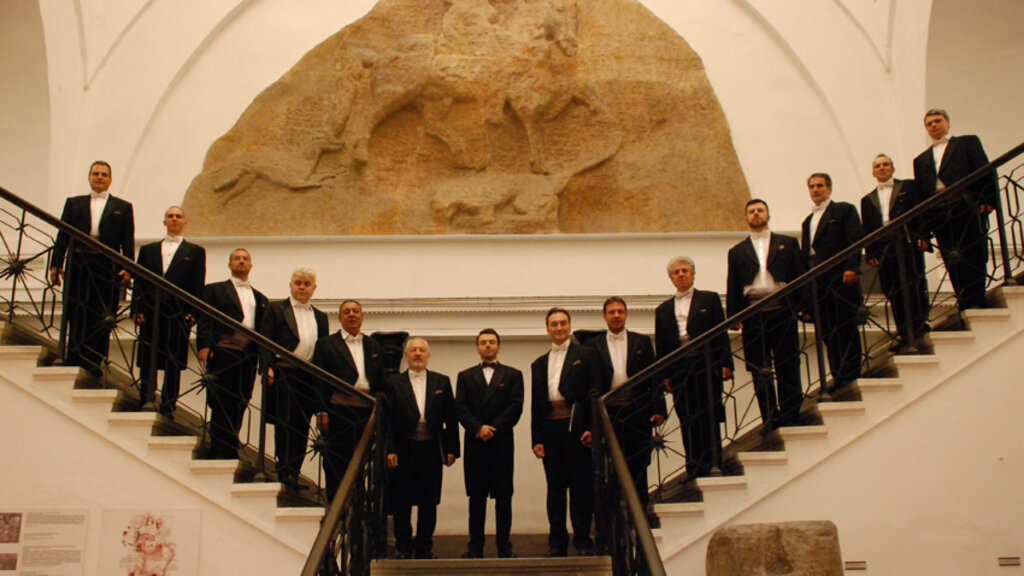
St. Yoan Koukouzel choir
PHOTO BNR
Music plays a profoundly important role in Orthodox worship, Nikola Antonov emphasises:
“This is why, even in ancient times, the Church established specific rules for chanters — how one should sing. It is said: with particular attentiveness and compunction, which is itself an ascetic virtue. Indeed, the task of music in Orthodox worship is to support the prayer of the faithful, to lead them so that all of us in the liturgy seem to be moving together, in one spirit-filled procession towards the Kingdom of God, singing — because singing is a constant inner movement of the soul. That is why almost everything in Orthodox worship is sung: we are in continual motion. We are moving towards God; we are not standing still. The calling of church singers is a very serious one, and another question is to what extent we meet these requirements and criteria.”
Editor: Elena Karkalanova
This publication was created by: Elizabeth Radkova