


Author
Krassimir Martinov
News
Ambassador Vanya Andreeva: Bulgarians in Ireland are valued and respected
The Irish are a tolerant and welcoming people, the diplomat says in an interview with Radio Bulgaria
Monday 6 April 2026 14:08
Monday, 6 April 2026, 14:08
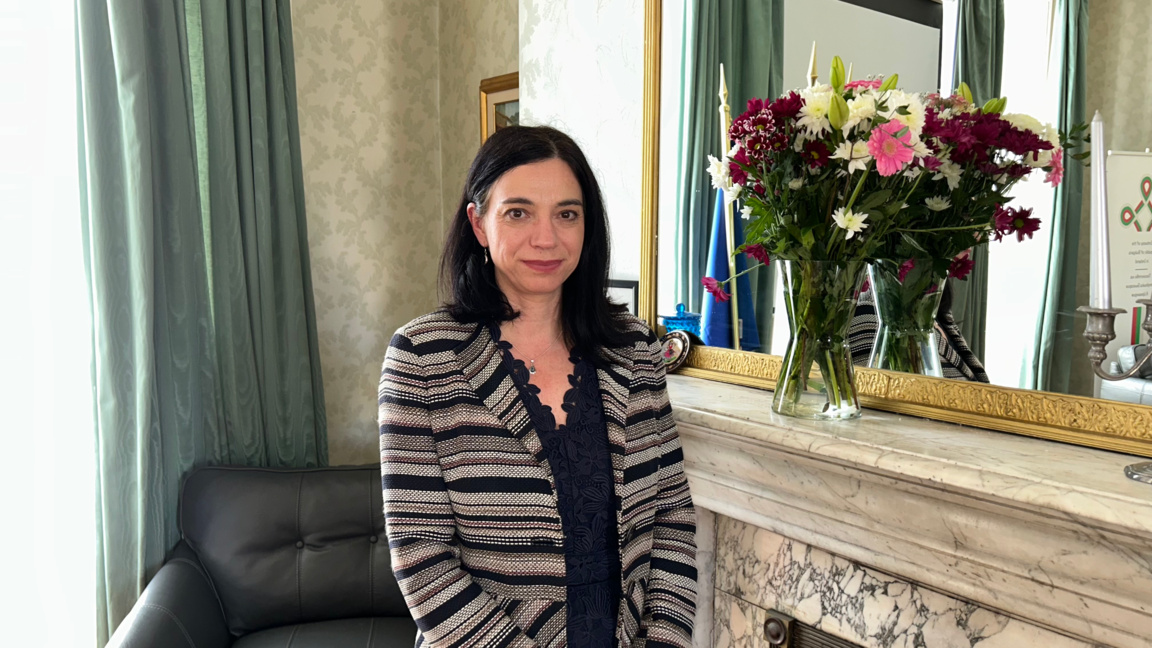
PHOTO Krassimir Martinov
Font size
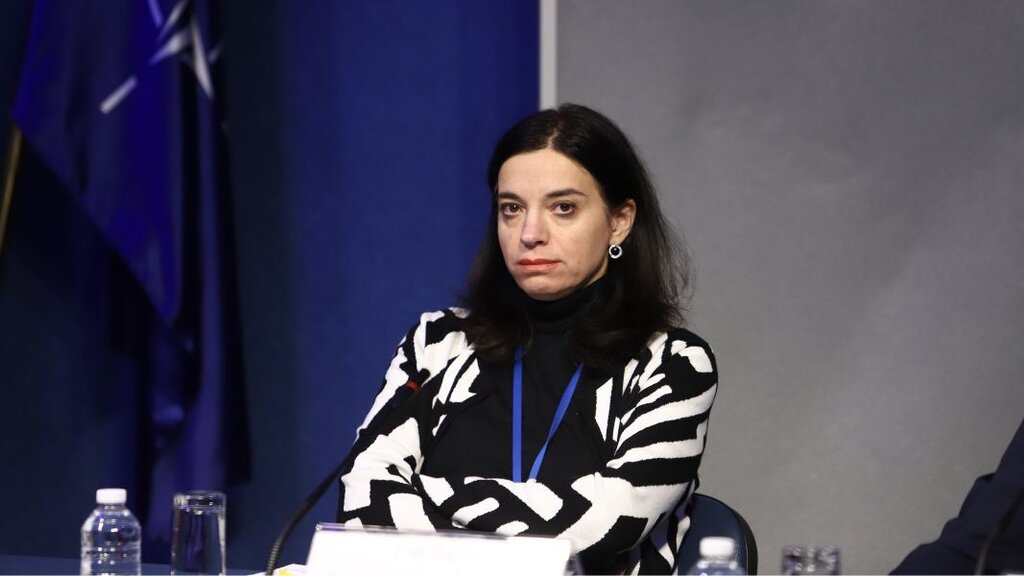
Vanya Andreeva-Malakova has served as Bulgaria’s ambassador to Ireland since September 2023. Her diplomatic career includes two assignments to North Macedonia and a posting to Bulgaria’s permanent mission to the United Nations, the OSCE and other international organisations, as well as roles across the foreign ministry, which she joined in 2000 after a competitive selection process. She has extensive experience in Southeast European affairs, the EU’s common foreign and security policy, multilateral diplomacy and human rights.
We spoke with Ambassador Andreeva at Bulgaria’s embassy in Dublin after the “History Without Borders: Preserving Bulgarian Memory Abroad” forum, organised by the Azbuka Bulgarian School in late March.
Ambassador Vanya Andreeva
PHOTO BNR
When Bulgarians living abroad are discussed, the focus tends to be on preserving their identity and safeguarding their national memory. But are these things actually at risk?
“That’s a very pertinent question. But, to be honest, after spending two days immersed in the forum, all my concerns have disappeared. In fact, Bulgarian identity is incredibly resilient. We have kept it alive through centuries of foreign domination, and we have even shaped European civilisation itself — after all, the EU’s third official alphabet is our own Cyrillic. We continue to pass on our culture and history through education, supported by the Orthodox Church. That was true historically, and it remains true today.”
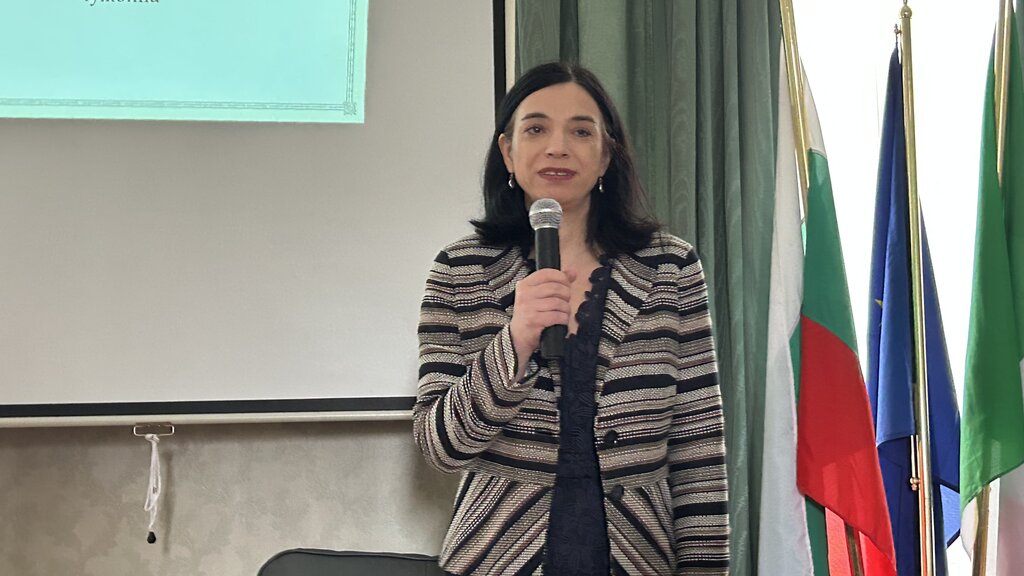
PHOTO Radio Bulgaria
There’s also that proverbial Irish tolerance for other cultures, which plays its part. Bulgarian children can take a school-leaving exam in their mother tongue in Ireland, and this counts towards university admission. The Bulgarian community is regularly invited to major public celebrations. Following Russia’s invasion of Ukraine, Ireland also took in around 100,000 Ukrainian refugees, the ambassador noted.
What do the Irish most often associate Bulgaria with?
“In my view, it’s tourism. I often meet Irish people who tell me quite proudly 'I've been to Sunny Beach!' or 'I've been to Bansko'. Many Irish people also own property in Bulgaria. I know a wonderful couple who spend six months of the year in Chepelare and six months in Monaghan. They discovered Bulgaria after supporting the treatment of two Bulgarian children for many years.
Many Irish people have left their hearts in our country. However, we could do much more to raise Bulgaria’s profile. We recently had the pleasure of hosting ‘The Mystery of the Bulgarian Voices’. The concert became a celebration enjoyed by Bulgarians and Irish people alike.
At the embassy, we also hold open days to showcase different elements of our culture. For example, our presentation of the Bulgarian rose and rose oil sparked great interest — many people were hearing about them for the first time and became keen to visit Bulgaria.”
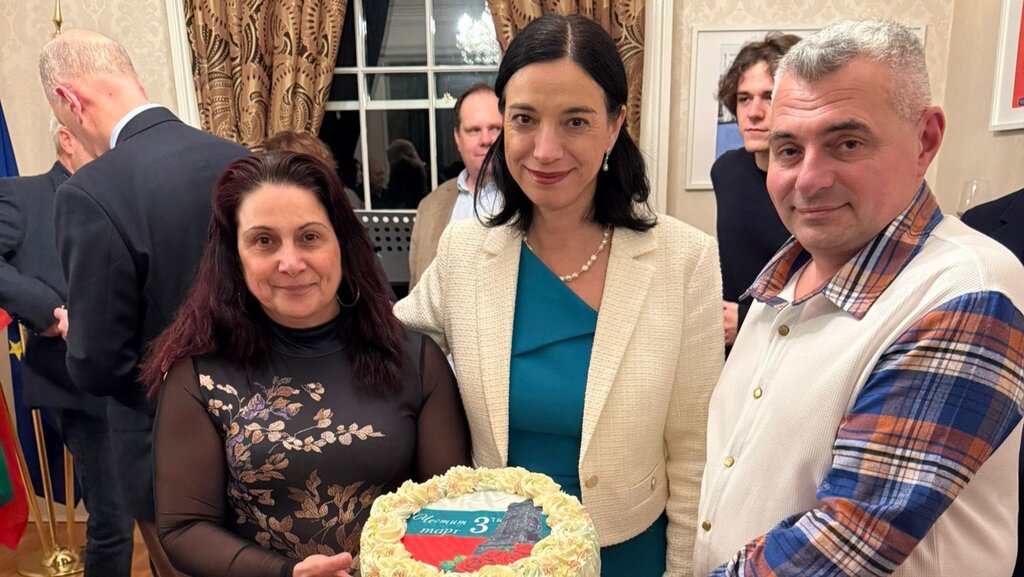
H.E. Ambassador Vanya Andreeva with Bulgarians at a reception on March 3, 2026
PHOTO Facebook/Embassy of Bulgaria in Ireland
Relations between Bulgaria and Ireland are also developing well politically, she said:
“Ireland has consistently supported Bulgaria at the European level, from its EU accession to its bid to join the euro zone. We received personal support from their finance minister and Eurogroup chair, Paschal Donohoe. Being part of the European Union is clearly advantageous — we share many priorities and often hold similar positions. However, we need to do more in areas such as the economy, tourism, innovation and high technology, in which Ireland has much to offer.
For its part, Bulgaria aims to establish itself in Southeast Europe as a hub for high-quality education and research in computer science, artificial intelligence and start-ups. There is clear scope for more initiative and closer cooperation.”
Although there are no precise figures, the foreign ministry estimates that between 8,000 and 10,000 Bulgarians live in Ireland. They are spread across the country — in Dublin, Cork, Limerick, Shannon, Tullamore and Galway — and work in a range of sectors.
“Bulgarians are present in almost every high-tech company,” Andreeva said, noting that there is a huge community of Bulgarian aviation engineers, not to mention accountants, factory workers, architects and doctors who have made their mark in Ireland.
Editor: Elena Karkalanova
Posted in English by E. Radkova
This publication was created by: Elizabeth Radkova