


Author
Yoan Kolev
News
New institute studies the characteristics of Bulgarian communities abroad
Roundtable discussion on the problems of Bulgarians in the Balkan region is being planned for June
Wednesday 8 April 2026 10:33
Wednesday, 8 April 2026, 10:33
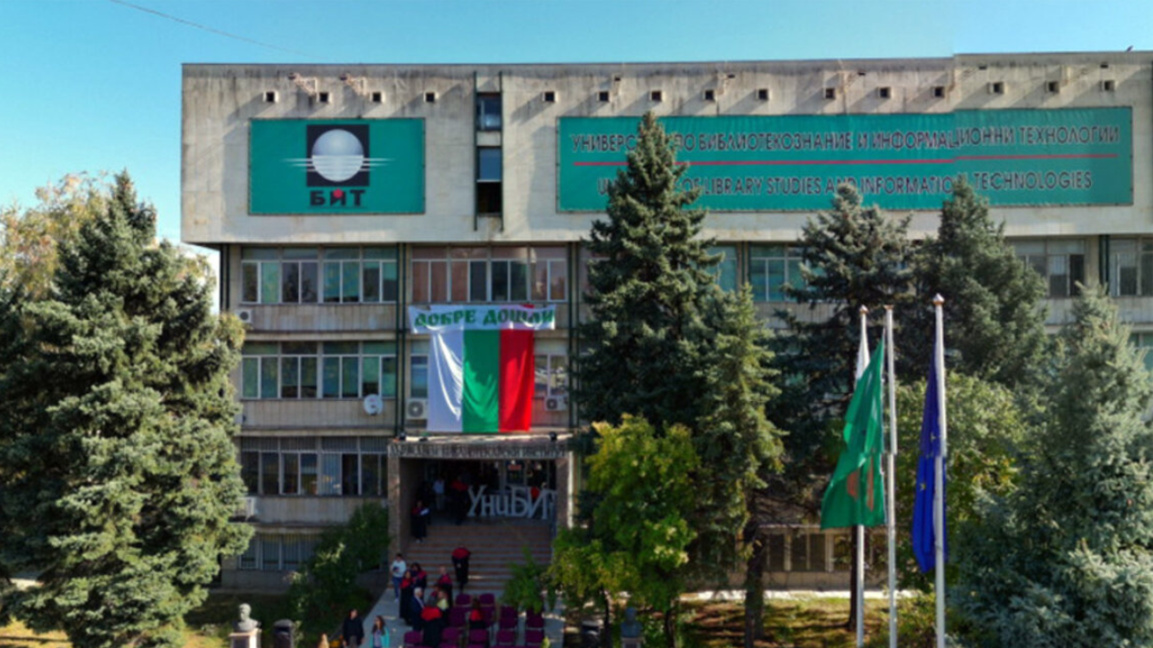
PHOTO unibit.bg
Font size
Approximately
3 million Bulgarians live abroad, according to a report by the
Ministry of Foreign Affairs for 2023. The data are approximate, as
Bulgarian citizens are not required to register in diplomatic
missions abroad. Yet the fact that almost every Bulgarian family has
members, relatives or friends who are far from their homeland keeps
the topic of Bulgarian communities around the world still relevant,
although the institutions whose main task is to work with these
communities are few. Since September 11, 2025, they have been joined
by the Institute for the Bulgarian Diaspora and Cultural Heritage
Abroad, established with the permission of the Council of Ministers.
The institute is a unit at the University of Library Studies and
Information Technologies.
For
several years, the topic of Bulgarians abroad has been part of the
University's work, but has now been taken over by the newly formed
unit. The work of the scientists in the team is funded by the
Scientific Research Fund of the Ministry of Education and Science.
The Institute is currently working on three projects, the first of
which has already been completed, and concerns the determination of
the cultural profile of the Bulgarian diaspora. The second project is
called "Bulgarian Communities Beyond the Border after 1878 - The
Code of Survival", and the third - "Bulgarians Abroad after
1989", which covers the new economic emigration from the era of
Bulgarian democracy.
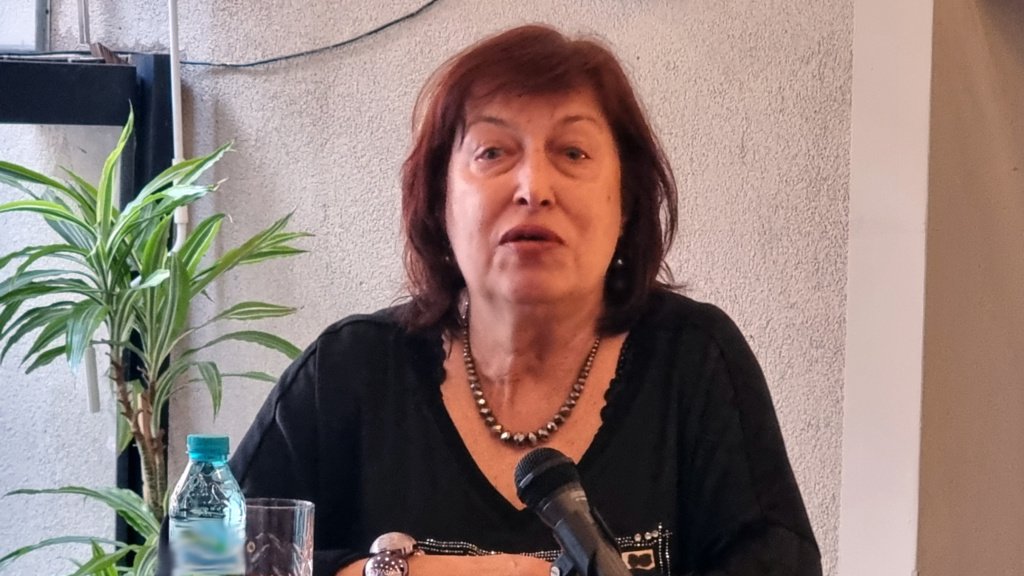
Prof. Dr. Boryana Buzhashka
PHOTO BTA
"Characteristic of all these diasporas is that they are not the same. Each has its own characteristics. The political diaspora is one thing, and the one that was beyond the border until 1989 and includes those living in Moldova, Bessarabia, Ukraine, etc., is another,” says in an interview with Radio Bulgaria the director of the Institute for the Bulgarian Diaspora and Cultural Heritage Abroad, Prof. Dr. Boryana Buzhashka. According to her, Bulgarian emigration after 1989 is divided into 3 directions. One is purely economic, which is caused by the turmoil that Bulgaria experienced in the transition to democracy. The wave that emigrated from Bulgaria is characterized by very high education and preparedness. These are people who seek their development purely professionally in very developed countries and usually initially they head to Germany, the Netherlands, Great Britain, Austria - countries where they could find their professional growth."
PHOTO library
In
order for these people to choose to return to our country again, it
is necessary to raise the standard of living and give them the
opportunity to continue to do what they do abroad, Prof. Buzhashka
says.
Part
of the Bulgarian emigration after 1989 are also the Roma, whose
motives for setting off on a journey are also mainly economic:
"They
head to countries where there is a very strong social system so that
they can use it and be able to find realization. I think that those
who deal with these problems would immediately notice that there is a
huge difference between the Roma who lived in Western Europe and
return to Bulgaria, and those who are here. There they get used to
certain traditions, to a regime that is very different from ours. Of
course, there are exceptions. And the other characteristic - they
bring in the money they have earned, support their relatives in
Bulgaria and actually in some way support the Bulgarian economy."

PHOTO BTA
The
third segment of emigration is the Bulgarian Turks, who do not break
their connection with Bulgaria. The emigration wave as a result of
the so-called Revival Process was huge. "Initially people talked
of over 350,000, but then the number reached 1 million,"
Buzhashka pointed out:
"What
is typical of them, however, is that they did not speak the language
spoken in the Republic of Türkiye and had great problems adapting at
the beginning. Secondly - their parents remained in Bulgaria and they
send their children to them in the summer, raised and educated in a
cultural environment typical of Bulgaria."
An
exhibition and a round table with the participation of
representatives of Bulgarian communities in seven Balkan countries
are the events that the Institute is currently actively preparing.
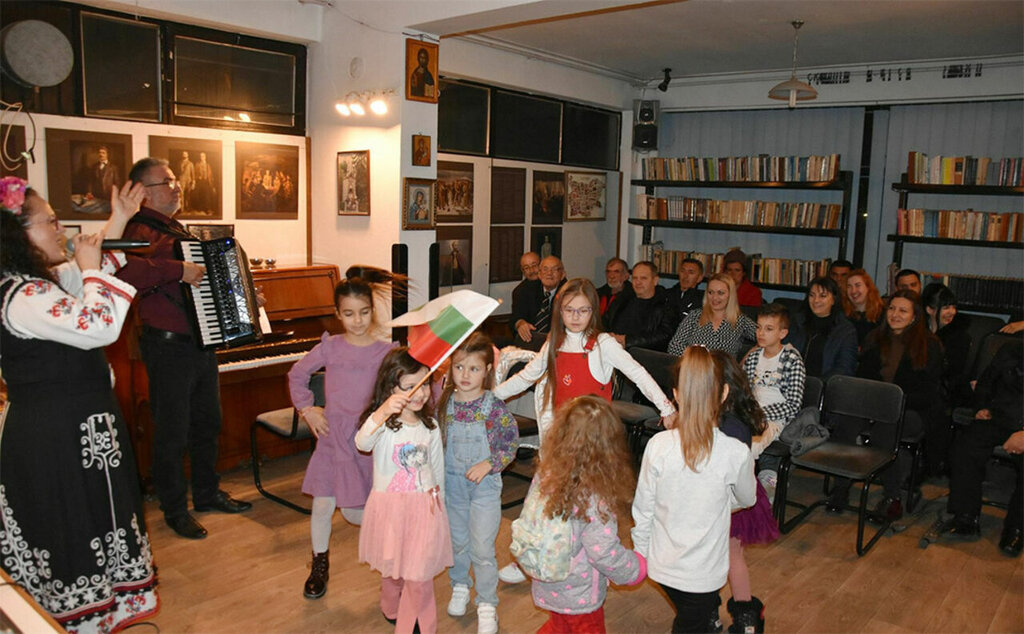
PHOTO library
"With the Ministry of Foreign Affairs and the efforts of the ambassadors in the Balkan countries, we will hold a round table in June to see and outline the problems of the Bulgarian communities in the Balkan countries. I must tell you that this is a challenge, because working with these communities is different in each country. While in Albania there are no problems with being recognized as member of the Bulgarian community and Bulgarian minority, the problems are serious in North Macedonia. In Romania, on the other hand, there is a very well-established system for working with minorities and the Bulgarian communities there do not have the problems that people in the Western Outlands have," she says. The exhibition ‘Bulgarians in the Balkans and Beyond the Border - The Code of Survival’ is also expected to be ready by the end of April. It will display documents and testimonies about the Bulgarian communities in the seven countries and will tell about spiritual centers and memorial sites there. There will also be information about some contemporary initiatives of the various Bulgarian associations in the Balkan countries. The exhibition will be presented during the round table in Sofia in June, and then there will be a kind of tour in the Balkan countries where it will be admitted,” Boryana Buzhashka informed us.
This publication was created by: Alexander Markov