


Author
Krasimir Martinov
Priest Maxim from the Kykkos Monastery – with love and care for Bulgaria
Thursday 9 April 2026 10:45
Thursday, 9 April 2026, 10:45
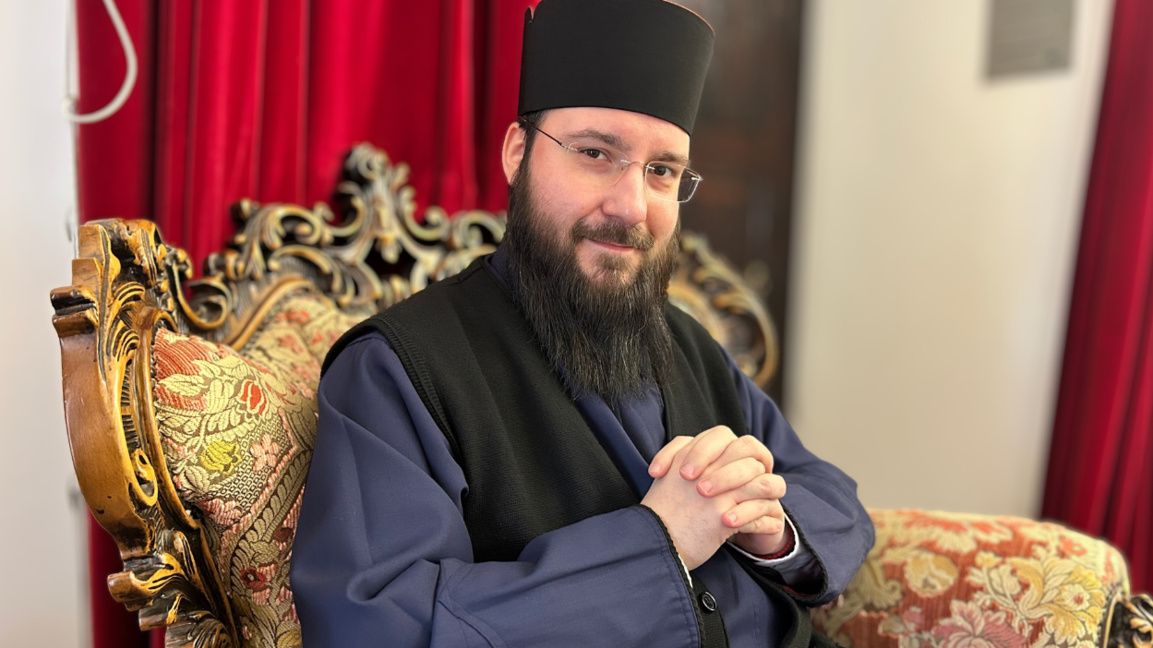
PHOTO Krasimir Martinov
Font size
Pilgrims from all over the world flock daily to the Troodos Mountains
to worship the miraculous icon of the Holy Mother of God, known as
the “Merciful” in Kykkos Monastery in Cyprus. And it is
especially lively during the major Christian holidays. Many
Bulgarians also visit the monastery.
We also find a "Bulgarian trace" in the modern development
of the monastery and this is Father Maxim. He is Bulgarian by father
and Cypriot by mother, a graduate of the Paisii Hilendarski
University of Plovdiv, and is often invited to the Bulgarian Sunday
School "Rodna Stryaha" in Cyprus.
"Before
I finished 12th grade I told myself that I wanted to move to the
monastery," Father Maxim says. "I lived here for nearly 8
months, and then they sent me to study theology. I passed the exams
in Thessaloniki. But with one of the brothers in Kykkos, Metropolitan
Isaiah, we visited the Plovdiv Metropolitanate. There, with the
blessing of Metropolitan Nikolay, I enrolled in the Plovdiv
University. After graduating, I had doctorate in Moscow, returned to
Cyprus and in 2021 I became a monk. Shortly after, Metropolitan
Nikiforos, who saw certain qualities in me, promoted me to the
highest administrative position - cellarer of the central monastery.
As such, I am responsible for welcoming guests, for nearly 100
workers who are part of the 250-member monastery staff, as well as
for the economic activities and for everything that concerns the
management of the monastery.”
Although
the Kykkos Monastery is stauropegic, it is only spiritually
subordinate to the Holy Synod of the Cypriot Orthodox Church.
Economically it is completely independent of it. Therefore, all the
income generated remains for the needs of the monastery. With it, it
supports itself, but also carries out a number of other activities
for the benefit of society. It supports poor families, maintains its
own social institutions - a home for the elderly, for children and
for people with disabilities, supports the work of other social
organizations. The Kykkos Monastery has its own police, fire
department, emergency medical service, a museum with 9 shops and its
own farms.
"The monastery is not ascetic. We are an open monastery and we
have social monasticism. We are open to every single person – to
guests, to pilgrimage groups, to tourists. The monastery opens its
doors at 4:30 in the morning and receives visitors until 6:30 in the
winter and until 7:30 in the summer months. We have no restrictions.
And this is what makes our monastery special. It is open to any
activities that put the person at the center."
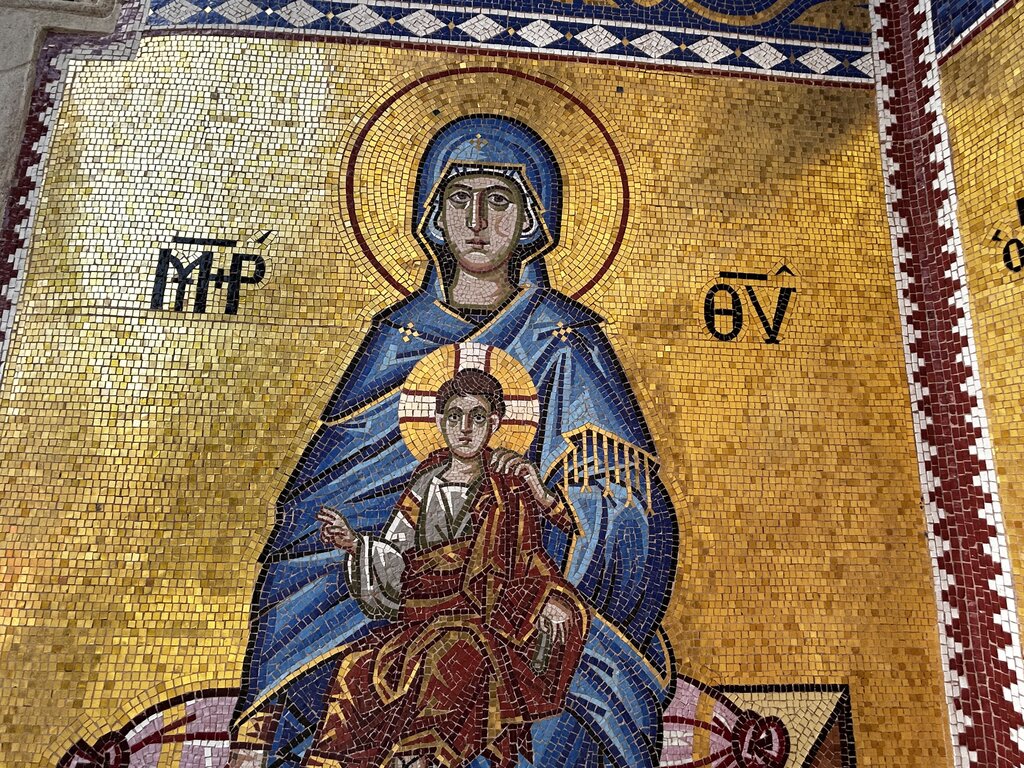
Virgin Mary of Kykkos, fresco
PHOTO Krasimir Martinov
In
fact, the monastery played a similar role in the first years after
its founding. The legend of the miraculous icon, which is now kept in
Kykkos, is also connected with this.
"In
the 11th century, even before the temple and monastery were built, a
monk named Isaiah lived here. He was ascetic person. Byzantine rulers
often came to him. The military governor of the Cypriot part of the
empire Emmanuel Votomid met the monk and received enlightenment from
the Virgin Mary - that they should transfer the icon of the Virgin
Mary Merciful from Constantinople to Kykkos, in the years before the
Franks entered and plundered everything. Emmanuel and Isaiah went to
the Byzantine emperor Alexios Komnenos. However, he did not believe
that this was enlightenment from the Virgin Mary. And she appeared to
him. After that, he handed over the icon and provided land for the
construction of the monastery and all its courtyards.”
In
addition to being personally connected to Bulgaria, Father Maxim is
also visited by many Bulgarian compatriots living in Cyprus. He
himself teaches religion in one of the Bulgarian Sunday schools. He
tells us that Bulgaria is something very dear and valuable to him. He
loves to communicate with Bulgarian priests, as well as with people
who visit Cyprus. But, it turns out, Bulgaria is also a sore subject
for Father Maxim.
"I
am not happy with the condition of Bulgaria and I am not happy with
the way the politicians act," he tells us. "I am not happy
with the way the laity act. But I am happy with the way the church
acts, because it tries to work as much as it is allowed to. The
statesmen must understand that if they do not help the church, the
Bulgarian people will not see prosperity. I am happy and see the
actions of the Bulgarian hierarchs, who work hard and diligently and
I pray that God will give them strength. Bulgarians must know that
wherever we are - in USA, Canada, Australia, Cyprus, Spain or Italy,
we remain Bulgarians. And we are hurt by what is happening. And we
pray for the prosperity and spiritual growth of the Bulgarian state
and the Bulgarian people."
PHOTO Krasimir Martinov
According
to Father Maxim, the path to prosperity is when even young children
grow up in communion with God. And so he opens the discussion about
religious education in school.
"Religious
education in schools is a very important part. It must be understood
that it can only bring good," Father Maxim says. "When the
children grow up, they will have that seed that God can water and
thus the child will turn into a beautiful person."
We
ask Father Maxim about the experience of Cyprus
"The
Church has always played an important role. That is why religious
education is part of the DNA of Cypriot education. And for every
important decision regarding the curriculum, the Ministry of
Education consults the Cypriot Church… The Church is the foundation
of every Christian state. Its language may sometimes be sharp, but we
must listen, because the hierarchs speak what Christ spoke."
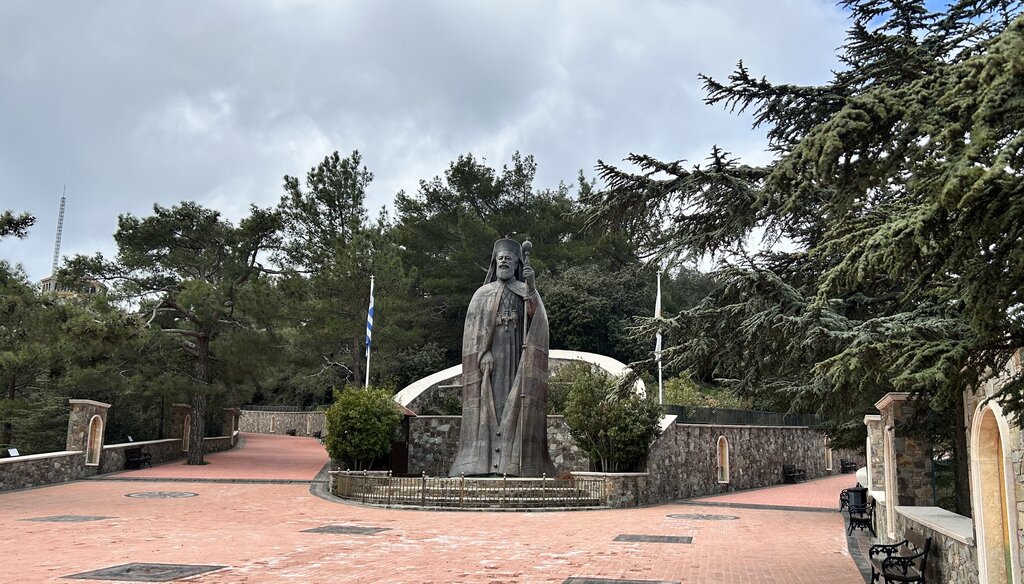
Memorial complex above the Kykkos Monastery
PHOTO Krasimir Martinov
How
do the Bulgarian children from the Sunday school where Father Maxim
teaches perceive the word of God?
"What
I see is that even children from mixed marriages show interest. When
I go to teach, all the children come, even the parents. This is a
message that tells us that people are looking for God. Children also
want to learn. But it is important to have a good program that does
not burden them and that everything comes with age. Bulgarians here
are very open to theological thought, as long as everything is done
carefully, with love and without criticism. The children are the
same."
This publication was created by: Alexander Markov