


Author
Ivo Ivanov
150 years of the April Epopee
"The Bloody Letter" heralds the beginning of the April Uprising
Monday 20 April 2026 08:05
Monday, 20 April 2026, 08:05
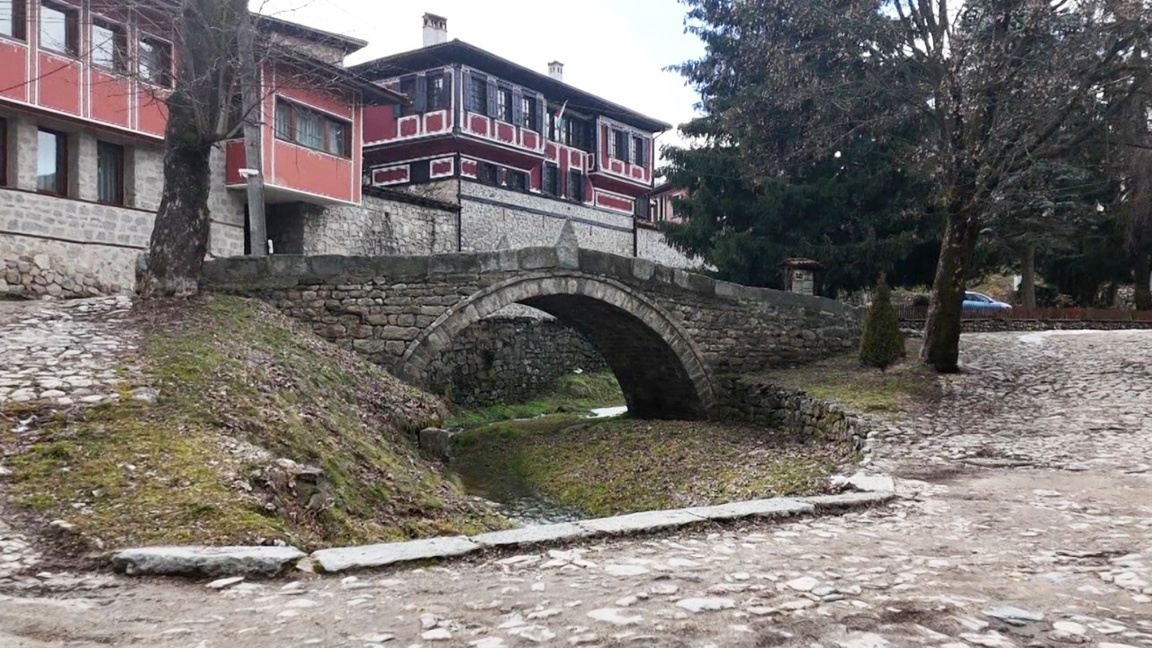
The bridge in Koprivshtitsa, where the first shot in the April Uprising was fired
PHOTO Ivo Ivanov
Font size
In 1396, medieval Bulgaria fell under Ottoman rule, which lasted
nearly five centuries and left lasting marks on the history and
development of the country. Since the beginning of the 19th century,
the Sultan's power over the Balkans had been shaken by rebellions and
uprisings of the local peoples, who were fighting for their
liberation. The great powers joined the race to acquire new lands and
influence from and over the Ottoman state, which has fallen into
constant crisis. That is how “The Eastern Question” was born.
After the uprising
of the Serbs in Bosnia and Herzegovina in 1875 and the intervention
of Austria-Hungary, Russia and England, the Bulgarians began to
restore the Internal Revolutionary Organization founded by Vasil
Levski. In the beginning of 1876, a network of committees in four
revolutionary districts started preparing an uprising, which broke
out prematurely on April 20 in Koprivshtitsa. The head of the local
revolutionary committee, Todor Kableshkov, sent a letter to the
leaders in the town of Panagyurishte, which ended with a call for an
uprising and for the rejection of five centuries of foreign
domination. The letter was sent to revolutionary committees in
different settlements and went down in history with the name "The
Bloody Letter".
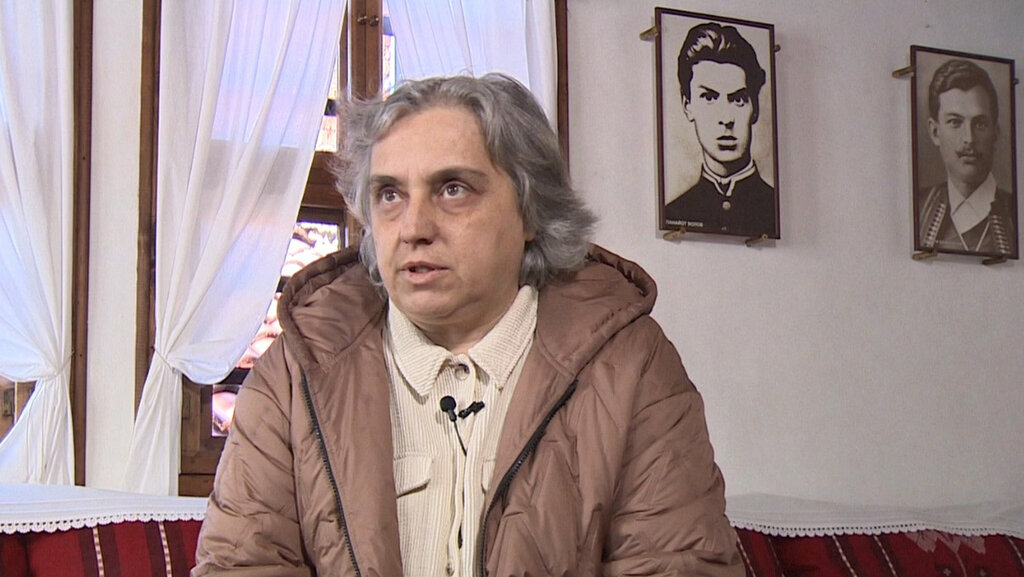
Historian Svetlana Muhova
PHOTO Ivo Ivanov
"When Kableshkov wrote the letter, the people of Koprivshtitsa
did not even know whether they would be followed by those in
Panagyurishte and other settlements. At that time, there was a great
tension over this moment and that is precisely what makes it
unique," says Svetlana Muhova, a historian from Koprivshtitsa.
During the National Revival, Koprivshtitsa was a rich mountain town
and an educational center with a high revolutionary spirit.
"The Bloody
Letter" briefly but in detail describes the beginning of the
April Uprising:
“Brothers! Yesterday Neceb Aga arrived in our village from Plovdiv,
and asked to imprison some people, including me. When I heard about
your decision, made at the Council of Oborishte, I called up some
brave men and after we got armed, we headed towards the konak and
attacked it, killing the müdür and some guards. Now, as I am
writing this letter, the flag is waving in front of the konak, rifles
are thundering accompanied by the echo of the church bells, and the
brave men are kissing one another on the streets... If you, brothers,
happen to be true patriots and apostles of Freedom, then do follow
our example...”
Koprivshtitsa,
20th April, 1876 T. Kableshkov
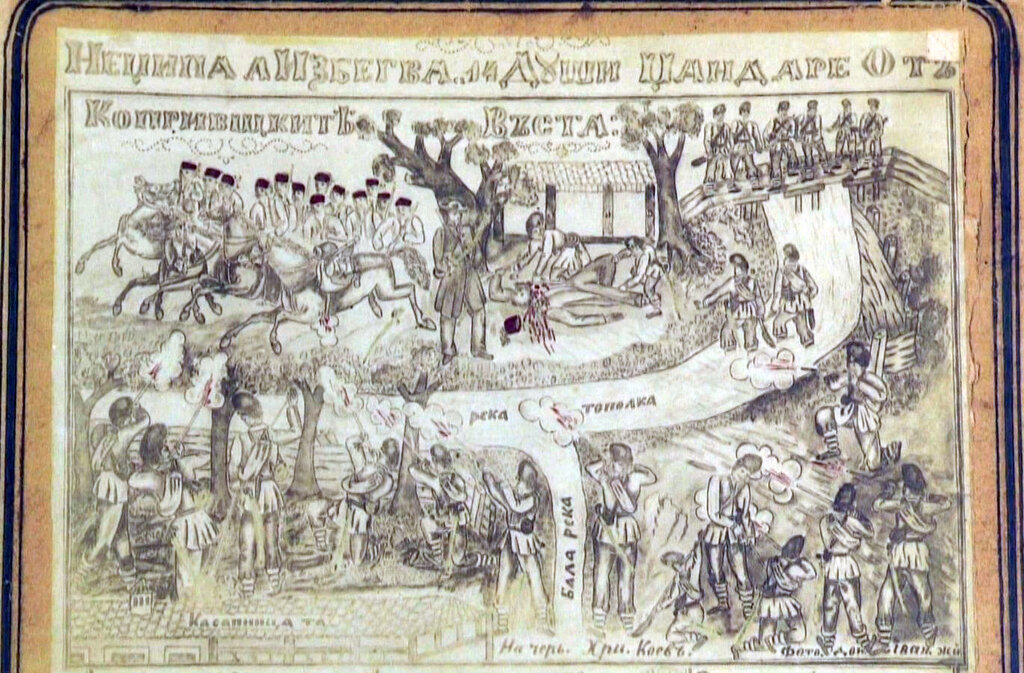
Drawing of the uprising in Koprivshtitsa by Tancho Shabanov, a member of the revolutionary committee
PHOTO Ivo Ivanov
The
text of the letter – a call for rebellion – is found
in the book "Memoirs
of
the
Bulgarian Uprisings", written by participant in the national
liberation movement Zahariy Stoyanov. However, Svetlana Muhova does
not lose hope that the original of the letter, or at least its
translation into Ottoman Turkish, may someday emerge from the
archives in Istanbul.
"The
ellipses
in the letter are
interesting. Years ago, I tried to examine Todor Kableshkov's letters
very carefully. I noticed that when he writes something, he usually
observes the correct punctuation for his time. But when there is some
excitement, some emotion, he very often interrupts the letter with an
ellipsis. These
ellipses
perhaps show Kableshkov's excitement at the moment of declaring the
uprising," the historian says.
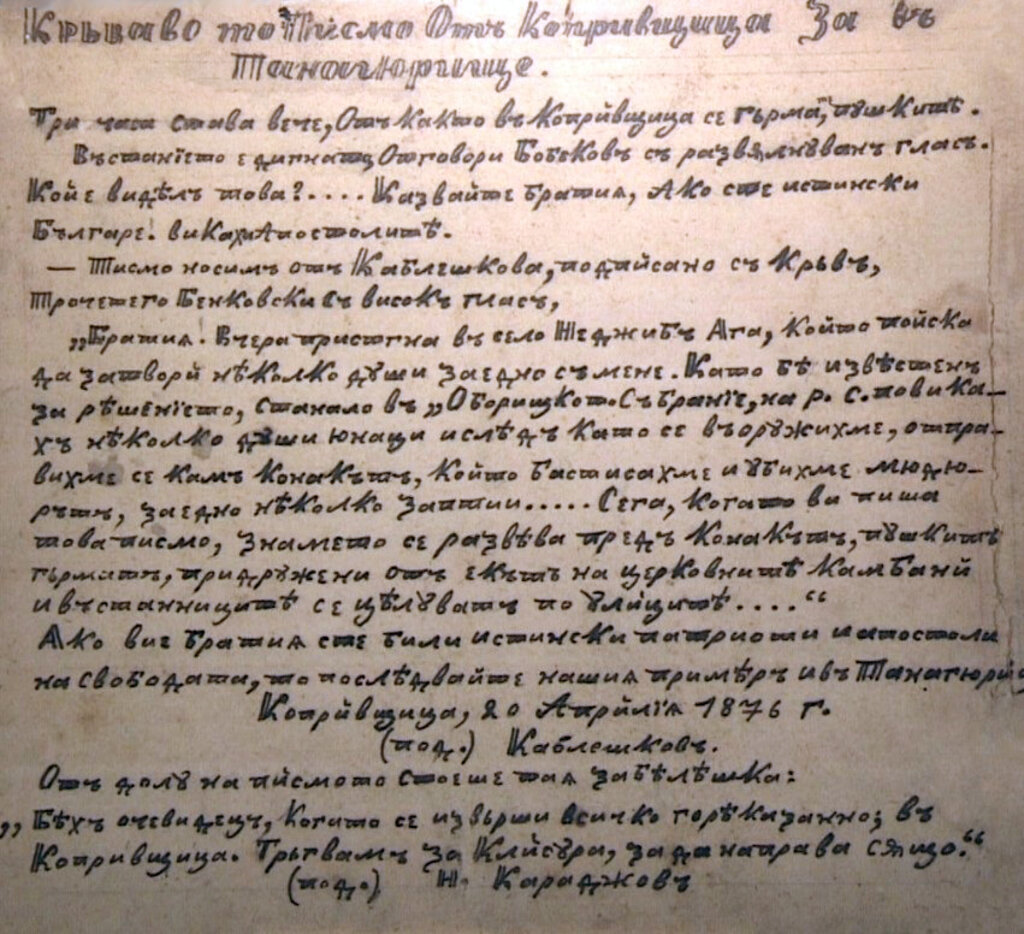
Text of the Bloody Letter - a fragment from "Memoirs of the Bulgarian Uprisings" by Zahari Stoyanov
PHOTO Ivo Ivanov
Svetlana Muhova says that many people believe that the letter was called "bloody" because it was written in blood. However, referring to contemporaries from 1876, she says that it could not be written in blood and assumes that the only possibility is that there was a cross under the text, drawn with the blood of Kableshkov himself. After April 1876, the expression "Bloody Letter" became for Bulgarians an idiom of determination, action, a call to fight and an honestly fulfilled word.
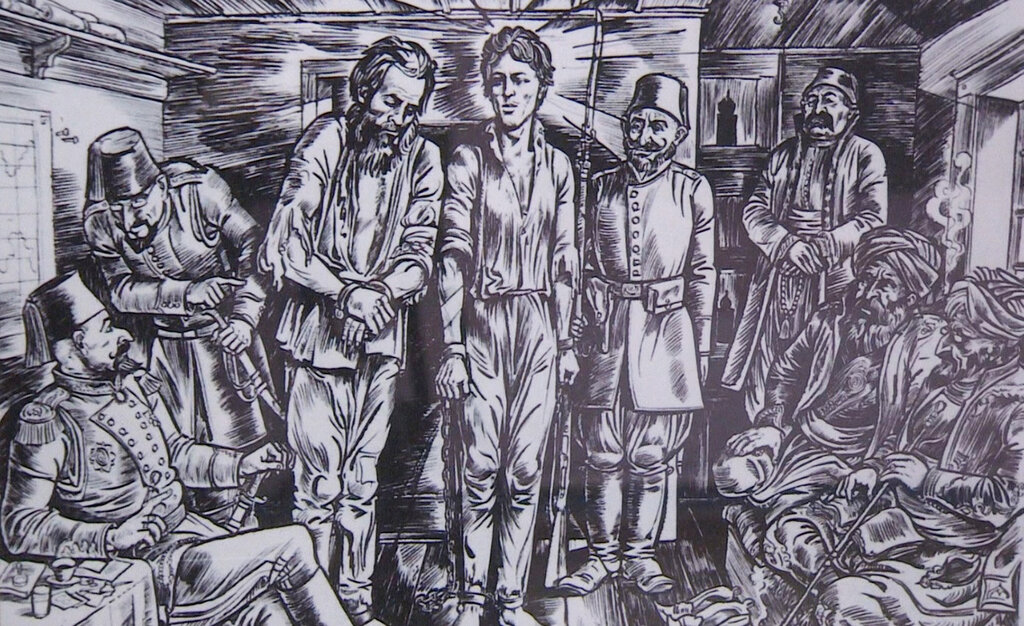
Investigation against Kableshkov in the konak in Tarnovo, art. Todor Tsonev
PHOTO Ivo Ivanov
The April Uprising was prepared in a short time and was poorly coordinated and therefore quickly suppressed. But the rebels achieved their ultimate goal. The atrocities against the civilian population in suppressing the rebellion caused the intervention of Europe. They led to the Russo-Turkish War and the emergence in 1878 of the first Bulgarian free lands in the Principality of Bulgaria and the autonomous region of Eastern Rumelia.
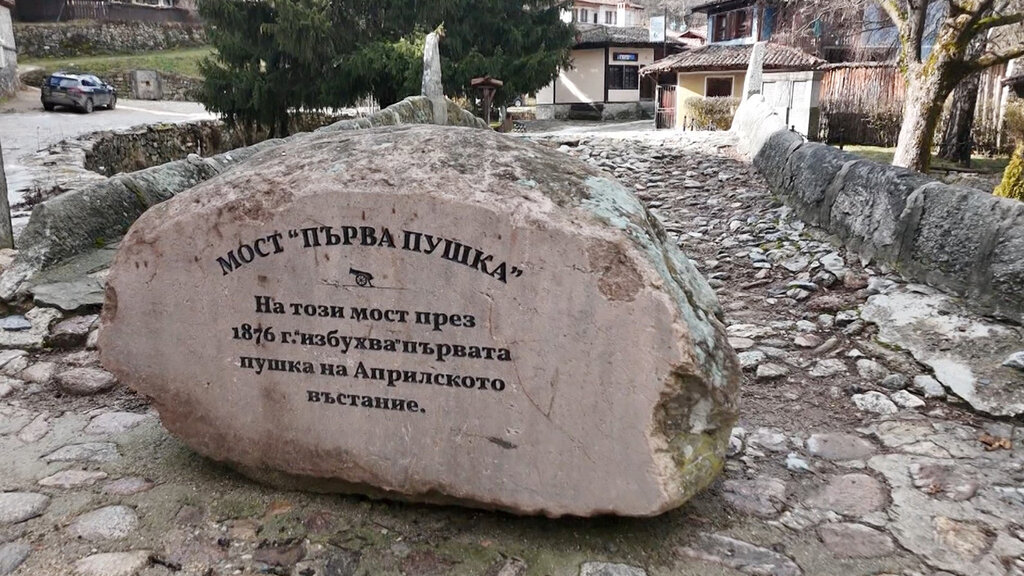
PHOTO Ivo Ivanov
This publication was created by: Alexander Markov