


Author
Yoan Kolev
News
Sociologist from "Alpha Research" Boriana Dimitrova to Radio Bulgaria:
Trust in parties with more nationalistic profile is shifting to new formations
Tuesday 21 April 2026 14:01
Tuesday, 21 April 2026, 14:01

PHOTO BGNES
Font size
A
little under 200,000 Bulgarian citizens voted abroad, as
53,000
voted using
machine. This was announced by the caretaker
Minister of Foreign Affairs, Nadezhda Neynski, at a briefing in the
Ministry of Foreign Affairs in connection with the holding of the
early parliamentary elections abroad on April 19.
The
result: Bulgaria has a clear winner - "Progressive Bulgaria"
coalition is in the lead in the preferences of Bulgarian citizens in
30 out of 31 electoral districts (the exception is Kardzhali, where
DPS
is traditionally in the lead). The new political formation around
former president Rumen Radev was also preferred by the majority of
Bulgarians who voted abroad.
Bulgaria
will have a 5-party National Assembly,
with the first political force having nearly 130 out of 240 members
of parliament, which means it will be able to form a cabinet and pass
laws - a situation we have not seen in the country for a long time.
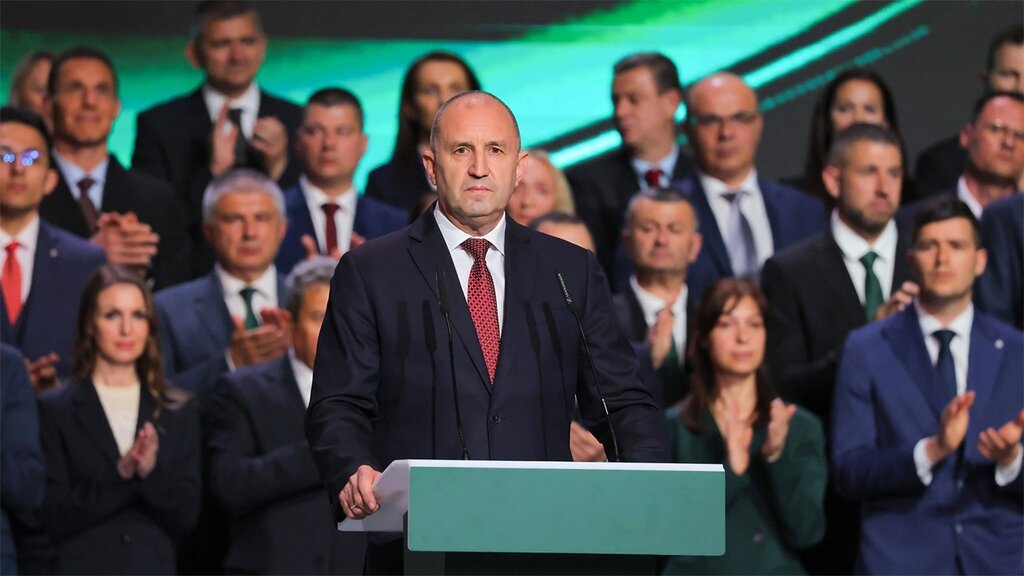
PHOTO Facebook/ Rumen Radev
The shifting of political figures in Bulgarian politics provides a field for analysis and forecasts and we focus on the vote of Bulgarian citizens abroad, which our team followed closely on election day. At the very beginning of the interview she gave to Radio Bulgaria, sociologist Boriana Dimitrova the Alpha Research agency (BNR's partner in covering the vote) focused on the impact on the electoral process of the changes in the Electoral Code, which limited the number of sections outside Bulgarian diplomatic and consular representations in non-EU countries to 20:
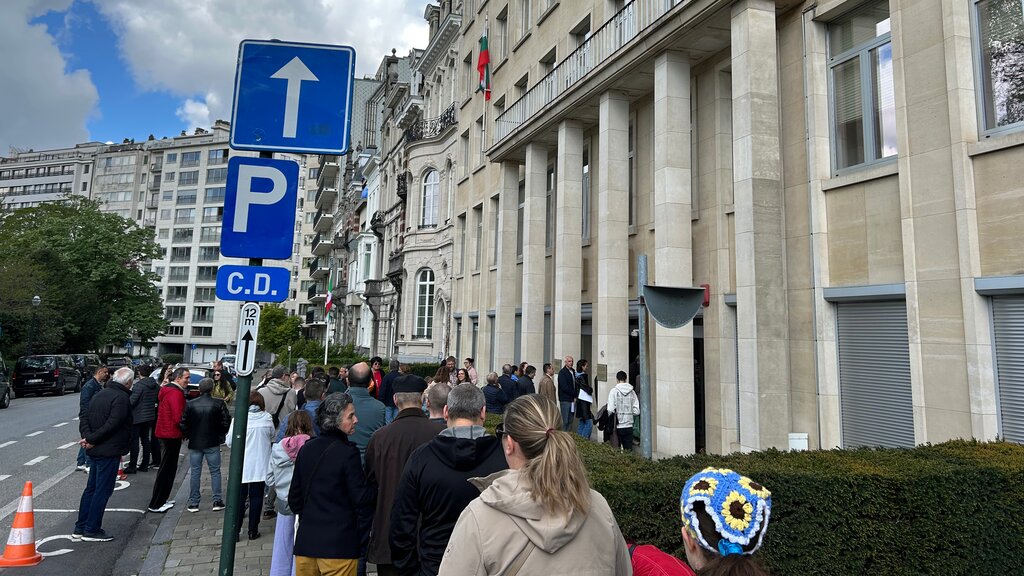
Citizens wait in line in front of the Permanent Representation of Bulgaria to the EU in Brussels to vote in the early parliamentary elections on April 19, 2026
PHOTO BTA
"BNR
reported
of
the huge queues in front of the polling stations and the insistence
of people to show that they have the right to vote and want their
voice to be heard. According to our survey, which we conducted for
the public radio at the beginning of the campaign, 60% of respondents
said that they would like our compatriots abroad to have the right to
vote and not be deprived of it."
CEC: With 100% of protocols, 5 formations enter the 52nd parliament
What
are the surprises in the final results?
The
reduced number of sections has certainly had a serious impact on
voter turnout abroad, as
"Progressive Bulgaria" is the leader there too, with just
over 38%.

The leader of "We Continue the Change" Asen Vassilev and co-chairman of "Democratic Bulgaria" Ivaylo Mirchev
PHOTO BGNES
"Secondly,
I wouldn't say it's a surprise that right-wing, democratic parties
are gaining serious support abroad. But now we're talking about quite
high support - about 22% for We Continue the Change -
Democratic Bulgaria (PP-DB). If the first (Progressive
Bulgaria) gets about 68,000 votes from abroad, then for the
second, the
votes
are about 40,000. Next in line, and with a much weaker result,
although we have commented that the vote from Türkiye has the
greatest weight in the vote from abroad, is DPS
with 8.5% (15,860 votes)."
Although
lower than the result we are used to seeing for DPS,
the current vote has its explanation:

Delyan Peevski
PHOTO DPS
"Over the past year and a half since the last parliamentary elections in October 2024, we have witnessed how a significant portion of Alliance for Rights and Freedoms (APS) mayors, as well as former activists, such as their co-chairman Dzhevdet Chakarov, through one mechanism or another, joined DPS. So, APS has long ceased to exist as an independent party with strong support. This is so, both because of leaders who were removed or switched to Delyan Peevski's party, and because of the role of Ahmed Dogan, who has been too distant and unconvincing as the leader of the formation for a long time. On the other hand, some APS MPs from the outgoing National Assembly switched to Progressive Bulgaria, with which part of the ethnic vote also switched to the new formation around former President Rumen Radev."
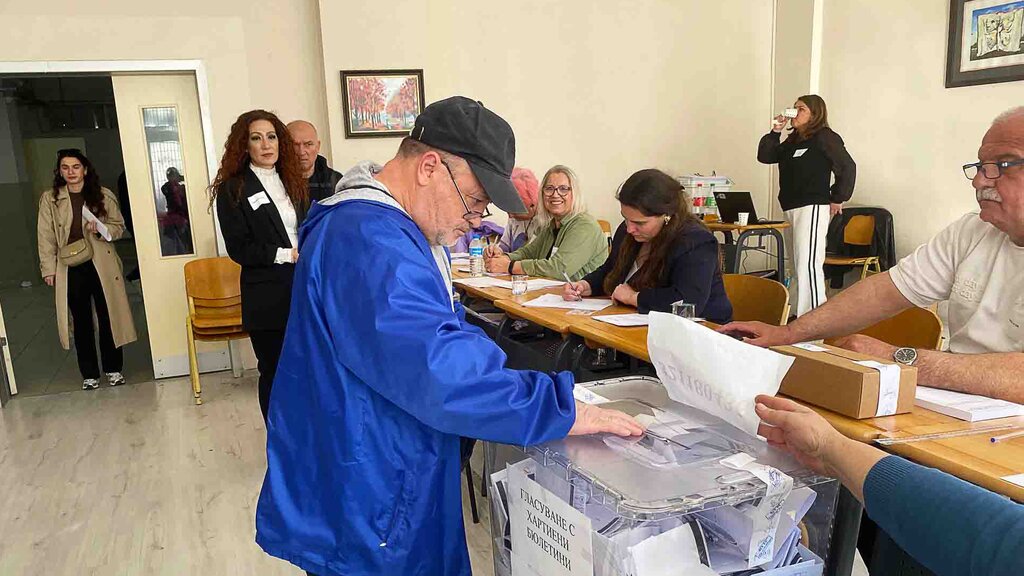
Voting in Istanbul
PHOTO BTA
According
to Dimitrova, what is interesting about the vote in Türkiye is the
significantly lower number of voters. 50-60,000 votes were
usually
coming from Türkiye but
this time they were about 15,000. This is partly related to the
smaller number of polling stations, although "in countries
outside the EU where we have people's motivation, there is
high voter turnout". Therefore, the sociologist draws the
following conclusion:
"Even
if at a certain point you try, with some force or power mechanisms,
to get your hands on the
vote, this, sooner or later, gives rise to a ricochet and a
resistance reaction from the voters."
In
the case of the nationalist "Vazrazhdane" and "Velichie"
parties that had high results among compatriots abroad in the
previous several early elections, the sociologist notices a declining
support in Bulgaria, which also has an impact on Bulgarians
abroad:
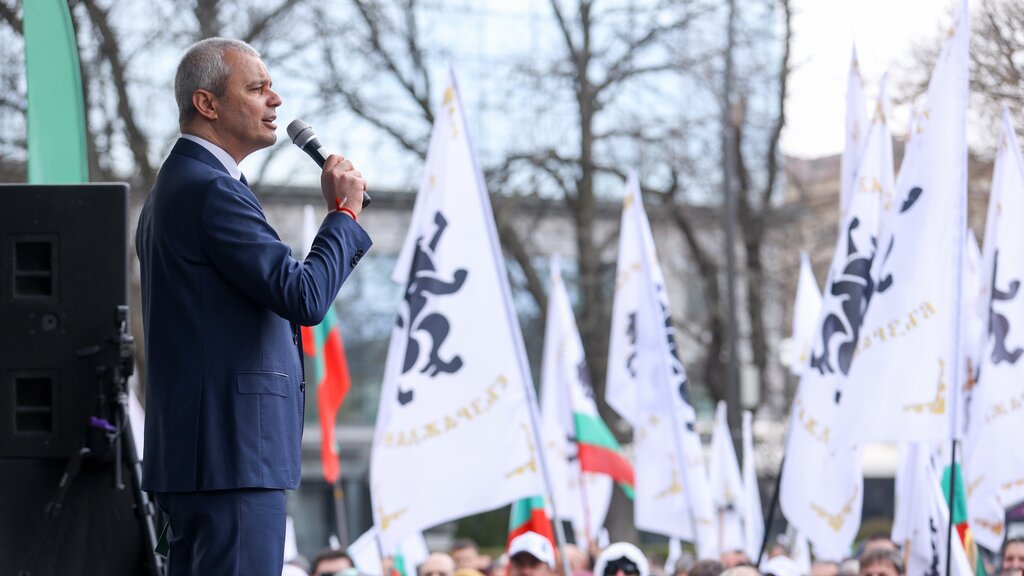
The leader of "Vazrazhdane" party, Kostadin Kostadinov
PHOTO BTA
"Despite
the decline we are observing, they still have support from people who
are employed in different sectors of the economy, but who share more
Eurosceptic views. This type of voters
continue to vote for both Velichie and Vazrazhdane. And if we take
their total result, it makes up about 1/10 of the entire vote
abroad."
The
special thing about the vote for nationalist parties is that it is
not lost, but simply passes from one party to another.
This publication was created by: Alexander Markov