


Author
Gergana Mancheva
News
Opera singer Nicola Ghiuselev and his passion for painting
A series of events marks the 90th anniversary of the birth of the world-renowned Bulgarian bass
Wednesday 29 April 2026 12:05
Wednesday, 29 April 2026, 12:05
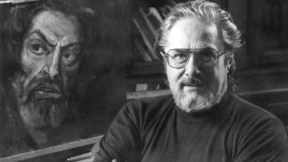
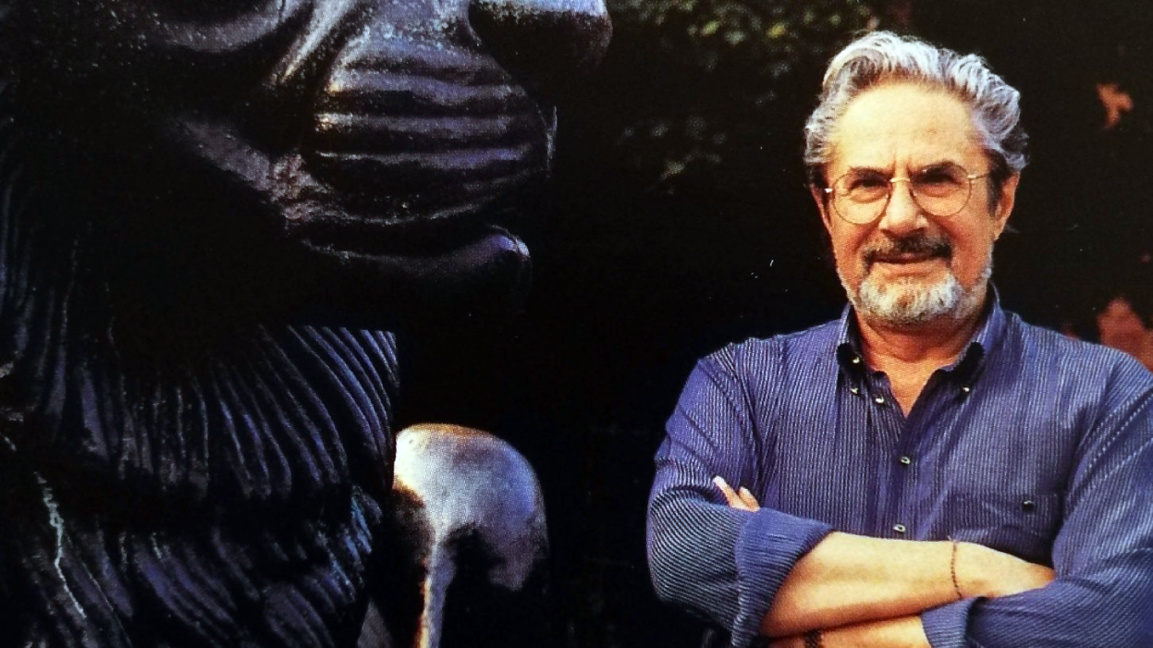
Nicola Ghiuselev (1936-2014)
PHOTO Nicola Ghiuselev Foundation
Font size
An exceptional operatic voice, yet also a remarkable painter. A refined and sensitive personality. Endowed with rare talent and striking presence - these are but a few of the superlatives with which admirers describe the great Bulgarian bass Nicolai Ghiuselev (1936–2014). This year marks the 90th anniversary of his birth, an occasion to be commemorated through a series of events across Bulgaria and Europe.
Nicolai Ghiuselev was born on 17 August 1936 in the town of Pavlikeni - “a town like a nest set in the plain” in central Northern Bulgaria, near Veliko Tarnovo. His fascination with opera was awakened at the age of fifteen when he heard, on the radio, Boris’s monologue from the opera Boris Godunov. Curiously, rather than pursuing vocal studies at once, the musically gifted young man graduated in 1960 from the Academy of Fine Arts in Sofia, specialising in painting. Only thereafter did he begin formal vocal training - initially with Tsvetana Sabeva and later with the distinguished pedagogue Ilia Yosifov.
While still a student, he performed as a soloist with the Academic Choir “Georgi Dimitrov” and the Song and Dance Ensemble of the Ministry of the Interior. In 1960, during an audition for opera engagements in Germany, he was heard by the eminent Bulgarian vocal pedagogue Hristo Brambarov, who persuaded him to continue his studies under his guidance. From that year, Ghiuselev became a trainee, and from 1961 a full-time soloist at the National Opera in Sofia.
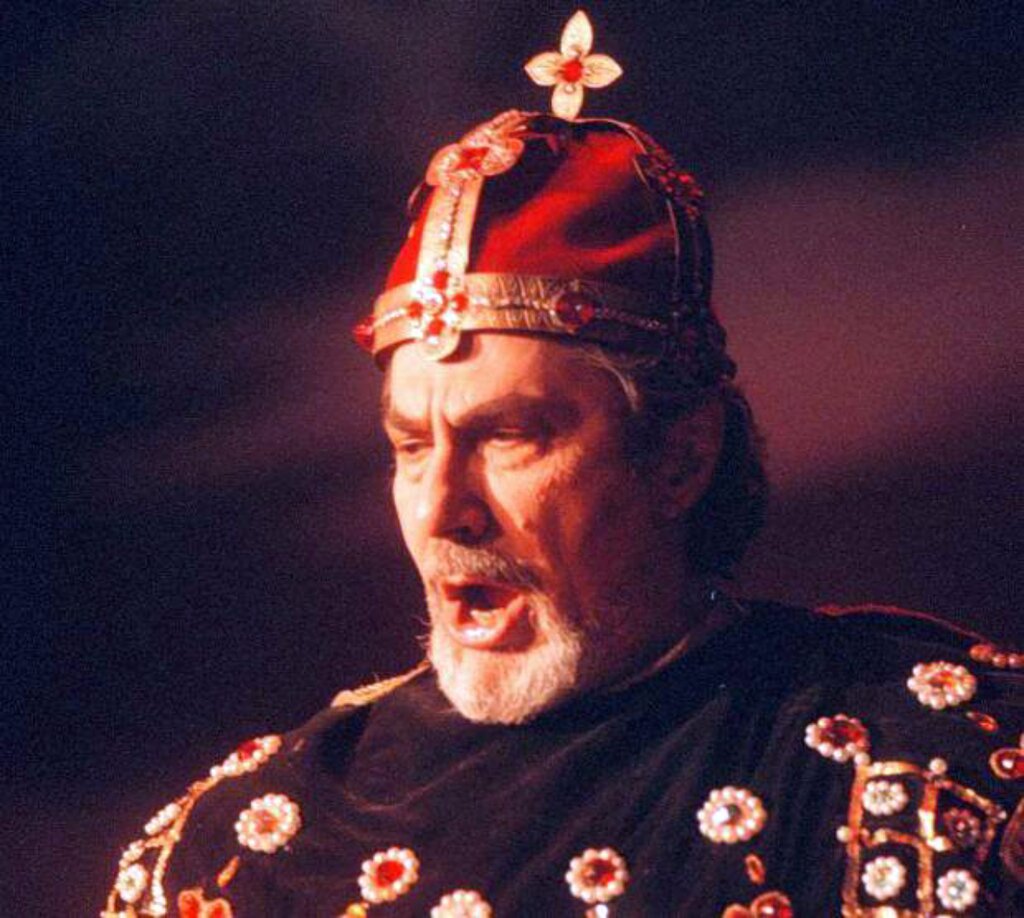
Nicola Ghiuselev in the role of King Philip II from the opera Don Carlos
PHOTO Nicola Ghiuselev Foundation
Thus began his long and illustrious career. Success followed swiftly: in 1963, after only two seasons on the professional stage, his portrayal of Philip II in Don Carlos earned him first prize and a gold medal at the Second International Competition for Young Opera Singers in Sofia.
In 1968, he made his debut at the Teatro Regio in Parma, Italy, where his performance in the title role of Attila captivated Italian audiences - a triumph of extraordinary magnitude. He went on to perform on the world’s foremost operatic stages across Europe, North and South America, Australia and Japan. Among his distinguished stage partners were towering figures of the operatic art such as Boris Christoff, Nicolai Ghiaurov, Ghena Dimitrova, Anna Tomowa-Sintow and Raina Kabaivanska.
Ghiuselev was the recipient of the highest honours bestowed by Bulgaria, Italy and the international operatic community.
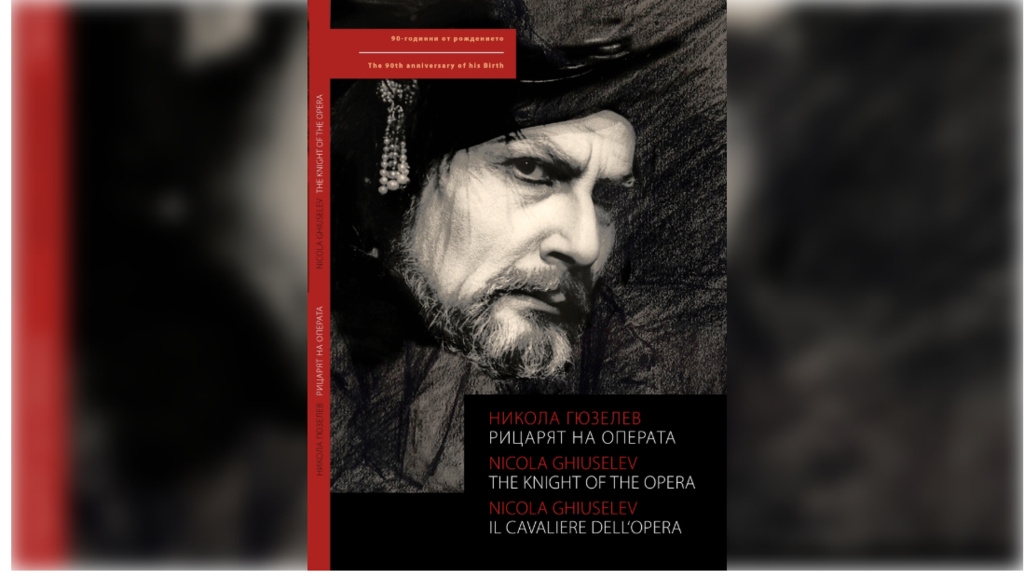
PHOTO Nicola Ghiuselev Foundation
A series of commemorative events this year will once again illuminate his multifaceted artistic legacy. On 29 April at the Sofia City Art Gallery, and subsequently on 18 May in Toronto, the new monographic catalogue The Knight of Opera will be presented. A memorial plaque will be unveiled in Sofia at the address where he lived with his parents; the Bulgarian National Radio will release a recording dedicated to the great bass; and Bulgarian National Television is preparing a documentary film.
Numerous events are also planned in Bulgaria and Italy, as noted in a televised interview by his wife, Anna-Maria Ghiuseleva. She has donated to the Sofia City Art Gallery a collection of early portraits, drawings and sketches created by the artist at various stages of his life.
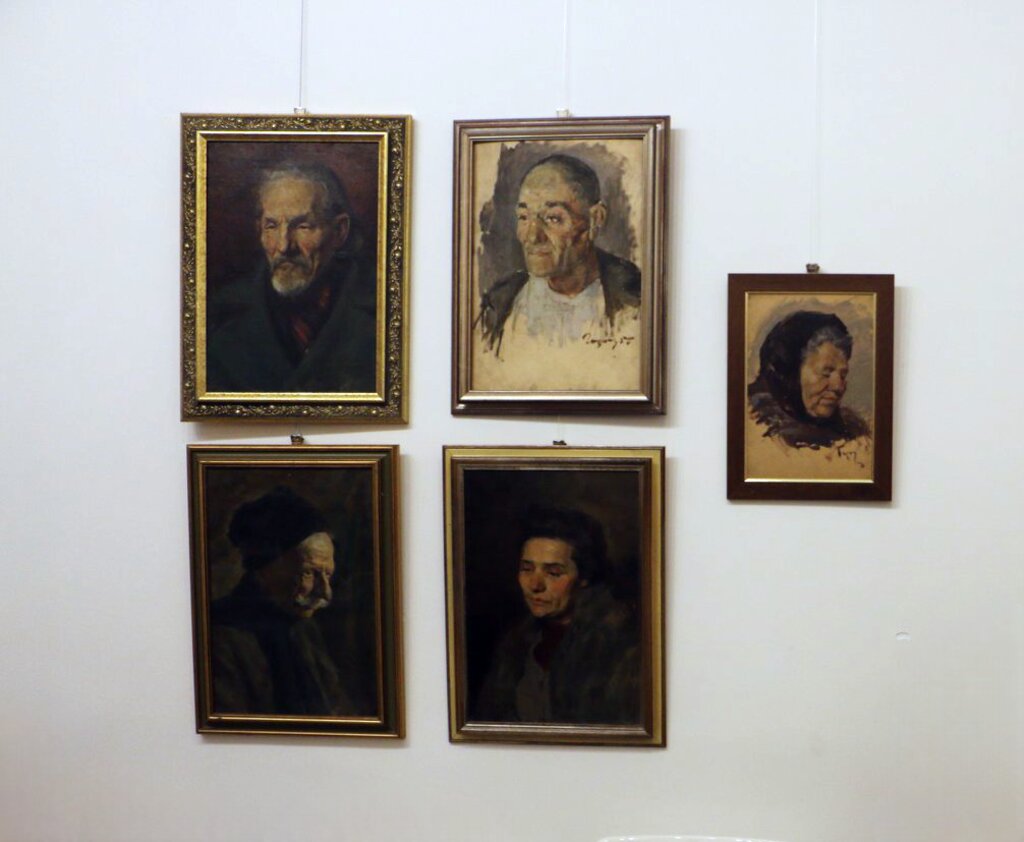
PHOTO Nicola Ghiuselev Foundation
“And he carried within him these two arts from the very earliest age - I would not even say from youth, but from childhood; for at the age of eleven he was already performing a leading role in a children’s opera. We also have a drawing of two exquisite dogs, created when he was between eleven and twelve. Thus, his path in both arts began remarkably early, long before he chose to complete his studies at the Academy of Fine Arts,” his wife, Anna-Maria Ghiuseleva, once recounted to Radio Bulgaria, recalling an exhibition at Sofia’s Sredets Gallery marking the tenth anniversary of the passing of Nicola Ghiuselev.
At a certain moment, however, the gifted Bulgarian was compelled to make a choice - and the scales tipped in favour of music.
“A man endowed with such a voice could hardly choose otherwise than to sing,” Anna-Maria Ghiuseleva continues. “He painted for many years, yet never had the time to devote himself so fully to painting as to consider mounting exhibitions that would reveal his works to the public. The art of singing - and a career at such a level - demands total commitment. I understand that he simply did not have the physical possibility here in Bulgaria. The art historian Prof. Atanas Bozhkov was the one who initiated the presentation of his works, organising a major exhibition in Bulgaria Hall during one of Ghiuselev’s concerts more than thirty years ago. Another exhibition of his paintings that I recall took place in Moscow, at the Bulgarian Cultural Centre. I am not aware of many others, either in Bulgaria or abroad. Now that he is no longer with us, we, as a family, have resolved to bring wider recognition to this other, equally noble facet of his artistry. We have organised exhibitions both in his native Pavlikeni and in Rome.”
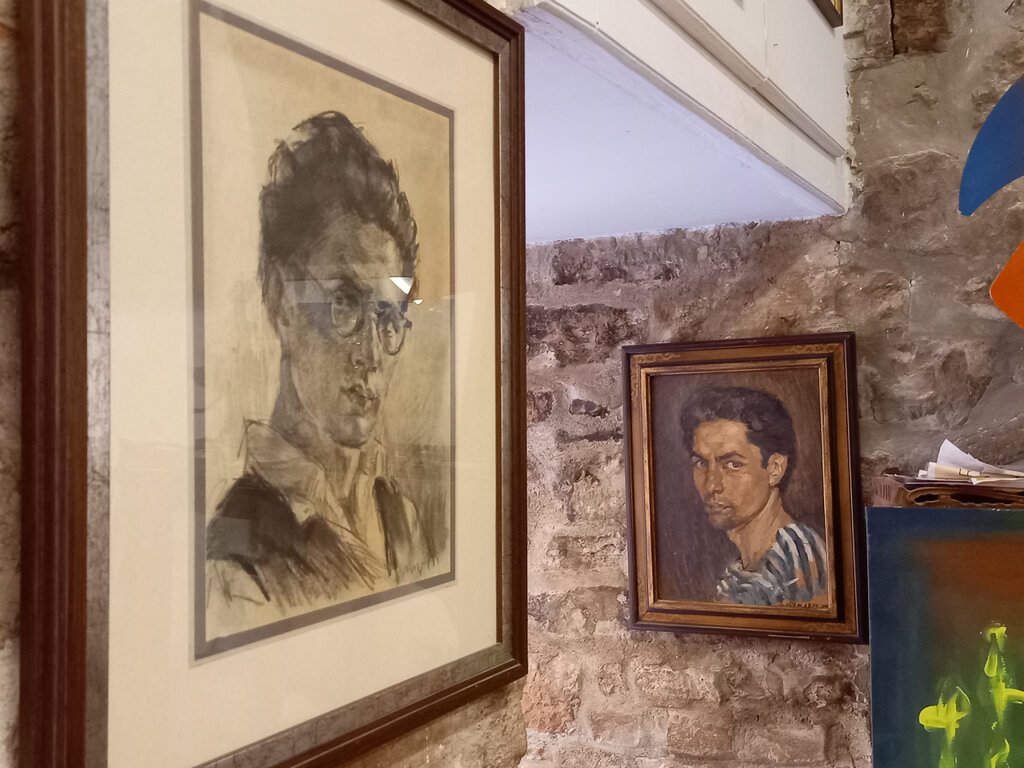
PHOTO Facebook/ Nicola Ghiuselev
A foundation bearing the name of Nicola Ghiuselev has been established, through which a substantial portion of his paintings is preserved and presented in exhibitions. Another part of his canvases remains in the singer’s home in Rome. The driving forces behind the foundation are his wife and his daughter Adriana, who founded it together with a circle of colleagues, friends and kindred spirits - conductors, musicians, critics, directors and disciples of the illustrious bass.
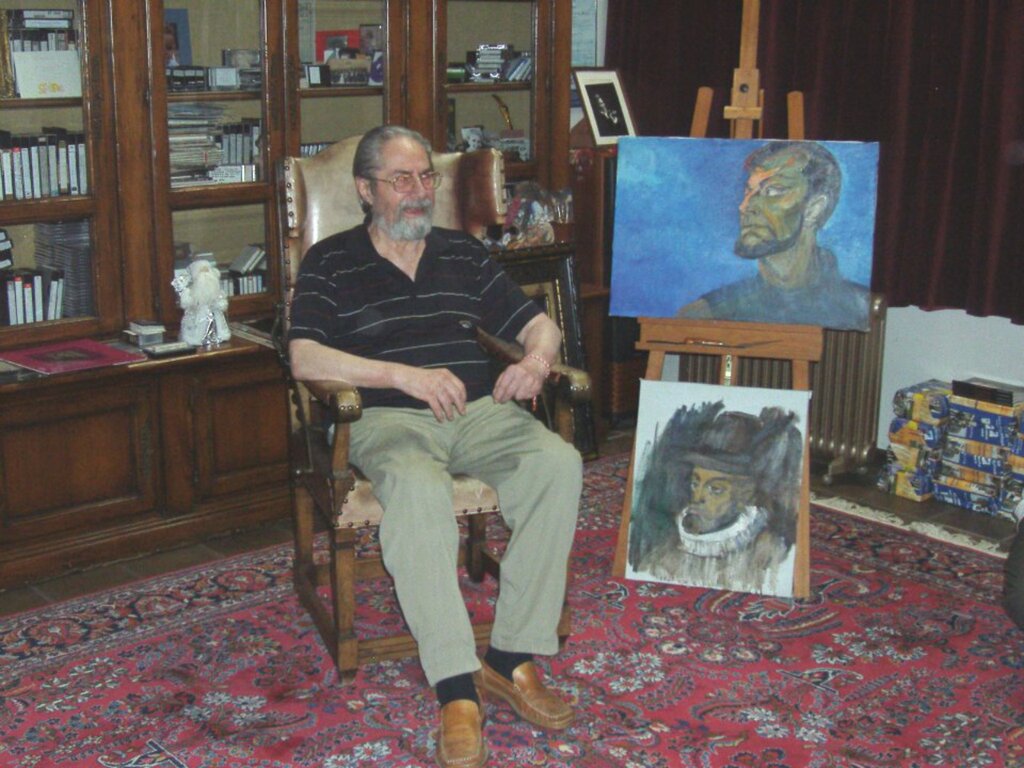
PHOTO Nicola Ghiuselev Foundation
“Very few of the paintings were acquired by collectors, as people were simply unaware of his studio and his engagement with painting,” continues Anna-Maria Ghiuseleva. “And secondly, we ourselves had never contemplated selling them. He would paint while at home, in the intervals between tours, between departures for the United States, France, Austria, England, and so many other destinations. Whenever he returned, and he preferred above all to come back to his home in Sofia, he had at his disposal a studio where he could work in peace.
He was also a deeply emotional man, profoundly moved by many aspects of life - by injustice, but equally by beauty. In his portraits, he placed great emphasis on the expressiveness of the human face, on the states of being, on the thoughts that may be reflected in one’s features. And as Prof. Aksinia Dzhurova, as well as Prof. Svetlin Rusev, have observed, he possessed the rare gift of a painter capable of conveying the human soul through the faces he set upon the canvas.
At the same time, being both singer and painter, he would observe his own reflection within his roles and stage images, as though contemplating his movements from a distance. In this way, as an artist, he refined and disciplined his expressive means, enhancing the depth and impact of each character he portrayed. It was precisely the visual arts that aided him profoundly in this pursuit.”
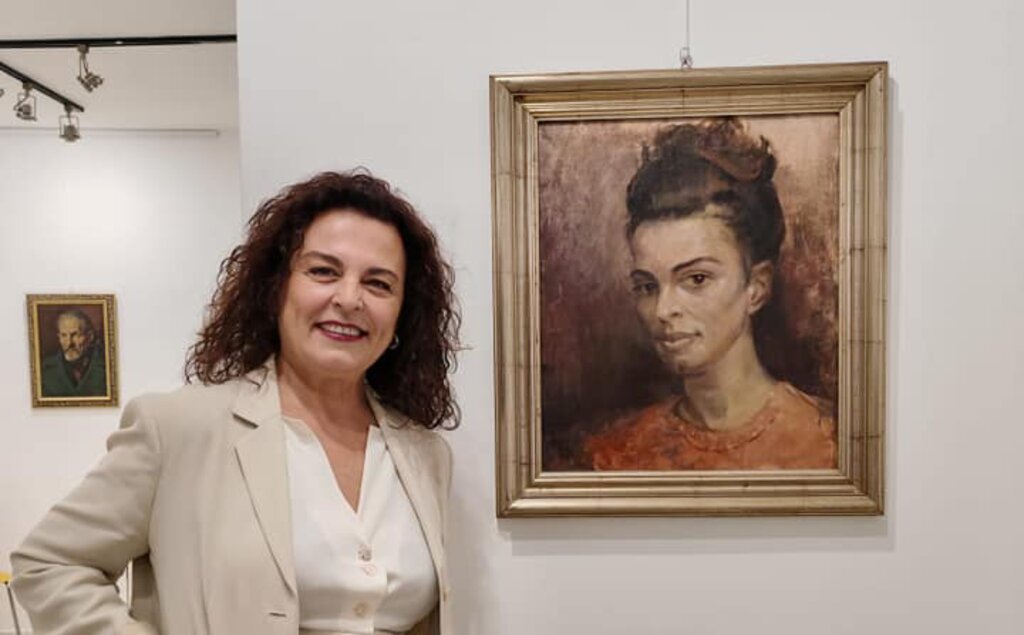
PHOTO Facebook/ Nicola Ghiuselev
Anna-Maria Ghiuseleva adds that she would never part with the originals of her two favourite portraits painted by Nicola Ghiuselev - one depicting him in the role of Ernani from Ernani, and the other portraying herself.
“He did not have the physical opportunity to devote himself more fully to this art, but we wish to bring it to wider recognition through a comprehensive catalogue of all his paintings,” she says:
“Such a talent cannot remain confined within the walls of a home; it must be revealed to the public - to inspire, to challenge, to offer hope, to provide, if you will, that impulse which lies at the heart of all art. No one is perfect, yet he possessed so many rare qualities - his kindness, his generosity of spirit. He loved Bulgaria deeply, he loved to help others, he was a man of great warmth.”
Read also:
In memoriam: Bulgarian opera basso Nicola Ghiuselev
National and international events commemorate great Bulgarian basso Nicola Ghiuselev (1936-2014)
Edited by E. Karkalanova
English: R. Petkova
This publication was created by: Rositsa Petkova