


Author
Krasimir Martinov
News
How is Bulgarian identity preserved in multicultural environment of South Slavs
Friday 8 May 2026 10:14
Friday, 8 May 2026, 10:14
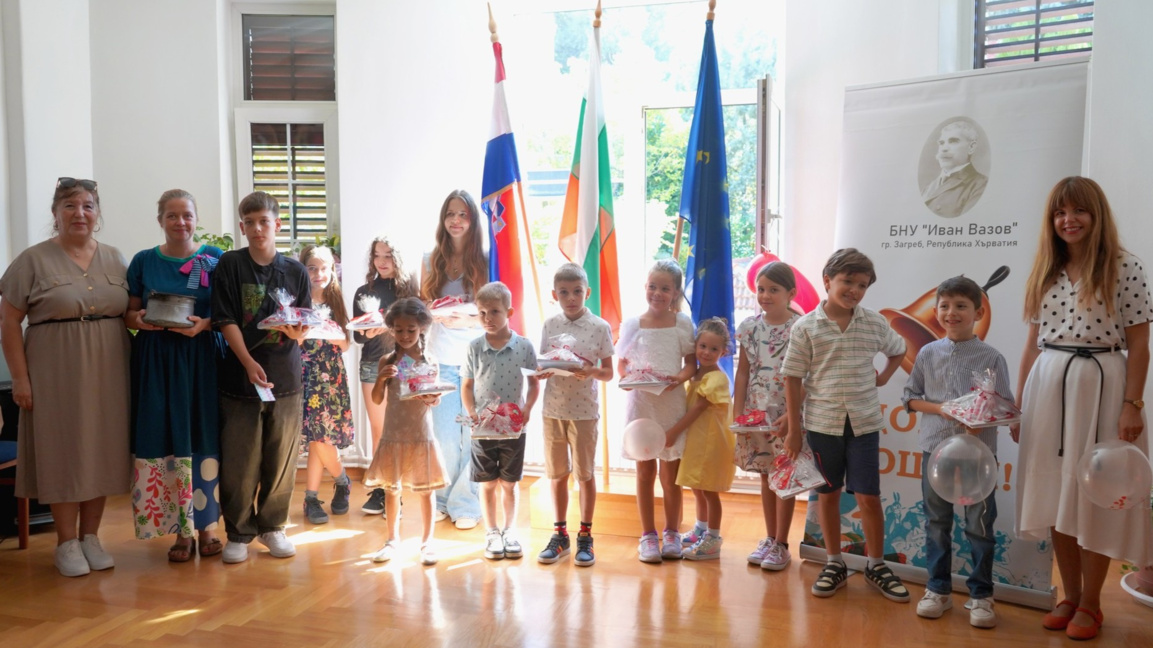
PHOTO facebook.com/bgschoolzagreb
Font size
Bulgarians living in Croatia
are a small but close-knit community. They insist that Bulgarian
culture and language be part of the lives of the younger generations,
regardless of whether they grow up in entirely Bulgarian families or
are from mixed marriages. This is what Iglika Kasabova, head of the
Bulgarian Sunday School "Ivan Vazov" in Zagreb, says.
During the current school year, 38 children are studying there.
"The
school serves not only Croatia, but also the region. In addition to
the capital Zagreb, we also have children from the coastal part of
Croatia - the cities of Šibenik, Split, Dubrovnik, Rijeka, as well
as from Ljubljana in Slovenia and Sarajevo in Bosnia and
Herzegovina."
The
main core of the Bulgarian community in Croatia is made up of the
descendants of the so-called old emigrants, most of them gardeners.
The situation for the first emigrants from Bulgaria was such that
they could not actively practice their language – to speak
Bulgarian and write in Cyrillic. However, they still have Bulgarian
self-awareness and are extremely active in community events.
"People
from the more recent immigration, to which I belong, have mostly
ended up in Croatia by chance," Iglika continues her story. "For
example, I came because my husband received a temporary assignment in
a Bulgarian company that expanded its business in Croatia. We stayed,
supposedly temporarily, for a year or two, but here we are now, 10
years later. Our son completed his entire secondary education in
Croatia and is now a student, and our daughters, aged 9 and 12, were
born in Bulgaria but they have been living in Croatia their entire
conscious lives."
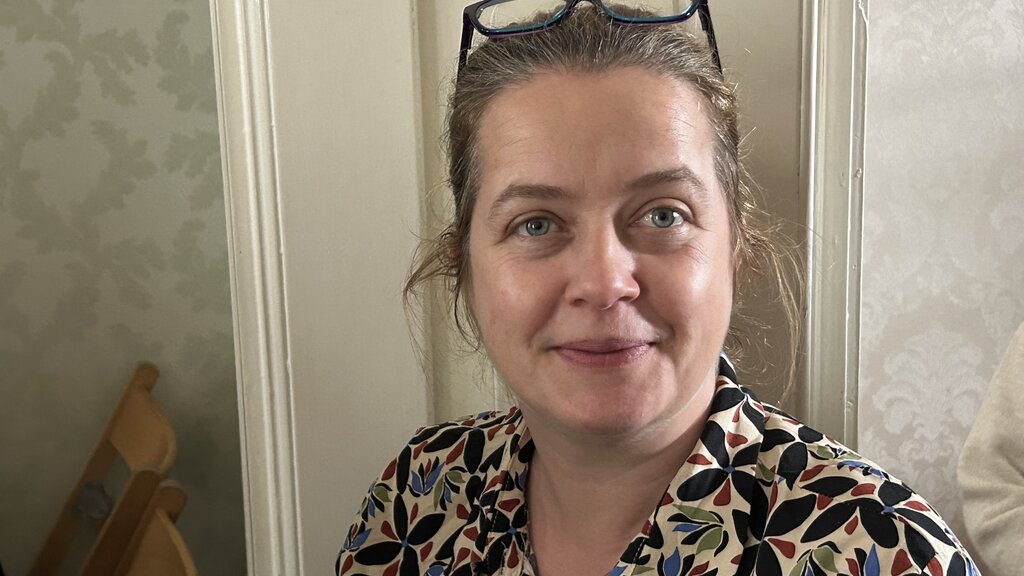
Iglika Kasabova
PHOTO Radio Bulgaria
The need to educate their
children in their native Bulgarian language also provoked Bulgarians
in Croatia to establish a Bulgarian Sunday school in Zagreb.
"With
the support of the Bulgarian Embassy and with the Croatian-Bulgarian
Association as a beneficiary, we opened the Bulgarian Sunday School
seven school years ago," Iglika Kasabova says. "Of course,
good news spreads quickly. Our colleagues and friends from Slovenia
decided that they didn't have enough children to open a school yet
and we gave them the opportunity to study with us remotely. In fact,
after the Covid pandemic, we became specialists in this blended form
of education."
Some
of the students are bilingual and trilingual, i.e. they speak
Croatian, Bulgarian, and another language. The problems in their
education are similar to those in other Bulgarian Sunday schools
abroad, Iglika Kasabova says and adds:
"For
our children abroad, the leading thing is the foreign school,
respectively - their first language is English, German or French. The
second language is Bulgarian, and the third - the language of the
country they live in. Another part of the children are from
mixed marriages between Croats and Bulgarians, respectively, the
dominant language is Croatian. Writing in Cyrillic is a challenge for
them and this is what they have in common. This requires patience.
The process is slow, they start reading and writing fluently only in
the second or third grade. And from there we need to catch up on
everything we have missed. We emphasize a lot on the desire to learn,
on motivation. If we lose motivation in children, the motivation of
parents also decreases. The Bulgarian school is an additional
commitment for both children and parents."
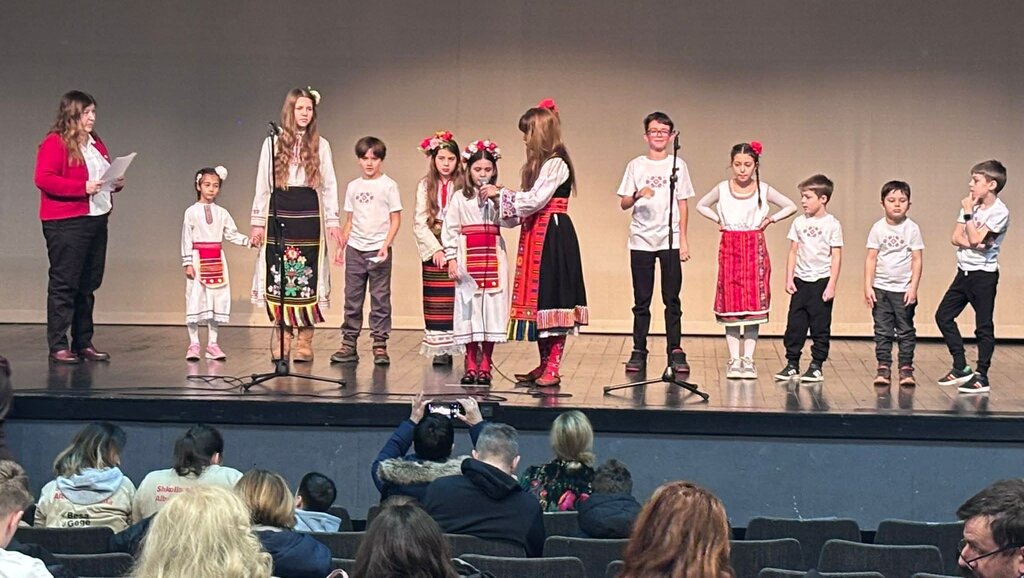
Students from the Ivan Vazov Sunday School in Zagreb during a school holiday
PHOTO facebook.com/bgschoolzagreb
Are historical facts about
Bulgarian-Croatian relations studied in class?
"We
always draw parallels and this is inevitable. We try to show what we
have in common, what the points of contact between the different
Slavic peoples in a historical and contemporary context are. We have
a very strong minority community in Croatia and we organize many
activities together. Every year in September there are Days of
National Minorities. This event brings together a colourful group of
cultures – Serbs, Hungarians, Poles, Czechs, Montenegrins, Bosnians
and others. We are famous in Croatia for our folk costumes and for
the food that we gladly prepare for our guests and friends."
When
we talk about Croatians, they have been showing interest in our
country and are especially excited about folklore and tourism, Iglika
tells us.
"I
was invited to the Gornjogradska Gimnazija (Upper Town Gymnasium) in
Zagreb on the occasion of March 1st, to celebrate the day of the
martenitsa and to tell where it comes from and what message the
weaving of the white and red thread brings. There was great interest
from high school students - more than 40 children participated in
this workshop. We wove martenitsa, they were interested, took
pictures and a large part of these children were preparing to go to a
Bulgarian school under the Erasmus program.
We should note that in the school we have a Bulgarian classroom. After the earthquake a few years ago in Zagreb, the Bulgarian government made a donation to this school. It is historically connected to us, the Bulgarians. After the Liberation, Bulgarian students studied in Zagreb with scholarship by Josip Strossmayer. He invested in them so that they could come and study in Zagreb. Among them are many famous scientists - physicists, mathematicians, meteorologists, hydrologists. I hope that these historical ties will strengthen the modern ones. There is also interest in tourism in Bulgaria - to the Black Sea coast in the summer months, to the cultural heritage of Plovdiv, Veliko Tarnovo, Sofia. For some Croats we are strange and exotic, but we are certainly pleasant to them, because after all we are Slavs, we have many common habits, a common view of the world. And let's not forget that we also have more and more mixed marriages - between Croats and Bulgarians..."
This publication was created by: Alexander Markov