


Friday 8 May 2026 12:32
Friday, 8 May 2026, 12:32
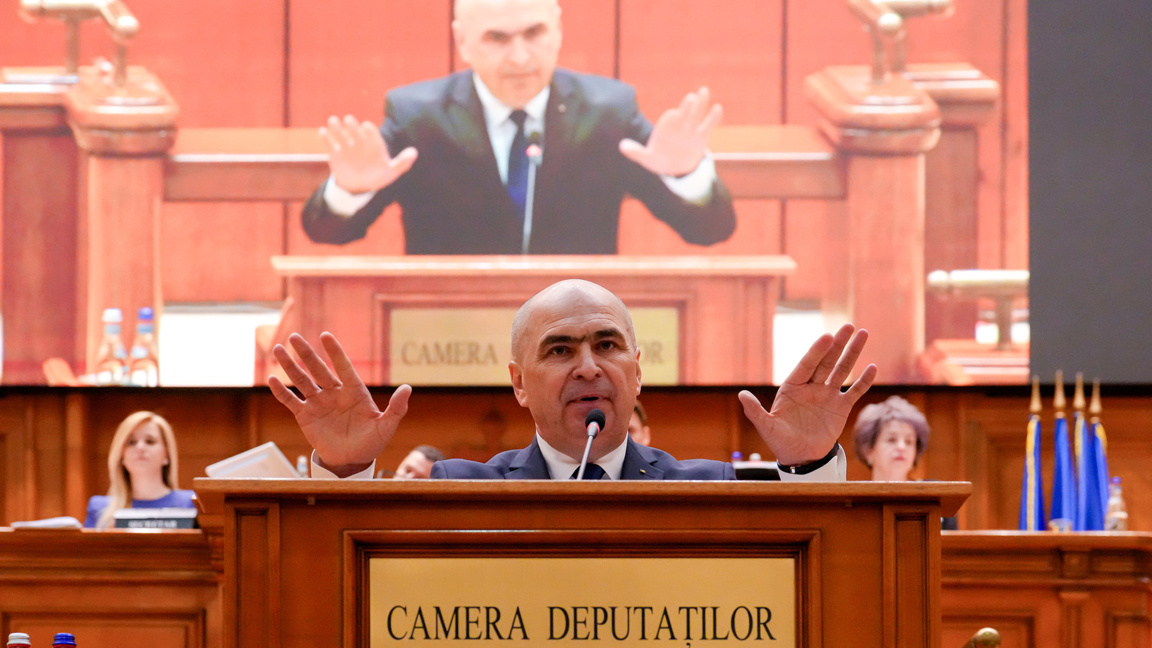
Ilie Bolojan
PHOTO AP/BTA
Font size
Romania is facing a government crisis that could develop into a parliamentary crisis
The Social Democratic Party (PSD), together with the opposition, brought down Prime Minister Ilie Bolojan of the National Liberal Party, who had been heading Romania’s four-party coalition government. The leader of the largest parliamentary force, Sorin Grindeanu, said he supports forming a new coalition cabinet, but without Bolojan as prime minister.
During consultations with President Nicușor Dan, the Social Democratic Party confirmed that it continues to oppose the austerity measures that led to the government’s collapse. President Dan insists on a pro-European majority and rules out a coalition with the Alliance for the Union of Romanians (AUR). AUR, the second-largest political party, is calling for early elections.
Romania’s constitution does not set a deadline for the president to nominate a prime minister, meaning Bolojan’s government could remain in office for a long time, according to digi24.ro.
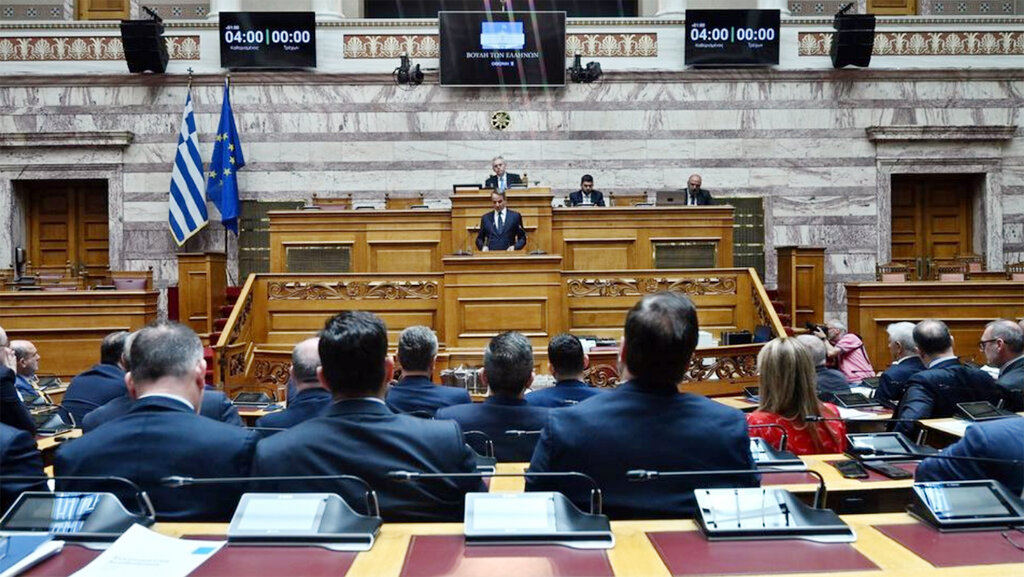
PHOTO ekathimerini.com
Greek ruling New Democracy party proposes constitutional amendments
Greek Prime Minister Kyriakos Mitsotakis has presented a large package of constitutional reforms. The proposed amendments have been distributed to MPs from the ruling New Democracy party.
The changes aim to protect journalists from pressure, regulate artificial intelligence, legalize private universities, and increase compulsory schooling from nine to eleven years. Preliminary investigations against ministers would be transferred from parliament to senior prosecutors. The relevant parliamentary committee would gain a greater role in appointing senior judges. The Supreme Court would also be tasked with verifying whether political parties meet the requirements to participate in elections. The dismissal process for public servants would be simplified. A single six-year presidential term is also being proposed.
Constitutional changes in Greece require approval through a multi-stage parliamentary procedure with qualified majorities, according to BGNES.
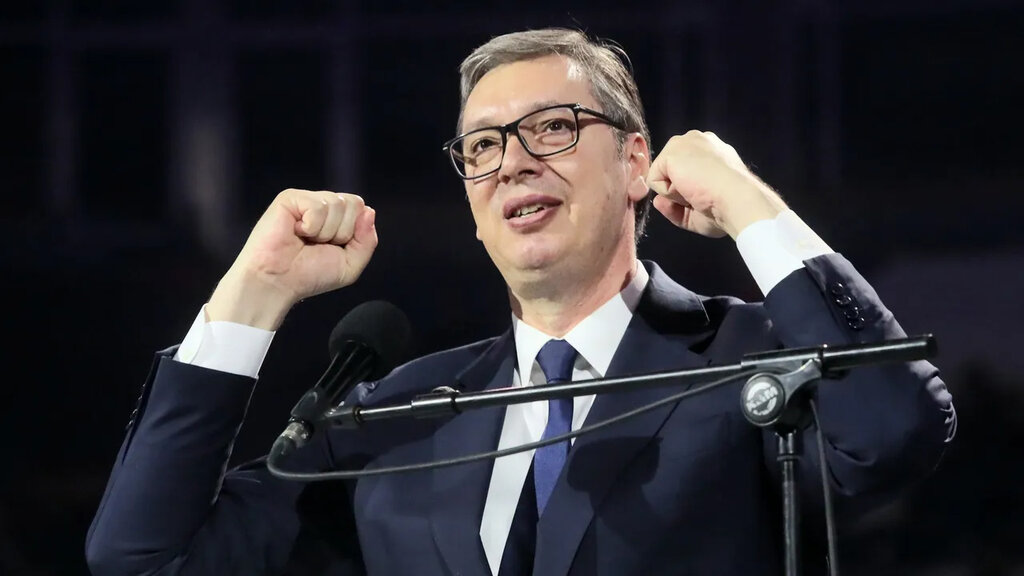
Aleksandar Vučić
PHOTO BTA
Aleksandar Vučić presents a five-point plan for Serbia
Serbian President Aleksandar Vučić has presented a five-point plan for Serbia in an author’s text for kurir.rs.
The plan includes a drastic reduction in the size of the government and public administration, increased productivity, reform of the country’s education system, including the introduction of dual education. It also outlines a comprehensive approach to resolving energy-related issues, including the potential use of nuclear energy, as well as adoption and application of knowledge in robotics, artificial intelligence, and modern technologies. “Serbia needs decisive reforms that can be implemented by serious, responsible, and experienced people”, Vučić stated.

Ekrem İmamoğlu
PHOTO odatv.com
Ekrem İmamoğlu: Excluding Türkiye weakens EU security
A large part of Türkiye’s tensions with the EU are driven the external consequences of its internal democratic decay, but Türkiye should not be left waiting at the EU’s gates, wrote the suspended mayor of Istanbul, Ekrem İmamoğlu, from Silivri Prison in a piece sent to Politico. He is a member of the opposition Republican People’s Party.
“As a founding member of the Council of Europe, Türkiye has been part of Europe’s institutional order. Through its place in NATO, it constitutes an important part of Europe’s security architecture and collective defense. From the Black Sea to critical energy routes, from migration to industrial production, the EU’s long-term resilience cannot be bolstered by excluding Türkiye. That is why placing Türkiye on the same plane as Russia and China runs contrary to the EU’s own geopolitical realities and strategic interests”, İmamoğlu warns.
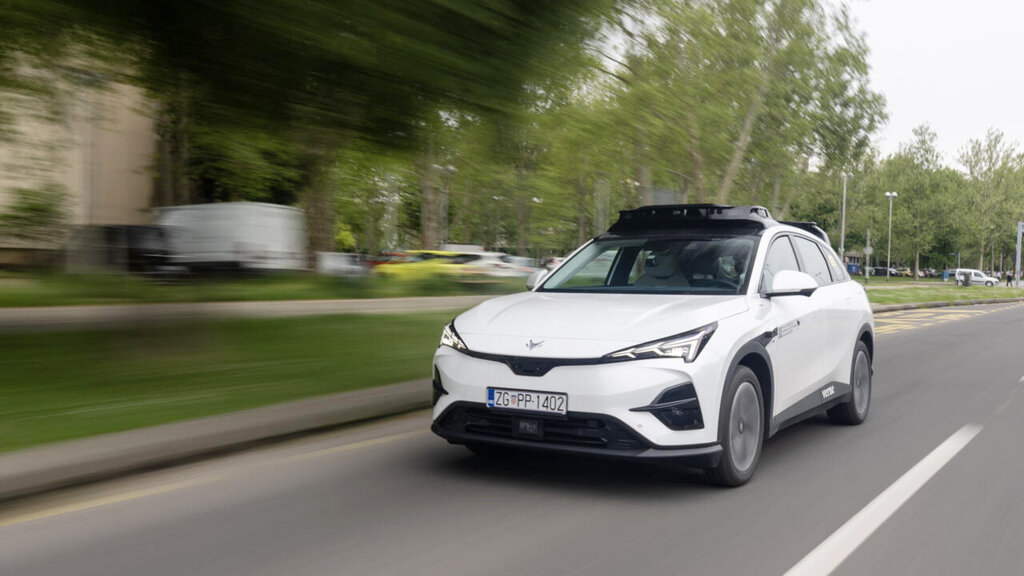
PHOTO AFP
Zagreb becomes the first European city to launch a robotaxi service
Zagreb has become the first city in Europe to launch a robotaxi service, the Croatian company Verne announced, according to BTA.
In partnership with Uber and China’s Pony.ai, Verne has been operating 10 automated vehicles for a selected group of customers in the Croatian capital since April 8. Similar services have been available in China and the United States for years, but several companies are still competing to introduce autonomous taxis in Europe.
The service, designed to be fully autonomous, is currently supported by a “human operator” in case intervention is needed. About 90% of passengers have given the service four or five stars, and no accidents were reported over tens of thousands of kilometers driven.
Although the service was first announced in early April, the vehicles are rarely seen on the streets. For now, they operate in the city center, parts of Novi Zagreb, and around the airport.
Edited by Ivo Ivanov
Translated by Kostadin Atanasov
This publication was created by: Kostadin Atanasov