


Author
Tsvetana Toncheva
News
"Shto me ne ozhenish, male" - favourite song of renowned singer Magda Pushkarova
Friday 15 May 2026 19:10
Friday, 15 May 2026, 19:10
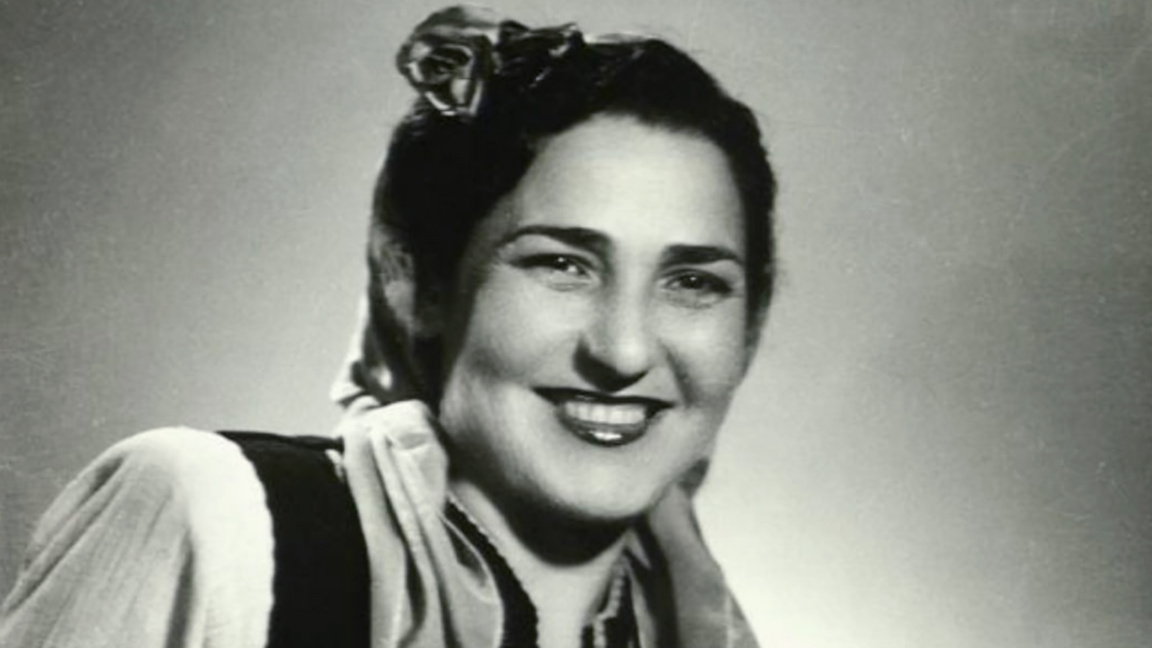
Magda Pushkarova (1920 – 2006)
PHOTO Petar Pakochev
Font size
The singing talents of the mystical Strandzha Mountain are many and
they have preserved for generations the priceless folklore wealth of
the southeastern Bulgarian region. Some of them, such as the
unforgettable Yanka Rupkina (1938 - 2026), with their talent, made the
Strandzha song world-famous. But the first singer with a huge
contribution to the popularization of Strandzha folklore throughout
Bulgaria is Magda Pushkarova. Magda was born about two decades before
Rupkina - in April 1920, in Malko Tarnovo in a family of refugees
from Edirne Thrace. Everyone in her family sang - parents, relatives,
brothers, sisters. From them she learned a large part of her
impressive repertoire. "Wherever I have travelled in the world,
Strandzha has been in my eyes, Strandzha blood has pulsed in my
heart and I have always sung the songs of Strandzha," Pushkarova once said
in an interview.
Poet
Assen Raztsvetnikov calls her "the enchantress of Strandzha
songs". Her contributions to the preservation and dissemination
of Strandzha
traditions are enormous, which is why folklore competitions and
ensembles bear her name today. During her lifetime, she received
many
awards.
Pushkarova was among the performers who toured
Bulgaria with concert programs. She loved
to sing the songs of her region but she often told
legends and tales form
Strandzha and was very proud of the fact that her grandfather was among the rebels
of Captain Petko Voivoda.
Her family was large and poor, so she studied only until the fourth grade and at the age of 11 she started working in a tobacco factory. She married, but was widowed early. After some time, she married young officer Asen Pushkarov. They moved to the capital and in November 1944 she auditioned at Radio Sofia. The committee included composer Boyan Ikonomov, conductor Ivan Kavaldzhiev, and folk singer Zhecho Dolchinkov, who applauded the previously unheard Strandzha melodies and voice. Magda was invited to sing "live" in front of the radio's microphones.
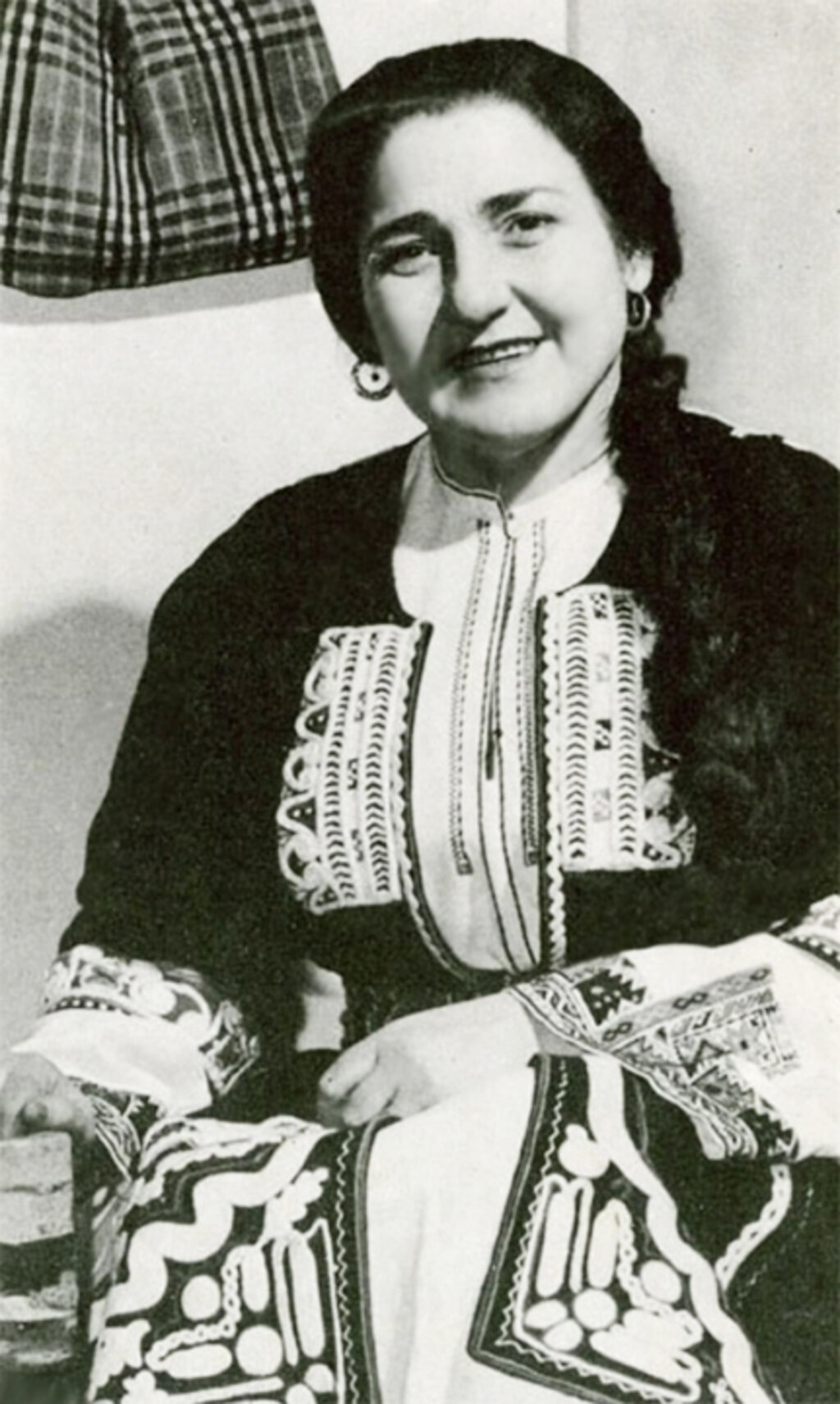
PHOTO burgasmuseums.bg
In 1951, she, together with Valkana Stoyanova and Yordanka Ilieva, was among the founders of the National Folklore Ensemble in Sofia and was appointed by Filip Kutev as the leading voice. She became a star on the stage. During her life Magda Pushkarova enjoyed the immense love of the audience and well-deserved recognition from specialists. She left more than 100 recordings in the Bulgarian National Radio collection, several records and television shows. The archives of the Bulgarian Academy of Sciences store 200 of her songs, recorded by renowned ethnomusicologist Elena Stoin. The great singer wore silk costumes and gold jewelry until her last day, remaining dignified and proud, with a majestic posture, in love with flowers, songs from Strandzha and Bulgaria.
Pushkarova's
unique alto voice – slightly muffled, velvety, warm and soft,
cannot be confused with that of any other singer. Her songs are
beautiful, but also sad,
as was the life of the refugees from Edirne Thrace. "I have many
songs, I love many songs," she said during her lifetime. "But
I have a special relationship with one. This is ‘Shto
me ne ozhenish, male’.
I am a descendant of refugees; the song tells about their fate and I
always relive this story…"
In
the musical dialogue between mother and son, the young man wants to
get married and asks his mother if she thinks
he's too young and inexperienced, or maybe they don't have enough money for
a new house? The mother replies that she would sell everything to
build a home for her child, but they are refugees, strangers in this
area and have no relatives to invite to the wedding, to give them
gifts and to celebrate with loved ones. Along with the song "Tudoro,
Tudoro" (dedicated to a beautiful female
nestinar),
"Shto me ne ozhenish, male" is among the most popular songs
from Magda Pushkarova's repertoire.
This publication was created by: Alexander Markov