News
Munich brings together Bulgarians from 21 countries at folklore festival
Monday 18 May 2026 14:52
Monday, 18 May 2026, 14:52
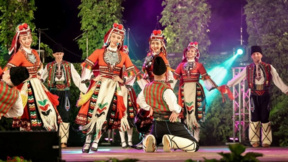
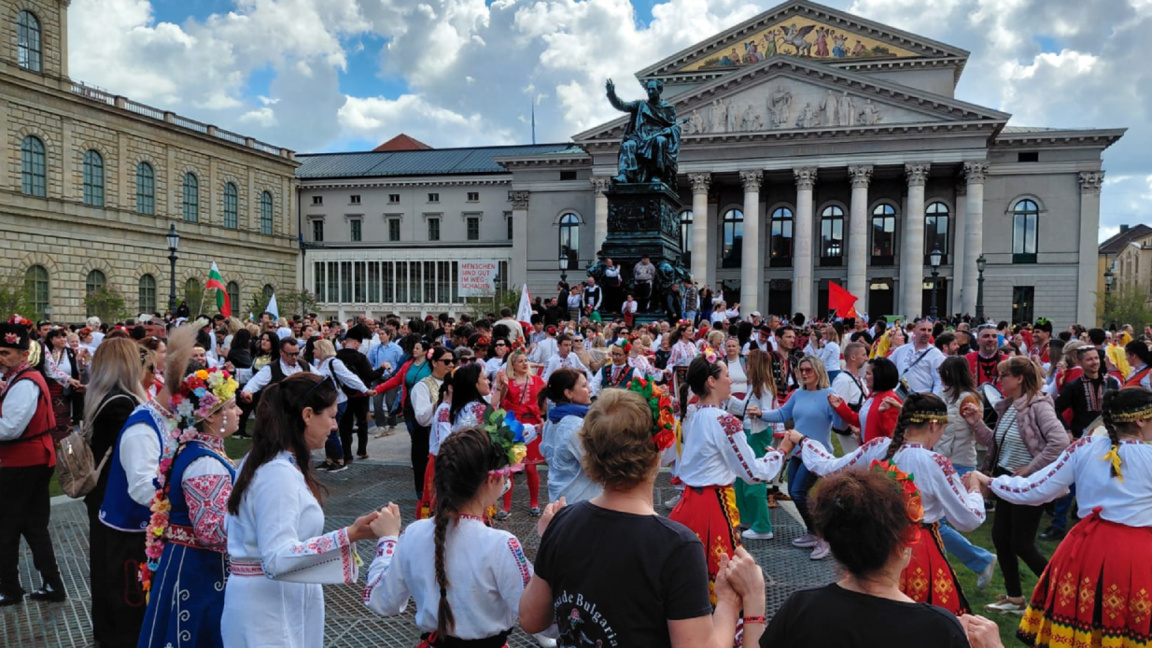
PHOTO Consulate General of Bulgaria in Munich
Font size
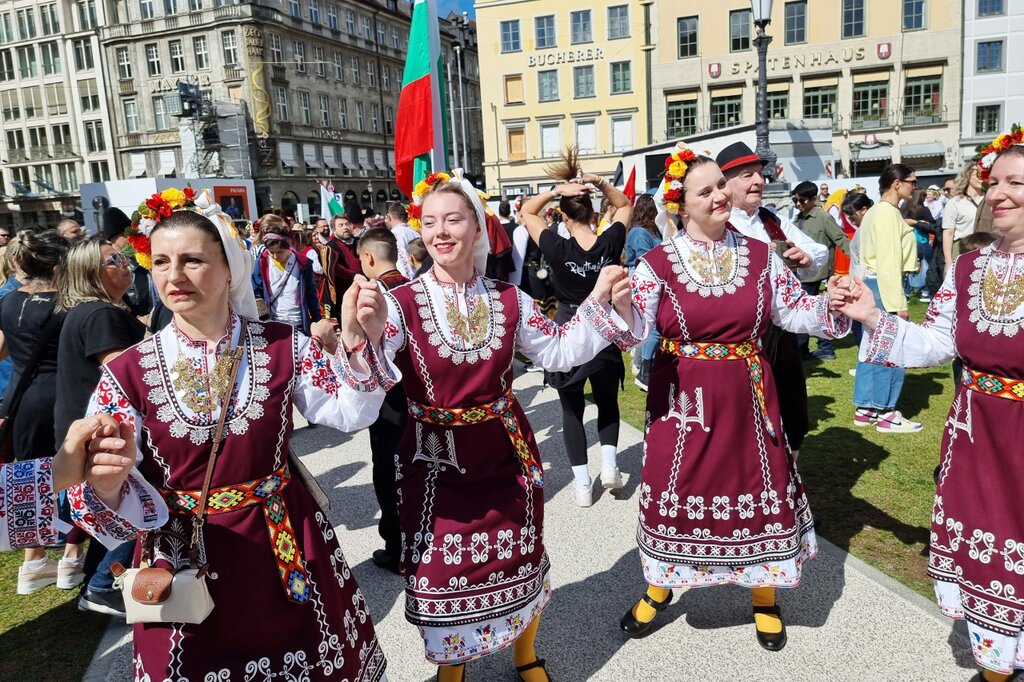
PHOTO BTA
Among the special guests from Bulgaria was the widely beloved Thracian folk singer Danislav Kehayov, who energized the “megdanci” (participants) with his warm voice. He was deeply moved by the incredible atmosphere of the gathering and the authentic connection to the roots of Bulgarians abroad.
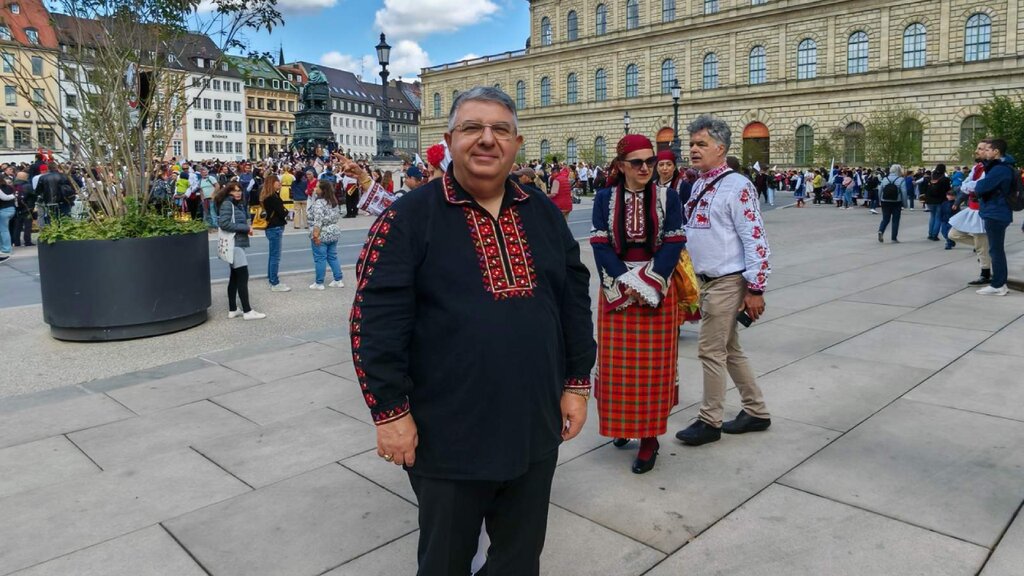
Famous folk singer Denislav Kehaylov, guest of the festival
PHOTO Yoan Kolev
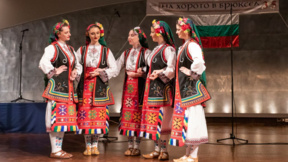
On the initiative of Tsvyatko Krastev’s dance group, this year’s “Megdana” also featured a joint formation “Bulgarian Rose Around the World,” composed of six “Bulgarian Rose” groups from Koblenz and Munich (Germany), Nice (France), Malaga and Palma de Mallorca (Spain), and Pretoria (South Africa).
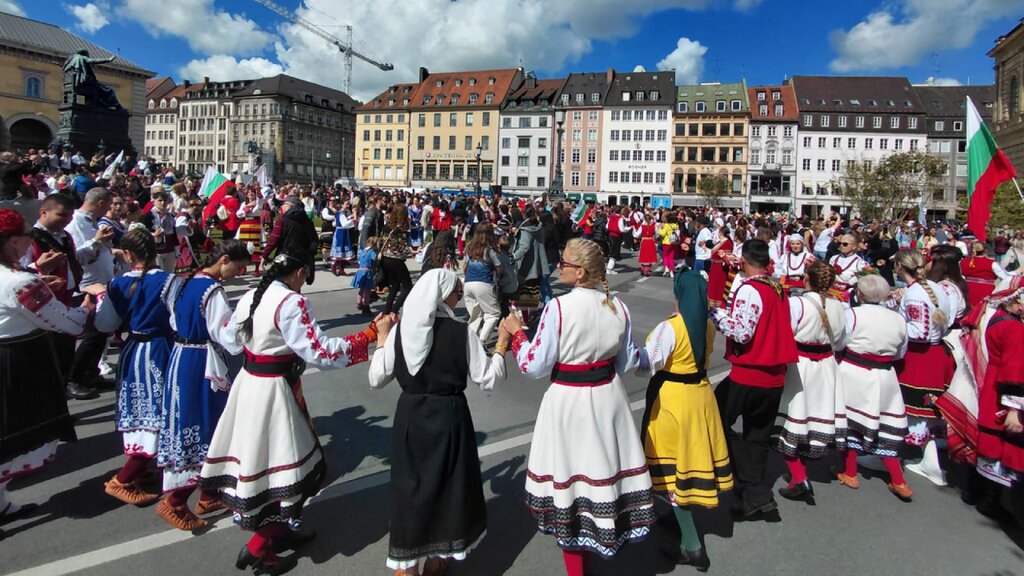
PHOTO Consulate General of Bulgaria in Munich
“We performed the piece ‘Sedjanka,’ with which we told the story of a Bulgarian woman who takes us back to her past, to her memories of a traditional evening gathering. The scene came alive for the audience. It started with her memory and ended with it, like an old photograph on the wall. It turned out wonderfully, even though we managed only two in-person rehearsals on site, in a parking lot. Preparation took months online, and in-person spontaneity brought the piece to life,” said Krastev.
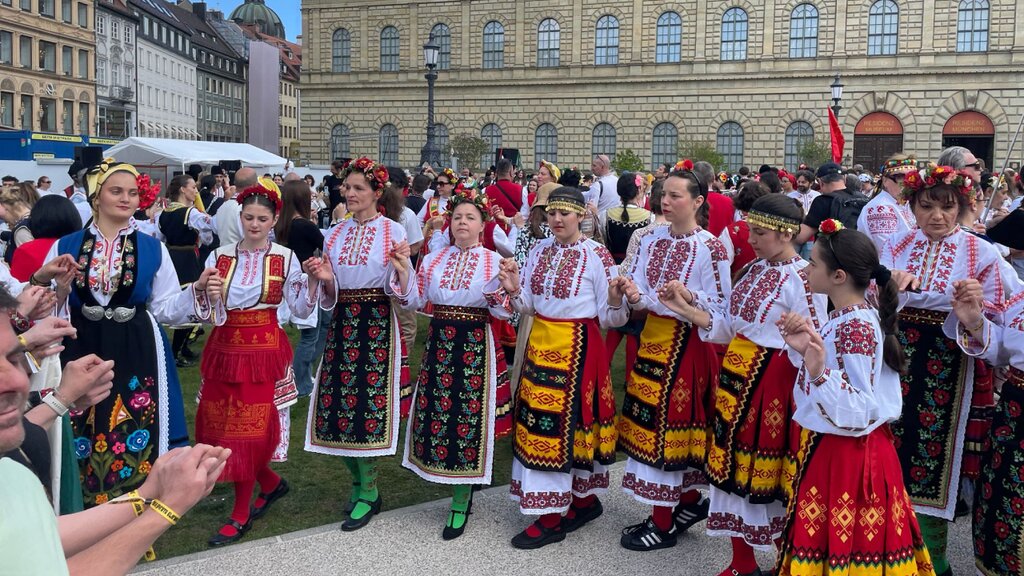
PHOTO Consulate General of Bulgaria in Munich
He was also part of the global dance collective “Gurbetchii,” created and directed by Theodosi Theodosiyev, which staged its performance “Return and Celebration after the Balkan War” almost entirely online. The ensemble brings together 55 dancers from over 25 Bulgarian groups from Europe and the USA. Krastev also shared his experience:
“We went on stage and gave everything we had, and the audience became one with us. There were people crying. Baba Radka, 89 years old, who has lived in Koblenz for many years and had the honor of participating in our piece ‘Sedjanka,’ also spoke warmly about ‘Gurbetchii.’ Many people we know made us proud.”
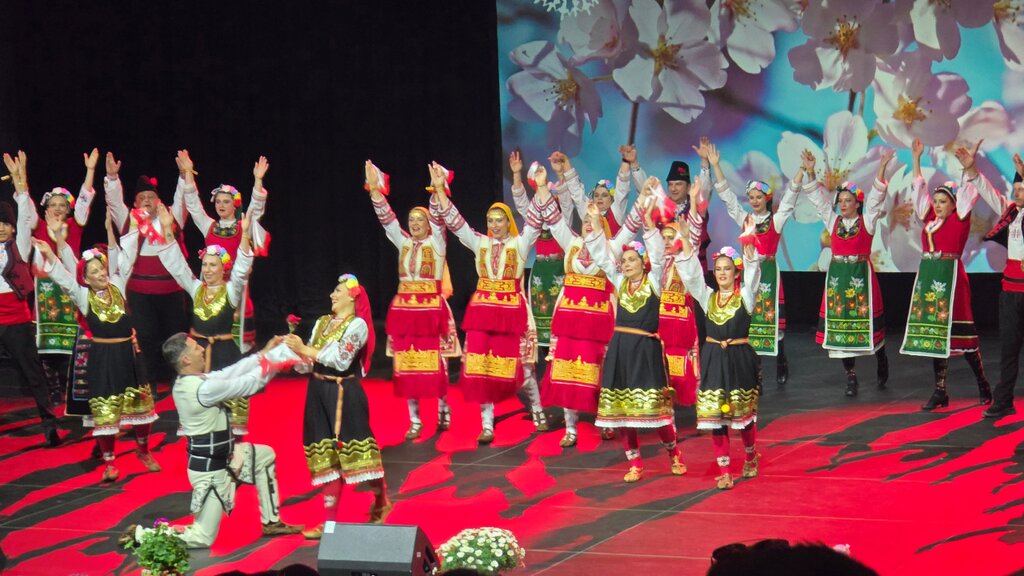
PHOTO BTA
The finale of the performance unexpectedly turned into the beginning of a new life. Stoian Zlatanov from “Gurbetchii” knelt before his beloved Desi Santova from the ensemble “Folklore Magic” in London, proposing marriage.
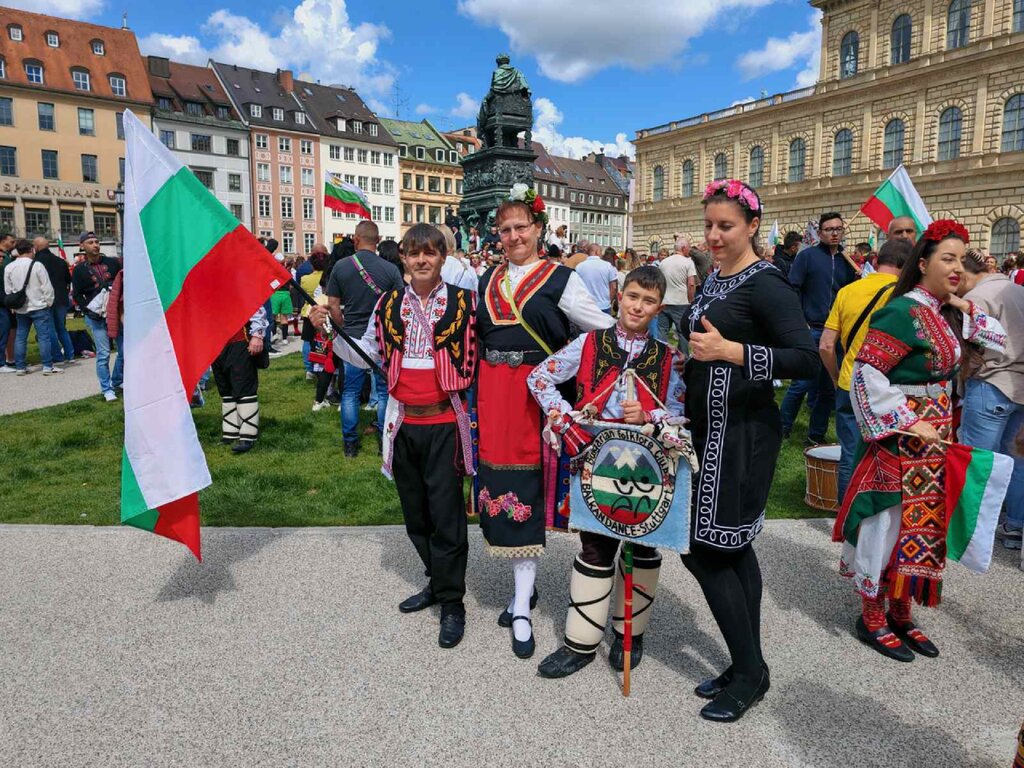
PHOTO Yoan Kolev
Part of this year’s emotions was also the participation of DARA at the Eurovision 2026 final. Bulgarians at the “megdana” massively supported the Bulgarian song and performer DARA who brought Bulgaria a historic triumph in the contest.
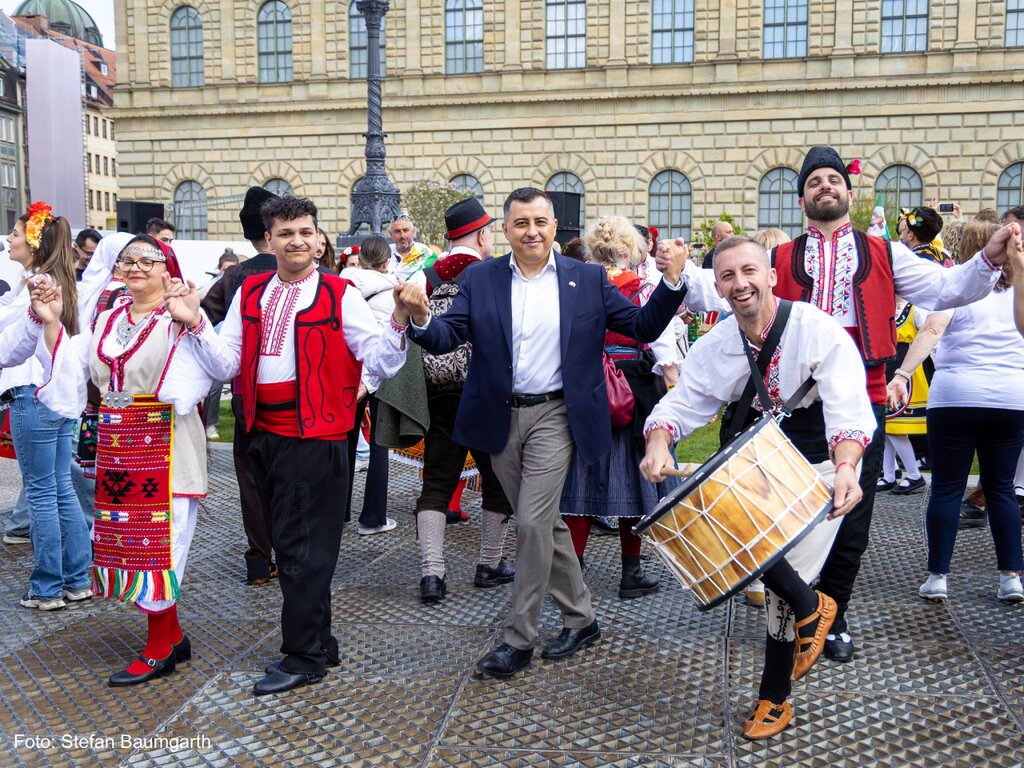
PHOTO Consulate General of Bulgaria in Munich
Anita Ekenova, chair of the cultural association “Ot izvora” (“From the Source”) in Lyon, which initiated the traveling folklore festival, summarized:
“Munich became Bulgaria, and all Bulgarian hearts from three continents - over 120 participating dance groups - came and filled the city with good mood, colorful costumes, and incredible rhythms. The square became Bulgarian, BMW Park became Bulgarian, and we all became one. We once again proved that when Bulgarians gather at the village square, there is no greater force, emotion, love, or devotion to Bulgaria.”
“The festival once again brought together Bulgarian folklore groups, schools, and organizations from different countries and showed that the Bulgarian spirit knows no borders,” stated the Executive Agency for Bulgarians Abroad on Facebook. As part of the forum, the institution donated traditional folk costumes to 16 schools in Germany.
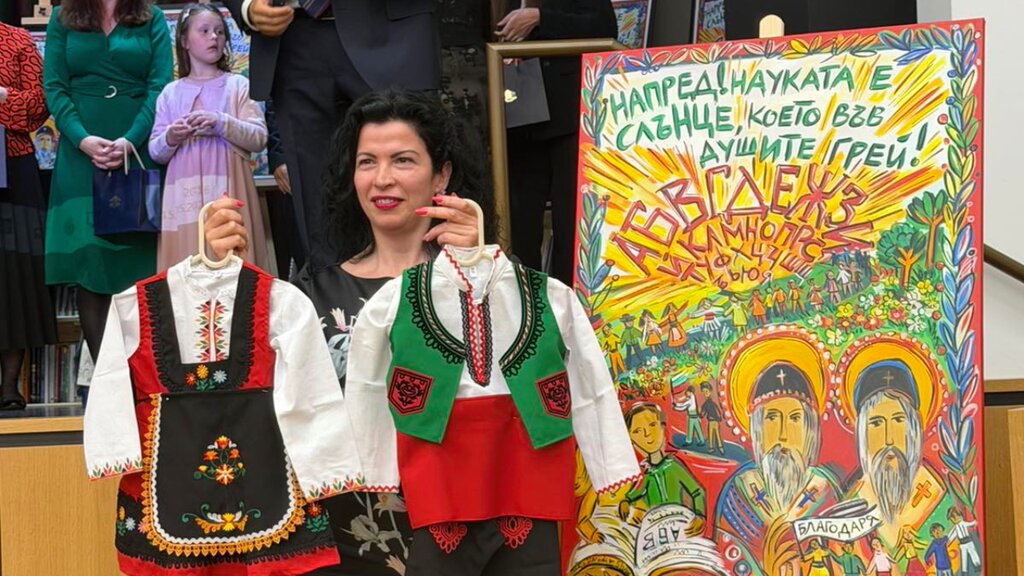
PHOTO Executive Agency for Bulgarians Abroad
Thus, outside Bulgaria - in the heart of Munich - thousands of Bulgarians once again proved that the village square is not just a place for dancing, but a way to stay connected to home, even when living thousands of kilometers away. And as tradition dictates, after the festival ends, compatriots return to their new homes around the world, agreeing to meet again next year on the “Megdana".
The next edition will take place from July 11 to 13, 2027 in Cyprus, hosted by the folklore ensemble “Sovatchii” from Limassol.
Read also:
From Bulgaria to Germany – Varna and Lazarka ensembles on one stage in Munich
Interviews: Yoan Kolev
Text: Miglena Ivanova
This publication was created by: Rositsa Petkova