


Author
Darina Grigorova
Language, faith and memory unite Bulgarians in Budapest on May 24
Three plane trees symbolize faith, community, and knowledge, guarding the Bulgarian spirit in Hungary
Sunday 24 May 2026 07:25
Sunday, 24 May 2026, 07:25
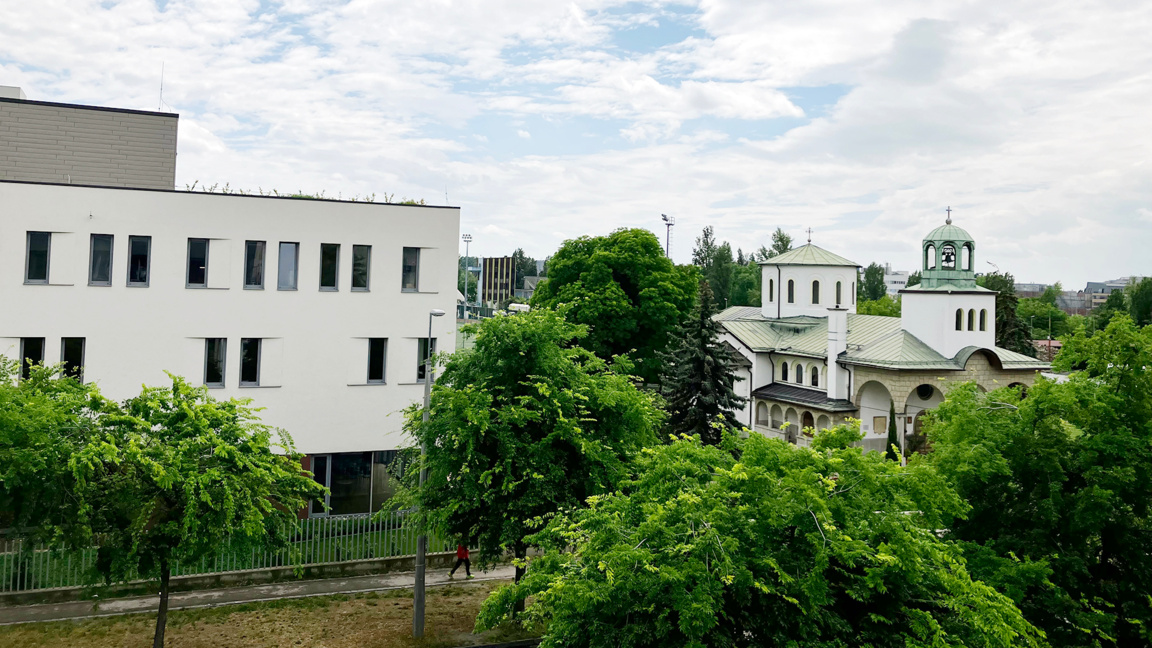
PHOTO Darina Grigorova
Font size
More than a century ago, a group of hardworking Bulgarian vegetable growers migrated to Hungary. They brought with them the seeds of Bulgarian language and culture.
First, they founded their own association in Budapest. Then they set up a fund to collect money for building a school and a church. In 1918, they used the funds collected by the Bulgarian community in Hungary to build a school, where their children could learn to read and write in Bulgarian and learn about the Holy Brothers Cyril and Methodius, the first enlighteners of the Bulgarian people.
In 1922, they opened a local community centre, which soon expanded to become a cultural centre. The last building they completed was the church. By 1932, Bulgarians in Hungary had a church — to exchange their marital vows, to christen their children, and to present their dead to God. The patrons of the church were none other than the Equal-to-the-Apostles Cyril and Methodius, so that Bulgarian culture and spirit might prosper and bear fruit for centuries to come.
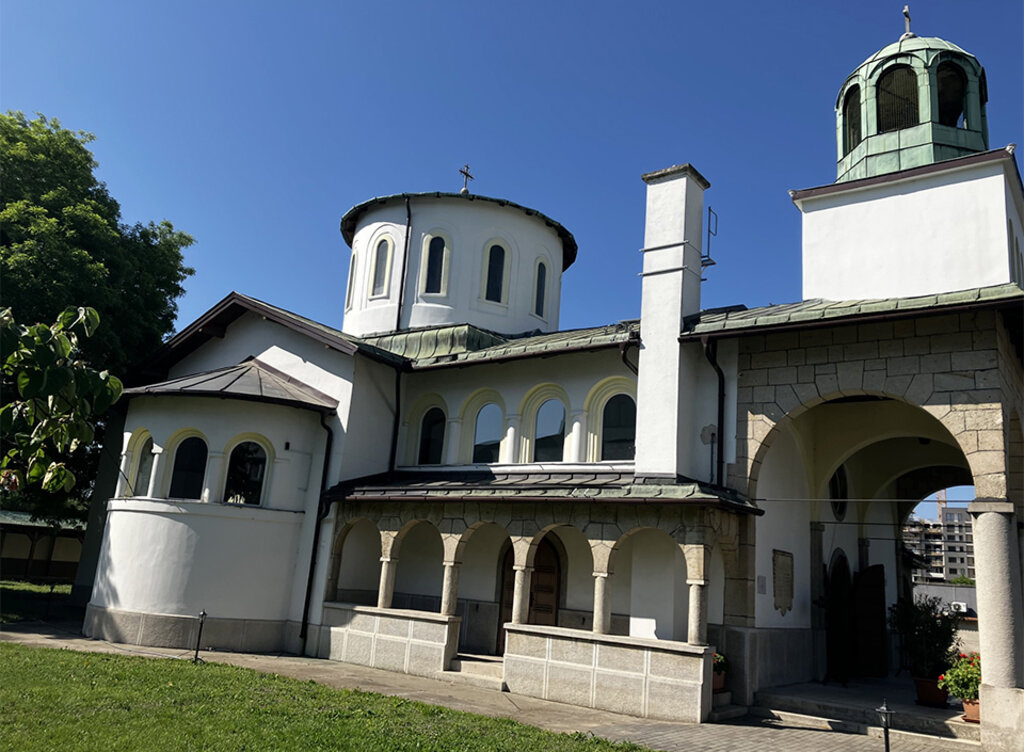
The Bulgarian Orthodox Church of Saints Cyril and Methodius in Budapest.
PHOTO Darina Grigorova
Thus, thanks to these three pillars — the church, the citizens’ association, and the school — five generations have preserved their roots, language, and faith. These pillars were recently embodied in three plane trees planted in the churchyard to guard and sustain the Bulgarian spirit, offering shade in the summer heat and shelter from life’s storms.
“The first tree symbolises faith, the second community, and the third learning,” explains Alexi Andonov, chair of the church board, in an interview with Radio Bulgaria.
“We Bulgarians in Hungary have always been a close-knit community. This can be explained historically by the fact that our ancestors were migrants from two neighbouring Bulgarian villages, Polikraishte and Draganovo. For us, 24 May is a very big holiday. Around 500 people gather in the churchyard to celebrate. It is always a joyful celebration that brings together the association, the church, and the school — all of us together. I hope this tradition will never die.”
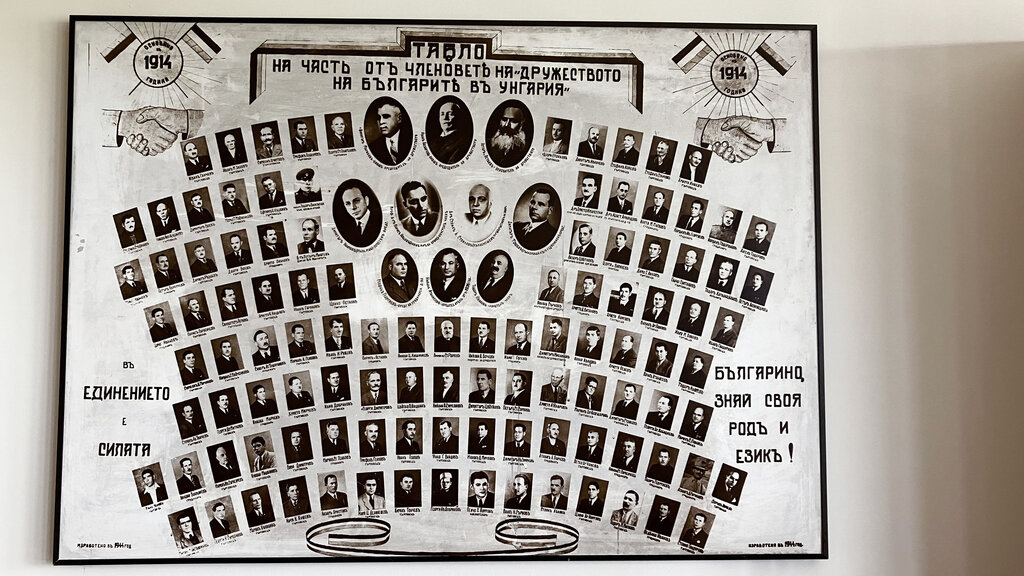
The founders of the Bulgarian Association in Hungary.
PHOTO Darina Grigorova
Faith in God and a hunger for knowledge were the driving forces that helped Bulgarians in Hungary preserve their community spirit and uphold the legacy of Lazar Ivanov, the first chair of the Bulgarian Association in Hungary. His words — “The future is built not only with the hoe, but with faith in God and an open mind” — have become a guiding principle for generations of Bulgarians, explains Alexi Andonov.
At the dawn of the twentieth century, Bulgarian gardeners arrived in Hungary armed with a tireless work ethic, knowledge, and the hope of earning a livelihood. Very soon, however, they realised that in order to preserve their community and Bulgarian roots, they needed one more thing — spiritual enlightenment.
“We are dedicated to keeping the history of the church alive,” says Rumyana Ivanova, a member of the church board, in an interview for Radio Bulgaria’s podcast Bridge of Faith. “Together with Father Tancho and the new chair of the board, Alexi Andonov, we are trying to do more for the church, so that it may unite Bulgarians here and help them cherish our faith, culture, and heritage.
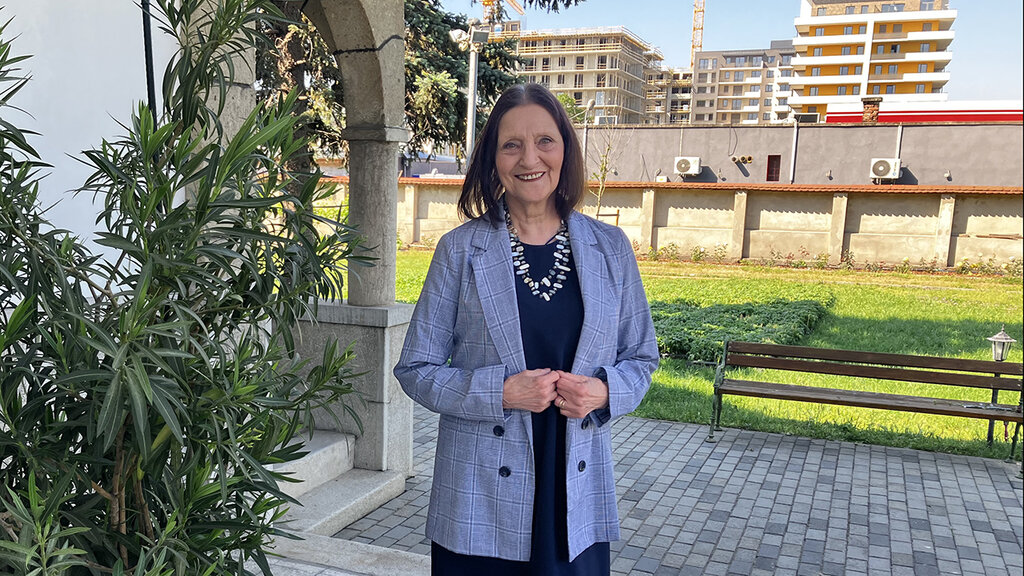
Rumyana Ivanova
PHOTO Darina Grigorova
“The church, the school, and the community cultural centre were built with the idea of keeping us together, united by our culture, education, and faith. These three buildings form a metaphorical triangle — a source of pride for us Bulgarians. I believe that the Bulgarians who envisioned the church and the Hungarians who joined and supported the effort wanted it to bear that name because the Holy Brothers embody our pride, our history, and our Bulgarian identity.”
After founding the Church Community of Saints Cyril and Methodius in 1916, the Bulgarian community in Budapest established a school two years later, at the end of the First World War. The school was later placed under the jurisdiction of the Bulgarian state, and in 2011 the Bulgarian Ministry of Education decided to close it. Meanwhile, in 2004, the Bulgarian Republican Self-Government in Hungary established the Bulgarian School for Native Language, where children of Bulgarian descent can learn the language of their ancestors.
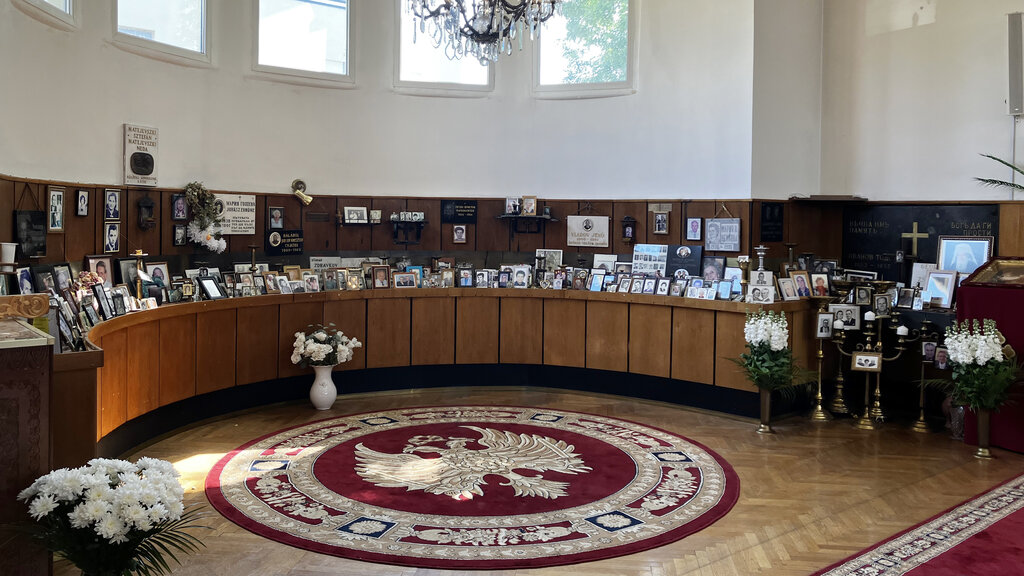
A special place in the church is dedicated to the founders of the Association, the church community, and the cultural centre.
PHOTO Darina Grigorova
The Bulgarian Cultural and Educational Centre, which today houses a school and kindergarten for native-language instruction, stands in the immediate vicinity of the Church of Saints Cyril and Methodius in Budapest. This project was realised with the invaluable support of Simeon Varga, the parliamentary representative for the Bulgarian minority in the Hungarian Parliament. He played a decisive role in negotiations with the Hungarian state and in securing substantial public funding for the preservation of Bulgarian institutions.
Speaking to Radio Bulgaria’s podcast Bridge of Faith, he emphasised that without the spirituality Bulgarians carry in their hearts and without faith in God, this Bulgarian dream would never have come true:
“What we strive to pass on to our children today is the example of our work. My mission is to draw young people closer to our cause, because someone must continue what our forefathers built and preserved. We must bring the younger generation closer to us, to the church, and to our efforts to preserve our culture here in Hungary. Just as in the past, we will pass on to them everything we have built, so that it may endure and continue to grow. Without development and financial support, these things are quickly lost.”
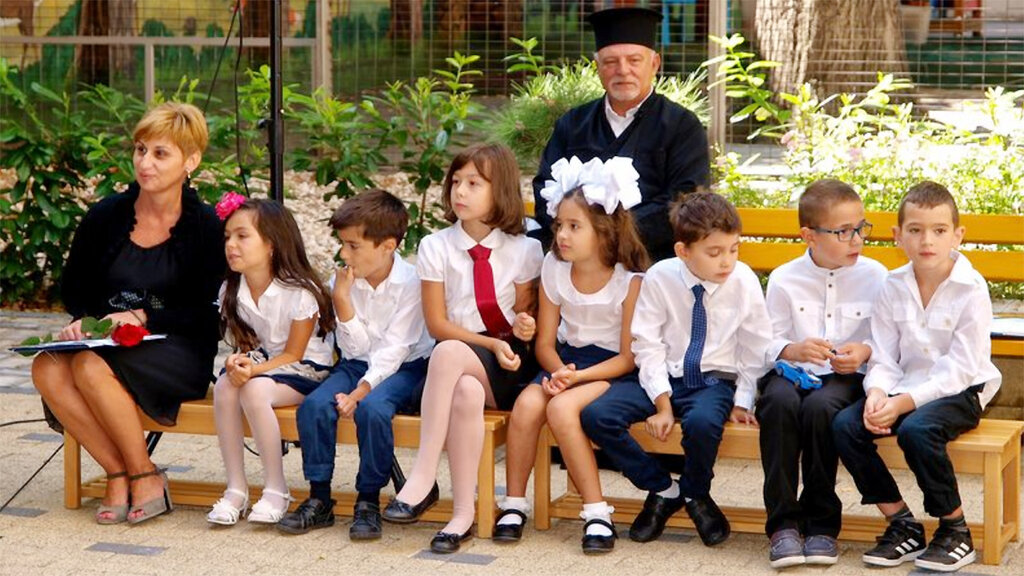
Father Tancho Yanchev with children from the Bulgarian school.
PHOTO bolgaregyesulet.hu
Once again this year, on 24 May, the church and the space around it fill with compatriots from near and far. The distance between Bulgaria and Hungary seems to melt away as everyone celebrates the feast of the Bulgarian enlighteners “with one heart and one voice”.
“From morning until evening there is a steady stream of believers coming to light candles for the Holy Brothers Cyril and Methodius,” says the rector of the church, Stavrophore Economus Father Tancho Yanchev.
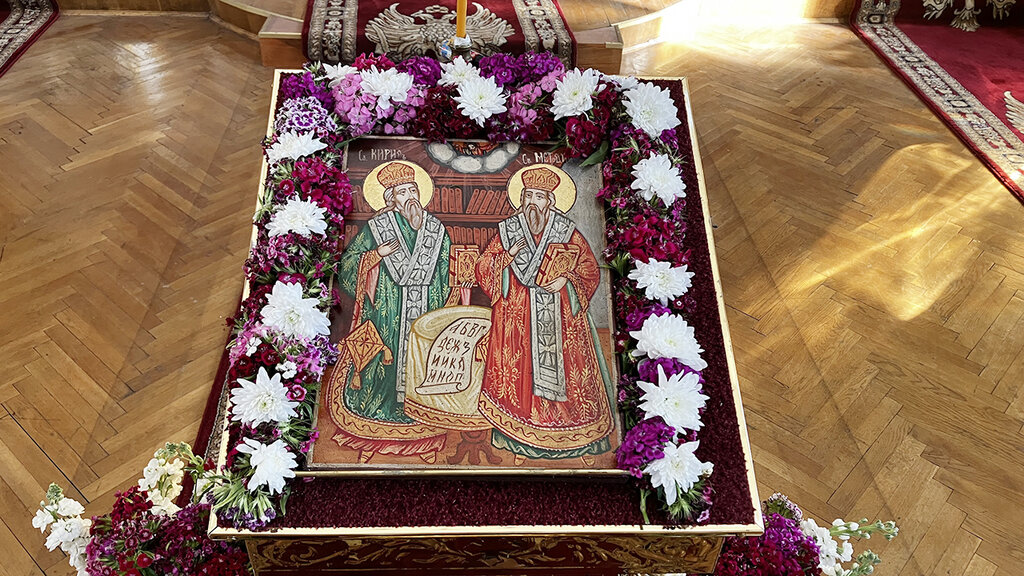
PHOTO Darina Grigorova
“We also hold community gatherings here. We celebrate the Divine Liturgy, and afterwards parishioners who are grieving or seeking prayer turn to the priest for comfort and prayer.”
At the end of 2025, during an official state ceremony in Budapest, Father Tancho Yanchev received the prestigious Award for National Minorities on behalf of the Prime Minister of Hungary. The distinction was awarded to the Bulgarian Orthodox Church in Hungary in recognition of its historic role in preserving the native language and the Orthodox and cultural heritage of the Bulgarian community.
Editing by Elena Karkalanova
This publication was created by: Elizabeth Radkova