Author
Krasimir Martinov
News
Visiting the Bulgarian “Azbuka” school in Dublin
Monday 25 May 2026 11:16
Monday, 25 May 2026, 11:16
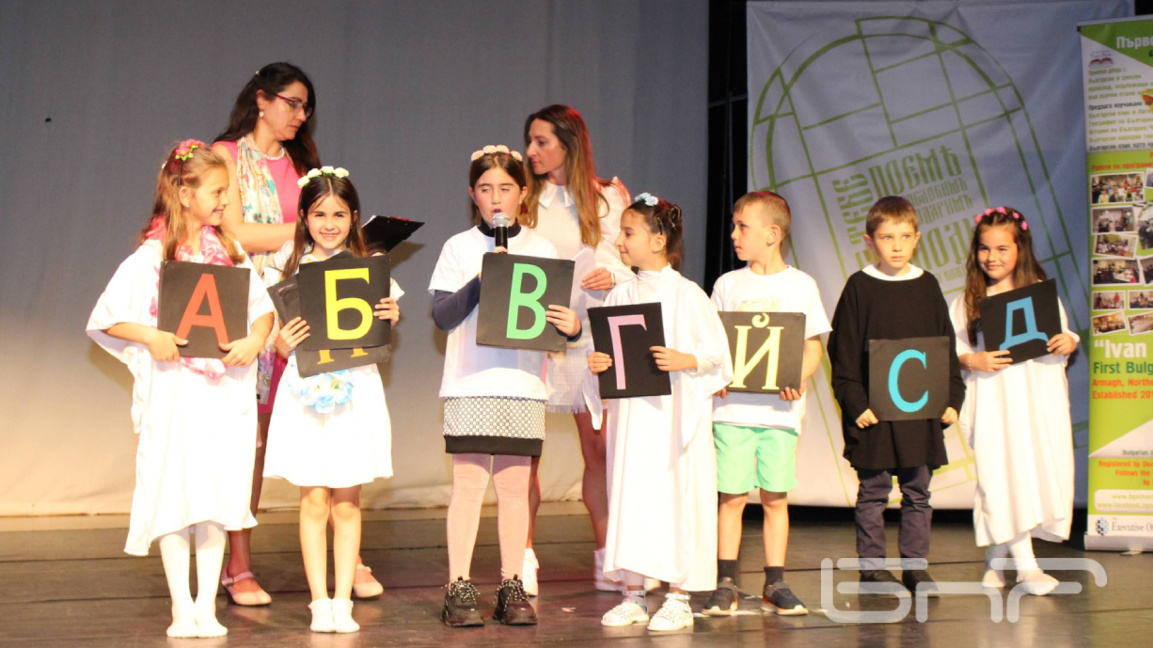
PHOTO Bulgarian school "Azbuka" (Alphabet) in Dublin
Font size
With special excitement and enthusiasm, Bulgarian schools abroad always welcome May 24 - the Day of Saints Cyril and Methodius, of Bulgarian education and culture, and of Slavic literacy. For many of them, the celebration of the alphabet also marks the end of the school year. But not only for this reason - Radio Bulgaria is visiting the Bulgarian “Azbuka” School in Dublin.
"Azbuka" (Alphabet) is the first Bulgarian school in the Irish capital which opened its doors at the beginning of the 2008/2009 school year. The school was created at the initiative of Bulgarian families who wanted their children to study their mother tongue. The Bulgarian Embassy in the Republic of Ireland also supported the initiative. Around the same time, the Bulgarian Educational and Cultural Centre in Ireland was founded to support the school’s work and development.
Today, “Azbuka” school teaches children from preschool age through 12th grade. It is important to note that Bulgarian is recognized as a matriculation subject in Ireland, and the school prepares students who wish to take the final Bulgarian language exam at the end of their studies.
Every Saturday, 12th-grade student Teresa Staneva and her younger sister Maria travel to Dublin to meet their Bulgarian friends and study Bulgarian.
“We moved from Bulgaria to Ireland when I was six years old and immediately started attending Bulgarian school on Saturdays,” Teresa tells us. “I really liked it when I was younger, especially because it was a different environment where you could speak Bulgarian and make friends with people who understood the traditions and whom I would never have met at my Irish school.”
Teresa admits there were periods when it was difficult and she resented the lack of free time on weekends, but today she is grateful that her parents insisted she continue studying literary Bulgarian:
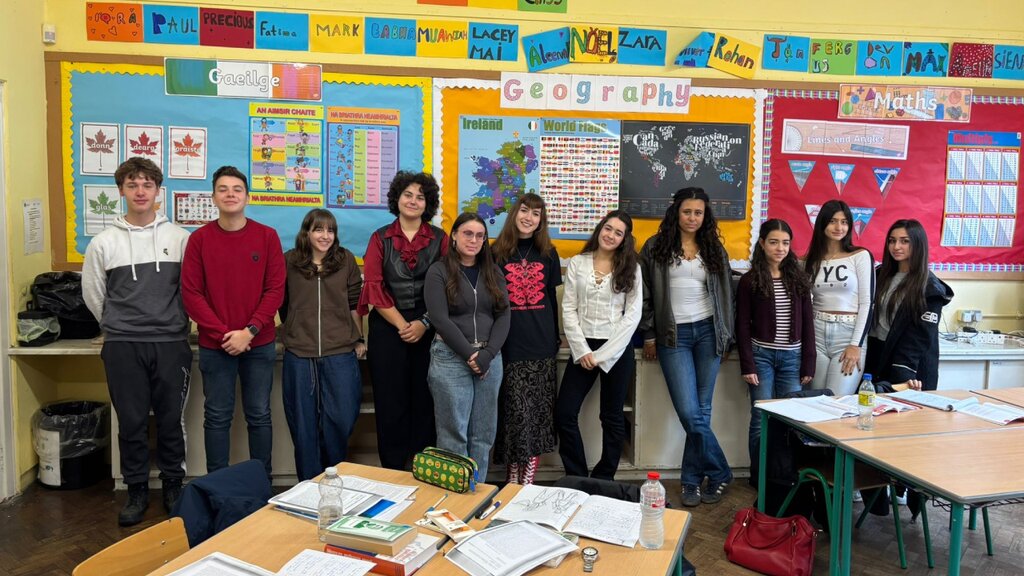
PHOTO Bulgarian school "Azbuka" (Alphabet) in Dublin
“Especially in the last two years it’s been a little difficult balancing everything, but there’s time for both Bulgarian school and Irish school. Personally, I plan to take the Bulgarian exam this year - it’s a three-hour matriculation exam at the end of the year, consisting of reading comprehension, a short essay of about 100 words, and a longer essay of 350 words. The essay topics are unknown, so we prepare to develop the skills to write meaningful essays. I chose to take Bulgarian because it’s another opportunity to earn points for university admission. I hope to study dental technology here, but I’m also considering studying in Bulgaria,” Teresa shared.
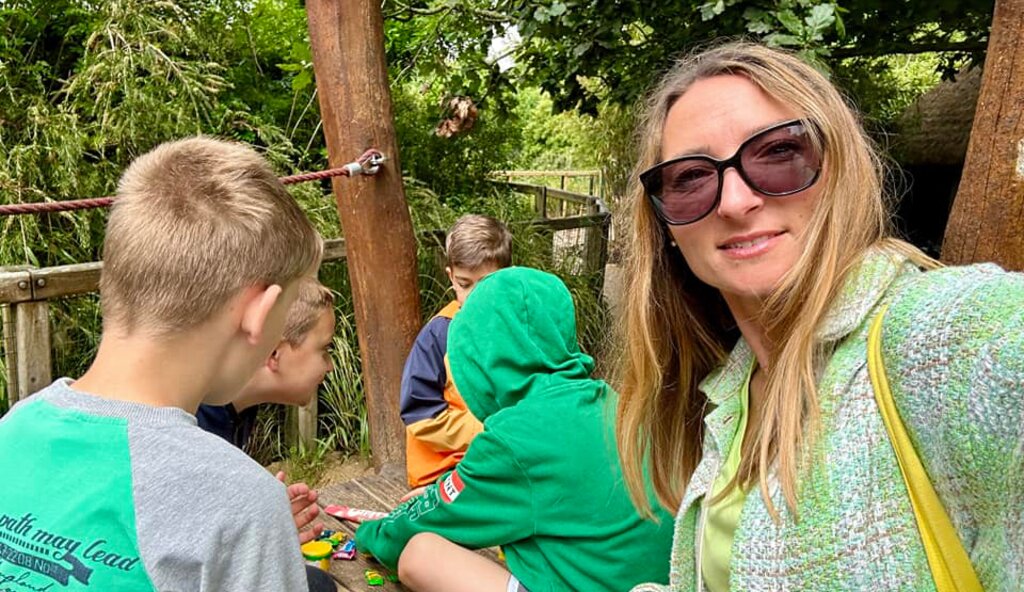
PHOTO Bulgarian school "Azbuka" (Alphabet) in Dublin
“Classes at Azbuka School are held once a week - on Saturdays until noon, while older students also study geography and history as additional subjects,” explains Dzheylan Eneva. Originally from the Bulgarian town of Targovishte, she has lived in Ireland for about ten years and currently teaches first-grade students at the Bulgarian school.
She says that in many mixed families Bulgarian is not actively spoken, which creates challenges for the learning process:
“They are not like my family, where we decided to speak entirely in Bulgarian. Many parents leave the choice to the child and communicate in English or another common language. But this makes our teaching process more difficult because the children speak Bulgarian at different levels, and the textbooks are not adapted for children living abroad. The time we have is also limited - once a week is simply not enough for children to fully learn Bulgarian grammar, reading, and writing.”
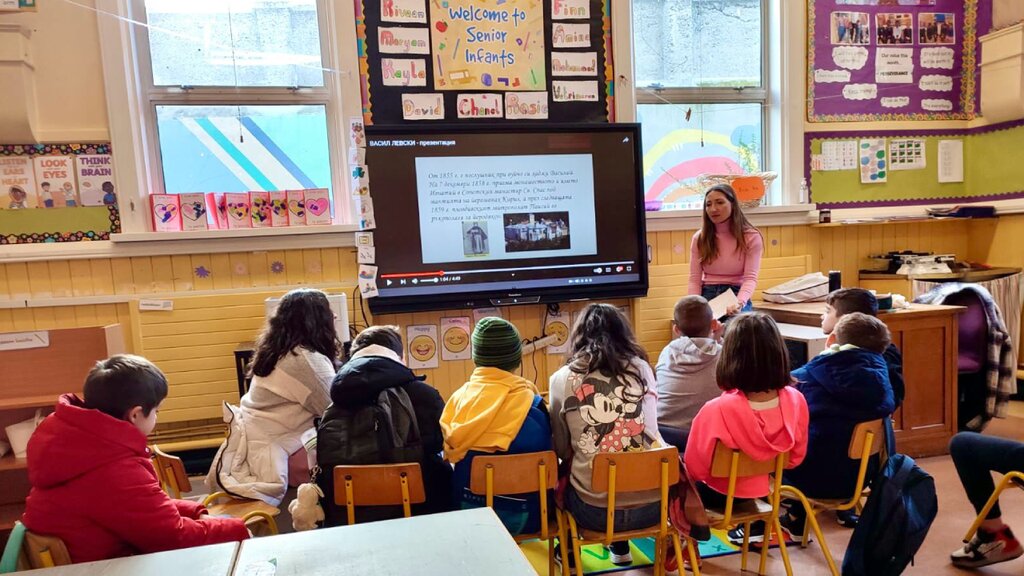
PHOTO Bulgarian school "Azbuka" (Alphabet) in Dublin
Dzheylan Eneva is also the reason our next interviewee, Sofia Duminika, became part of the Azbuka School team in Dublin. Sofia is a Bessarabian Bulgarian, and her twin brother Ivan Duminika is an expert at Moldova’s Ministry of Education. They are from the village of Tvarditsa in the Taraclia region of Moldova, home to a compact Bulgarian population with historical roots in Bulgaria.
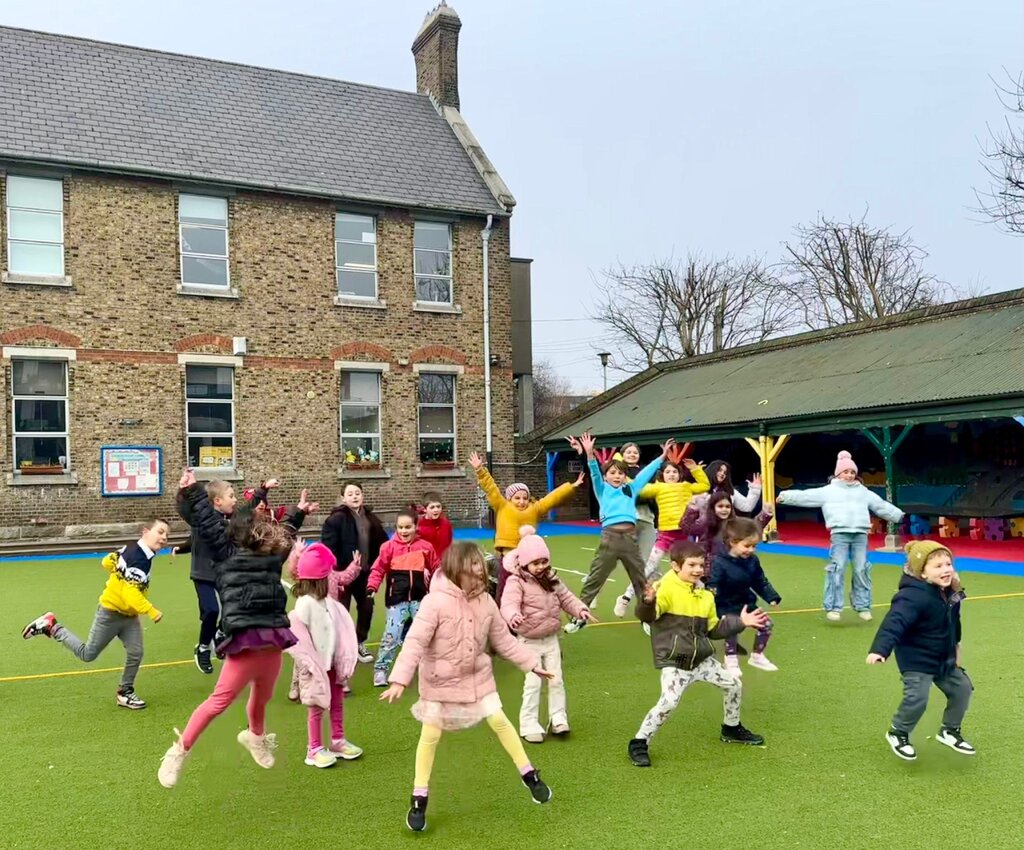
PHOTO Bulgarian school "Azbuka" (Alphabet) in Dublin
“For a long time I didn’t know there was a Bulgarian school,” Sofia tells us. “I met my friend at an Irish school where we studied English. When we introduced ourselves, she learned that I had graduated in Bulgarian philology and said: ‘Do you know that you could work at the Bulgarian school in Dublin?’ I was a little worried because my Bulgarian isn’t as strong as that of native speakers born in Bulgaria. But she reassured me, saying: ‘The important thing is that you carry the Bulgarian spirit.’ When I met the principal, Radostina, she welcomed me warmly, made me feel comfortable, and inspired me.”
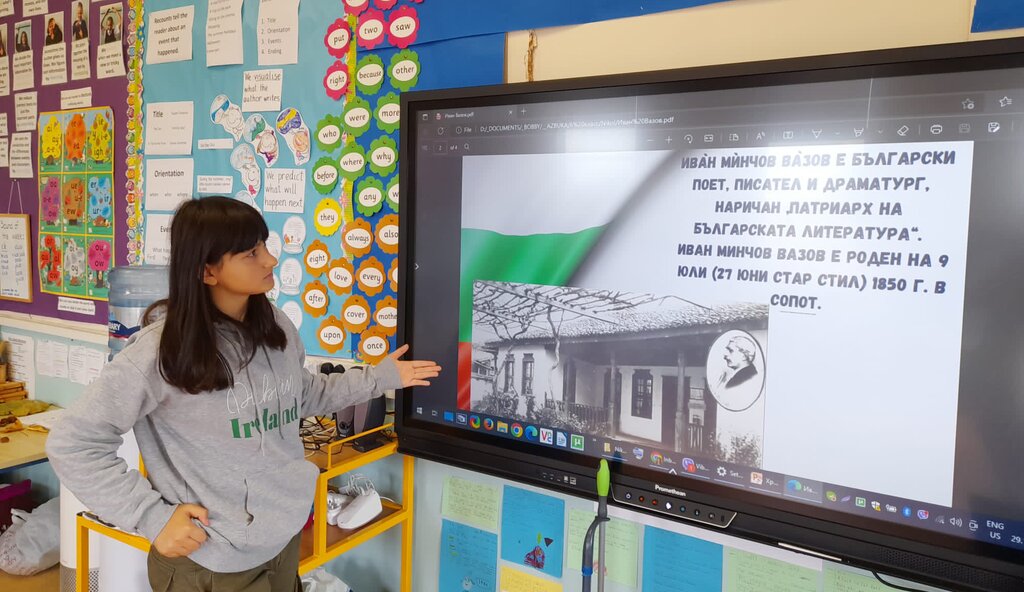
PHOTO Bulgarian school "Azbuka" (Alphabet) in Dublin
The Bulgarian spirit - this is what Sunday schools abroad strive to awaken in children, many of whom were born outside Bulgaria. In this mission, teachers’ greatest allies are the parents. Venko Stanev is chairman of the parents’ council at Azbuka School in Dublin and actively participates in organizing school initiatives. He is also the father of Teresa and Maria. He says he never once doubted whether to enroll his daughters in a Bulgarian school in Ireland. He is happy that an active and united Bulgarian community has formed around the school, with many compatriots continuing to volunteer even after their children have graduated.
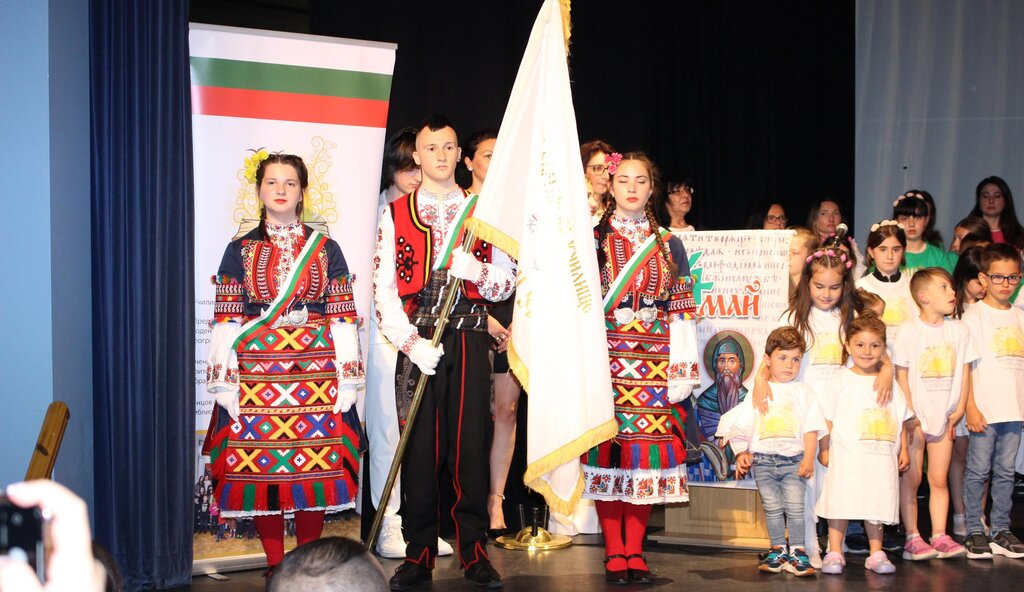
PHOTO Bulgarian school "Azbuka" (Alphabet) in Dublin
“I’m chairman of the parents’ council, which supports the school’s activities. Part of our work is organizing events and celebrations for the children - we celebrate all Bulgarian holidays. We organize many initiatives to support the school, but we also help causes in Bulgaria - every year we send gifts to disadvantaged children there. We also maintain contact with a nursing home for elderly people with illnesses. We send them cards, and they are incredibly happy and grateful because many of them are lonely and need emotional support. But our main goal is to build a close-knit community here.”
And so, with Venko Stanev’s words about kindness, we leave Dublin and Azbuka School, only to return again in the autumn, when teachers, with the help of parents, will once more begin working with Bulgarian children so they never forget where their roots come from.
Read also:
“Just like being in Bulgaria!” – Easter service in Bulgarian in Dublin
Liturgy in Bulgarian brings together Bulgarians in Ireland after long pause
English version: R. Petkova
This publication was created by: Rositsa Petkova