


Author
Vesela Krasteva
News
A Bulgarian heart beats at the centre of Orchestra Lele Lele
Musician, teacher and ensemble founder Mihail Dinchev reflects on the journey that took him from Vidin to Stockholm and led him back to the riches of Bulgarian folk music
Sunday 7 June 2026 11:30
Sunday, 7 June 2026, 11:30
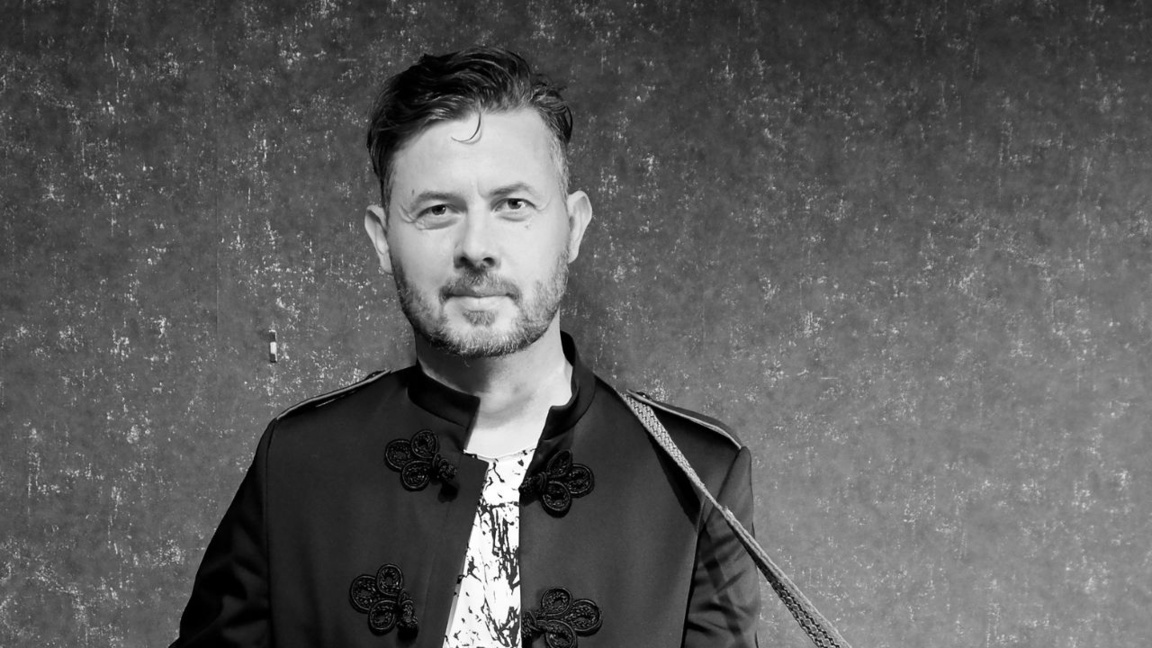
PHOTO B. Borozanov
Font size
Some stories sound as though they were written for the screen. Mihail Dinchev's is one of them. Born in the northwestern Bulgarian town of Vidin, he went on to build a life in Sweden while helping bring Bulgarian folk music to new audiences.
Dinchev is a musician, teacher and founder of Orchestra Lele Lele, a Swedish-based ensemble that blends authentic Balkan folk traditions with contemporary influences and infectious stage energy.
Seven years after the group's last appearance in Bulgaria, the musicians returned in March 2026 for two concerts under the title Balkan Jam Session in Burgas and Sofia. Together with Kai Sundquist (clarinet), John Runefelt (accordion), Stian Grimstad (tuba) and Moa Danielson (tupan), Dinchev once again showed how Swedish jazz and world music can speak Bulgarian in an uneven Balkan rhythm.
During the visit, he stopped by the Radio Bulgaria studio to talk about the journey that brought him there - a journey that began in Vidin during the early years of Bulgaria's democratic transition.
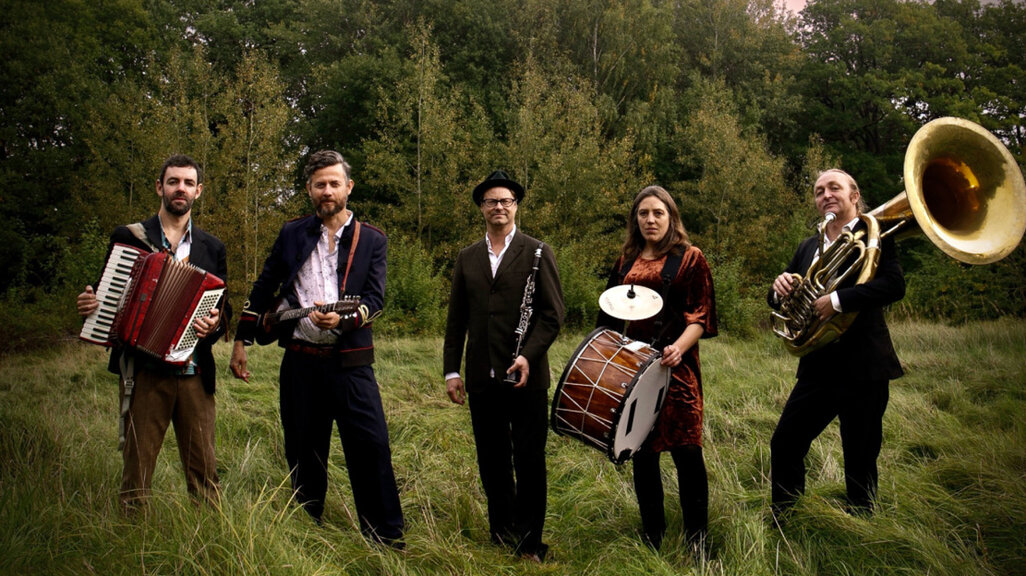
PHOTO Lele Lele Orchestra
"If we follow my musical journey more or less chronologically, I started playing guitar at the music school in Vidin when I was seven. At the time, my friends and I listened mainly to rock and heavy metal, and folk music didn't really interest us very much. We knew it was there and sensed there was something special about it, but our focus was elsewhere. That's where my love of music began – with my first guitar teachers, the people who inspired me, and the friends I played with."
Because he did not grow up in a family of musicians, Mihail's path to his dream proved somewhat longer than expected. His parents encouraged him to focus on languages and continue his education at a language high school. That is exactly what he did until 1992, when a new opportunity presented itself to the ninth-grade student: the chance to learn Swedish.
"Before communism fell in Bulgaria, sometime before 1989, when I was about 11 or 12, my parents happened to meet a family at Sunny Beach – Swedish-speaking Finns, who are a minority in Finland. Since my mother was an English teacher, they naturally struck up a conversation on the beach, just like in a film. We showed them around Bulgaria and our Black Sea coast, and a genuine friendship developed."
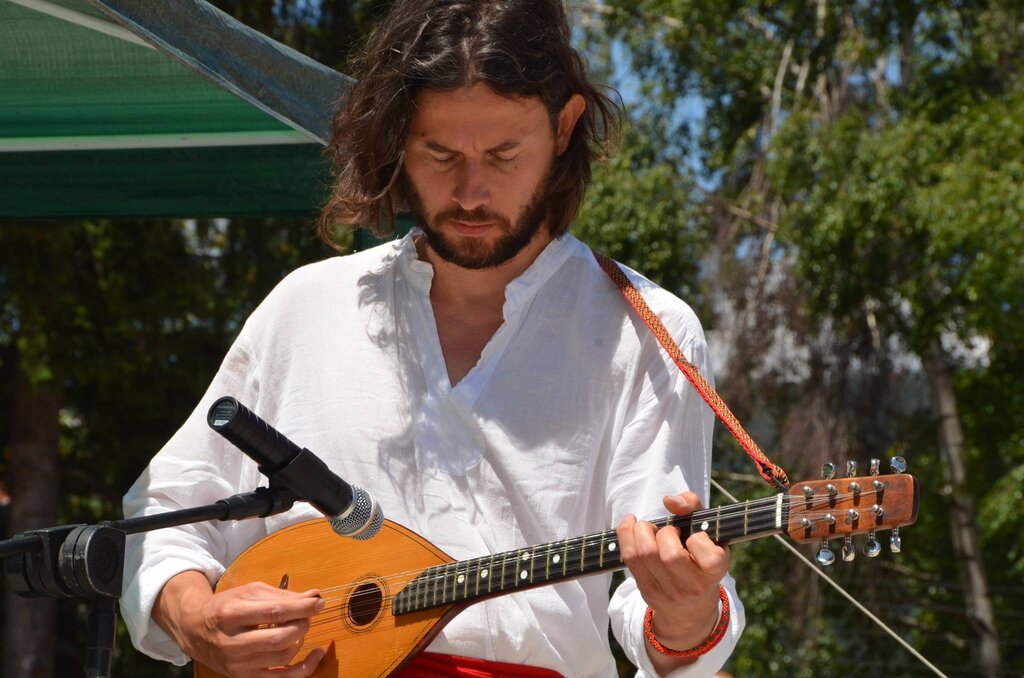
PHOTO Personal archive
"Then, we started exchanging letters. There was no internet at the time, so that was the only way to stay in touch. After the political changes in Bulgaria, they invited us to visit them. Since I was already speaking fairly good English at the age of 14, the Finns thought I had a real talent for learning foreign languages. They suggested to my family that I come and live with them, enrol in the local Swedish-language secondary school and learn a language that was quite unusual for Bulgaria at the time, but one that might prove useful in a field such as tourism or something else."
Within six months, Dinchev was speaking Swedish and adapting to the lush, very different world he had discovered in Finland. A few years later, at the age of 17 and thousands of kilometres from home, he found a way back to his childhood dream: music.
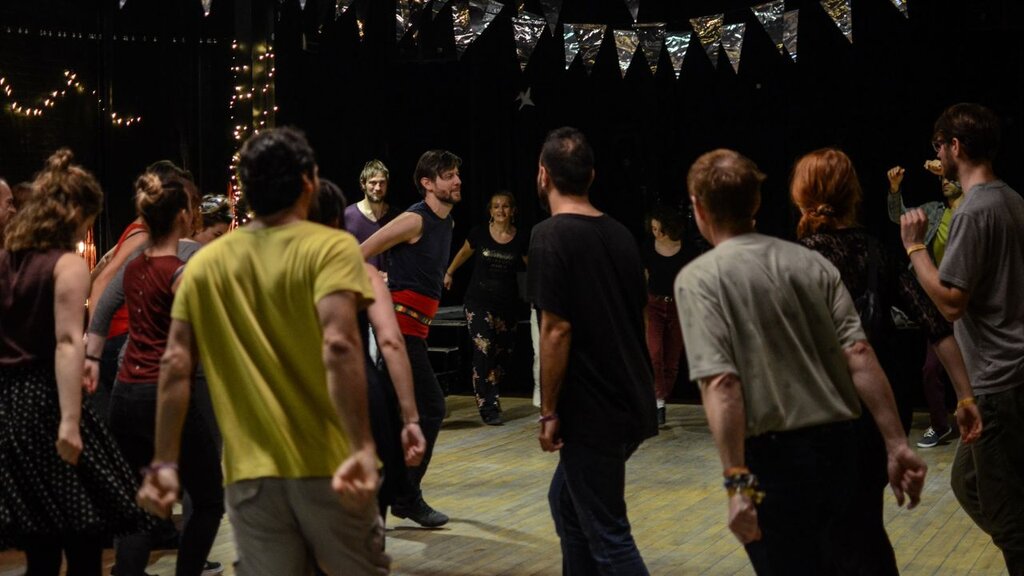
PHOTO Personal archive
One of the children in the family he was living with attended a local music school that offered preparatory courses in pop and jazz. Mihail decided he wanted to study there as well. "The Finns supported me in that too, and thank goodness I was accepted," he recalls today.
Somewhere along the way, almost without realising it, the Bulgarian in search of his own identity also discovered Bulgarian folk music.
"Through recordings. In Finland there was a library with a huge collection of CDs featuring music from all over the world. Out of curiosity, I listened to music from Africa, India and South America. I simply wanted to learn about everything that existed, to immerse myself in all kinds of influences. Among those collections were also recordings of Bulgarian music. There were our choirs – The Mystery of the Bulgarian Voices, Trio Bulgarka, Ivo Papazov-Ibryama, whose albums were released by Joe Boyd, and the work of Teodosii Spassov. The more I listened, the more fascinated I became with our folk music.
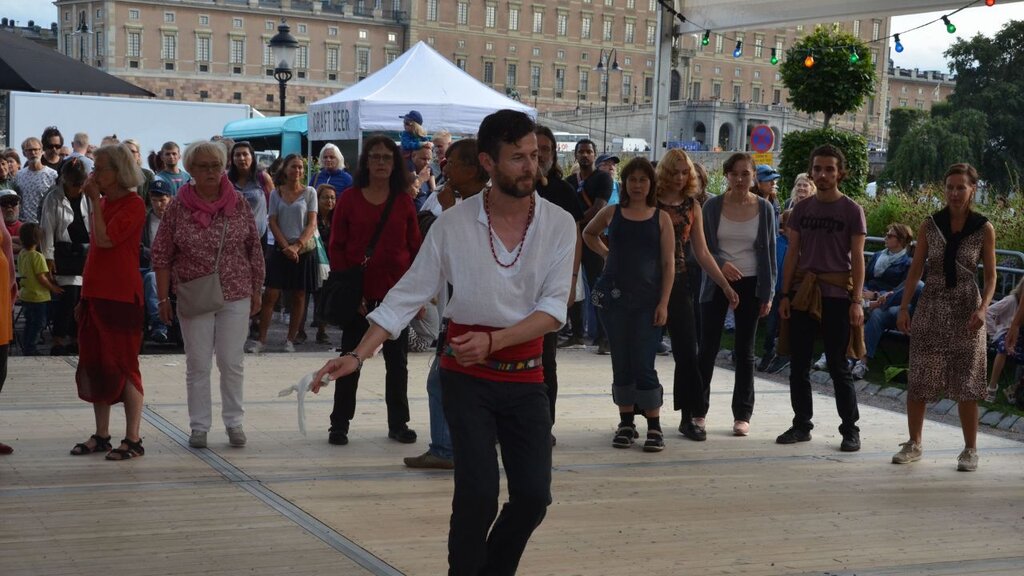
Mihail Dinchev is teaching Balkan dances at the Stockholm Culture Festival.
PHOTO Personal archive
One of my most powerful encounters with it came through the Norwegian group Farmers Market, who were on tour in Finland and performed at the jazz club in the town where I was studying. At the time, they were playing with the Bulgarian saxophonist Trifon Trifonov. The way they presented their music – their blend of Bulgarian folk music with jazz, pop and a tremendous sense of humour – was decisive for me. Meeting them was indescribable and remains so to this day.
After one of the concerts, I spoke with the group's accordionist, Stian Carstensen, who speaks Bulgarian very well. He told me: 'Play Bulgarian folk music. It is vital.' That phrase has stayed with me ever since. I decided that this was what I wanted to do. And I've been doing it ever since."
As the years passed, music eventually took Mihail Dinchev to Stockholm, where his search for a musical voice increasingly followed the rhythms of Bulgarian folk music.
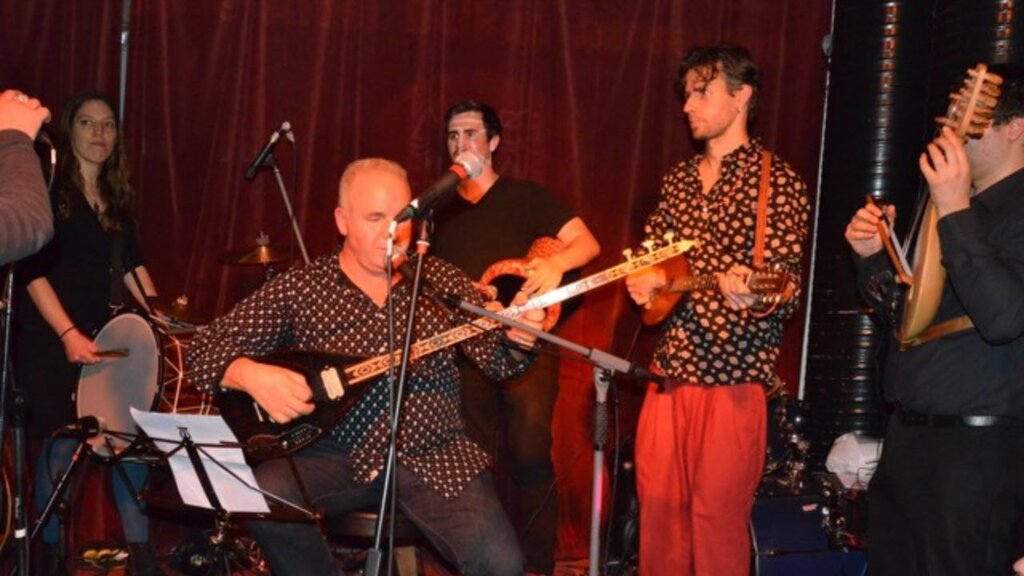
PHOTO Personal Archive
"At the beginning of the 2000s, I moved to Sweden because many of my friends were talking about the opportunities there to study different styles of music and about the interest people showed in folk traditions from around the world. Most of them moved there to study, and somehow they drew me in as well. I first enrolled in a music school similar to the one I had attended in Finland, and in 2003 I was accepted into the Royal College of Music in Stockholm, where I studied music education."
It was during this period that Mihail met the musicians with whom he founded Orchestra Lele Lele, now in its 23rd year. Having traded his guitar for the tambura, he began experimenting alongside musicians playing instruments such as the tabla and sitar. Indian rhythms initially exerted a strong influence on the group's sound, something that can still be heard on Lele Lele's debut album. (The band's name, Lele Lele, comes from a playful Bulgarian exclamation of surprise and amusement). Gradually, however, Balkan melodies and Bulgarian folk music, blended with elements of jazz, classical music and rock, moved to the heart of the ensemble's musical identity.
The albums When the Light Goes Out and, most recently, Ayde Ayde (2024) followed.
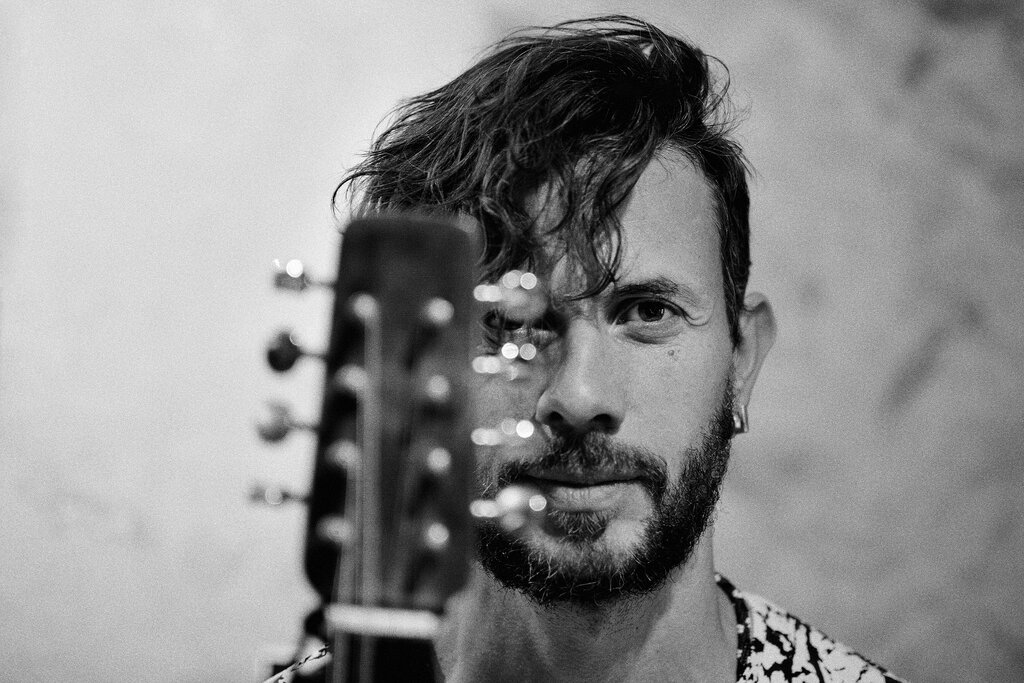
PHOTO Ivo Hristov
In 2005, Dinchev deepened his knowledge of traditional singing, music and dance at the Academy of Music, Dance and Fine Arts in Plovdiv. Today, he describes that period as one of the happiest years of his life, when virtually every waking hour revolved around music.
There followed journeys across Europe, periods spent performing as a street musician in Spain and Portugal, and recognition from Goran Bregović, who described Orchestra Lele Lele as a genuine "Scandinavian sensation".
"I don't know whether there is a recipe for a band's success, but one of the important factors is openness and honesty in our human relationships and in the way we function as an ensemble. It also matters that we genuinely like one another as people. Everyone is committed to music, everyone does their best to make it as large a part of their daily lives as possible. That dedication is important.
And perhaps just as importantly, there is persistence. We realise that we are not a commercial act and that Bulgarian music is not a mass-market culture that will bring us huge audiences. But we do not give up. We've decided that as long as we enjoy playing together, we will continue doing it.
Besides, Bulgarian folk music is an ocean without end. A lifetime is not enough to discover all the music it contains, so our future is assured."
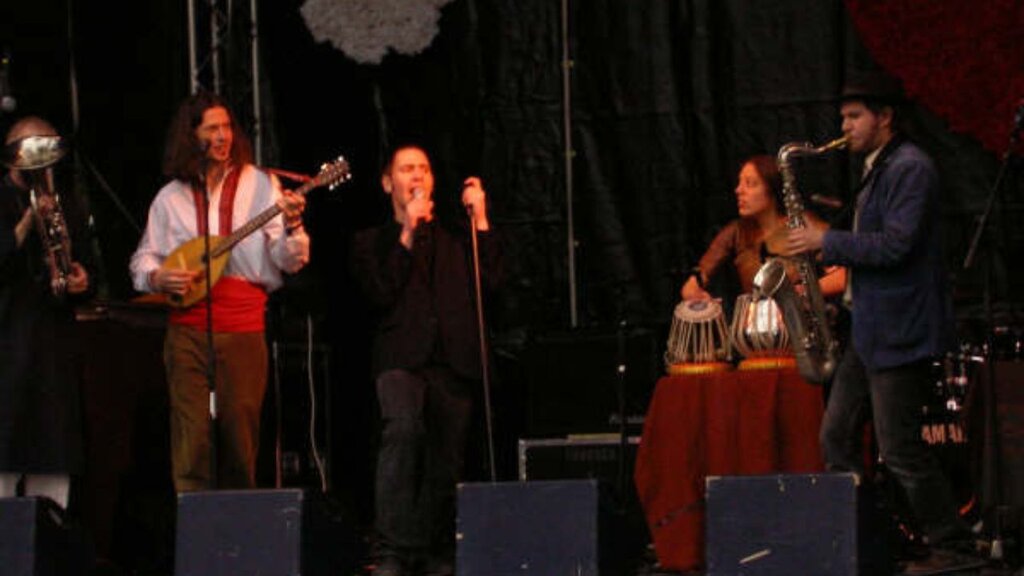
PHOTO Personal Archive
"The most important thing is not to take things too seriously – after all, we are Lele Lele," Dinchev adds with a grin. His warmth and easy manner have long been part of the group's appeal. Wherever they perform, the musicians organise open gatherings featuring lessons in Bulgarian folk dances, opportunities to try traditional instruments and an immersion in that uniquely Balkan sense of timelessness where the concerns of everyday life briefly fade away.
Alongside all this, Mihail Dinchev returns frequently to Bulgaria and works on projects that matter not only to him, but also to the preservation of the country's musical heritage.
"One such project is the documentation of authentic folk traditions. In 2025, through my own label, I released Pictures from Ravnogor, an album featuring 34 songs by the women's singing group Ravnogorski Biseri from a small Rhodope village. It is a genuine artistic document of their music, and it turned out beautifully.
The album was funded entirely through donations from around the world. There are no young women in the group, and these songs might otherwise have disappeared with time. The project follows a cinematic concept: alongside the music, listeners hear natural sounds from the village and the Rhodope Mountains, creating the feeling of walking through the area and coming across these women sitting on a bench and singing.
I am currently working on recordings by the late accordionist Veni Petkov from Vidin. Before he passed away, he entrusted me with two original compositions and two unreleased horo dances – a daichovo and a rachenitsa. We recorded them last summer and are now adding kaval and tambura parts. They too will soon be released in his memory."
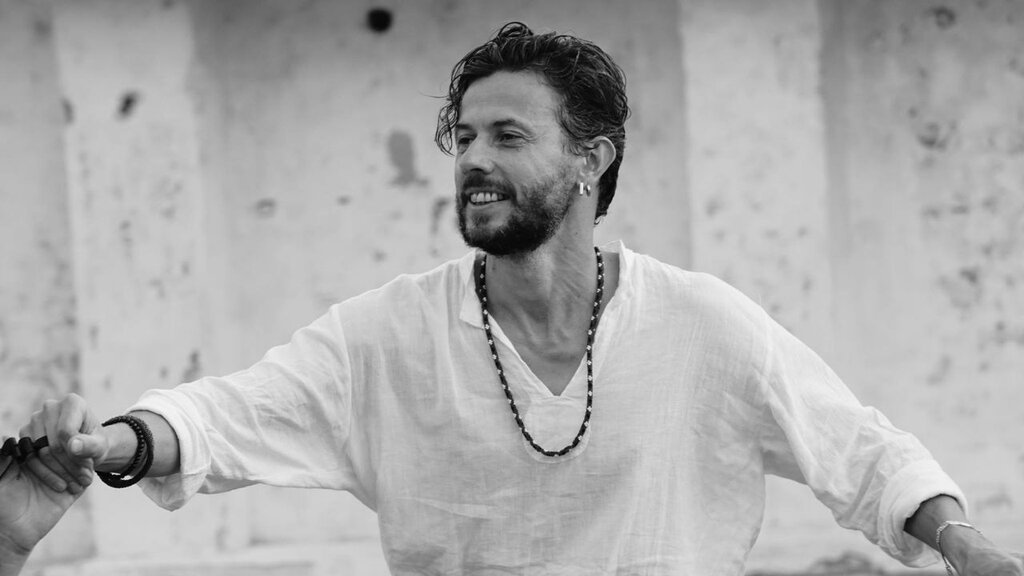
PHOTO Leon Allik
Alongside researching and documenting music, Dinchev also teaches it – both at a music school and at the First Bulgarian Sunday School "Yan Bibiyan" in Stockholm. "Yes, teaching is a major part of my life," he says.
He is one of the few specialists working with the Dalcroze and El Sistema methods, which use movement as a key tool in music education. Numerous studies, Dinchev notes, have demonstrated the benefits of introducing children to music from an early age.
At the end of June, Bulgarian audiences will have a chance to experience his approach firsthand at the Festival of Skilled Hands in the village of Busintsi near Pernik. On 20 June, he will appear for the first time in a duo concert with gadulka player Hristina Beleva, taking audiences on a journey through the beauty and diversity of Bulgarian folk music. The following day, he will lead a workshop on building Choncha and Tiger Delta kites.
In July, his music will become part of the kite festival on Sweden's island of Gotland. Audiences can also look forward to a documentary about Orchestra Lele Lele by journalist Georgi Toshev, as well as the ensemble's fourth studio album.
Editor: Elena Karkalanova
This publication was created by: Elizabeth Radkova