


Author
Mladen Petkov
The story of a lasting cultural partnership
Unique Bulgarian publications in the U.S. Library of Congress
The first three Bulgarian publications to enter the Library of Congress collection were a Psalter and Genesis from 1857 and a New Testament from 1850
Tuesday 16 June 2026 14:24
Tuesday, 16 June 2026, 14:24
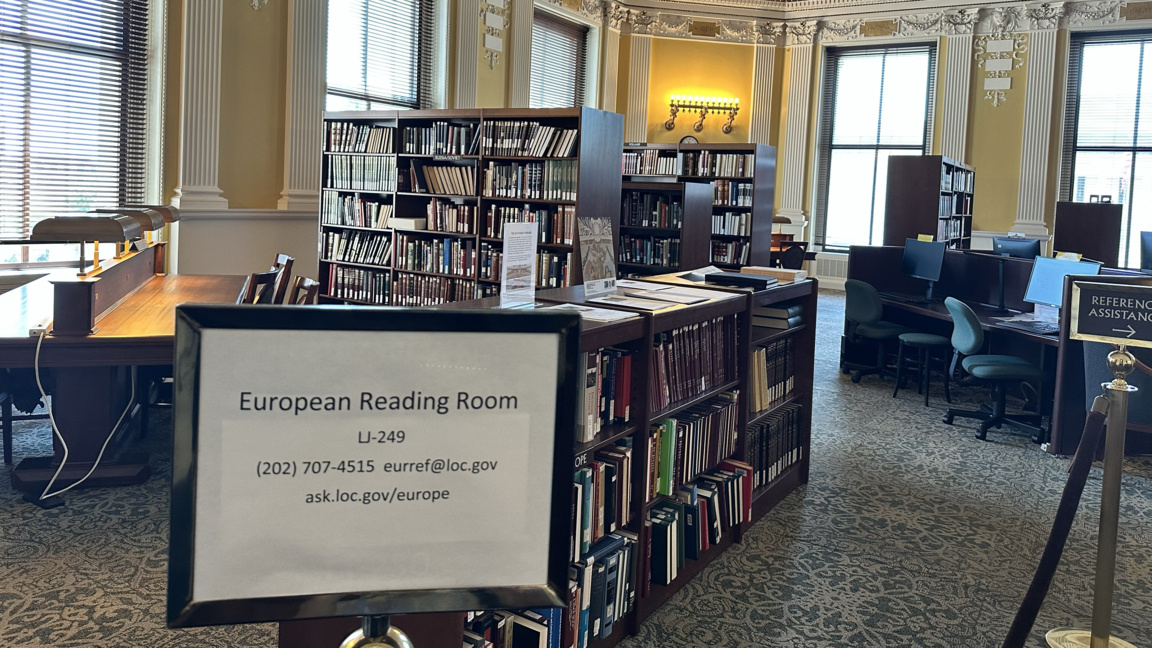
PHOTO Mladen Petkov
Font size
Bulgaria is represented in the Library of Congress in Washington with one of the richest national collections outside the country. Built through exchanges, donations, purchases and a partnership that endured even during periods of political tension, the collection stands as a testament to a long-standing cultural connection.
The first three Bulgarian publications to enter the Library of Congress were a Psalter and Genesis, both published in 1857, and a New Testament from 1850. They appeared in the library's catalogue as early as 1861, although there is no clear record of how they reached Washington. The true exchange of publications began at the end of the 19th century.
"The real beginning came in the 1890s," librarian Angela Cannon told Bulgarian National Radio.
"One of our earliest materials is a copy of Collection of Folk Creations, Science and Literature from 1897, donated to the Smithsonian Institution by Paul Leverkuehn, personal secretary to Ferdinand I (who ruled Bulgaria for 31 years, from July 7, 1887, to October 3, 1918 - editor's note). The copy bears the Tsar's own bookplate."
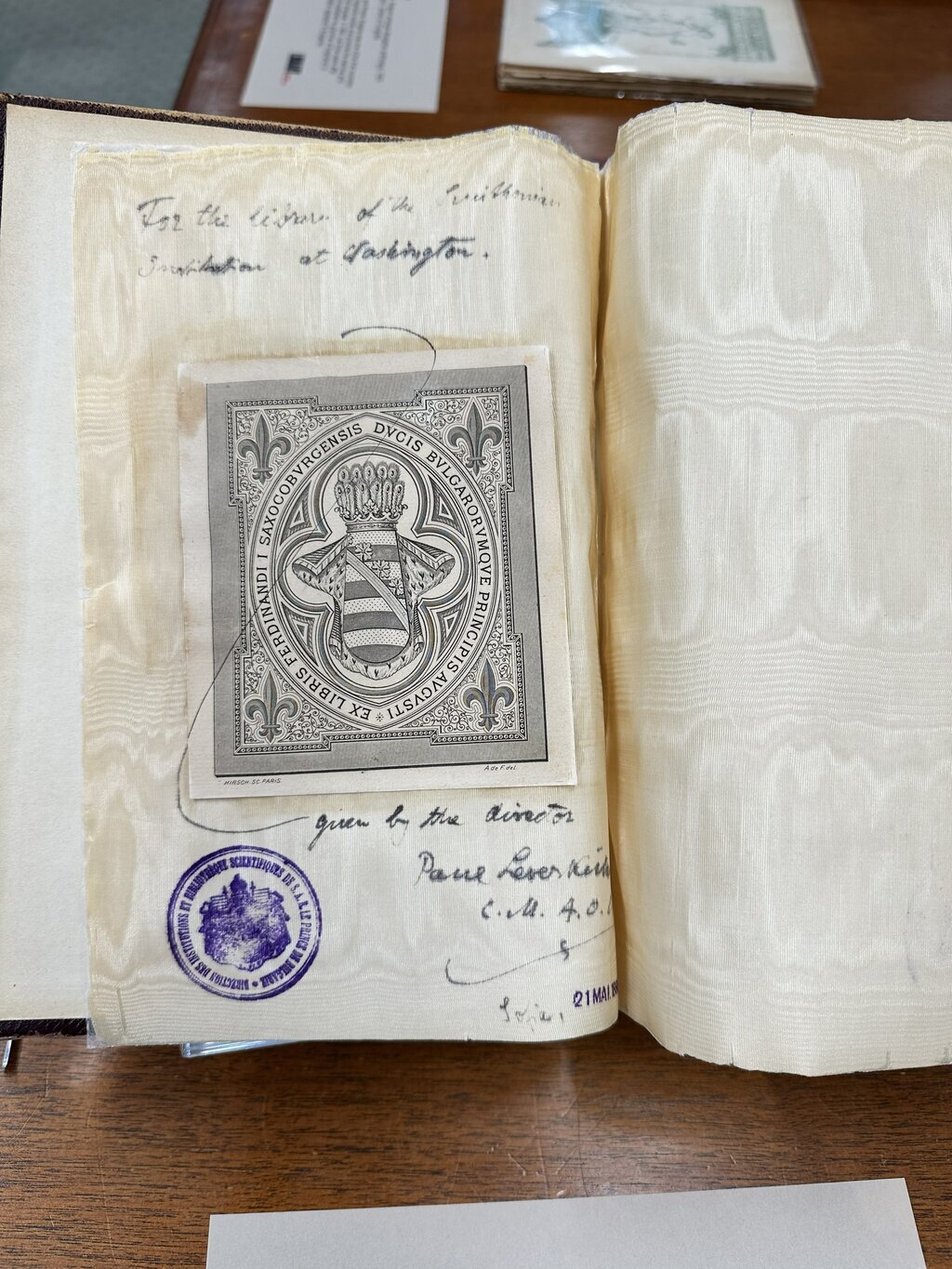
Collection of Folk Creations, Science and Literature from 1897 - the copy bears Tsar Ferdinand's own bookplate
PHOTO Mladen Petkov
Initially, Bulgaria was included in the Slavic Division, where the primary focus was on Russia. A shift in perspective came during World War II, when the Library's staff increasingly recognized that ignorance about developments in one part of the world could pose security risks elsewhere.
"After participating in two European wars, the Library began to realize that we needed to systematically collect information about all these countries," Cannon explains.
In 1946, on the eve of the Cold War, Bulgaria and the United States signed an agreement for the exchange of official documents, books and periodicals.
Under the agreement, the Library of Congress undertook to provide a set of U.S. government documents and to purchase one copy of every book listed in the American national bibliography. Bulgaria, in turn, committed to supplying official government documents, all publications listed in the Bulgarian National Bibliography, and selected periodicals and newspapers requested by the Library of Congress.
A collegial relationship developed and continued even during the 1950s, when Bulgaria and the United States suspended official diplomatic relations following the trial of Traicho Kostov, the former secretary of the Central Committee of the Bulgarian Communist Party who was accused of espionage and nationalism in a political show trial and subsequently executed.
The history of this cooperation is described in detail in Cannon's 2010 scholarly article, The Historical Development of the Bulgarian Collection in the Library of Congress from 1894 to the Present.
Particularly noteworthy is the correspondence between James Bennett Childs and Todor Borov, Director of the Bulgarian Bibliographic Institute. Despite the Cold War climate, the two maintained what amounted to a friendship. Their letters reveal candid discussions about topics such as library salaries. Childs also wrote openly about what he considered the continuing problem of Russian dominance within the Slavic Division.
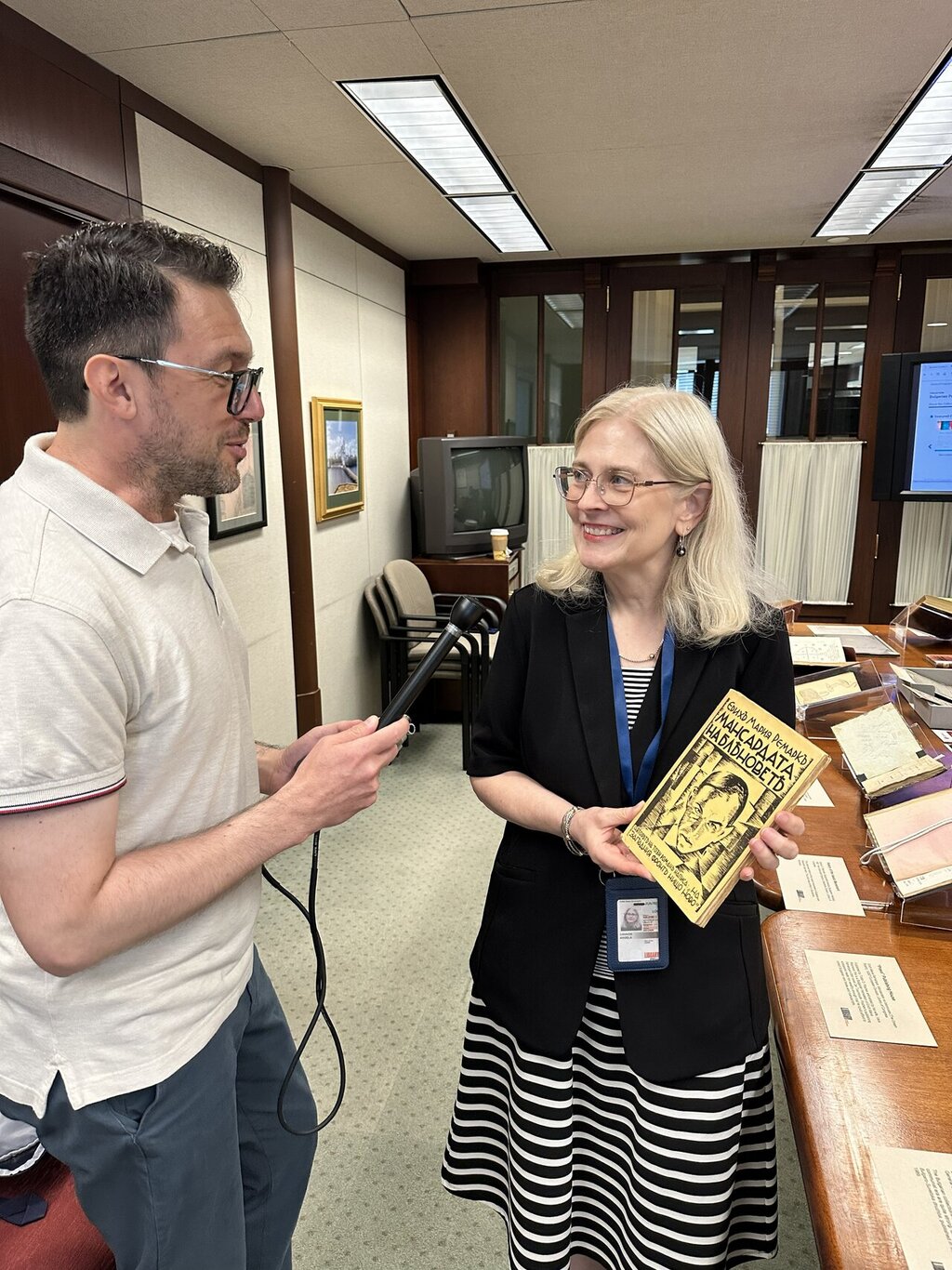
Angel Cannon and Mladen Petkov
PHOTO Mladen Petkov
One of the most valuable holdings in the Bulgarian collection is the private library of printer and publisher Todor Plochev.
"His passion was collecting rare books," Cannon notes. "He travelled throughout Bulgaria, speaking with people to find out whether they had hidden books that he could buy or exchange."
It remains unclear how his collection ended up in the United States. In 1949, the Library of Congress purchased it from his son for $3,000. The collection comprises approximately 700 titles, including the Kyriakodromion by Sophronius of Vratsa (1806), the famous Fish Primer by Petar Beron (1824), Bulgarian Grammar by Neofit Rilski (1835), and numerous works by Georgi Rakovski.
"I believe this collection is extraordinarily important to your culture and your history," Cannon says. "Whenever we show these books to Bulgarians visiting the Library, they are deeply impressed and delighted to see them."
Plochev owned the publishing house Pravo in Sofia. His wife, Vera Plocheva, a physician and activist in Bulgaria's women's rights movement, also worked there. The publishing house opened around 1918 but was nationalized in 1948.
Today, the Library of Congress holds only one publication from Pravo publishing house: a Bulgarian translation of a novel by Erich Maria Remarque, edited by Vera Plocheva.
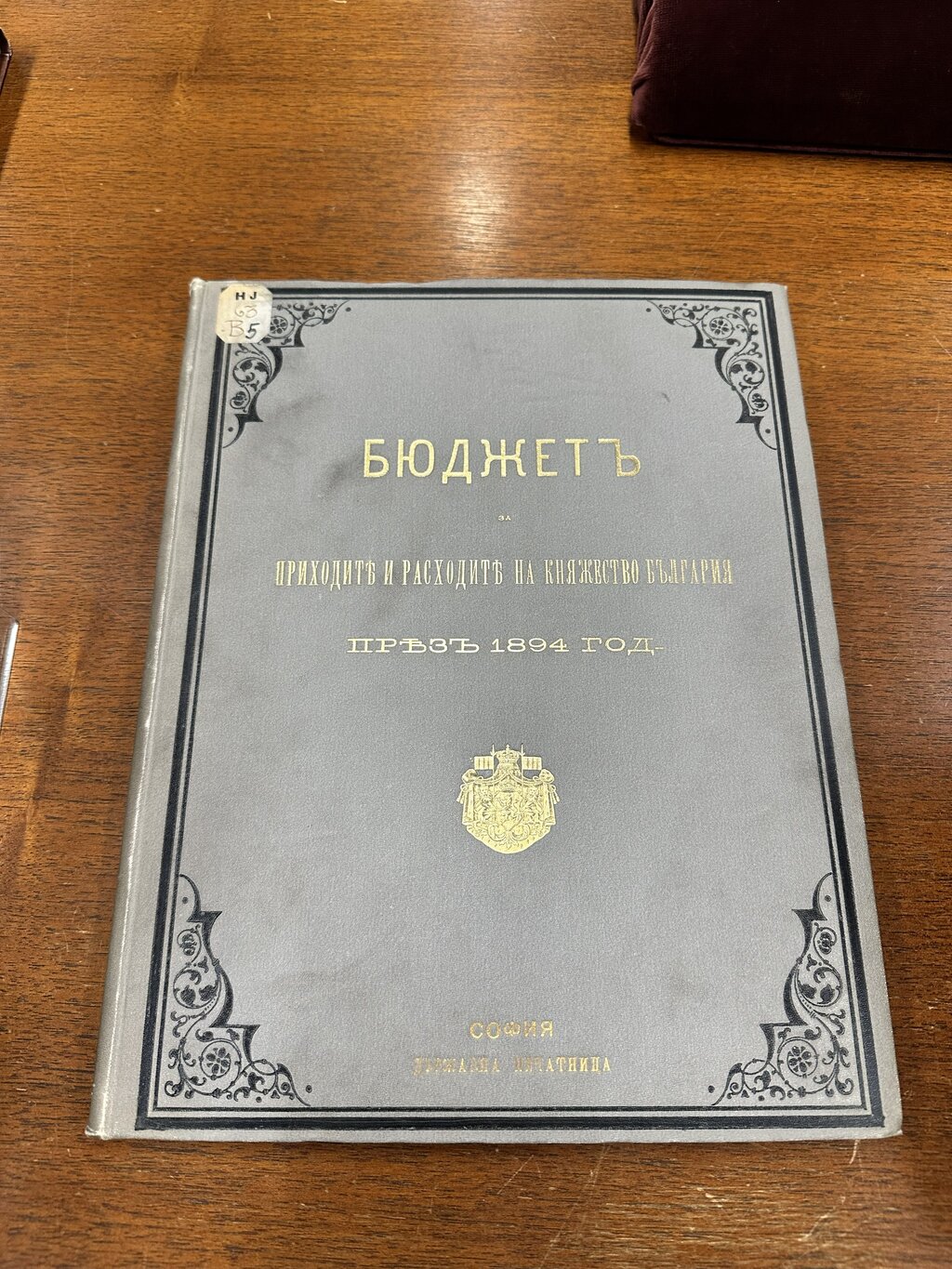
PHOTO Mladen Petkov
Another highlight of the collection is its archive of Bulgarian immigrant publications in the United States. In the early 20th century, Bulgarian immigrants began publishing their own newspapers and books. One of the earliest and most significant was Naroden Glas (People's Voice), first published in 1907 in Granite City, a centre of early Bulgarian immigration.
Among the more unusual items is a 1918 Bulgarian translation of a work by Leon Trotsky, which entered the Library's holdings through American intelligence services monitoring individuals with radical left-wing views in the United States.
"Many Eastern European immigrants held such beliefs, including many workers in Granite City," Cannon says. "The publication is in such excellent condition that I don't think anyone ever actually read it."
Not all Bulgarian immigrant publications of the period, however, leaned to the far left. In New York City, Bulgarian émigrés also published the anti-communist newspaper Free and Independent Bulgaria.
The Library of Congress actively seeks materials reflecting the diverse communities of Bulgaria. During one of her research trips to Bulgaria, Angela Cannon attempted to establish contact with the Chief Mufti's Office in order to obtain examples of minority voices. She even sought assistance from the U.S. Embassy in Sofia, but without success. Ultimately, the long-established partnership with the National Library helped her locate the magazine Muslims.
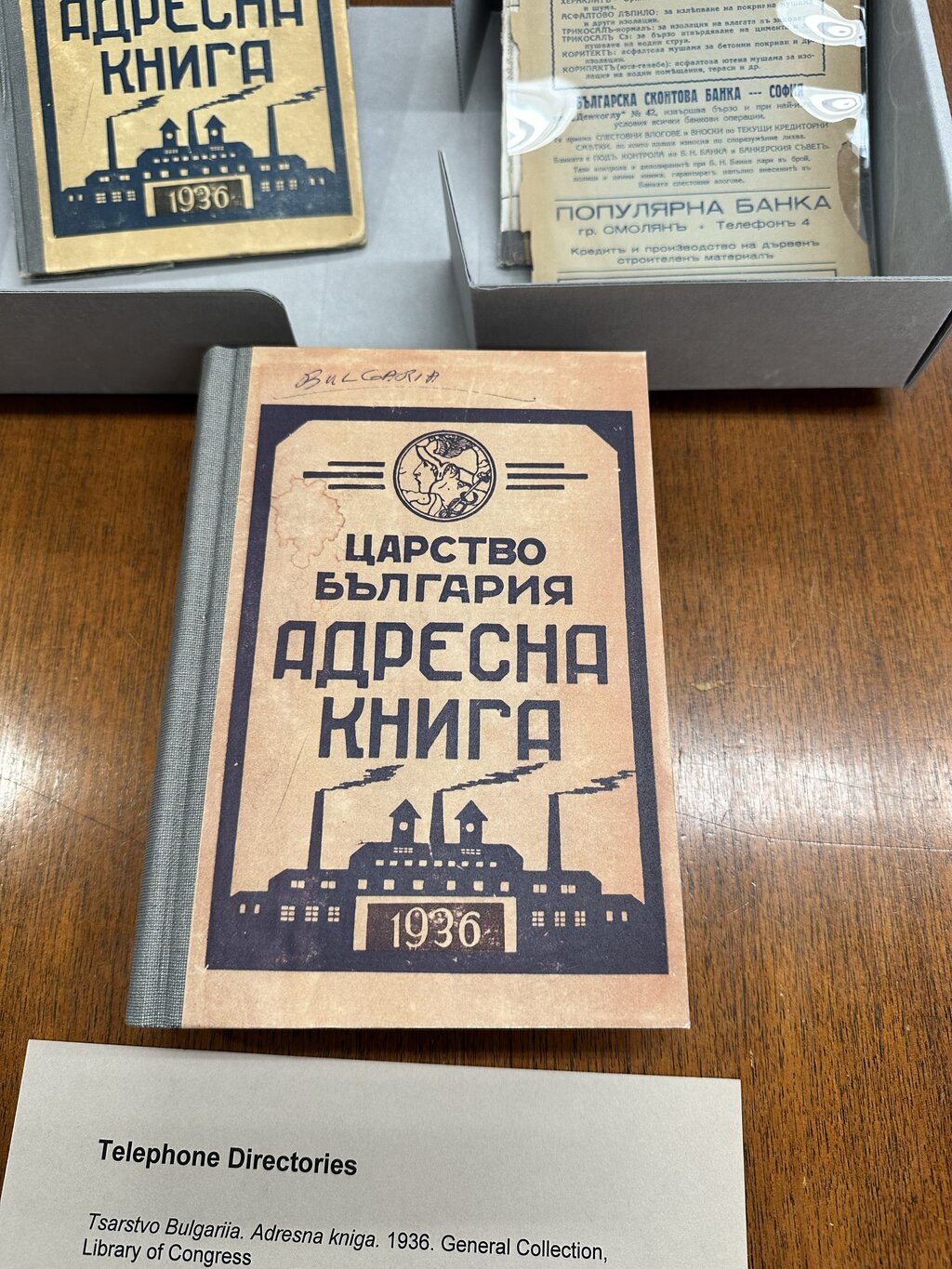
PHOTO Mladen Petkov
This collaboration, which predates the establishment of official diplomatic relations between Bulgaria and the United States, has created a living bridge between the two countries.
Each year, the Library of Congress receives approximately 3,000 items from Bulgaria, adding new dimensions and filling gaps in international knowledge about Bulgarian history, culture and national character.
The Bulgarian collection can be consulted in the European Reading Room of the Library of Congress. More information, including free access to digitized materials, is available through the Library's official website - https://www.loc.gov/.
Edited by E. Karkalanova
This publication was created by: Rositsa Petkova