


Author
Diana Tsankova
News
Bulgarian education faces a choice: managed evolution or collapse
"There are serious gaps in Bulgarian pupils' digital skills," says Prof. Roumiana Peytcheva-Forsyth
Sunday 21 June 2026 09:18
Sunday, 21 June 2026, 09:18
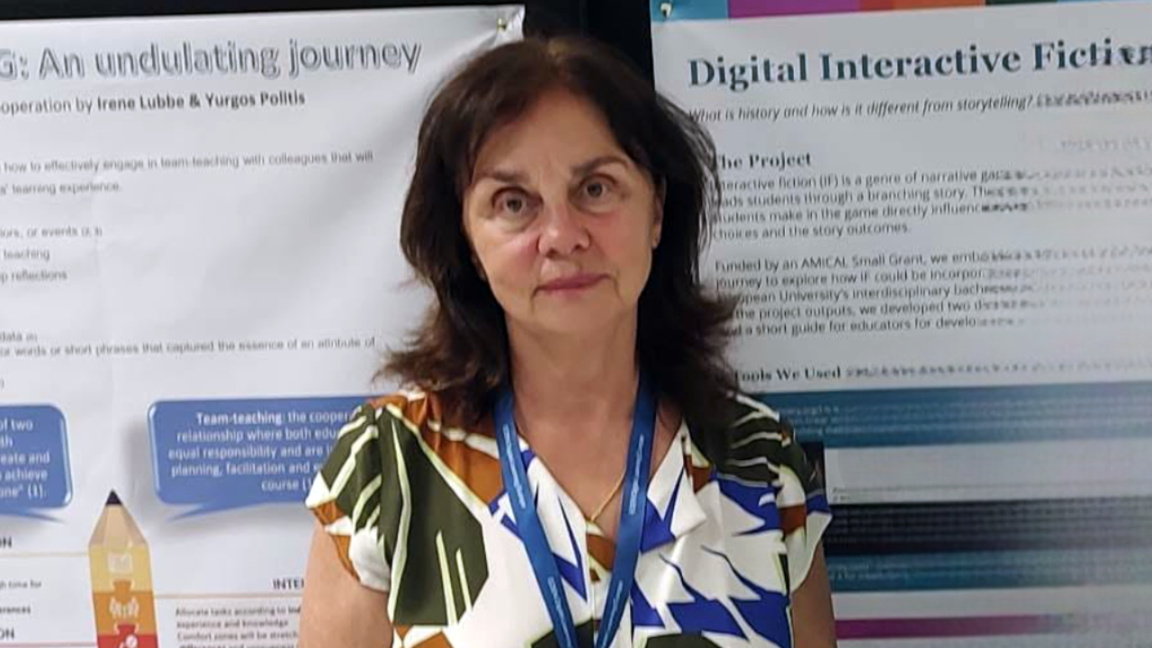
Roumiana Peytcheva-Forsyth
PHOTO Center for Educational Technologies - Sofia Univeristy
Font size
Data from international studies paint a troubling picture: Bulgarian teenagers rank near the bottom in Europe in terms of digital skills. This prompted researchers from Sofia University's St Kliment Ohridski to carry out a large-scale nationwide study to assess the state of digitalisation in secondary education, including teacher preparedness, and to propose informed policy solutions.
The project, Digitalisation of Bulgarian Secondary Education, headed by Prof. Roumiana Peytcheva-Forsyth, involved 350 schools across the country, 2,400 teachers, 1,200 pupils and 700 parents, and included observations of 250 lessons.
So, what did the research reveal?
"Most teachers rate their digital skills as basic," says Prof. Peytcheva-Forsyth. "When it comes to more advanced competencies – fostering critical thinking in the use of technology, encouraging pupils to work independently with digital tools to create content, solve problems and develop projects – many teachers feel ill-equipped and in need of support."
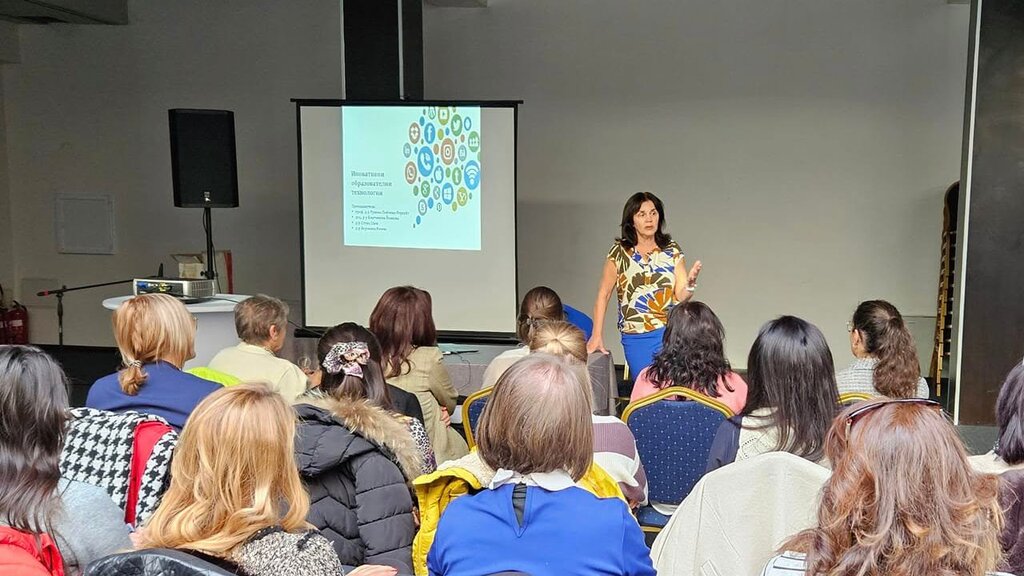
PHOTO Center for Educational Technologies - Sofia Univeristy
Pupils display a similar pattern. Most have mastered the basics, such as searching for information online and using familiar software and applications. At the same time, significant gaps become apparent when it comes to critically assessing sources and their reliability, distinguishing scientifically sound information, working with more sophisticated digital tools and behaving responsibly online.
As for schools, they tend to rate themselves highly, but in practice many either lack digitalisation strategies altogether or fail to implement them. As a result, examples of good practice are usually the product of individual teachers' initiative rather than a systematic approach.
"Digital technologies are still largely being used as substitutes for the teacher – to illustrate and present content, but above all to reinforce established ways of working," Prof. Roumiana Peytcheva-Forsyth continues. "In other words, the teacher teaches and pupils watch and listen. Practices that encourage children to think critically, develop projects and engage in interactive activities remain exceedingly rare, because many teachers are either unfamiliar with such approaches or do not feel adequately supported in their work with pupils. The widely held belief that modern equipment alone can bring about digital transformation in schools has simply not been borne out."
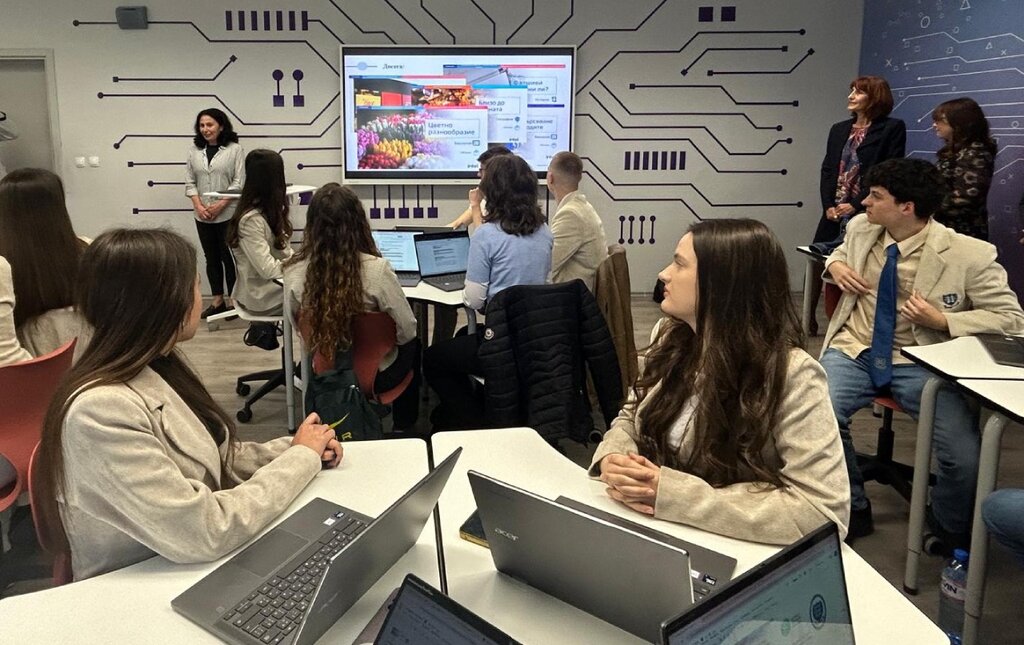
PHOTO Ministry of Education and Science
Prof. Peytcheva-Forsyth draws a stark conclusion:
"Our education system is not undergoing a digital transformation, because there are no serious indications that technology is changing the quality of teaching and learning."
The researcher points to another phenomenon – so-called digital inequality, closely linked to parents' own skills. Some parents possess high levels of digital competence and often limit the amount of unsupervised screen time their children are exposed to. Others, whose own digital literacy is lower, tend to encourage unrestricted use of technology, believing it will open the door to a better future in an increasingly digital society.
"Parents have to be brought into the process one way or another," Prof. Roumiana Peytcheva-Forsyth insists.
Can pupils acquire the digital skills they need in the foreseeable future, and who will make that possible?
"The Ministry of Education and Science, together with the Institute of Education, is launching a new three-year project aimed at introducing a competency-based approach in schools," Prof. Roumiana Peytcheva-Forsyth replies. "Yes, it can be done, provided that developing digital competences is not left solely to IT teachers. Teachers across all subjects need to be prepared to work together on the basis of an interdisciplinary approach and involve pupils in a wide range of creative activities. And because this is a shared endeavour, parents also need to be brought into the process, so they know what is happening in the classroom."
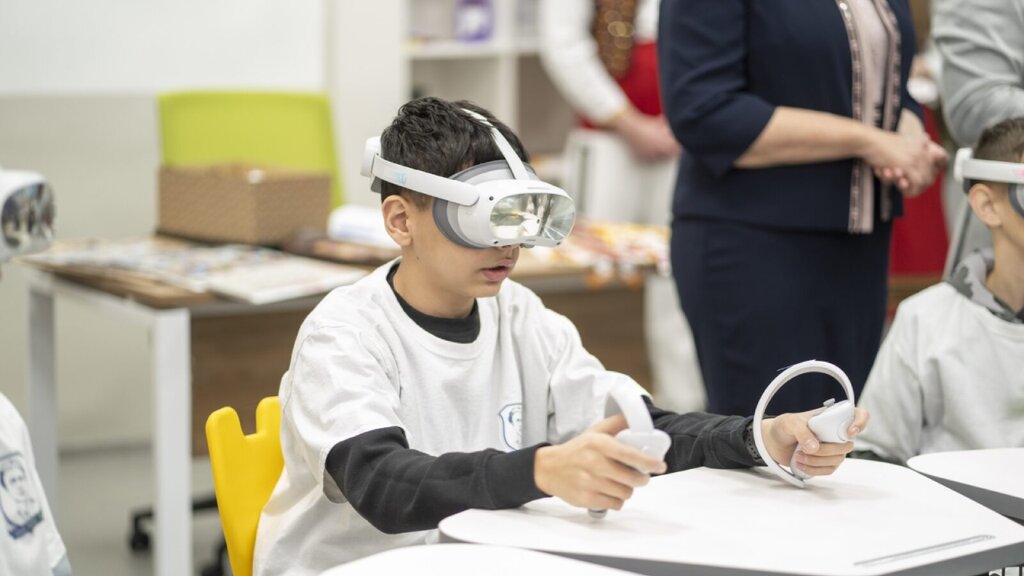
PHOTO МОН
Prof. Peytcheva-Forsyth uses the term "managed evolution" to describe the kind of change the Bulgarian education system requires.
"What is needed is a restart – a rethinking of all its components, so that it becomes clear how each of them should function both independently and in concert with the others in an era when artificial intelligence is capable of generating content, solving problems and performing tasks traditionally carried out by both teachers and pupils," she says.
Such a restart, she says, must be purposeful, with a clear vision and firm deadlines.
"Even if we do not feel equal to the task, the time is coming when it will become so necessary that we will simply have no alternative," Prof. Roumiana Peytcheva-Forsyth adds. "Once it becomes apparent that the education system can no longer fulfil its core mission – preparing young people to develop cognitively, socially and emotionally, and to become fully fledged citizens in a fast-moving economy – and that instead we are producing children harmed by excessive exposure to digital technologies, children who are not being encouraged to think, collaborate, communicate and flourish as human beings, then, if no action is taken, the system will collapse under its own weight. The system must find the strength at every level, and politicians, the Ministry of Education, universities training future teachers and parents must act in concert to rethink and redefine what education, learning and pedagogical science actually mean today."
PHOTO Reuters
Otherwise, young people risk being left ill-equipped for a labour market shaped by digital technologies and demanding flexibility, deep knowledge and strong cognitive skills.
"Without those qualities, people simply become nothing – individuals incapable not only of fulfilling their potential, but even of sustaining themselves economically and socially," Prof. Roumiana Peytcheva-Forsyth concludes.
Editor: Elena Karkalanova
This publication was created by: Elizabeth Radkova