


Author
Daniela Goleminova
News
Bulgarians in Brussels dance into summer with the 38th Big Horo
Monday 22 June 2026 17:22
Monday, 22 June 2026, 17:22
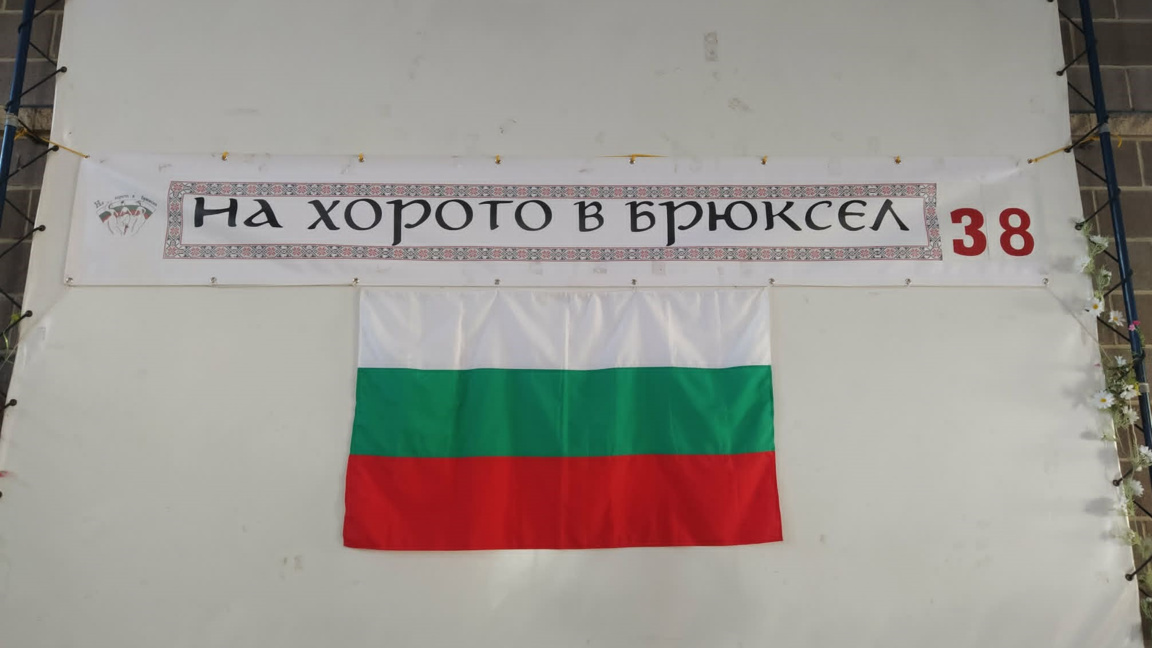
PHOTO Daniela Goleminova
Font size
For the 38th time, Bulgarians in Brussels came together for the "Big Horo". The event, which has been held for more than 15 years, drew dozens of Bulgarians, along with many people of other nationalities living and working in Belgium who share a love of Bulgarian folk dancing. Many compatriots also travelled to the Belgian capital from France, the Netherlands and Germany especially for the occasion.
Temperatures approaching 33°C did little to dampen spirits on Saturday. In a hall filled to capacity, dancers spent more than three hours performing horo from Bulgaria's different folklore regions. One of the highlights of the evening was a flash mob featuring the Thracian dance "Za Edna Karpa" ("For a Handkerchief"), which the Na Horoto v Bruksel (At the Horo in Brussels) club had presented at the Bulgarian folklore festival in Munich in mid-May.
"The feeling is one of togetherness. This is the 38th gathering in a row where we meet relatives and friends. Even though it's 33 degrees outside, which is unusually hot for Brussels, everyone is in high spirits. People have brought food and drinks. We've got food, water, wine... We dance horo from different parts of Bulgaria. It's an event we all look forward to," said Aneta Todorova.
"I'm really happy I came with my children. I want them to experience Bulgarian culture. I think folk dances and folk music are the best way for them to understand their roots and be proud of where they come from," said another Bulgarian woman, who had brought her two children to the Big Horo.
"We get together twice a year. Dance groups come from Paris, Eindhoven and different places in Germany. We meet to dance before everyone goes off on holiday. It's great fun and it's wonderful to see everyone and dance together. A person who dances is a happy person!" said one of the participants.
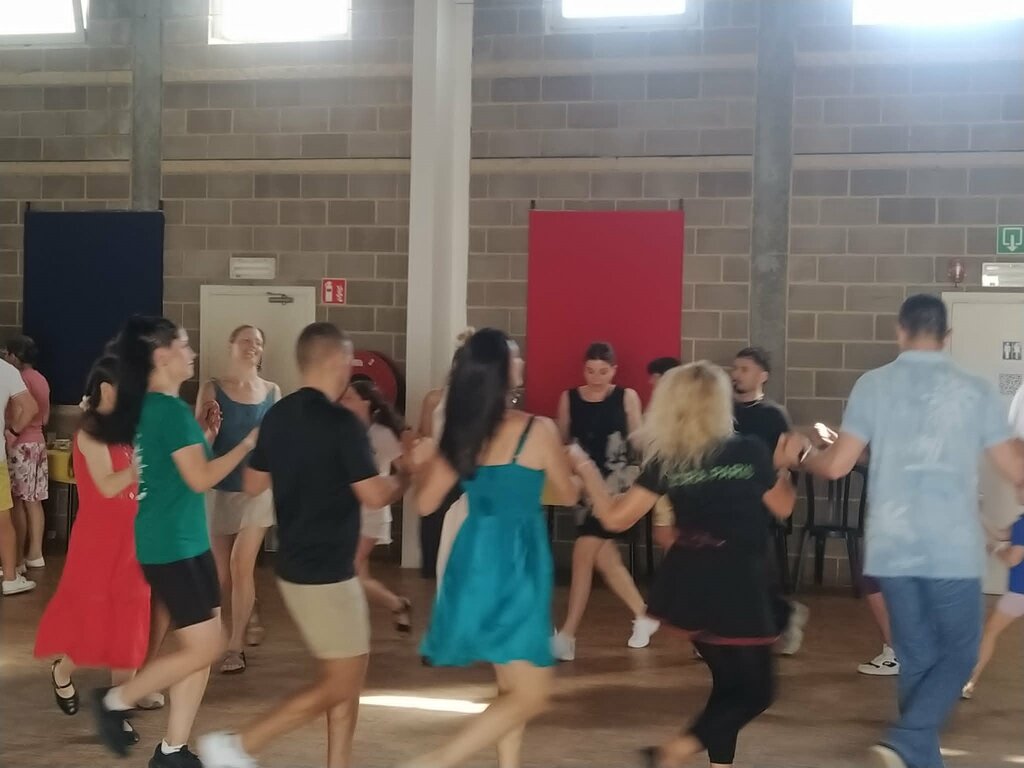
PHOTO Daniela Goleminova
"I'm really happy I came with my children. I want them to experience Bulgarian culture. I think folk dances and folk music are the best way for them to understand their roots and be proud of where they come from," said another Bulgarian woman, who had brought her two children to the Big Horo.
"We get together twice a year. Dance groups come from Paris, Eindhoven and different places in Germany. We meet to dance before everyone goes off on holiday. It's great fun and it's wonderful to see everyone and dance together. A person who dances is a happy person!" said one of the participants.
"The feeling is very profound, very emotional and incredibly uplifting, because these are the Bulgarian horo dances you miss so much when you live abroad. To throw yourself into this atmosphere, among your own people, with our smiles, glances, emotions and feelings… it's a wonderful way to welcome the summer and the holiday season," said another compatriot, visibly moved.
As on previous occasions, the event was organised by Maria Tsvetkova, who works as a translator for the European institutions and is also the long-time leader of the Na Horoto v Bruksel folk dance club.
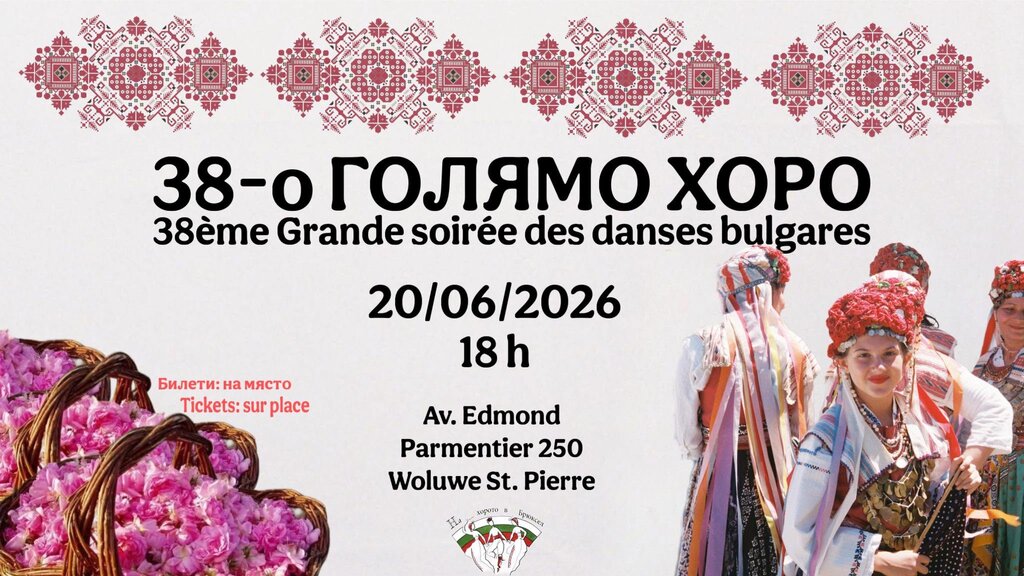
PHOTO Facebook / Na horoto v Bruksel
"Everyone is already in holiday mode and, before we all head off in different directions, those of us who love horo gather together. It's also something of an open lesson – a chance for the groups, especially the beginners, to show what they've learned. The mood is high despite the unbelievable heat, which, of course, is beyond our control. I never stop being surprised by the interest people show," says Maria Tsvetkova.
Special guests at the Big Summer Horo in Brussels were the young dancers from the first children's Bulgarian folk dance group in the Flemish town of Waregem, led by Gergana Kitancheva.
"Fifteen or sixteen children between the ages of five and twelve are active members of our group. The Big Summer Horo is our first appearance before an audience and the children are tremendously excited. They've been rehearsing every Saturday since 4 April. Every one of them is eager to learn Bulgarian folk songs and dances. We're not a school, but we've gradually turned into something like a community centre. We learn songs, rhymes and dances from every ethnographic region of Bulgaria. That's how we learn geography as well, because I teach them about each region.
My first task as their teacher was to make Bulgarian folklore something they truly enjoyed, and only then to encourage them to follow it. First it had to become interesting to them, and I think we've achieved that.
It's a mission beyond price, and there are children who will carry it forward. They're genuinely happy. I should mention that we use very little digital material in our lessons. We sing and dance. The children go to Bulgaria once or twice a year, and that's simply not enough to develop their language. Many of them were born in Belgium and don't instinctively think of themselves as Bulgarian. I have to congratulate the parents for encouraging them to attend events like this, and everyone speaks Bulgarian. Some children can even read and write in Bulgarian without attending Sunday school, which is a source of enormous pride for their parents," Gergana Kitancheva said.
Visitors also had the opportunity to take part in the Bulgarian-language book exchange initiative, "Read It and Pass It On". Sibila Stoyanova, a member of the Na Horoto v Brussels club, looked after the book stand and invited fellow Bulgarians to share books with one another.
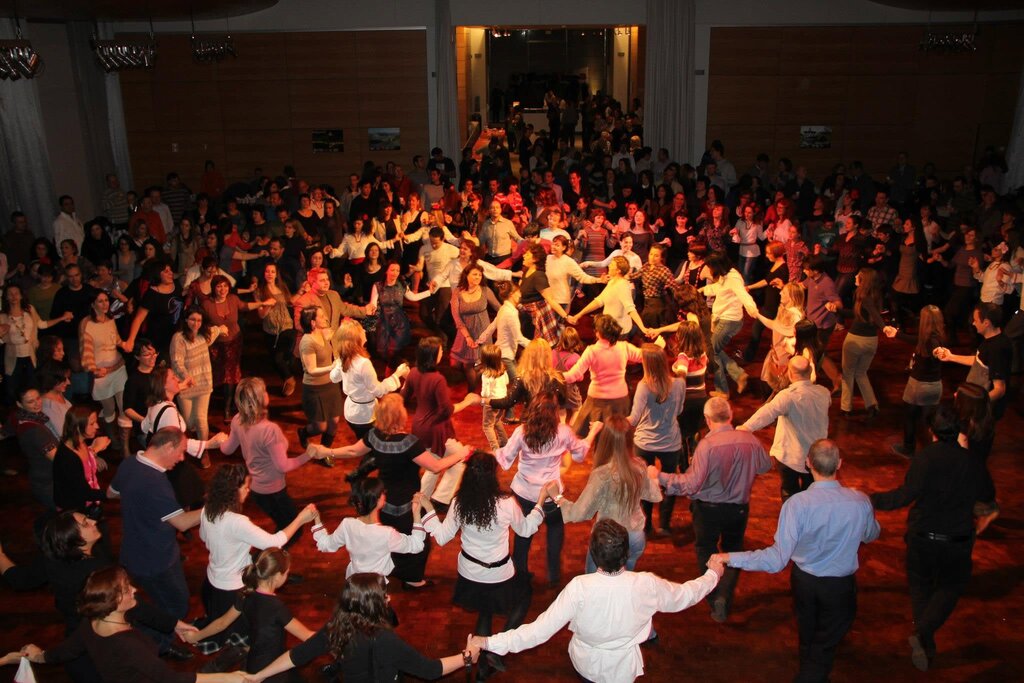
PHOTO Facebook / Na horoto v Bruksel
"The Read It and Pass It On initiative has been around for quite some time. It was started by Maria Tsvetkova, the club's leader, and I've joined in because I'd like to expand it. The idea is simple – everyone brings a book they've already read and no longer need at home and passes it on to someone else. We try to build a personal connection with readers. We ask them whether they enjoyed the books they borrowed and what they would recommend to friends. We want to encourage people to read in Bulgarian and gradually build a kind of library.
There is interest. Quite a few books changed hands. I'd like to make things more fun, so sometimes I choose a book 'blind' for someone. I saw the idea in some bookshops in Brussels and hope our compatriots will enjoy it too. We have children's books as well. I hope that after reading them people will come back and share their impressions. An initiative succeeds when you spark people's interest and get others involved," Sibila Stoyanova said.
Editor: Elena Karkalanova
This publication was created by: Elizabeth Radkova