


Author
Vladimir Mitev
News
Teaching Bulgarian in Banat
Summary of Svetlana Karadjova’s first academic year at the West University of Timișoara and her projects with the Bulgarian community in Stár Bišnov
Wednesday 1 July 2026 08:23
Wednesday, 1 July 2026, 08:23
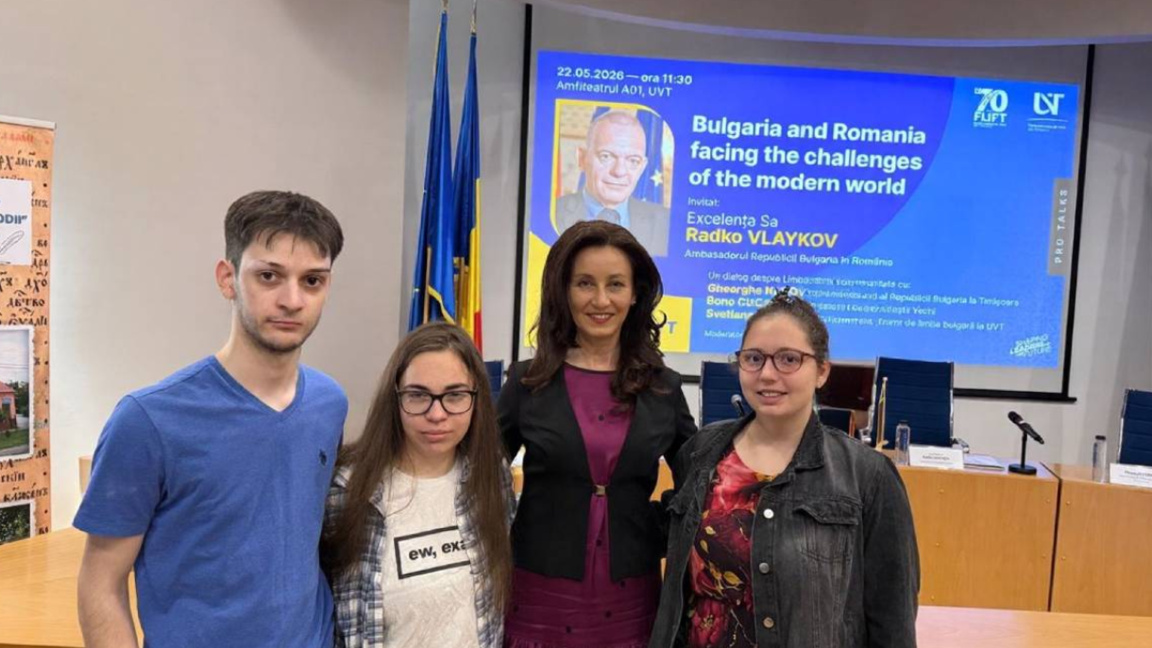
PHOTO Personal archive of Svetlana Karadjova
Font size
The first academic year (2025/2026) for Svetlana Karadjova as a Bulgarian language lecturer at the West University of Timișoara was marked by surprising interest. In an interview with Radio Bulgaria, she shared that she arrived in Romania without great expectations, but during her eight months of stay she managed to lay the foundations of an active and cohesive community. Different people gather to study the language – students (mainly ethnic Romanians), ethnic Serbs and representatives of the local community of Banat Bulgarians, who show diligence, interest and express hope to visit Bulgaria soon.

Svetlana Karadjova
PHOTO Facebook/ Svetlana Karadjova
Special chrestomathy with
Banat Bulgarian Texts
One
of the most significant achievements during the year is the
successful implementation of a specialized chrestomathy, prepared by
the Bulgarian Academy of Sciences (BAS), which collects texts written
by Banat Bulgarians and about the realities of Banat and the
community. Karadjova explains that in order to keep the attention of
Banat Bulgarians, who write in Latin alphabet and have lived in the region for
nearly three centuries, a specific approach is needed. Historical
periods of isolation have distanced them from the cultural life of
their homeland. For this reason, educational texts must resonate with
their spirit.
Svetlana
Karadjova points out that when teachers from Bulgaria were sent to
Stár Bišnov in 1948, the training did not achieve the desired
"cohesion" between the two versions of the language, since
the teachers at the time were not prepared for the specific local
culture. The gaps from the communist era when the right approach to
this conservative Catholic community was not found are today being
overcome precisely through texts related to their own history.
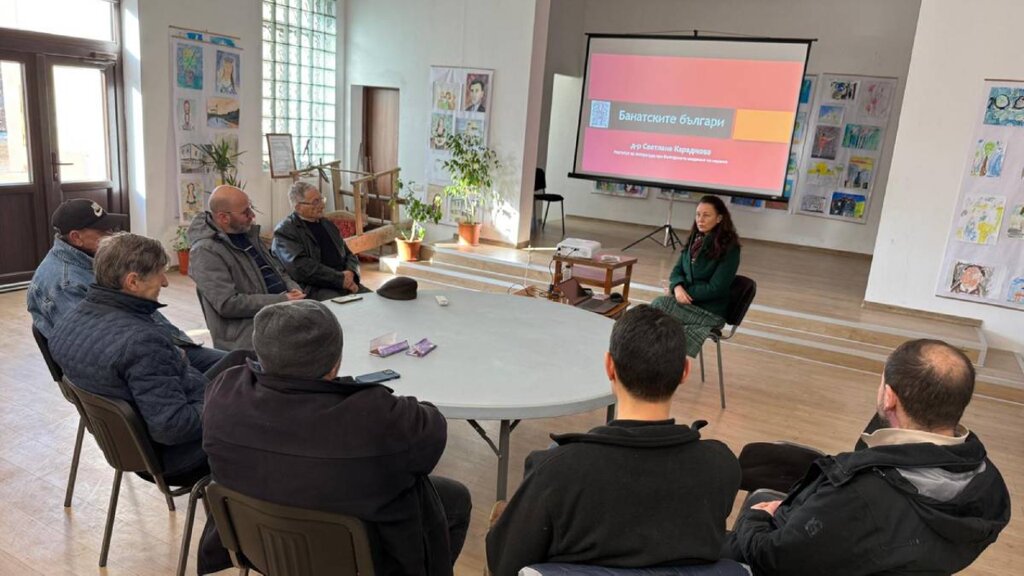
PHOTO Personal archive
"I saw that when such texts by Catholic authors or adaptations of texts by Jaku Ronkov, who is a representative of the Banat Bulgarians, are read, they perceive them with particular excitement and communication, as well as memorization during learning, are much easier. I am grateful to Chief Assistant Professor Dr. Magdalena Abadzhieva and the entire team of colleagues from the Bulgarian Academy of Sciences with whom we worked on this book, as it found its most natural environment," Svetlana Karadjova says.
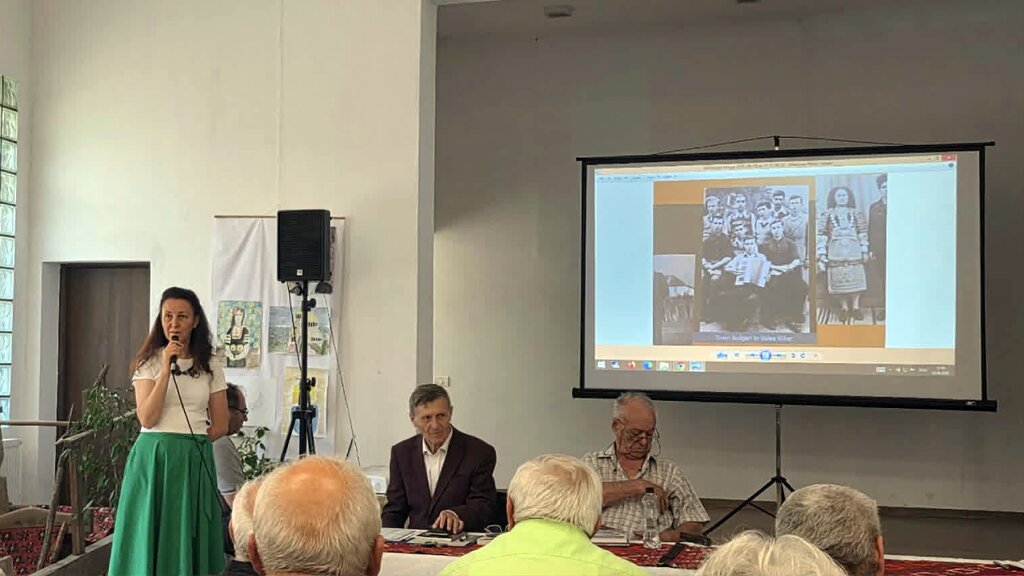
PHOTO Facebook/ Svetlana Karadjova
Bridges
to the local community and discussions in Stár Bišnov
In
addition to her academic duties at the university, Svetlana Karadjova
is also actively involved in the cultural life of the Banat
Bulgarians. The main scene of this activity is the village of Stár
Bišnov and
its cultural center "Karol Telbizov". There she organizes
meetings-discussions, covering topics from history, culture and
contemporary civic issues.
Recalling
the past months and the dynamics of these discussions, Karadjova
says:
"My
idea was to organize such talks, to examine different topics from
history, culture, various civic issues, to have a dialogue between
community representatives, mostly with the aim of activating thinking
and speaking on the topics. Debates on certain books, discussions on
certain topics, presentation of different interesting views – I
think all of this happened during these 11 meetings."
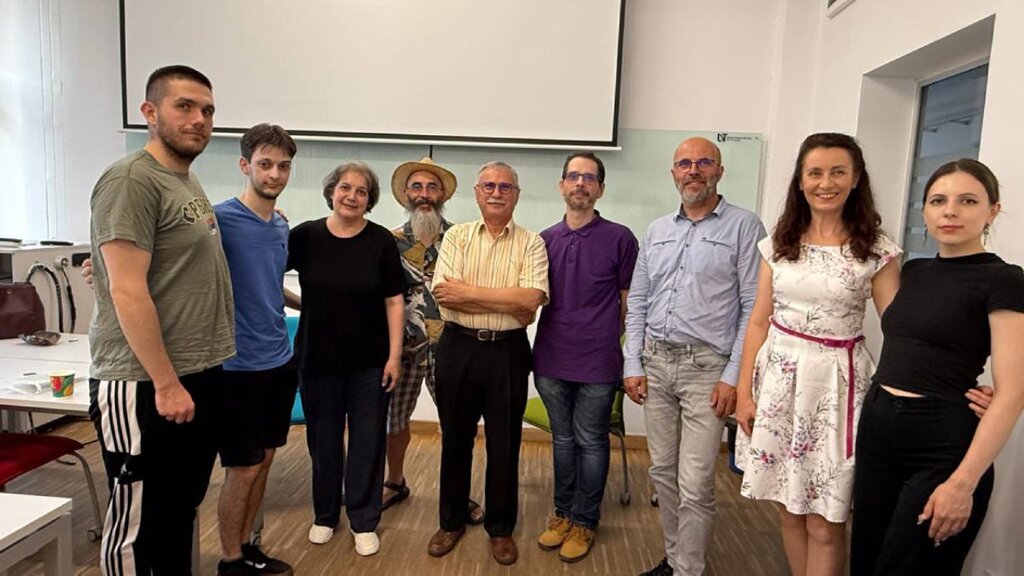
PHOTO personal archive
Literary
projects and diplomatic visits
The
academic year was also marked by several original events. At
Karadjova’s initiative, around May 24 – the officially recognized
Day of the Bulgarian Language in Romania – a large Bulgarian event
was organized at the university. On May 22, at the invitation of the
university administration, the Bulgarian Ambassador Radko Vlaykov was
a guest and held meetings with the administration and young people.
The
Bulgarian language also finds a place in the urban environment of
Timisoara through the poetry project "Poetic Journey: May in the
Tram". It also includes one of the best-prepared students -
ethnic Romanian Dorian Erina, who translated two Bulgarian poems - by
Ivan Vazov and Dimcho Debelyanov into Romanian. As part of the
initiative, leaflets with short excerpts of poetry in both languages
were distributed in public transport.
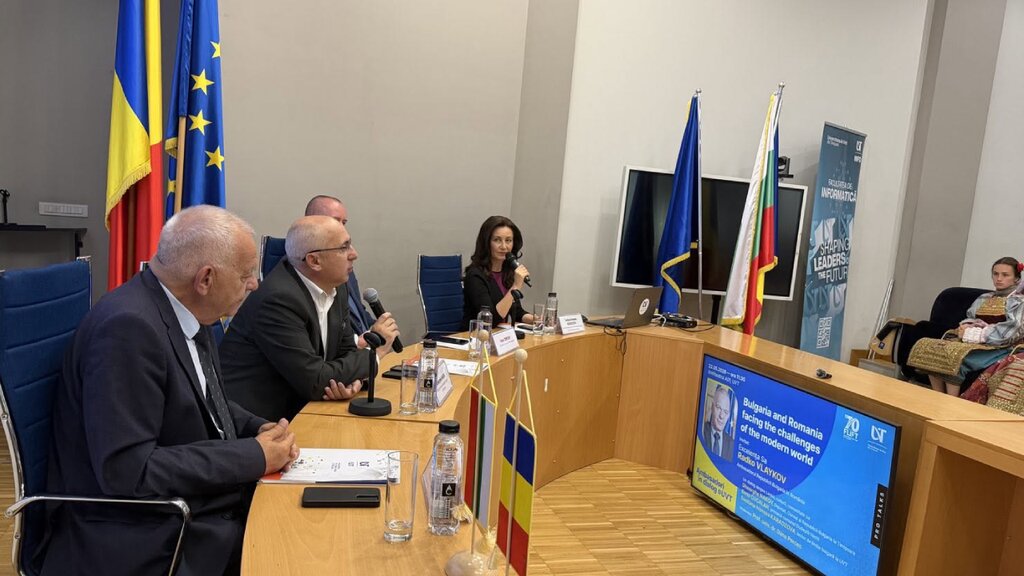
PHOTO Facebook/ Svetlana Karadjova
Summer seminars in Bulgaria
and a look to the future
The
success during the year is also expressed in opportunities for
students. Thanks to the Ministry of Education and Science of
Bulgaria, the University of Timisoara receives three scholarships for
summer language seminars.
Svetlana
Karadjova's work continues into the next academic year, with
even greater expectations as the subject has now become
elective for students from all faculties of West University. At the
end of the conversation, she outlines her vision for the future
development of the lectorate:
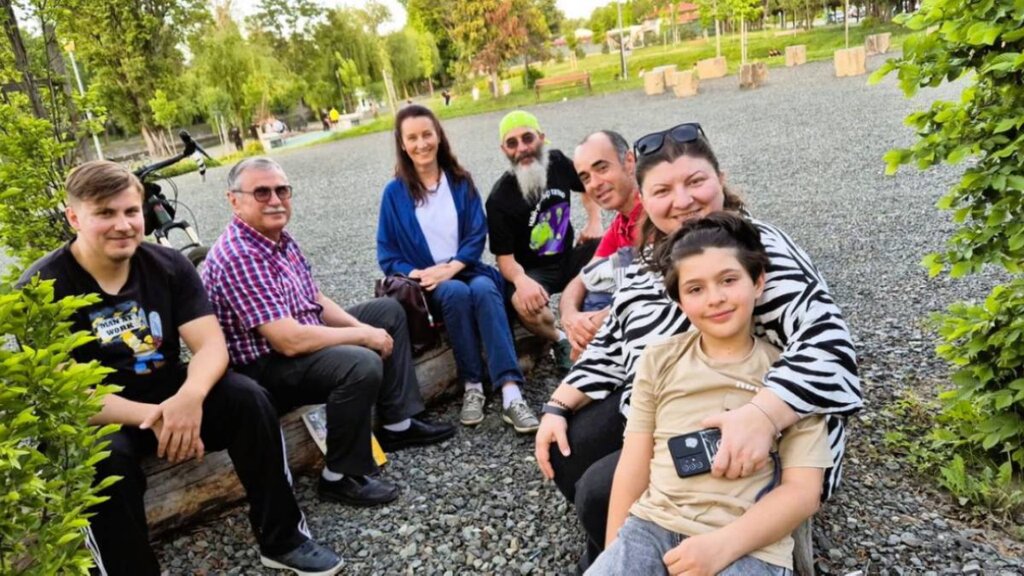
PHOTO personal archive
"I think that the Bulgarian language will also find its worthy place in the group of Slavic languages that are studied in the West University of Timișoara. I believe that there will be conditions for the development of more intensive cultural activity in the community of Banat Bulgarians. Their inclusion in the language of Bulgaria, which is currently somewhat exotic for them, will be made easier through various cultural events, which I hope will be more intense. The presentation of books or other initiatives of this kind will stimulate people to come to such gatherings to meet a culture that is both distant and close to them."
This publication was created by: Alexander Markov