


Author
Tsvetana Toncheva
News
"Master Manol" – a legend turned into a hit song by Olga Borisova
Friday 3 July 2026 16:30
Friday, 3 July 2026, 16:30
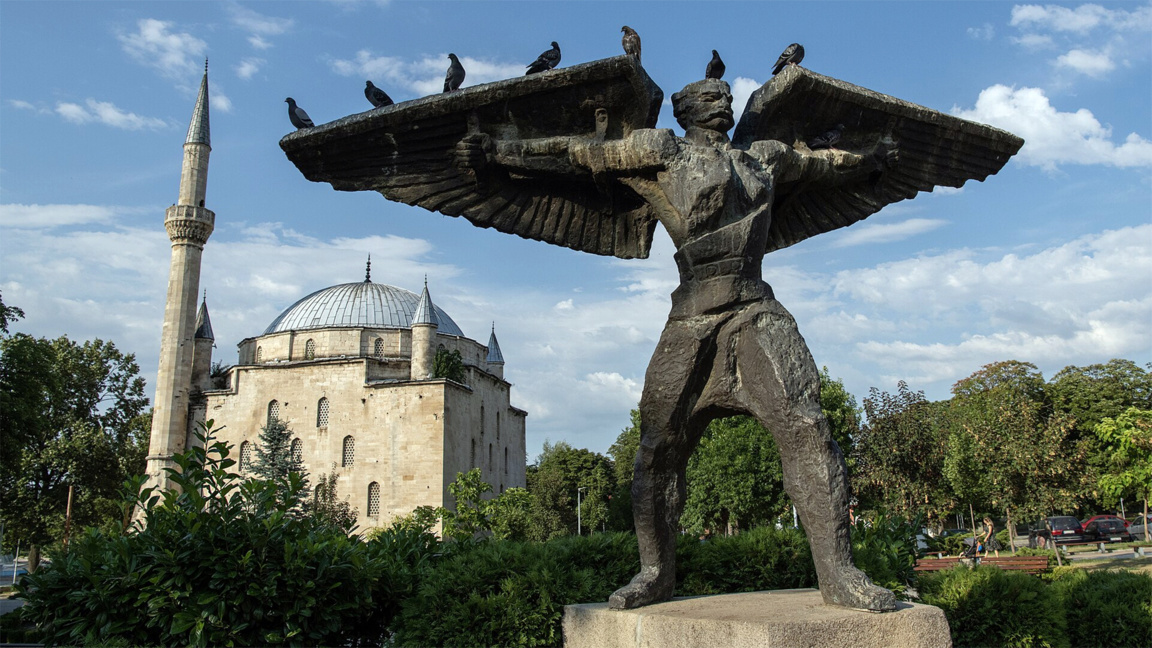
Monument to Master Manol in front of the Ibrahim Pasha Mosque in Razgrad
PHOTO bg.wikipedia.org
Font size
The legendary and controversial figure of Master Manol appears in many folk legends across the Balkans, Anatolia, and even the Caucasus. It remains unclear whether he was a real historical figure or a composite character, but legends describe him as an extraordinary builder faced with a fateful choice.
There are two main stories about the master builder: the first tells of a sacrificial “immurement”, while the second describes an incredible attempt to escape by flying. In some legends, Master Manol is associated with the Selimiye Mosque in Edirne. Folk belief holds that he was one of the principal builders of this architectural masterpiece, but that during its construction he was forced to convert to Islam. To preserve his faith, Manol crafted artificial wings and attempted to escape by flying.
The two legends– that of immurement and that of flight – carry deep symbolism: immurement represents sacrifice in the name of creation, while flight represents the pursuit of freedom. The motif of “immurement” refers to an ancient belief that, for a public structure such as a temple, bridge, or other construction to be strong and enduring, a human sacrifice was needed, with the victim becoming a guardian spirit. Immurement was said to have been carried out by builders leaving an opening in the structure and, when someone passed by, pushing the person inside and sealing them into the construction. In later times, it was the person’s shadow that was “built in” instead. It was believed that the person whose shadow had been immured would gradually weaken, become ill, and eventually die.
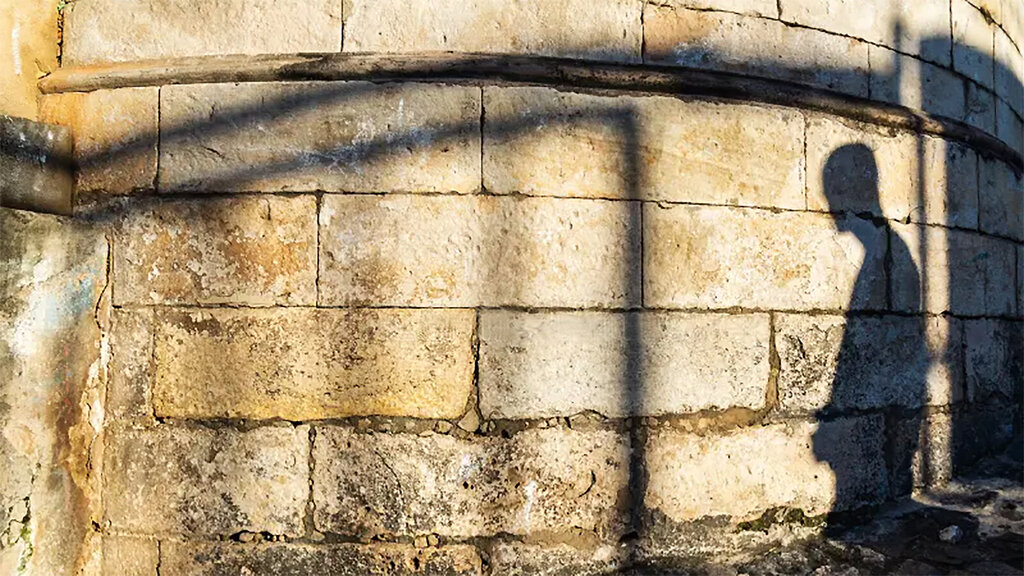
PHOTO Pixabay
According to a famous legend, three master builders are constructing a bridge, but nature is against them, – every night, the river washes away what they have built during the day. After agonizing deliberation, they decide to sacrifice one of their wives and agree that it will be the one who first comes to the construction site to bring food to her husband. However, the two older brothers warn their wives not to come. The youngest, Master Manol, is honest and conscientious, and he tells his wife nothing. The next day, she arrives at the construction site and is built into the bridge. The tragedy inspired many folk songs. Whether it reflects actual ancient rituals or is a symbolic story about the price of creation and the extent to which morality can be subordinated to a “higher purpose” remains unknown today. Similar motifs appear in other cultures, suggesting a universal theme rather than a specific historical event.
The spirit of a nursing mother who cries at night is still said to haunt the village of Nevestino in Kyustendil region. Local people recount that Manol’s wife, Struma Nevestа, arrived at the construction site carrying her baby and was built into Kadin Bridge (Bride’s Bridge), constructed in 1470 and linking the two sides of the village of Nevestino.
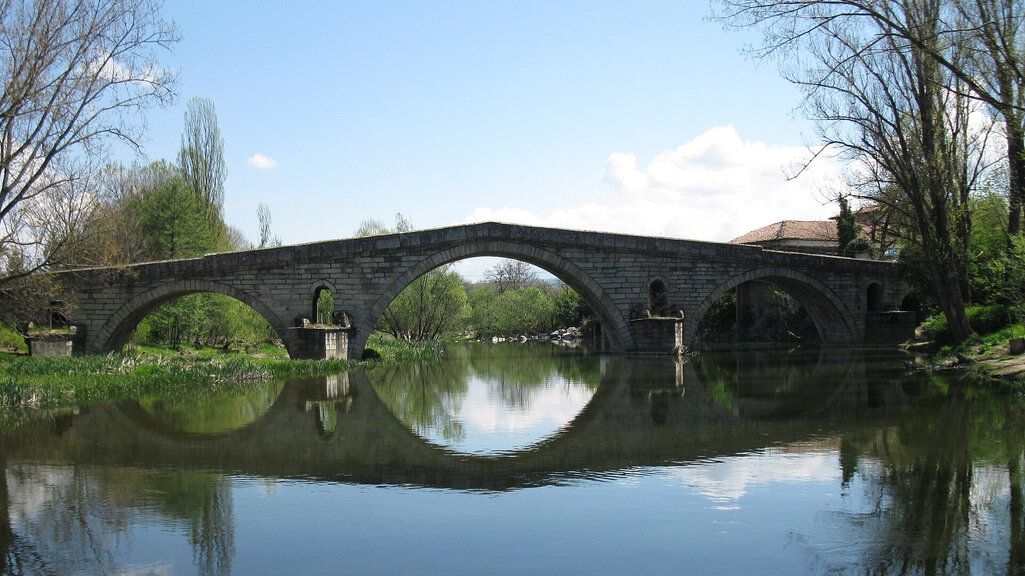
Kadin Bridge in the village of Nevestino
PHOTO bg.wikipedia.org
In the 1980s, the legend of Master Manol became a true sensation through a song adaptation performed by Olga Borisova, a leading star of the Bulgarian National Radio Folk Songs Ensemble, later known as “The Mystery of Bulgarian Voices”. In an interview with the Bulgarian National Radio, she says:
“I love this song very much. And, if I may say so without seeming immodest, I consider it my own work, because I read the legend of Kadin Bridge, which is in the village of Nevestino, over the Struma River. The story deeply moved me! Of course, the text was very long, and I decided to condense it into three verses – about the immured bride. The builders had all agreed not to tell their wives. The first one to bring food would have her shadow built into the bridge; the bridge would survive, but she would die. All the builders warned their wives, except Master Manol. An incredibly powerful song...”
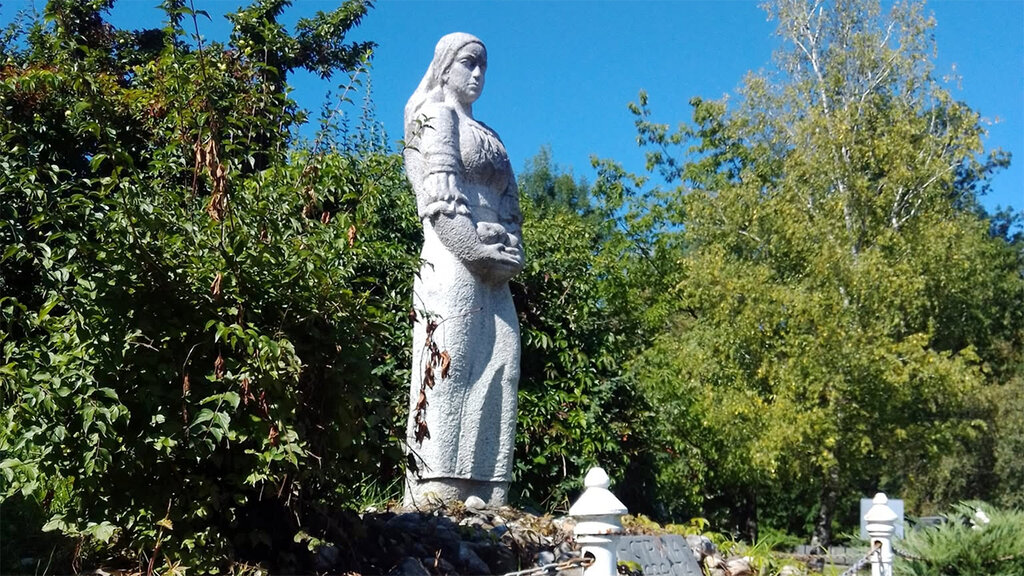
The sculpture of the Struma Bride in Nevestino
PHOTO Plamen Simeonov
Opposite the bridge, visitors can also see a sculpture of Struma the Bride, the woman said to have been immured in the bridge, created by the renowned Kyustendil sculptor Mite (Dimitar) Chudomirov. Struma the Bride holds apples, a fruit traditionally associated with the region, and is almost an exact replica of a famous painting by Vladimir Dimitrov – the Master. During her lifetime, Olga Borisova, who was also born in the Kyustendil region, was often compared to the young women immortalized in the portraits of the Master.
The song “Master Manol” – Olga Borisova’s signature piece – remains to this day her most moving and unforgettable performance. In an interview with Radio Bulgaria, renowned folk singer, researcher and journalist Daniel Spasov, a longtime close friend of the singer, recalls:
''She says that she could be considered, to some extent, a co-author of the song, because the lyrics were already popular, the melody was, in her view, extremely simple, and she enriched it further. She loved the song very much. When her final concert in Kyustendil ended, people began coming onto the stage to greet her with flowers and gifts, while the song was playing in a recorded version. She looked at me then and said: 'Let this be the song of the last celebration', She said nothing more. I immediately knew what she meant by that last celebration. And that is what we did. When the funeral service ended, we played the song.
Translated by Kostadin Atanasov
This publication was created by: Kostadin Atanasov