


Author
Elena Karkalanova
News
Bulgarian Studies in Athens: between “emotional madness” and cultural diplomacy
“Slavic Studies in Greece began with one Bulgarian,” says Guentcho Banev, lecturer at the University of Athens
Saturday 4 July 2026 14:35
Saturday, 4 July 2026, 14:35

Guentcho Banev
PHOTO Elena Karkalanova
Font size
In the lecture halls of the University of Athens, the decision to study Bulgarian often begins as an act of what students themselves call "madness", an irrational yet deeply emotional choice. More than a decade after the Bulgarian language lectureship was reestablished, it has evolved into a powerful instrument of cultural diplomacy, says Guentcho Banev, lecturer in Bulgarian language and literature.
In an interview with Radio Bulgaria, Banev explains that the modern history of Bulgarian language teaching at the University of Athens began around 2010 within the Department of Russian Language and Literature and Slavic Studies. Bulgarian is offered as an optional second Slavic language alongside Polish and Serbian, and interest has remained steady, with more than 30 students currently studying it.
Although students receive only three hours of instruction per week, sufficient to reach B1 proficiency, the most motivated continue with additional courses, eventually achieving C2 level. This enables them to work as translators, teachers and tour guides.
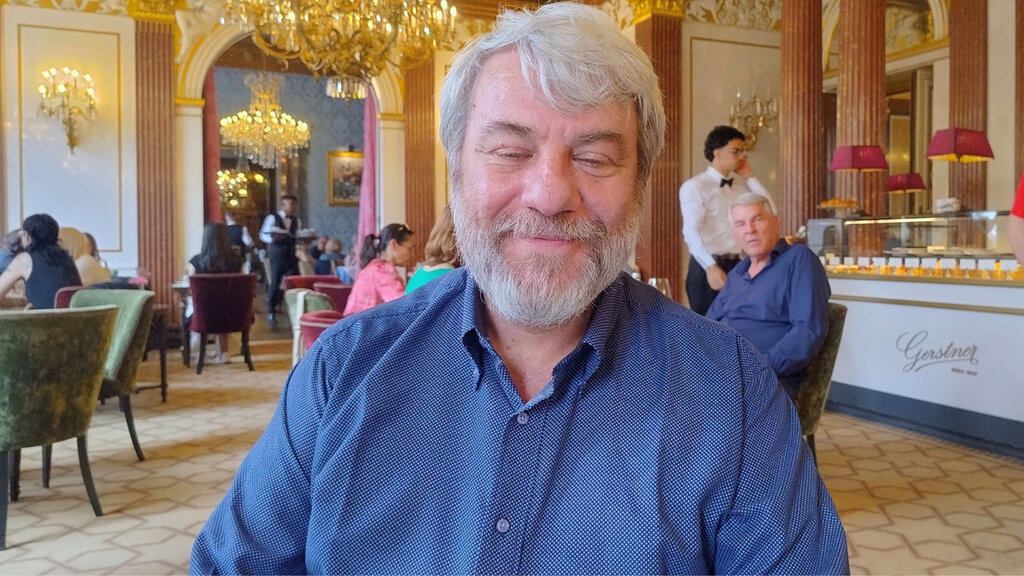
Guentcho Banev
PHOTO Elena Karkalanova
Why would a young Greek choose to study Bulgarian?
According to Guentcho Banev, the motivations range from practical career opportunities to deeply personal reasons. For him, however, the most important outcome is the lasting impression students take away from their experience with the language.
"I would say that every one of them becomes an ambassador of Bulgaria in Greece, regardless of their level of language proficiency. Whether a student learns Bulgarian well or exceptionally well depends on many factors, but what I strive to achieve is to create a warm feeling toward our country, our language and our people. Even if they never become fluent, they carry with them a part of the affection we have shared. In that sense, each of them becomes an ambassador in one way or another."
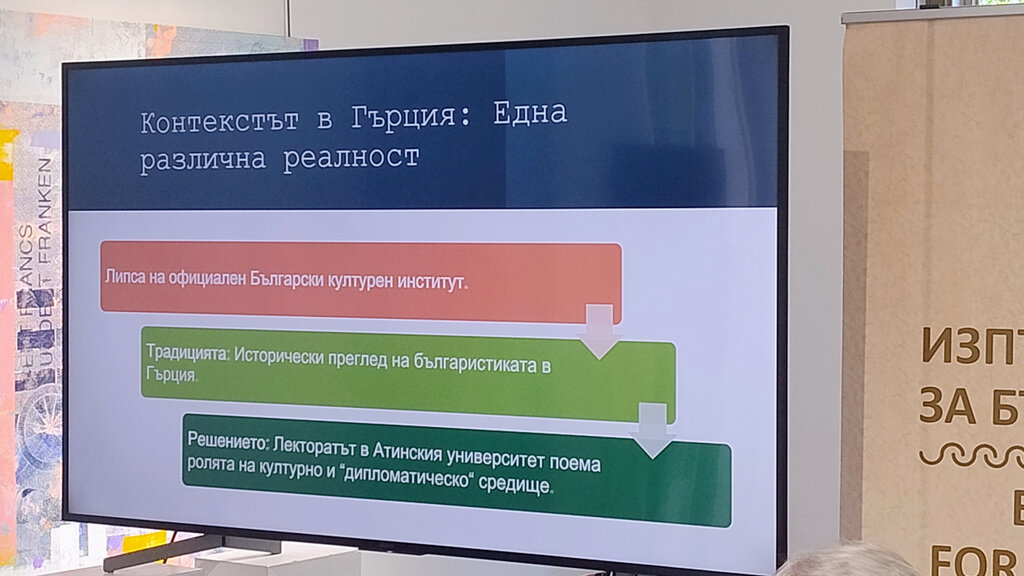
The lectureship in Bulgarian language at the University of Athens acts also as a cultural institution
PHOTO Elena Karkalanova
The Bulgarian lectureship in Athens as a cultural institution
In the absence of an official Bulgarian Cultural Institute in Athens, the Bulgarian lectureship has partially assumed that role. It has become a venue for meetings with Bulgarian writers while also developing research projects that reveal little-known historical connections.
"Not only does Bulgaria lack a cultural institute in Greece, but Greece also does not have one in Bulgaria. There are many reasons why the Balkan countries have not established reciprocal cultural centers, from stereotypes to technical considerations. Of course, every embassy has a cultural section and cultural attachés who do valuable work. But the richness and diversity of cultural relations are so great that the lectureship naturally takes on part of this mission. I actively seek contact with institutions and people in the host country at the deepest possible level. This is our way of practicing genuine cultural diplomacy on the ground. We invite Bulgarian authors, organize events with the Bulgarian community and Sunday schools, and participate in initiatives such as the Bulgarian Ministry of Education's 'Untold Stories of the Bulgarians' programme," Guentcho Banev explains.
One of the most fascinating discoveries made by Bulgarian studies students came through a joint project with the Bulgarian Sunday School in Athens dedicated to diplomat Dimitar Shishmanov. They found that Slavic Studies in Greece actually began with a Bulgarian.
In the 1930s, Stefan Gechev, then a young Bulgarian diplomat and translator at the Bulgarian Legation in Athens, enrolled in a course on Byzantine philology at the request of Bulgaria's Minister Plenipotentiary to Greece, Dimitar Shishmanov. Professor Nikos Veis recognized the young scholar's exceptional talent and invited him to teach Old Church Slavonic philology to his fellow students.
"This is how Stefan Gechev started an informal course in Slavic Studies, which eventually produced some of Greece's first Slavic scholars. When we shared with the university professors who now head the department that this important academic tradition had, in fact, begun with a Bulgarian, they were initially surprised, in a positive way. Later they embraced the idea and now present it themselves as a historical fact. This is a wonderful example of how the projects developed by the lectureship can reshape perceptions of Bulgaria and Bulgarians."

The activities of the lectureship in Bulgarian language at Athens University
PHOTO Elena Karkalanova
Looking ahead
Despite the global decline of the humanities, interest in Bulgarian Studies remains alive. International initiatives such as the Vienna Readings, which bring together students of Bulgarian from more than twenty university lectureships across Europe, have helped sustain that interest. However, enthusiasm alone is not enough, Guentcho Banev says:
"I am definitely optimistic, but this also places a great responsibility on us. We cannot simply expect people to seek out Bulgarian Studies on their own. We have to create the conditions and attract them. The real challenge is not bringing young people into the field, but keeping them engaged in the long term. Media, institutions and teachers all need to work together to create opportunities for these young people to develop professionally and to see a stable future in Bulgarian Studies."
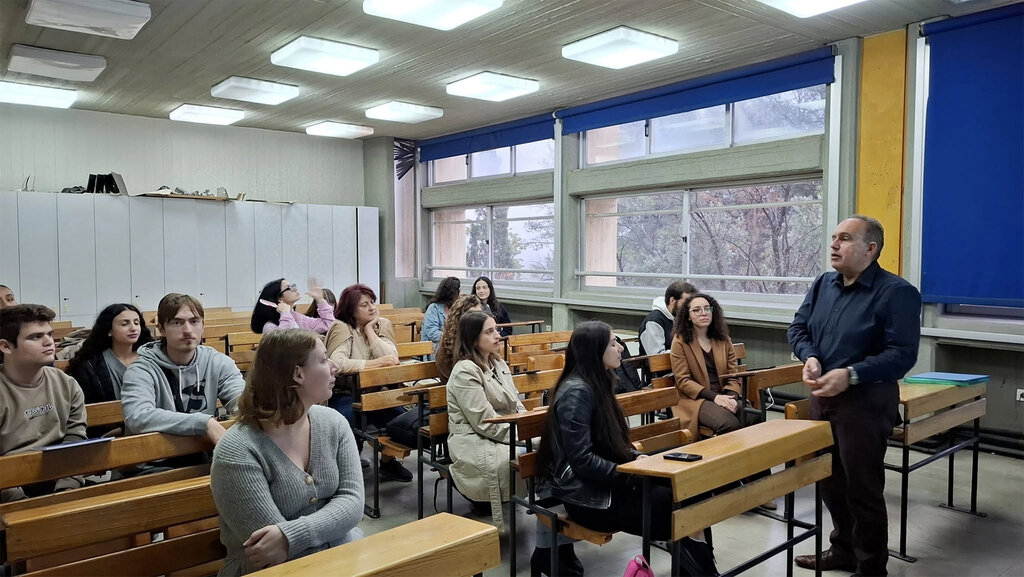
PHOTO Facebook/Guentcho Banev
For Guentcho Banev, the success of this mission depends on close cooperation between the lecturers who serve as ambassadors of the Bulgarian language abroad and the Bulgarian state.
After the summer, the focus will shift to the 11th Meeting of Bulgarian Studies Scholars from European Universities, scheduled for November. The event will mark the beginning of the second decade of the Vienna Readings initiative.
"Through these student meetings, we have had the joy of seeing first-year students grow into professionals. Some of them are already teaching Bulgarian in different parts of the world. They are few, certainly not a mass phenomenon, but these individuals are changing the picture. They are truly remarkable people," Guentcho Banev concludes.
Read also:
A lesson on Bulgaria... with the pupils of the Sts Cyril and Methodius Bulgarian School in Athens
The Bulgarian News Agency (BTA) opens a national press club in Athens
English: R. Petkova
This publication was created by: Rositsa Petkova