


News
Highlights of Bulgarian musical culture
Old Time Bulgarians – Bulgaria's most performed operetta
Friday 17 July 2026 16:05
Friday, 17 July 2026, 16:05
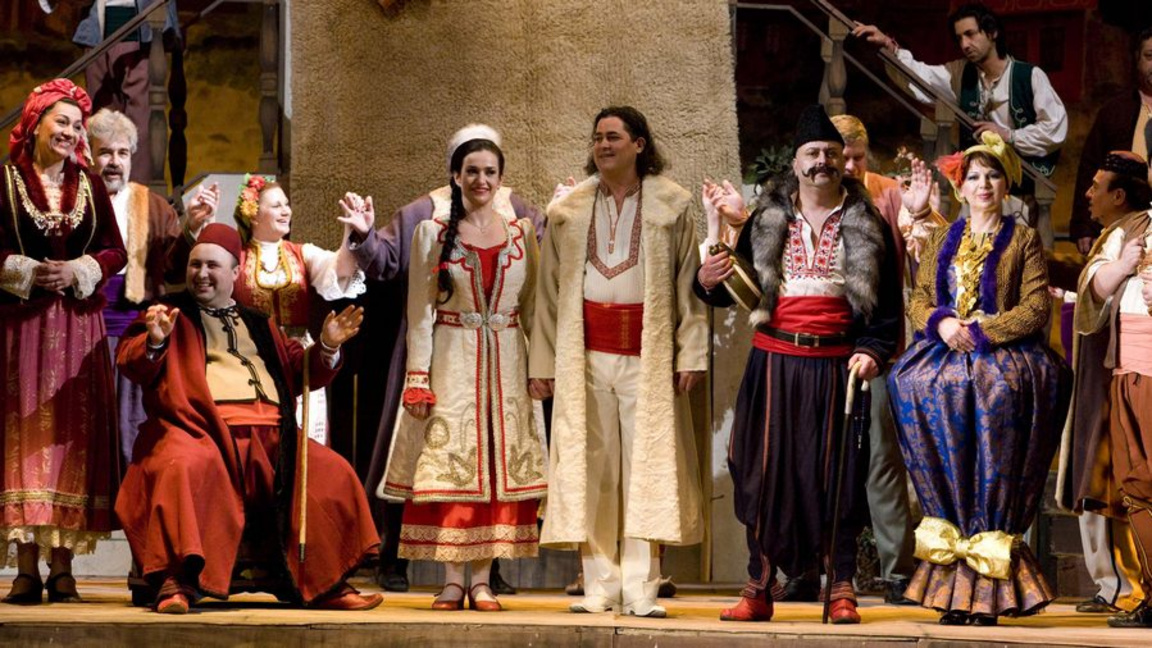
PHOTO National Music Theatre "Stefan Makedonski"
Font size
Old Time Bulgarians is the best-known and most enduring work by the renowned Bulgarian poet, writer, journalist, ethnographer and national revival figure Lyuben Karavelov (1834–1879). Set in the 1850s in his native town of Koprivshtitsa, it tells a distinctly Bulgarian, light-hearted version of the timeless Romeo and Juliet story.
When two wealthy and respected townsmen, Hadzhi Gencho and Dyado Liben, discover that their children, Lila and Pavlin, have fallen in love, they agree to arrange their marriage. But as the wedding plans take shape, the two fathers quarrel so fiercely that they break off the engagement before the whole town. Refusing to let their parents' feud stand in the way of their happiness, the young couple challenge the rigid patriarchal traditions that govern their lives. Like any good comedy, the story ends on a happy note: with Dyado Liben's help, the lovers are finally married, while the remorseful Hadzhi Gencho soon becomes a regular guest in his new in-law's home, where he develops a particular fondness for his host's excellent wine.
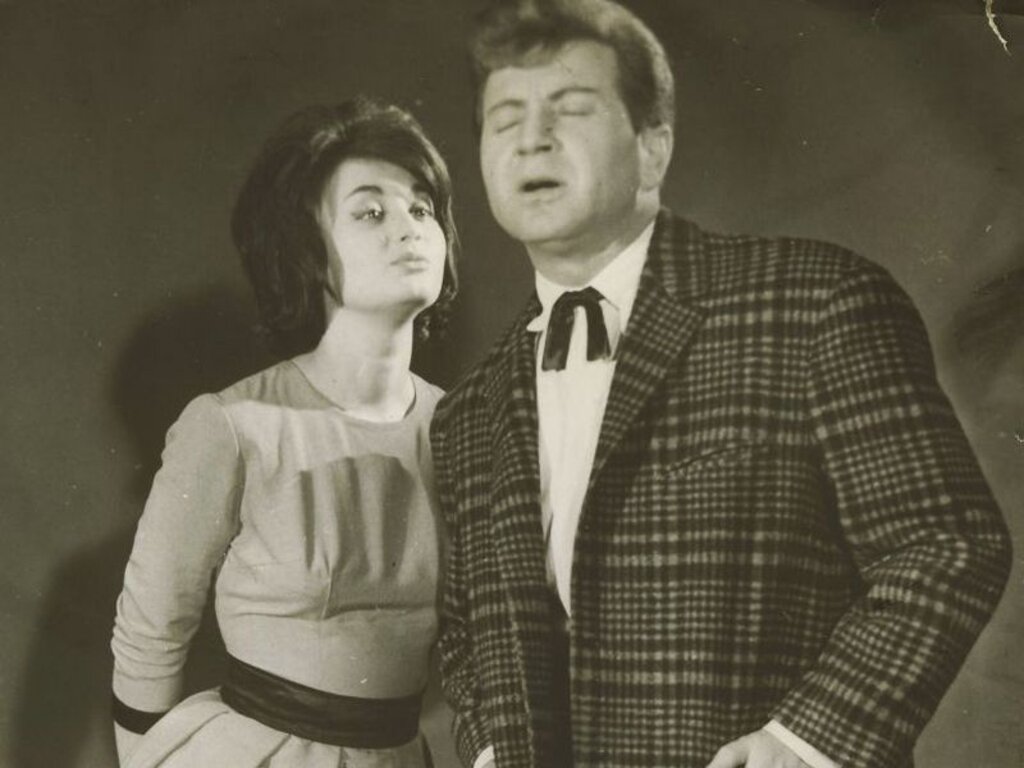
Lilyana Kisyova and Vidin Daskalov, the legendary duo of the State Music Theatre, perform the famous second duet of Yanka and Ivan from Asen Karastoyanov's operetta Old Time Bulgarians.
PHOTO BNR
Written specifically for the State Music Theatre (today the Stefan Makedonski National Music Theatre – the only theatre in Sofia that has specialised in operettas and musicals for more than a century), Old Time Bulgarians premiered on 24 January 1959. Its composer, Asen Karastoyanov (1893–1976), studied at the Berlin Academy of Music before pursuing advanced training in composition and music theory at the École Normale in Paris and the Leipzig Conservatory. Together with librettist Kosta Raynov, one of Bulgaria's leading operetta actors, he created the country's first operetta based on a classic work of Bulgarian literature.
By the end of the twentieth century, Old Time Bulgarians had firmly established itself as a classic of the Bulgarian operetta repertoire, with more productions and performances than any other work in the genre. It also earned critical acclaim during tours in Russia and Czechoslovakia in the 1970s. The most recent production of this enduring favourite premiered at the Varna State Opera in early March 2026.
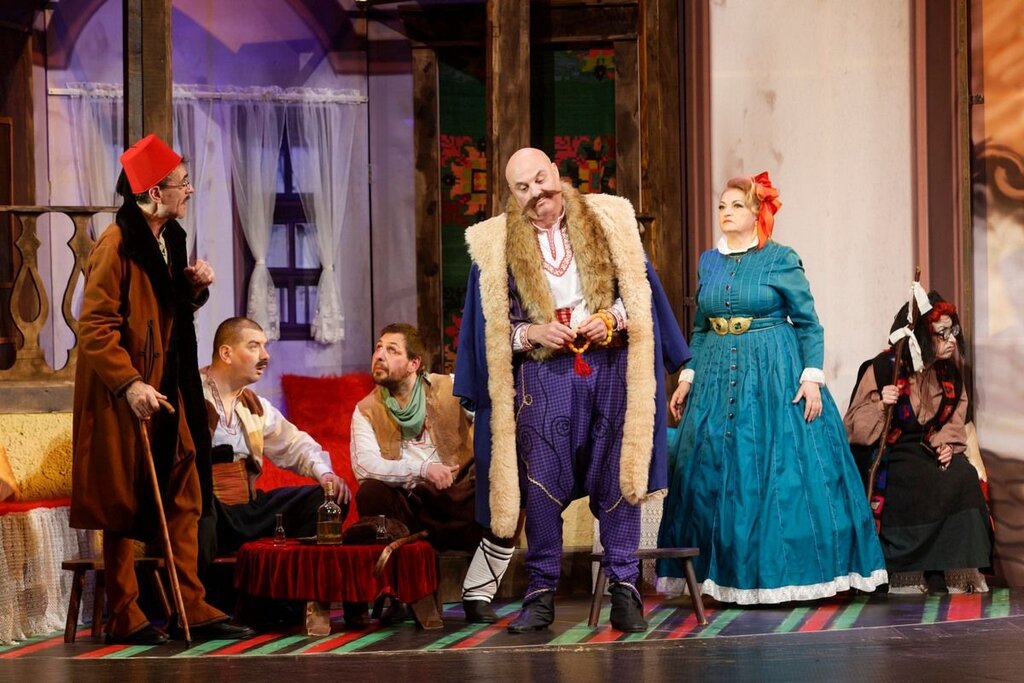
The latest production by the Varna State Opera.
PHOTO Facebook / State Opera Varna
The operetta has retained its popularity thanks to its engaging story and lively comic plot, rooted in the customs, beliefs and traditions of patriarchal Bulgarian society during the National Revival. Kosta Raynov's libretto stays close to Karavelov's original, while Asen Karastoyanov's spirited score is deeply inspired by Bulgarian folk music.
At the heart of the story are Bulgaria's own Montagues and Capulets – the vividly drawn yet equally stubborn and overbearing Hadzhi Gencho and Dyado Liben. Their constant bickering entangles not one but two young couples: their children, Pavlin and Lila, and their servants, Ivan and Yanka. While remaining faithful to the original, Raynov introduced several new characters and scenes to strengthen the dramatic structure and heighten the comedy. The most memorable of these is Yanka, Hadzhi Gencho's sharp-witted maidservant. Clever, spirited and resourceful, she emerges as one of the operetta's central characters, and her duets with Ivan have become audience favourites. Their second song-and-dance duet – a playful declaration of love infused with the language and imagery of Bulgarian folklore – remains one of the best-loved numbers in the score.
Yanka and Ivan's duet, from a December 2018 production at the Stefan Makedonski National Music Theatre, performed by Katerina Tuparova and Aleksandar Mutafchiyski:
The musical and dramatic strengths of Bulgarians of Old Times have enabled it to outlive the era in which it was created. Rich in theatrical vitality, it has earned its place as a classic of the Bulgarian repertoire, offering each new generation of directors and performers fresh opportunities for interpretation.
We leave you with the irresistible song-and-dance exuberance of the traditional Bulgarian betrothal celebration in the operetta's central engagement scene:
This publication was created by: Elizabeth Radkova