


News
Saving lives despite the system
Staff shortages and weak oversight undermine quality of healthcare
Wednesday 15 July 2026 16:07
Wednesday, 15 July 2026, 16:07

St Ekaterina University Hospital, Sofia
PHOTO BGNES
Font size
Bulgaria has the highest number of hospital beds in the European Union, with 870 per 100,000 people, but is among the countries with the fewest nurses, with just 4.4 per 1,000 people compared with the EU average of 8.5, according to figures cited by the Bulgarian Association of Healthcare Professionals. The imbalance puts additional strain on the healthcare system. A national standard intended to ensure a minimum number of healthcare professionals for each number of hospital beds is currently being challenged in court. Without such standards, guaranteeing the same quality of care for every patient becomes far more difficult.
Another major weakness is the absence of a single body responsible for assessing not only whether healthcare providers comply with regulations, but also the quality of the care they deliver, says Dr Aleksandar Aleksandrov of the National Cardiology Hospital.
"There is no institution in Bulgaria that oversees the quality of healthcare. Simply put, such a body does not exist. As the scientific secretary of the Bulgarian Society of Interventional Cardiology, I can say that we are working to introduce a national registry in which every interventional procedure will be recorded. Once that is in place, it will become much more difficult to bill the National Health Insurance Fund for procedures that were not actually carried out."

Dr Aleksandar Aleksandrov
PHOTO Elena Beykova
Dr Aleksandrov believes the registry would make it much harder to submit fraudulent reimbursement claims to the National Health Insurance Fund.
Greater transparency is essential if abuses in the healthcare system are to be prevented. In Switzerland, for example, hospitals publish their mortality rates. If those exceed accepted benchmarks, inspections are carried out, medical teams receive additional training and, in some cases, entire departments are closed. In Bulgaria, however, even basic communication between institutions is often missing, Dr Aleksandrov said in an interview for BNR's Horizont programme.
"To be honest, I don't know how much communication there is between the different institutions. For example, I have no idea what information the Executive Agency for Medical Supervision, which is responsible for inspections, receives from the National Health Insurance Fund. Does it have access to that information or doesn't it? I simply don't know. I believe many of the problems stem from poor communication between the numerous institutions in the healthcare system. As a result, too few inspections are carried out."
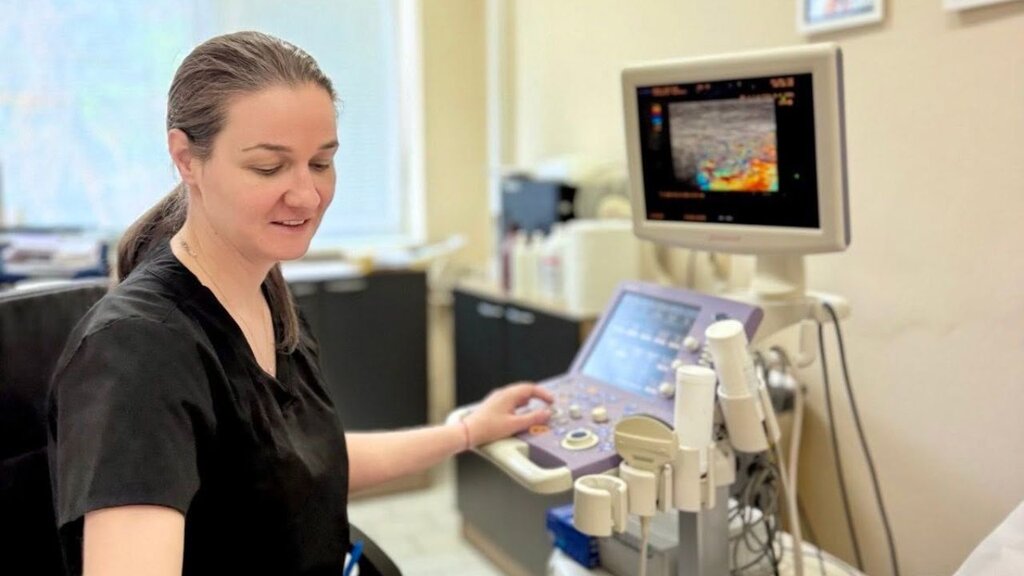
PHOTO Facebook / National Cardiology Hospital
At the same time, Bulgarian medicine continues to produce remarkable clinical achievements. One recent example is the case of 29-year-old Desi, who was pregnant with twins. All three lives were saved after Dr Aleksandar Aleksandrov performed a unique ultrasound-guided procedure to repair her ruptured aorta. The teams at the National Cardiology Hospital and Maichin Dom University Hospital once again demonstrated the world-class expertise of Bulgarian doctors.
"When three lives are at stake, emotions such as fear and excitement inevitably compete with medical judgement. The procedure had to be performed because, without it, all three patients would have died. I do not regret taking that risk for a single second. The real challenge was carrying out the procedure without X-ray guidance because the babies were still developing. We relied entirely on ultrasound guidance, and I have to admit it was the first time I had ever performed such a procedure that way."

Desi with her twins.
PHOTO Maichin Dom University Hospital, Sofia
The successful outcome highlights both the strengths and the challenges facing Bulgaria's healthcare system. While doctors continue to deliver treatment of the highest standard, long-standing problems remain, including a lack of effective quality control and a critical shortage of healthcare professionals. Addressing these shortcomings will be essential to ensuring consistently high-quality care and strengthening patients' confidence in the healthcare system.
Interview by Elena Beykova, BNR Horizont
Text by Elena Karkalanova
This publication was created by: Elizabeth Radkova